o2 Sensor Cost to Replace
An O2 sensor replacement usually costs about $150 to $500 per sensor, with the total commonly split between roughly $50 to $250 for the part and about $100 to $250 for labor; bank layout, rust, and access can push it higher. Skipping diagnosis can mean paying for the wrong sensor, missing a wiring or exhaust leak, and repeating the repair. This guide breaks down parts prices, labor drivers, and when to replace one sensor versus test first.
O2 sensor cost matrix

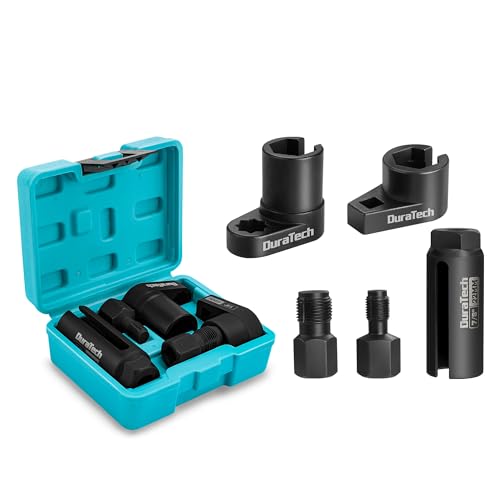
This matrix splits part price from labor impact so you can budget by sensor type, not by a vague average. Upstream sensors usually sit before the catalytic converter and are often more expensive. Downstream sensors usually sit after the converter and often cost less.
| Sensor type | Likely location | Typical part-price band | Labor-impact notes | Risk of misdiagnosis |
|---|---|---|---|---|
| Upstream O2 sensor | Before the catalytic converter; often Bank 1 Sensor 1 | $180-$250 for original parts; $120-$180 for generic front sensors | Front access can take more time; heat shield removal can add labor hours | Higher. Fuel-mixture codes can also come from vacuum leaks, exhaust leaks, or wiring faults |
| Downstream O2 sensor | After the catalytic converter; often Bank 1 Sensor 2 | $150-$220 for original parts; $90-$150 for generic rear sensors | Rear access is often easier, but rusted threads and damaged connectors can still add time | Medium. A P0420 code can point to converter efficiency, not a failed rear sensor |
| Wideband oxygen sensor | Typically upstream | Usually higher than a narrowband sensor | More expensive parts often appear on newer vehicles with tighter air-fuel control | Medium to high if the fault is actually elsewhere in the mixture-control system |
| Narrowband oxygen sensor | Often downstream | Usually lower than a wideband sensor | Often simpler to source, but fitment still needs to match connector and thread type | Medium. Converter-efficiency faults can be mistaken for sensor failure |
The table is the clearest way to budget the job. If the failed sensor is upstream, expect the part to cost more and the labor to rise if a heat shield or tight exhaust routing gets in the way. If the code points downstream, the part may be cheaper, but the diagnosis still needs to rule out the catalyst.
Why do O2 sensor prices vary so much?
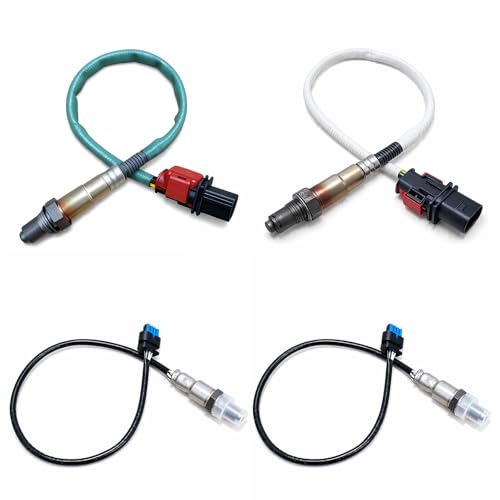
Prices vary because sensor design, location, and fitment are different jobs. A wideband sensor used upstream costs more than a narrowband sensor used downstream. OEM, OE-supplier brands such as Bosch or Denso, and economy aftermarket parts also sit at very different price points.
Wideband vs narrowband design
Wideband oxygen sensors are typically installed upstream and support air-fuel ratio control. That job is harder on the part, so the sensor usually costs more. Narrowband oxygen sensors are often used downstream to monitor catalytic converter efficiency, and they usually sit at a lower price point.
Car Talk notes that some rear sensors are a simple O2 sensor, while front sensors are often wideband. That split matters because the front sensor is usually the one that controls fuel mixture, so it tends to cost more than the rear sensor that mainly monitors converter function.
Bank, sensor number, and location
Upstream is often listed as Bank 1 Sensor 1. Downstream is often listed as Bank 1 Sensor 2. That wording is not decoration. It tells you where the sensor sits, which connector it uses, and whether you are buying the correct part for the front or rear exhaust path.
Location affects labor too. A sensor on the front bank may be easier to reach on one vehicle and far harder on another with a heat shield, turbo plumbing, or tight underbody packaging. Rear sensors often look simpler from the parts catalog and still take time once a rusted exhaust and hot-side hardware enter the picture.
OEM, OE-supplier, and aftermarket tiers
OEM parts usually cost the most. OE-supplier brands such as Bosch or Denso often land in the middle and are commonly chosen when the goal is to match factory-style performance without paying dealer pricing. Economy aftermarket sensors can be much cheaper, but fit and calibration quality vary more.
The same source shows economy sensors can be as low as $36, while one upstream sensor is listed at $350. That spread is why a single “average” price is not useful. You need the exact sensor position and the exact part family before you budget.
Direct-fit vs universal fit
Direct-fit sensors usually come with the correct connector and wire length for a specific vehicle. Universal sensors can cost less, but they may require splicing and more care with connector compatibility. For most owners, direct-fit is the safer buy unless the part catalog clearly confirms universal compatibility.
What does replacement usually cost?
Most owners should budget by scenario, not by a single headline figure. A DIY parts-only repair can stay near the part price, while a shop visit adds labor and diagnosis. If rust, heat shields, or broken wiring slow the job, the total moves up quickly.
DIY parts-only budget
For a do-it-yourself replacement, the main cost is the sensor itself. Front original parts are listed at $180-$250, while generic front parts are listed at $120-$180. Rear original parts are listed at $150-$220, while generic rear parts are listed at $90-$150.
The quoted installation torque is 30-40 N·m, and the page calls for a 22mm oxygen sensor sleeve. Those numbers matter because overtightening can damage threads and under-tightening can create an exhaust leak.
Independent shop total
Labor is listed at $120-$200 for this replacement. In practice, that labor can be lower on an easy rear sensor and higher on a front sensor that needs a heat shield removed. Traffic Dave reports total costs can range from $60 to $400, which fits the spread between a quick rear swap and a tougher front job.
Dealer total
A dealer quote usually lands at the upper end because the part price is often higher and diagnostic time is more likely to be billed separately. If the vehicle has a newer wideband upstream sensor, the dealer total can climb faster than the rear-sensor job many owners expect.
Hidden costs from access problems
Rust, seized threads, broken clips, and damaged connectors can turn a routine replacement into a longer repair. Heat shield removal can add hours on front sensors. If the sensor comes out with damaged wiring or the bung is corroded, the real cost is no longer just the sensor.
Suppose your 2016 four-cylinder sedan needs Bank 1 Sensor 1 and the exhaust shield sits tight against the manifold. The part may be the expensive side of the quote, but the labor can rise faster than expected because the first challenge is simply reaching the sensor without damaging the shield or connector.
Should you replace one sensor or both?
Replacing one sensor is often enough when only one circuit has failed and the other sensor tests normally. Replacing both can make sense on a high-mileage vehicle with matching sensors and related codes, but you should not replace a second sensor just because the first one failed.
When one sensor is enough
If the code points cleanly to one sensor, and testing confirms that sensor is faulty, replace only that one. A single upstream sensor failure does not automatically mean the downstream sensor is bad too. The same is true in reverse.
When both sensors make sense
Both sensors can make sense on older vehicles with high mileage, especially if the parts have the same age and the exhaust has already seen heavy heat cycling. That said, the decision should still be based on test results, not age alone. A working downstream sensor should stay in service.
Mileage and age considerations
High mileage raises the chance of corrosion, connector wear, and slower sensor response. It does not justify replacing a good sensor. Use age as a reason to inspect both sensors carefully, not as a reason to guess.
When diagnosis should come first
Diagnosis should come first if the code history includes lean-condition faults, catalyst-efficiency faults, or heater-circuit faults that do not match a failed sensor pattern. A vacuum leak, exhaust leak, wiring fault, or failing catalytic converter can produce the same warning light.
A common first-timer mistake is replacing the rear sensor after a P0420 code, then finding the catalyst was the real problem. The sensor may have been doing its job and reporting low converter efficiency. That is why a code is a clue, not proof.
Which codes point to an O2 sensor issue?
The P0130-P0147 range includes oxygen-sensor and heater-circuit faults, but the code alone does not guarantee the sensor is bad. P0141 points to a heater circuit malfunction. P0420 points to catalyst efficiency, which can look like a sensor fault even when the sensor is working.
P0130-P0147 code range
Codes in this range can point to sensor circuit problems, heater issues, or response problems. They are useful starting points, but you still need to check wiring, connector condition, exhaust leaks, and the exact sensor position before buying parts.
P0141 heater circuit faults
P0141 is a heater circuit malfunction. That often means the sensor heater circuit is not warming the sensor correctly, but it can also mean damaged wiring, a blown fuse, or a connector problem. Replacing the sensor without checking the circuit can miss the real fault.
P0420 catalyst efficiency codes
P0420 usually points to catalytic converter efficiency, not a simple front-or-rear sensor failure. A rear sensor can trigger the code, but so can a worn converter, exhaust leaks, or upstream fueling problems. That is why the sensor should not be the first and only assumption.
What raises labor and diagnosis costs
Labor changes with access, not just with part price. Front sensors usually take more effort than rear sensors. Corrosion, seized threads, and broken connectors can add diagnostic time and repair time before the new sensor even goes in.
Rear access versus front access
Rear sensors often sit farther back under the car, where access may be awkward but straightforward. Front sensors can be buried near the exhaust manifold and may require more disassembly. That is where the cost difference between “simple swap” and “slow job” starts.
Heat shields and corrosion
Heat shield removal can add labor hours on front sensors. Corroded fasteners can slow the job even more. Once the exhaust is hot, cramped, and rusty, the time needed to remove the old sensor may matter more than the part price itself.
Seized threads and broken connectors
A seized sensor thread can push the work from replacement into repair. Broken connectors can require wiring repair before the new sensor can function. Those extra problems are why diagnosis should include a close look at the harness and bung, not just the scan code.
Testing before replacement
Testing before replacement is the cheapest way to avoid a second repair. Check for vacuum leaks, exhaust leaks, damaged wiring, and evidence of catalyst problems. If the scan data and the physical inspection point to the sensor itself, then replacement makes sense.
How to check fitment before you buy
Fitment is where many buyers waste money. You need the exact model year, engine size, bank, sensor number, connector style, and thread compatibility. A close match is not enough when the connector or sensor body differs by trim or engine family.
Model year and engine size
Two versions of the same badge can use different sensors. Engine size matters because exhaust routing and sensor placement can change between trims. Use the exact model year and engine code whenever possible, not the vehicle name alone.
Bank and sensor position
Bank 1 Sensor 1 and Bank 1 Sensor 2 are not interchangeable labels. One sits upstream and shapes fuel mixture control. The other sits downstream and monitors converter efficiency. Buying the wrong position is an easy way to create a no-start or persistent-code problem.
Connector and thread match
Check connector shape, wire count, and thread compatibility before ordering. A sensor can look right in the catalog and still fail to plug in or thread correctly. The quoted 22mm oxygen sensor sleeve and 30-40 N·m torque spec also show why the mechanical fit matters as much as the electronic one.
Cross-checking part numbers
When possible, cross-check the original part number against the replacement listing. That is the best defense against buying a generic unit that fits poorly or a direct-fit part for the wrong bank. If the catalog is vague, stop and verify before you spend.
Picture a Ford V6 with a rear sensor code and 140,000 miles. If the connector is cracked and the exhaust is rusty, the job may cost more than the sensor price suggests because the repair includes diagnosis, hardware cleanup, and possibly connector work before the new part can be installed.
Frequently asked questions
How much does it cost to get O2 sensors replaced?
Front sensors usually cost more than rear sensors, and rust or heat shield removal can move the total higher. Diagnosis time may be extra if the code is not straightforward.
Can you replace just one O2 sensor?
Yes, and that is often the right move when only one sensor has failed. Replace the specific sensor that tests bad, not both by default. If the vehicle has related lean or catalyst codes, diagnose first so you do not replace a working sensor.
How much to replace oxygen sensor?
A front sensor often costs more than a rear sensor because the part itself is more expensive and the labor can be harder. A reasonable shop budget includes the sensor, $120-$200 labor, and extra time if the exhaust is rusty or the heat shield must come off.
How much does O2 sensor cost to replace?
The cost depends on whether you need an upstream or downstream sensor, a wideband or narrowband design, and how hard the exhaust is to reach. A simple rear replacement can stay near the low end. A front wideband sensor with hard access can climb quickly.
Are O2 sensors expensive to replace?
They can be, but the price spread is wide. Economy rear sensors can be relatively cheap, while an original upstream sensor can cost much more. The real expense usually comes from the combination of part type, labor time, and whether diagnosis finds another fault first.
Why is one O2 sensor much more expensive than another?
Price differences come from sensor design, location, and fitment. Upstream sensors are often wideband and used for fuel-mixture control, so they cost more. Downstream sensors are often narrowband and mainly monitor converter efficiency, so they usually cost less. Brand and connector style also matter.