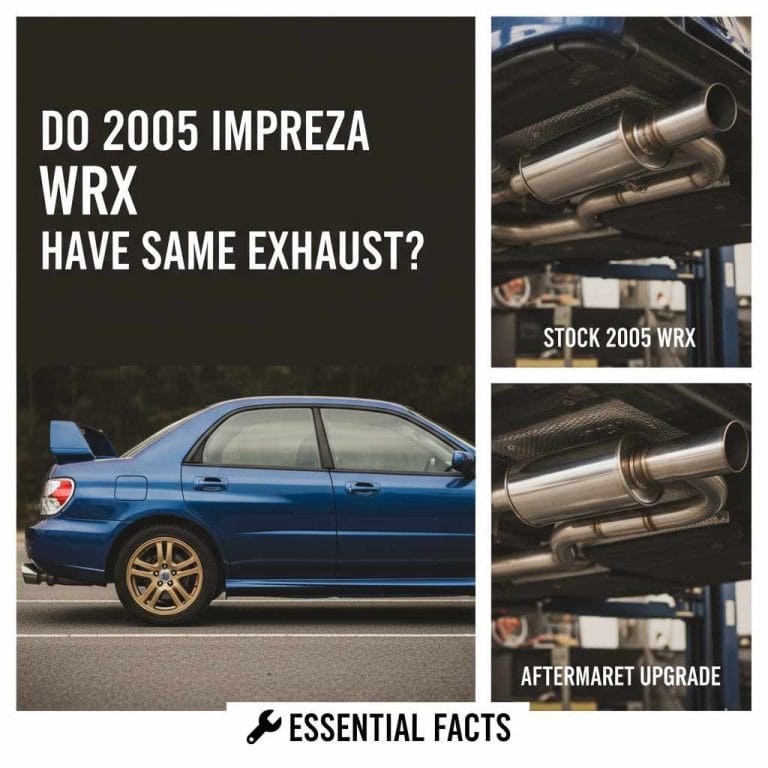
How Much Horsepower Do Exhaust Manifolds Add?
Exhaust manifolds are often reported to add roughly 0–5 hp on a stock naturally aspirated engine, shorty headers about 5–15 hp, and long-tubes about 10–25 hp, with more possible on a turbo car when the factory manifold is restrictive. Pick the wrong part and you pay for noise or labor without fixing the real choke point. This guide breaks down gains by setup and shows when manifolds are worth replacing versus when cams, tuning, or the turbine side matter more.
Quick answer and realistic gain range


Factory exhaust manifolds usually add little power by themselves unless the stock casting is clearly holding the engine back. On many cars, a manifold swap changes sound first, torque second, and peak horsepower last. Wheel horsepower is often the most practical number to compare, because that is what the dyno measures at the tires.
Crank horsepower and wheel horsepower are not the same thing. A driveline can absorb a meaningful amount of power before it reaches the rollers, so a “20 hp gain” claim can mean very different things depending on whether it is quoted at the crank or at the wheels. For exhaust changes, wheel horsepower is the cleaner comparison.
| Setup | Stock manifold to mild performance manifold | Stock manifold to shorty header | Stock manifold to long-tube header | Likely torque shift | Tune or ECU calibration | Risk of no measurable gain |
|---|---|---|---|---|---|---|
| Stock naturally aspirated | 0–5 whp | 3–10 whp | 10–25 whp | Often stronger mid-range torque, little peak change on mild engines | Optional on some cars, helpful for full gain | Moderate if cats, midpipe, or intake remain restrictive |
| Lightly modified naturally aspirated | 2–8 whp | 5–15 whp | 15–35 whp | More mid-range pull and better top-end if cam, intake, and exhaust already support flow | Often recommended | Lower, but still real if the rest of the exhaust is bottlenecked |
| Turbocharged | 0–5 whp unless the manifold is a known restriction | Usually small at the wheels | Often small unless the turbo manifold is restrictive | May help spool or reduce backpressure more than peak hp | Usually not required for the hardware swap, but useful if boost control or fueling changes | High if the turbo, downpipe, or calibration is the real limit |
That matrix is the realistic starting point. A header swap can be worth real power, but only when the engine, rpm range, and rest of the exhaust let the change matter.
What an exhaust manifold actually does
An exhaust manifold collects each cylinder’s exhaust and sends it into one path. Factory cast-iron designs are built for cost, packaging, emissions, durability, and heat control. They fit tight bays well and hold heat in check, but that usually costs flow.
Compared with headers, many stock manifolds use shorter, rougher passages and less attention to pulse timing. That can create more backpressure, especially at higher rpm. The restriction is not always obvious at idle, which is why some owners hear a deeper tone and assume the engine gained more power than it did.
Headers flow better because each cylinder gets a more direct path, and the pulses can help one another instead of collide. Vehicle Seeks says headers are one of the oldest performance modifications in automotive history, which fits the physics: the basic idea is simple, and the physics have not changed.
Do exhaust manifolds add horsepower or just sound?
Most of the time, a manifold change affects sound first and power second. If the factory part was not the main restriction, the car may sound freer while peak horsepower barely moves. In that case, the dyno can show a small torque shift with little or no headline number at the top end.
Why torque first? Exhaust scavenging depends on pressure waves, tube length, diameter, and rpm. A better-flowing manifold can help evacuate the cylinder sooner, which often shows up as improved mid-range torque before peak horsepower rises. That is especially true when the rest of the exhaust still has narrow cats or a restrictive midpipe.
For example, a 5.0-liter V8 with long-tubes but a tight factory midpipe may sound sharper and pull harder from 2,500 to 4,500 rpm, yet the top-end gain can stay modest because the system after the collector is still limiting flow. That is a common failure case.
Headers, tube length, and scavenging
Headers replace factory manifolds with separate primary tubes. Short-tube headers usually fit closer to stock routing, while long-tube headers run longer primaries and usually move the power curve more. Long-tube headers generally provide greater gains than short-tube designs because they improve scavenging over a wider rpm band.
Long-tube headers can produce 15 to 30 wheel horsepower gains on stock or lightly modified LS engines. Some 5.0L Coyote applications see 20 to 35 wheel horsepower gains with long-tube headers. Those are meaningful numbers because they are wheel horsepower, not crank claims.
Scavenging is the pressure-wave effect that helps pull exhaust out of the cylinder as the exhaust valve opens and the pulse moves down the tube. A well-matched primary length can help the next pulse arrive at the right time, which reduces leftover exhaust in the cylinder and can improve filling on the next intake stroke.
Tube length matters. A tube length of 30 to 36 inches is described as best for 2,500 to 5,000 RPM scavenging. That is one reason long-tubes often feel stronger in the mid-range on naturally aspirated V8s.
The collector also matters. It is the merge point where the header tubes join, and collector size affects both flow and scavenging. Too small a collector can choke the system near the top of the rpm range. Too large can weaken pulse energy and soften low-speed response.
Shorty headers versus long-tube headers
Shorty headers are easier to fit and can work well when ground clearance, emissions hardware, or budget are the main limits. They can add power, but usually less than long-tubes. Long-tube headers usually make more power because the longer primary tubes and collector placement improve exhaust pulse timing across the range where a naturally aspirated engine spends much of its time.
On a stock engine, shorties can be enough if you mainly want a small gain and easier installation. If you want a clearer wheel horsepower increase, long-tubes are usually the better bet, especially on naturally aspirated V8s.
Primary tube size and engine match
Primary tube diameter is one of the easiest ways to get the match wrong. Common street performance sizes include 1-3/4 inch and 1-7/8 inch. Those sizes are popular because they balance flow and pulse speed for many street engines.
Too small, and high-rpm flow gets restricted. Too large, and low-rpm velocity can fall, which hurts torque where the car spends more time on the street. The right size depends on displacement, rpm range, camshaft, and how much airflow the engine already has through the heads and intake.
Two-inch primary options are used for high-displacement or heavily modified engines. They make more sense when the engine has the airflow to use them. On a mild engine, they can move the power curve in the wrong direction.
For a small-block with a mild cam and stock heads, a 2-inch primary is usually too much tube. A 1-3/4 inch header is the cleaner match, because it keeps gas speed up without giving away the low- and mid-range torque the car actually uses.
Do you need a tune after changing manifolds?
Sometimes yes, sometimes no. A tune is not always required to bolt on headers, but it often helps the engine realize the full gain. When the air mass changes enough for fueling or spark timing to drift away from ideal, the ECU calibration becomes part of the result, not a separate issue.

If the car uses wide-open throttle fuel and spark tables that were calibrated around the old exhaust, a header swap can still work without a tune and leave power on the table. If the vehicle has sensitive oxygen sensor placement, catalyst monitoring, or aggressive factory torque management, the calibration may matter more than the hardware.
- Check whether the new manifold or header changes oxygen sensor location.
- Check whether catalyst efficiency or rear O2 readiness will be affected.
- Look for a known calibration path for your engine family.
- Plan a tune if the setup also includes cams, intake changes, or exhaust changes after the collector.
A poor match usually shows up as a gain that is smaller than expected, a flatter torque curve, or no measurable change on a dyno that was supposed to show one. That does not mean the parts did nothing. It often means the calibration or the rest of the exhaust is the bottleneck.
Are long-tube headers worth it on a stock engine?
On a stock naturally aspirated V8, long-tubes are often worth it if you want the clearest wheel horsepower gain and you can support the rest of the system. They are less compelling if you only want sound, if the car must keep strict emissions hardware, or if ground clearance and heat are bigger concerns than power.
On stock LS and Coyote combinations, the gains can be large enough to feel. The sourced numbers here put long-tube gains at 15 to 30 wheel horsepower on stock or lightly modified LS engines and 20 to 35 wheel horsepower on some 5.0L Coyote applications. That is why long-tubes are the usual answer for naturally aspirated V8s.
For smaller engines, mild cams, or setups with restrictive cats and midpipes, the result can be much less dramatic. A long-tube swap does not cancel out a narrow exhaust after the collector. It only moves the restriction downstream.
Turbo engines are different. If the factory manifold is feeding the turbine well enough, the manifold swap may not add much wheel horsepower. If the stock manifold is a known restriction before the turbo, then the change can matter more, but the turbine side and boost control still set the ceiling.
How much horsepower do exhaust manifolds add?
On a stock naturally aspirated engine, the answer is usually little to none for a stock cast manifold replacement, and modest for a real header swap. A mild performance manifold might add 0–5 whp, while a full long-tube setup can add far more when the rest of the exhaust and the tune are ready for it.
The key is that manifold-only swaps do not behave like a fixed horsepower part. If the factory manifold was already adequate, the gain can be tiny. If it was a restriction, the gain can be real and repeatable on the dyno.
Frequently asked questions
How much horsepower do exhaust headers add?
There is no single number. For stock or lightly modified LS engines, long-tube headers can produce 15 to 30 wheel horsepower gains. Some 5.0L Coyote applications see 20 to 35 wheel horsepower gains. Other engines may gain less, especially if the cats, midpipe, or tune stay stock.
How much hp does an exhaust add?
On naturally aspirated cars, modest exhaust changes often add a small amount unless the stock system is very restrictive. Max Racing says downpipe changes on naturally aspirated cars typically increase power by 3 to 8 horsepower, stock naturally aspirated cat-back changes typically add 2 to 6 horsepower, and a header plus mid-section and rear-section can bring 5 to 10 horsepower in some stock NA cars.
Do manifolds add more power on naturally aspirated or turbo engines?
Naturally aspirated engines usually show the clearest gains because the exhaust path is easier to improve and the pressure-wave effect can help cylinder clearing. Turbo engines can benefit too, but only if the factory manifold is a real restriction before the turbine. Otherwise, the gain can be small at the wheels.
Do you need a tune after changing exhaust manifolds?
Not always, but it is often the difference between a modest gain and the full result. A tune becomes more important when sensor placement changes, when the engine already has supporting mods, or when the exhaust swap changes airflow enough that fueling and spark no longer land in the best range.