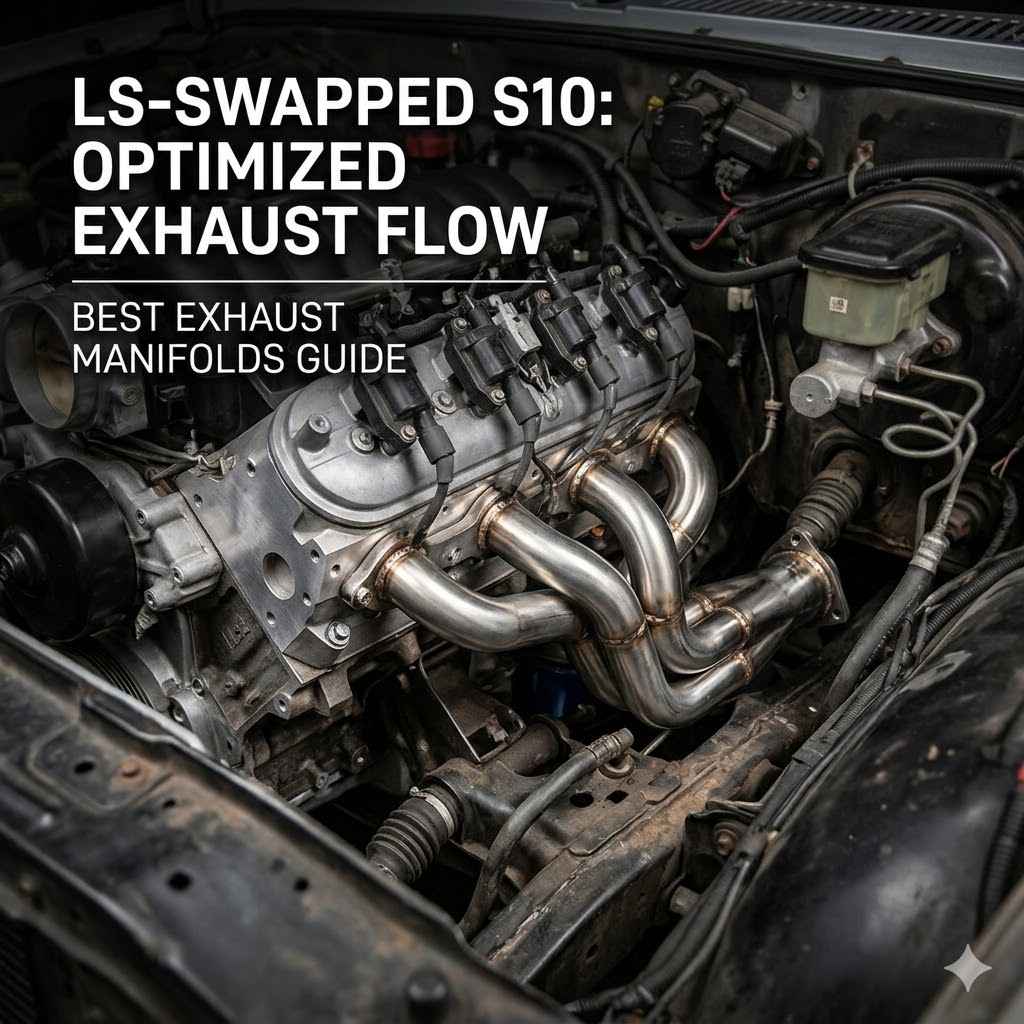
Best Exhaust Manifolds for LS-Swapped S10
Getting the right exhaust parts for your LS-swapped S10 can feel tricky, especially if you’re new to this kind of project. Lots of folks wonder about the Best Exhaust Manifolds for LS-Swapped S10. It’s a common question because the fit and performance matter a lot.
Don’t worry, we’ll break it down simply. We’ll guide you step-by-step to find the best fit for your truck. After this, you’ll know exactly what to look for.
Choosing The Best Exhaust Manifolds for LS-Swapped S10
Finding the right exhaust manifolds is a big step for any LS-swapped S10 project. It’s about making sure your engine breathes well and sounds great. These manifolds connect your engine’s exhaust ports to the rest of your exhaust system.
Getting this part right means your engine can work at its best. It also helps prevent exhaust leaks, which can cause problems. We’ll explore the different types available and what makes them a good fit for your S10.
Understanding Exhaust Manifold Types
There are a few main types of exhaust manifolds you’ll see for LS swaps. Each has its own pros and cons. Knowing these differences will help you pick the perfect set for your S10.
Shorty Headers
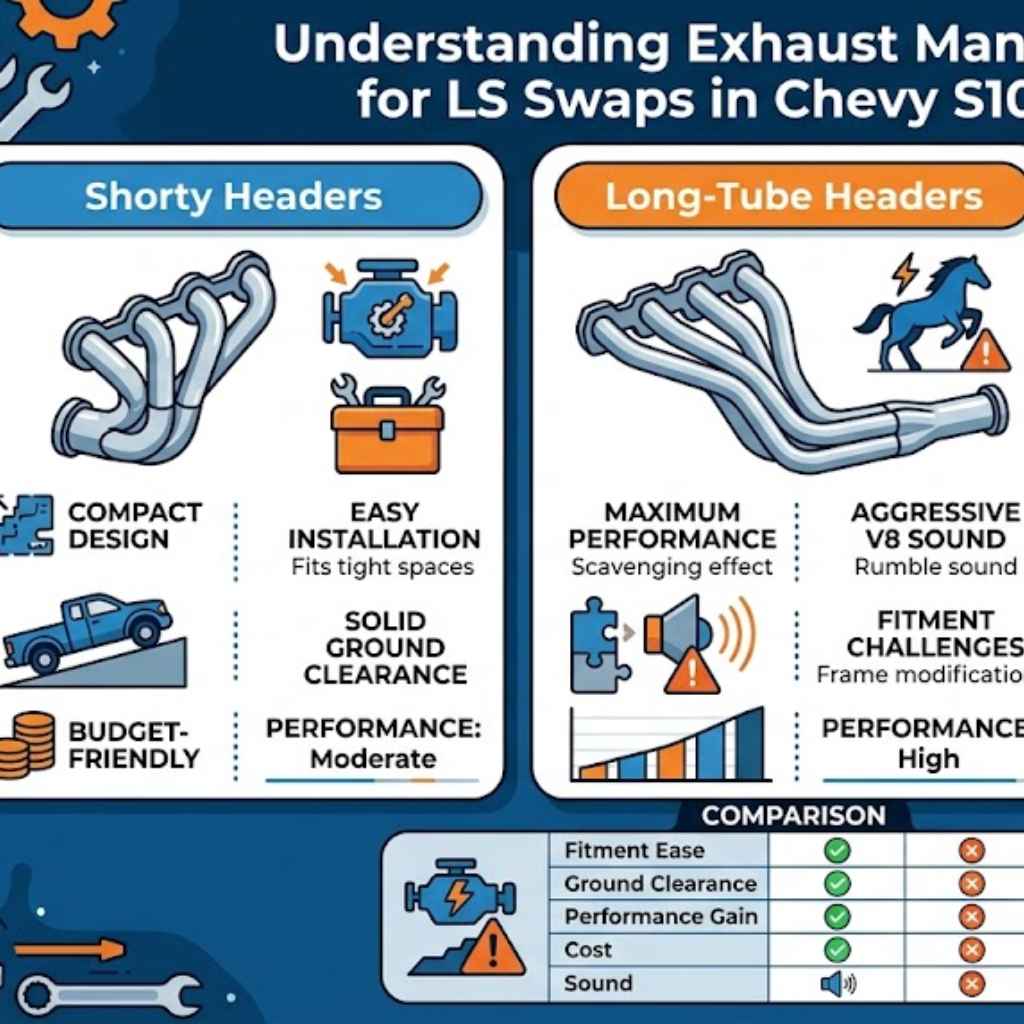
Shorty headers are designed to be compact and fit within the engine bay easily. They are a popular choice for LS-swapped S10s because they often clear the S10’s frame and steering components without much fuss. They typically improve exhaust flow compared to stock cast iron manifolds, but their performance gains might be less significant than long-tube headers.
- Ease of Installation: Shorty headers are generally easier to install than long-tube headers. Their smaller size means less wrestling with tight spaces. Many come with direct-fit designs for specific truck models, making the process smoother. This can save you time and frustration, which is a big plus for DIYers.
- Ground Clearance: Because they don’t extend far down, shorty headers help maintain good ground clearance. This is important for S10 trucks that might be used for hauling or driving on uneven surfaces. You won’t have to worry as much about scraping the bottom of your exhaust system.
- Cost Effectiveness: Compared to other header types, shorty headers are often more budget-friendly. This makes them an attractive option for those looking to get good performance improvements without breaking the bank. They offer a solid balance of price and function.
Long-Tube Headers
Long-tube headers are known for providing the biggest performance gains. They have longer pipes that sweep down and away from the engine. This design helps scavenge exhaust gases more effectively, meaning spent gases are pulled out of the cylinders more efficiently.
This leads to better power and torque, especially at higher RPMs.
- Maximum Performance Gains: Long-tube headers are the kings of performance. They can significantly boost horsepower and torque by improving exhaust flow. The longer runners create a vacuum effect that helps pull exhaust out of the cylinders. This allows the engine to take in more fresh air and fuel on the next cycle.
- Sound Quality: Many enthusiasts prefer the deep, aggressive sound that long-tube headers produce. The longer pipes can help tune the exhaust note, giving your LS-swapped S10 a distinct rumble. This sound is often associated with powerful V8 engines.
- Fitment Challenges: The biggest hurdle with long-tube headers is fitment. They can be challenging to fit into the S10 chassis, often requiring modifications to the frame, transmission tunnel, or steering column. This can add complexity and cost to the installation process. Professional installation might be recommended.
Tri-Y Headers
Tri-Y headers are a hybrid design. They have four pipes that merge into two, and then those two merge into a single collector. This design offers a good balance between the scavenging benefits of long-tube headers and the easier fitment of shorty headers.
They can provide a broad powerband, meaning good performance across a wide range of engine speeds.
- Balanced Performance: Tri-Y headers aim to provide the best of both worlds. They offer improved exhaust scavenging over shorty headers and can deliver good mid-range torque. This makes them a versatile option for trucks used for daily driving as well as some performance applications.
- Sound Characteristics: The sound of Tri-Y headers is often described as a bit mellower than typical long-tube headers but still more aggressive than stock. The merging of pipes can create a smoother exhaust note, which some people prefer. It’s a good middle ground for sound.
- Installation Considerations: While generally easier to fit than full long-tube headers, Tri-Y headers can still require some work. Their design is longer than shorties, so clearance is something to keep in mind. Checking specific fitment guides for your S10 model is always a good idea.
Key Factors for LS-Swapped S10 Manifold Selection
When you’re looking for the Best Exhaust Manifolds for LS-Swapped S10, several factors come into play. It’s not just about picking the fanciest-looking ones. You need to think about how they’ll actually work in your truck.
Engine Power and Camshaft
The amount of power your LS engine is making and the type of camshaft you’re running heavily influence header choice. A mild engine with a stock cam might be perfectly happy with shorty headers. However, a high-performance engine with a large aftermarket camshaft will benefit much more from long-tube headers.
The camshaft dictates how much air and fuel the engine can handle, and the exhaust system needs to match that potential.
- Camshaft Profile: A camshaft with more lift and duration means the engine can ingest and expel more air. For these engines, efficient exhaust scavenging is crucial. Long-tube headers excel at this, helping to quickly clear the cylinders. This allows the engine to breathe better and produce more power.
- Engine Displacement: Larger displacement LS engines, like a 6.0L or 6.2L, often benefit more from the improved flow of long-tube headers compared to smaller 5.3L engines. The larger volume of exhaust gases needs more space and efficiency to exit quickly.
- Tuning Requirements: When you upgrade to performance headers, especially long tubes, your engine will likely need a custom tune. This ensures the engine’s computer is calibrated for the new airflow characteristics, optimizing performance and preventing issues like running too lean or too rich.
S10 Chassis Clearance and Fitment
The S10 chassis presents unique challenges for exhaust system routing. Space can be tight, especially around the frame rails, steering column, and transmission. This is where the physical dimensions of the headers become critical.
- Frame Rail Interference: The S10 frame rails can be a major obstacle for exhaust routing. Long-tube headers, in particular, often require careful bending or routing to avoid contact with the frame. Some headers are specifically designed with bends to help clear these areas.
- Transmission Tunnel Clearance: Depending on the transmission you’re using with your LS swap (e.g., a 4L60E or a T56 manual), the transmission tunnel might need modifications. The exhaust pipes from the headers need to pass under or around it, and clearance can be tight.
- Steering Shaft Interference: The steering shaft is another common area where exhaust components can interfere. Some header designs might require the steering shaft to be modified or rerouted. This is a safety consideration that needs careful attention.
Material and Coating Options
The materials used and any coatings applied to your exhaust manifolds can affect their durability, performance, and appearance. These choices can also impact their longevity in different weather conditions.
- Stainless Steel: Most performance headers are made from stainless steel, usually 304 or 409 grade. 304 stainless steel offers excellent corrosion resistance and a polished look, making it ideal for show cars. 409 stainless steel is also very durable and offers good corrosion resistance, often at a lower price point.
- Ceramic Coating: A ceramic coating can provide several benefits. It helps to insulate the exhaust gases, keeping them hotter as they flow through the header. Hotter gases flow more easily, which can lead to slightly better performance. The coating also helps protect the header material from rust and corrosion, extending its lifespan, and can give a stealthier, matte black look.
- Bare Steel: Some budget-friendly headers are made from mild steel and are left bare or with a basic paint coating. While cheaper upfront, these will rust much faster, especially in humid or salty environments. They are often seen as a temporary solution or for show cars that are not exposed to the elements.
Budget Considerations
Your budget will significantly influence your choice. Performance headers can range from a few hundred dollars to over a thousand. It’s important to balance your desired performance with what you can realistically afford.
- Entry-Level Options: For those on a tighter budget, some brands offer more affordable shorty headers or basic mild steel long tubes. While these might not offer the absolute best performance or longevity, they can still be a significant upgrade over stock manifolds. It’s about finding the best value for your money.
- Mid-Range Choices: Many reputable brands offer stainless steel headers in the mid-range price bracket. These usually strike a good balance between quality, performance, and cost. They are often made from good quality materials and offer proven designs for various applications.
- Premium Headers: High-end headers, often made from premium stainless steel and featuring advanced designs, can be quite expensive. These are typically for serious performance enthusiasts who want the absolute best in terms of materials, craftsmanship, and potential power gains. They often come with extensive engineering behind their design.
Popular Header Brands for LS Swaps
Several companies specialize in performance exhaust components that are well-suited for LS swaps into vehicles like the S10. Knowing these brands can help you narrow down your search for the Best Exhaust Manifolds for LS-Swapped S10.
Hooker Headers
Hooker Headers is a long-standing name in the performance exhaust industry. They offer a range of headers specifically designed for LS swaps into various GM trucks and muscle cars. Their products are known for good quality and performance.
- Product Lines: Hooker offers BlackHeart and Super Competition series headers. BlackHeart is often geared towards direct-fit applications for common swaps, including S10 trucks. Super Competition is typically for more custom or high-performance builds where fitment might be less of a direct concern but maximum flow is desired.
- Application Specifics: Hooker makes an effort to design headers that fit specific chassis like the S10, aiming to minimize modification needs. This can make the swap process much more straightforward for builders. Their engineering team tests for fit and function.
- Reputation: Hooker has a solid reputation for producing durable and effective exhaust systems. Many S10 builders have successfully used their products to achieve great results. Their long history in the performance market speaks to their reliability.
Pypes Exhaust
Pypes Exhaust provides a variety of performance exhaust systems and headers. They focus on delivering aggressive sound and good performance. They have options that can work well for LS-swapped S10 trucks.
- Sound Focused: Pypes is well-known for the aggressive and deep exhaust notes their systems produce. If you want your LS-swapped S10 to sound as mean as it performs, Pypes is a brand to consider. Their header designs contribute to this sound.
- Material Quality: They typically use stainless steel for their headers, ensuring good corrosion resistance and longevity. This is important for a vehicle that might be driven in various conditions. The quality of the material impacts how long the headers last.
- System Integration: Pypes often sells complete exhaust systems, allowing you to match your headers perfectly with the rest of your exhaust. This can lead to optimal performance and a consistent sound from front to back. It ensures all components work together.
Stainless Works
Stainless Works is known for its high-quality, fully polished stainless steel exhaust systems and headers. They cater to enthusiasts who want premium materials and craftsmanship.
- Premium Materials: As the name suggests, Stainless Works uses high-grade stainless steel, often 304 stainless. This material offers exceptional corrosion resistance and a beautiful, lasting shine. The polished finish also looks great under the truck.
- Performance Engineering: Their headers are engineered for maximum performance, focusing on optimal exhaust flow and scavenging. They often use advanced design techniques to create headers that perform exceptionally well across the RPM range.
- Custom Options: Stainless Works also offers custom exhaust solutions, which can be beneficial for unique LS swap projects where off-the-shelf parts might not offer the perfect fit or performance. This allows for a truly bespoke system.
Installation Tips for Your S10 Exhaust Manifolds
Putting on new exhaust manifolds, especially on an LS-swapped S10, can be a challenging but rewarding task. Following a few key tips can make the process much smoother.
Prepare Your Workspace and Tools
Before you start, gather all the tools and supplies you’ll need. This includes wrenches, sockets, extensions, penetrating oil, torque wrench, new gaskets, and potentially exhaust wrap if you plan to use it. A clean, well-lit workspace is essential for safety and efficiency.
- Essential Tools: Make sure you have a good set of metric and SAE sockets and wrenches, along with extensions and universal joints for reaching difficult bolts. A breaker bar can be helpful for stubborn bolts. Don’t forget safety glasses and gloves.
- Penetrating Oil: Apply a good penetrating oil to all exhaust manifold bolts the day before you plan to work on them. This helps loosen rust and corrosion, making them much easier to remove. Reapply if needed.
- New Gaskets: Always use new exhaust manifold gaskets. Reusing old gaskets can lead to exhaust leaks, defeating the purpose of installing new headers. Ensure the gasket material is appropriate for high exhaust temperatures.
Removing Old Manifolds
This is often the trickiest part. Old bolts can be rusted and seized. Take your time and be patient.
If a bolt breaks, you’ll need to deal with extracting it, which can add significant time to the job.
- Soak and Pray: As mentioned, penetrating oil is your best friend. Spray generously and let it soak. Tapping the bolts lightly with a hammer can also help the oil penetrate the threads.
- Heat Application: In some cases, carefully applying heat from a propane torch or heat gun to the area around the bolt can help expand the metal and break the rust bond. Be cautious not to overheat or damage nearby components.
- Bolt Extractors: If a bolt head snaps off, you’ll need to use bolt extractors or drill and tap the hole for a new bolt. This requires precision and can be difficult if you’re not experienced.
Installing New Manifolds/Headers
Once the old manifolds are off, clean the mating surfaces on the cylinder heads thoroughly. Install the new gaskets and then the new headers. Hand-tighten all bolts first, then torque them in the recommended sequence and to the correct specification.
- Clean Mating Surfaces: Use a gasket scraper or a wire brush to remove all traces of the old gasket and carbon buildup from the cylinder head exhaust ports. A clean surface is crucial for a good seal.
- Torque Sequence: Headers and manifolds should be tightened in a specific pattern, usually working from the center bolts outward. This ensures even pressure and prevents warping. Consult your header manufacturer’s instructions for the correct sequence.
- Proper Torque Specification: Overtightening can strip threads or crack exhaust ports. Undertightening will lead to leaks. Use a torque wrench to achieve the manufacturer’s recommended torque settings.
- Check for Leaks: After installation, start the engine and let it warm up. Listen carefully for any exhaust leaks around the manifolds. Sometimes, a slight adjustment or re-torquing is needed after the initial heat cycle.
LS Swap S10 Exhaust Manifold Performance Data
Understanding how different exhaust manifolds impact performance can help you make the best choice. While exact numbers vary based on the engine, camshaft, and other modifications, general trends are well-documented. This data highlights why choosing the right manifold is important for your LS-swapped S10.
Flow Bench Data Comparisons
Flow bench testing measures the volume of air that can pass through a component at a given pressure. Exhaust manifolds are tested to see how efficiently they can remove exhaust gases from the engine. Higher flow rates generally translate to better performance.
- Stock Cast Iron Manifolds: These typically flow around 100-150 CFM (Cubic Feet per Minute) per port at 28 inches of water pressure. This is sufficient for mild engines but quickly becomes a restriction as power increases.
- Shorty Headers: These can improve flow significantly over stock, often in the range of 170-220 CFM per port. They offer a good balance of improved flow without major fitment issues.
- Long-Tube Headers: The best long-tube headers can achieve flow rates of 250-300+ CFM per port. This substantial increase in airflow is what allows them to unlock the most power potential from a performance LS engine.
Dyno Testing Results
Dynamometer (dyno) testing measures the engine’s horsepower and torque output. Swapping from stock manifolds to performance headers, especially long tubes, often shows noticeable gains.
- Example 1: 5.3L LS Swap S10: A common LS swap into an S10 involves a 5.3L engine. Swapping from stock cast iron manifolds to a good set of long-tube headers and a matching exhaust system can result in gains of 15-25 horsepower and 10-20 lb-ft of torque. These gains are often felt most strongly in the mid-to-upper RPM range.
- Example 2: Modded 6.0L LS: For a more aggressively modified 6.0L LS engine, the difference can be even more dramatic. Dyno tests have shown gains of up to 30-40 horsepower and similar torque figures when upgrading from shorty headers or stock manifolds to well-designed long-tube headers. The larger engine displacement has more potential to benefit from improved exhaust scavenging.
- Impact of Exhaust System: It’s important to remember that headers are only one part of the exhaust system. To maximize gains, they should be paired with a high-flowing catalytic converter (if emissions are a concern) and a free-flowing cat-back exhaust system. Without this, the headers may not be able to perform at their full potential.
Choosing Headers for Your Specific S10 Model
The specific S10 model you have can influence header choice due to slight variations in chassis dimensions. For instance, an S10 Blazer might have different clearance issues than a standard S10 pickup.
- Early vs. Late Model S10s: Older S10s might have slightly more room in the engine bay compared to newer generations. Always check manufacturer fitment guides for your specific year and body style.
- 2WD vs. 4WD S10s: Four-wheel-drive S10 trucks often have a front differential and suspension components that can make exhaust routing more challenging, especially with long-tube headers. Some header designs may be specifically made to clear these components.
- Body Styles: Extended cab or crew cab models might have longer exhaust routing needs, but the primary concern for headers is under the engine and firewall. The cab length typically affects the cat-back portion more.
Common Challenges and Solutions
Even with the right parts, LS swapping an S10 can bring unexpected issues. Here are some common challenges people face with exhaust manifolds and how to overcome them.
Exhaust Leaks
This is probably the most common problem after installing new headers. Leaks can be caused by improper gasket installation, loose bolts, or warped header flanges.
- Cause: Warped Flanges: If the header flange is not perfectly flat, it won’t seal against the cylinder head, even with a new gasket.
Solution: Use a straight edge to check the header flange for flatness. If it’s warped, you can try to carefully flatten it on a flat surface with sandpaper or have it professionally machined. - Cause: Improper Torque: Not tightening the bolts correctly or in the right sequence can lead to leaks.
Solution: Always follow the manufacturer’s recommended torque sequence and specifications. Retorque the bolts after a heat cycle. - Cause: Damaged Gaskets: Using old or damaged gaskets, or installing them incorrectly, will cause leaks.
Solution: Always use new, high-quality gaskets designed for your specific application. Ensure they are seated correctly before tightening.
Ground Clearance Issues
Long-tube headers, especially, can hang low and scrape on speed bumps or uneven surfaces. This is a major concern for daily-driven trucks.
- Cause: Header Design: Some long-tube header designs are simply longer and hang lower than others.
Solution: Look for headers specifically designed for S10 swaps that prioritize ground clearance. Some manufacturers offer bent pipes to help tuck the exhaust higher. If clearance is still an issue, consider using an exhaust shop to help reroute or modify the pipes. - Cause: Vehicle Ride Height: If your S10 is lowered significantly, ground clearance will naturally be reduced.
Solution: If you plan to lower your S10, factor this into your header choice. Shorty headers might be a more practical option for very low vehicles. If you want long tubes, you might need to reconsider your suspension setup.
Header Fitment and Interference
As mentioned before, fitting headers into the S10 chassis can be tight. Interference with the frame, steering, or transmission is not uncommon.
- Cause: Tight Engine Bay: LS engines are physically larger than the original S10 engines, making space a premium.
Solution: Select headers that are advertised as a direct fit or designed for LS swaps into S10s. If interference occurs, you may need to have custom bends added by an exhaust shop to clear obstacles. - Cause: Transmission Swap: Different transmissions can occupy different spaces and require different exhaust routing.
Solution: Research which headers are known to work well with your specific transmission. Sometimes, minor modifications to the transmission crossmember or tunnel are needed to accommodate both the transmission and the exhaust. - Cause: Steering Components: The steering shaft and linkage can easily interfere with exhaust pipes.
Solution: Many S10 LS swap kits include modified steering shafts. Ensure your steering setup allows adequate clearance for the exhaust pipes routing around it. Sometimes, a U-jointed steering shaft can be positioned to avoid interference.

Frequently Asked Questions
Question: What are the main differences between shorty and long-tube headers for an LS-swapped S10?
Answer: Shorty headers are compact and easier to install, offering moderate performance gains and good ground clearance. Long-tube headers are longer, provide maximum performance and torque gains by scavenging exhaust gases better, but can be harder to fit and may reduce ground clearance.
Question: Will I need to tune my LS engine if I install new exhaust manifolds on my S10?
Answer: Yes, it is highly recommended to tune your LS engine after installing performance exhaust manifolds, especially long-tube headers. Tuning ensures optimal performance, fuel efficiency, and prevents potential engine damage by adjusting for the increased airflow.
Question: How much horsepower can I expect to gain from headers on an LS-swapped S10?
Answer: Gains vary, but shorty headers might add 10-15 horsepower, while well-designed long-tube headers can add 15-30+ horsepower, depending on the engine’s other modifications and overall exhaust system.
Question: What material is best for LS swap S10 headers?
Answer: Stainless steel, particularly 304 or 409 grades, is best for durability and corrosion resistance. While more expensive than mild steel, it lasts much longer, especially in varied weather conditions.
Question: Can I use stock exhaust manifolds from another vehicle on my LS-swapped S10?
Answer: While some stock manifolds might physically bolt up, they are often not designed for the specific fitment challenges of an S10 chassis during an LS swap and typically offer minimal performance gains compared to dedicated aftermarket headers.
Summary
Choosing the right exhaust manifolds for your LS-swapped S10 matters. We looked at different types like shorty and long-tube headers. We also covered important factors like engine mods, chassis fitment, materials, and budget.
You learned about popular brands and installation tips. We also highlighted common problems and solutions. Now you have the knowledge to pick the best exhaust manifolds for your S10 build.
