Exhaust Gasket vs Exhaust Sealant: Key Differences
An exhaust gasket seals a designed flange joint; exhaust sealant fills small imperfections or slip-fit gaps. Use the part the joint was built for, not both by default. Pick wrong, and you get leaks, soot, noise, and a joint that can fail again after one heat cycle. This guide shows where each one fits, when neither is right, and how heat and surface condition decide the choice.
Exhaust gasket vs exhaust sealant: what’s the difference?

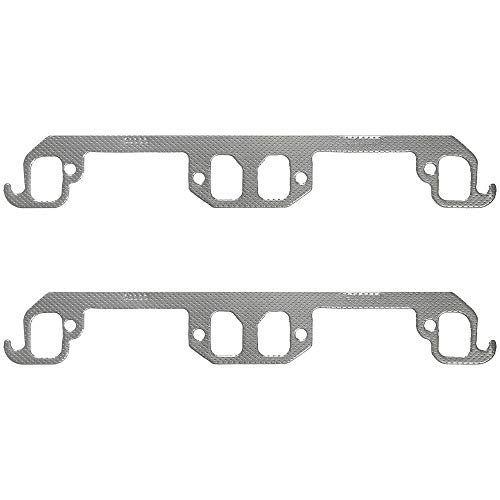
The core difference is simple: an exhaust gasket is a solid sealing component installed between mating exhaust surfaces, while exhaust sealant is a liquid or paste applied during assembly and cured in place. They solve different problems, and they are not interchangeable by default.
A gasket gives a joint a shaped sealing layer that can be compressed by bolts, studs, or a clamp. Sealant is a thin filler meant to help with small surface irregularities or specific assembly instructions. On an exhaust system, that difference matters because exhaust gas temperatures often exceed 1,000°F under load, and the seal has to survive thermal cycling, not just initial clamping.
| Decision factor | Exhaust gasket | Exhaust sealant: what’s the difference | Winner |
|---|---|---|---|
| Best function | Solid part that seals a designed flange or joint face | Liquid or paste that fills tiny gaps during assembly | Neither; they solve different jobs |
| Heat tolerance | Graphite and MLS exhaust gaskets are used where heat is high; modern versions are presented as surviving 1,500°F+ | High-temp RTV is rated up to 400°F in the cited guide; premium high-temp RTV is described as 600°F to 700°F intermittent | Exhaust gasket |
| Installation style | Often dry on modern MLS and graphite manifold gaskets | Applied as a thin bead, coating, or spray when the joint calls for it | Exhaust gasket |
| Failure risk if misused | Wrong gasket type or poor surface prep can leak, but the part stays in the joint | Burn-off, squeeze-out, blockage, or contamination can create a new failure | Exhaust gasket |
| Best-fit use case | Manifold, header flange, and other designed sealing faces | Specific joints where the manual allows a sealant or spray aid | Tie, by application |
What a gasket does at an exhaust joint
A gasket creates a controlled seal between two mating exhaust surfaces. Graphite exhaust gaskets handle heat and movement well, while MLS gaskets depend on flat surfaces and correct compression to seal cleanly.
That makes the gasket a mechanical part of the joint, not an afterthought. If the face is flat and the clamping load is right, the gasket is the intended barrier between exhaust gas and the outside air.
What sealant does during assembly
Sealant is an assembly aid, not a universal replacement. RTV silicone is a common sealant type, but its temperature limit must be checked against exhaust heat, because standard RTV is not suitable for exhaust manifold joints.
Copper spray is another helper product. It can act as a micro-filler in some exhaust jobs, and the cited guide lists it as acceptable up to 1,500°F, but it is still not a universal substitute for a gasket.
Why the two are not interchangeable
A gasket is designed to be clamped. Sealant is designed to cure in place. When a joint needs one behavior and you force the other, the failure mode changes: a gasket may not seal a warped face, while sealant may burn off or squeeze into the gas path.
That is why the tube label matters less than the joint design. Start with the service manual. Then match the product to the joint geometry, the surface condition, and the heat load.
📊 MLS and graphite gaskets are presented as surviving 1,500°F+. Source: Gasket and Sealant Guide: What’s the Difference & When to Use Each.
Which exhaust joints need a gasket, sealant, or both?
Different exhaust joints ask for different solutions. The manifold-to-head joint is a high-heat sealing location with thermal cycling and backpressure, so it is the hardest test case. Slip joints, flange joints, and sensor bungs each have their own sealing rules.
Start with the service manual. Then match the product to the joint geometry, the surface condition, and the heat load. A sealant that works at a low-load slip fit may fail fast at an exhaust manifold.
Manifold-to-head joints
These joints usually need a proper exhaust gasket, and modern MLS and graphite exhaust manifold gaskets are often installed dry. That is because the joint faces are meant to clamp flat, and the seal has to survive severe thermal cycling.
A standard RTV bead is a poor substitute here. The cited guide warns that standard RTV silicone is not suitable for exhaust manifold joints, and exhaust gas temperatures can exceed 1,000°F under load.
Header flange joints
Header flanges typically rely on a gasket unless the specific header and cylinder head combination is designed for a dry metal-to-metal seal. Graphite gaskets are common where heat and movement are significant.
If the flange is warped, sealant will not correct the geometry. The joint needs flatness and clamp load, not more paste.
Slip joints and clamp joints
Slip joints are one of the few places where a thin exhaust sealant, paste, or copper spray may be appropriate, if the manual allows it. These joints depend on fit and clamp pressure more than on a shaped gasket.
Even here, too much product is a problem. A heavy bead can squeeze inward, create blockage risk, or contaminate the gas path.
Sensor bung interfaces
Sensor bung sealing depends on the sensor design. Many oxygen sensor threads seal by thread form or a built-in seat, and extra compound can interfere with the sensor or contaminate the sensing area.
Use only the product the sensor or bung maker specifies. If the bung is damaged or crossed, replacement is safer than trying to patch it with sealant.
Do you install exhaust gaskets dry or with sealant?
Modern exhaust gaskets are often installed dry, especially MLS and graphite exhaust manifold gaskets. That is the default when the manufacturer or service manual specifies a dry install, because extra product can change compression, squeeze into the port, or prevent proper seating.
Thin coatings or spray aids are only appropriate when the manual calls for them. If a joint was engineered for a dry gasket face, adding sealant can create the failure you were trying to avoid.
When dry installation is preferred
Dry installation is preferred when the gasket design depends on precise compression, especially with MLS. Flat surfaces and the correct torque sequence matter more than paste.
Dry also reduces contamination risk. There is less chance of material entering the exhaust stream, sensor passages, or bolt holes.
When a thin coating or spray may help
A very thin coating may help on specific joints with minor surface texture, or where the service manual allows a spray-type aid. Copper spray is one example the cited guide treats as a helper product, not a universal fix.
Use only a light application. The goal is micro-filling, not building a second gasket by accident.
When added product can cause failure
Extra sealant can burn off, soften, or squeeze into the gas path. On a manifold joint, that can mean soot and a leak returns after the first full heat cycle.
On any exhaust joint, excess material can also block a passage or make clamp load less even across the flange.
How heat and surface condition change the choice

Heat load is the first filter. Idle EGT ranges from 600°F to 800°F in the cited guide, while heavy-load or towing EGT can reach 1,000°F to 1,300°F+. That means the product spec must match the real thermal exposure, not a guess.
Surface condition is the second filter. A flat flange with correct clamp load points toward a gasket or dry seal. Warpage, pitting, and damaged faces point toward repair, machining, or part replacement before you reach for sealant.
Exhaust gas temperatures and product limits
High-temp RTV silicone is rated up to 400°F in the cited guide, and premium high-temp RTV is described as 600°F to 700°F intermittent. That is far below the heat seen at many exhaust manifold joints.
By contrast, MLS and graphite gaskets are presented as surviving 1,500°F+, which is why they are better suited to severe exhaust heat. The product must match the joint, not the other way around.
Flat surfaces versus warped or pitted surfaces
Flat, clean, correctly torqued surfaces favor a gasketed or dry design. Warped or pitted faces reduce contact area and create leak paths that no thin bead can reliably erase.
Suppose a 2-bolt flange has a small gap on one corner. Sealant may fill part of that gap, but the clamp load will still concentrate at the high spots, and the leak usually comes back.
Why clamp load and machining matter
Clamp load is what compresses the gasket and keeps the seal consistent through heat cycles. If the flange ears are bent, the bolt holes are stretched, or the manifold face is distorted, the joint can move even after a fresh install.
A common first-timer mistake is adding more sealant when the real fix is machining or replacing the damaged part. If the surfaces cannot clamp flat, sealant is only a temporary mask.
Joint-by-joint decision table
| Joint type | Recommended sealing method | Dry install preferred? | Common failure mode | Do not use |
|---|---|---|---|---|
| Exhaust manifold to cylinder head | MLS or graphite exhaust gasket | Yes, for modern MLS and graphite designs | Burn-off, leak return after thermal cycling, uneven clamp load | Standard RTV silicone or heavy paste bead |
| Header flange | Gasket matched to flange design; thin copper spray only if specified | Usually yes | Squeeze-out, soot trail, flange leak at low clamp area | Sealant as a substitute for a warped flange or missing gasket |
| Slip joint / clamp joint | Thin exhaust sealant or copper spray only if allowed by the manual | No, the joint usually calls for an assembly aid | Blockage from excess paste, clamp slip, hiss under load | Thick bead of RTV or a gasket that does not fit the slip profile |
| Sensor bung interface | Use the sensor or bung maker’s specified seal method; often no extra product | Usually yes | Contamination of sensor passages, false readings, thread damage | Copper spray, RTV, or paste in the sensing area unless specified |
Choose Exhaust gasket if… / Choose exhaust sealant if…
Choose an exhaust gasket if the joint has a designed flange, the surfaces are flat, and the service manual calls for a dry compressed seal. Choose exhaust sealant only when the manual or part design calls for a thin assembly aid at a specific joint, not as a general leak fix.
Choose neither if the flange is warped, pitted, cracked, or too loose to clamp evenly. In that case, machining, resurfacing, or replacing the part is the real repair.
Choose exhaust gasket if…
- The joint is manifold-to-head or a similar designed flange.
- The part calls for MLS or graphite gasket material.
- The service manual specifies a dry install.
- You need the joint to survive sustained exhaust heat and repeated thermal cycling.
Choose exhaust sealant if…
- The joint is a slip fit, clamp joint, or another application that specifically allows paste or spray.
- The product spec matches the actual exhaust gas temperature at that location.
- The bead can stay out of the gas path and away from sensors.
- The goal is to fill tiny surface texture, not fix a bad flange.
What happens if you use the wrong product on an exhaust flange?
The most common result is a leak that returns after a heat cycle. Wrong product choice can also lead to sealant burn-off, squeeze-out into the passage, or contamination of nearby components, especially when the joint sees exhaust gas temperatures above the product limit.
On a flange with poor surface prep, the joint can also lose clamp load as the material compresses unevenly. That leaves soot, noise, and a repeat repair.
Burn-off and leak return
Sealant that is below the heat load can harden, crack, or disappear from the joint face. Once that happens, exhaust gas follows the easiest path out.
This is why high-temp RTV figures matter. A product rated for 400°F or even 600°F to 700°F intermittent still may not be suitable where the joint regularly sees more heat.
Squeeze-out and blockage risk
Excess paste can be pushed inward by clamp load. In an exhaust passage, that is not a cosmetic issue; it can affect flow and create a new obstruction.
The same risk applies near sensor openings. Material in the wrong place can damage readings or foul the threads.
Contamination of nearby components
Sealant can migrate onto oxygen sensor tips, threads, or sealing cones. Copper spray can also create problems if it is used where the part was designed to run dry.
That is why the service manual wins over the tube label. The wrong helper product is still the wrong choice.
Frequently asked questions
What’s the difference between an exhaust gasket and exhaust sealant?
An exhaust gasket is a solid part that seals between mating exhaust surfaces. Exhaust sealant is a liquid or paste applied during assembly and cured in place. They are not interchangeable, because one depends on compression and the other depends on curing and surface fill.
Do you install exhaust gaskets dry or with sealant?
Most modern exhaust manifold gaskets, especially MLS and graphite types, are installed dry. Use sealant only if the service manual or gasket maker specifically allows it. Extra product on a dry joint can distort compression, squeeze into the passage, or shorten the seal’s life.
When is exhaust sealant actually appropriate?
Exhaust sealant may be appropriate on joints designed for it, such as some slip joints or clamp joints. It may also work as a thin helper in certain low-gap applications. It is not a general answer for manifold or flange leaks, especially at high heat.
Can sealant replace an exhaust gasket?
Usually no. A gasket is the designed sealing element for a flange joint, while sealant is only an assembly aid in specific cases. If the joint was made for a gasket, sealant alone often burns off, squeezes out, or leaks after thermal cycling.
What happens if I use the wrong product on an exhaust flange?
You can get burn-off, leak return, squeeze-out, and contamination of sensors or nearby parts. If the flange is warped or pitted, the wrong product also hides the real problem. In that case, machining or replacement is a better fix than more paste.
How do I know if my exhaust joint needs machining instead of sealant?
If the faces are warped, pitted, cracked, or cannot clamp evenly, machining or replacement is the right move. Sealant cannot correct bad geometry. A straightedge, clean bolt holes, and even clamp load matter more than a thicker bead.