
How Many Exhaust Clamps Does a 2005 Audi S4 Need
Figuring out how many exhaust clamps your 2005 Audi S4 needs can feel like a puzzle, especially if you’re new to car maintenance. It’s a common question because exhaust systems have many connection points, and using the right number of clamps is key for a good seal. We’re here to make it simple.
We’ll walk you through exactly what you need, step by step, so you can get the job done right without any confusion. Let’s find out How Many Exhaust Clamps Does a 2005 Audi S4 Need?
Understanding Your 2005 Audi S4 Exhaust System
Your 2005 Audi S4’s exhaust system is a complex network designed to channel harmful gases away from the engine and out of your vehicle safely. It’s made up of several parts, including the exhaust manifold, catalytic converter, muffler, and tailpipes. Each of these parts needs to connect securely to the next to prevent leaks.
These leaks can cause a lot of problems, like reduced engine performance, increased fuel consumption, and that annoying loud exhaust noise. Ensuring all these connections are tight and sealed is where exhaust clamps come into play. They act like strong bands, holding the pipes together firmly. Knowing how many you need helps you buy the right parts and do the job efficiently.
Components of the Exhaust System
The exhaust system on your S4 is a finely tuned piece of engineering. It starts at the engine with the exhaust manifold, which collects gases from multiple cylinders. These gases then travel through a pipe to the catalytic converter, a critical part that reduces pollution. From there, the exhaust moves through a mid-pipe, often containing resonators to quiet the sound further.
Finally, it reaches the muffler, which significantly reduces noise, and then exits through the tailpipes. Each of these junctions between pipes, or between pipes and other components like hangers or brackets, is a potential spot for a clamp.
The number of clamps isn’t just about how many pieces there are. It’s also about how those pieces are designed to connect. Some parts might use slip-fit connections where one pipe slides into another, and these almost always require a clamp.
Other connections might use flanges with bolts, which don’t typically need clamps but rely on gaskets for sealing. For a 2005 Audi S4, the specific design of its performance-oriented exhaust system means there are quite a few connection points that rely on robust clamping for a leak-free seal.
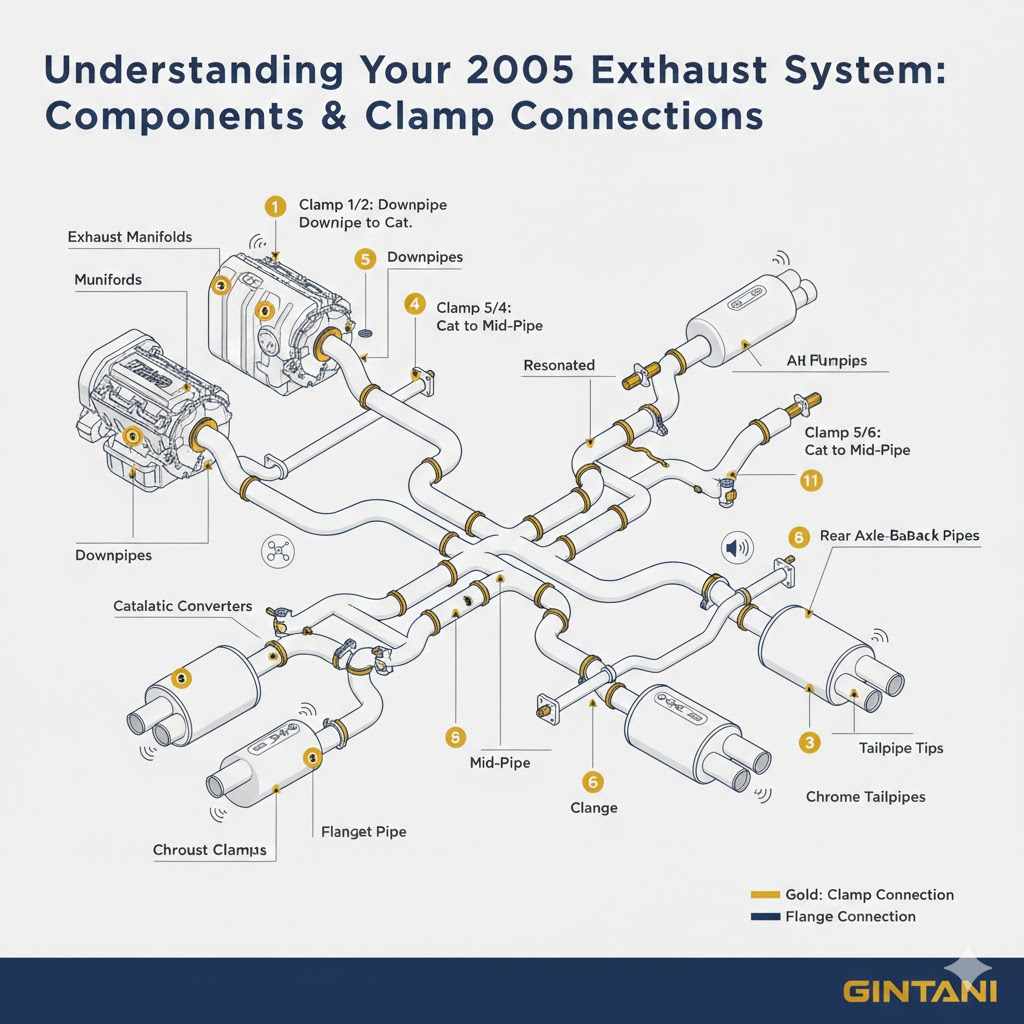
Exhaust Manifold and Downpipes
The exhaust manifold bolts directly to the cylinder heads. From each manifold, downpipes carry the exhaust gases towards the catalytic converters. These downpipes typically connect to the manifold using a flange and bolts, often with a gasket. However, the sections of the exhaust system that follow the downpipes, leading towards the rest of the exhaust, are usually connected with slip joints or flanged connections that require clamps.
These initial sections are crucial for controlling exhaust flow and managing sound. A proper seal here prevents exhaust gases from escaping prematurely, which could affect the performance of sensors and the catalytic converter. If there’s a leak at this early stage, it can lead to a code being thrown by your car’s computer.
The downpipes often connect to the mid-section of the exhaust, and these connections are prime candidates for robust clamping.
Downpipe to Mid-Pipe Connection
This is a very common area where clamps are essential. The downpipes from the catalytic converters usually connect to the rest of the exhaust system, which might include a mid-pipe or resonator section. These connections are often made using a slip-fit design, where one pipe slides over the other.
- A slip-fit connection is designed for ease of assembly and allows for some movement and expansion within the exhaust system due to heat. For this type of connection, a specialized U-bolt clamp or a band clamp is used to compress the outer pipe over the inner pipe, creating a tight seal.
These clamps are vital. Without them, or with a clamp that’s too small or not tightened properly, exhaust gases will escape. This not only creates a loud noise but can also lead to reduced performance because exhaust pressure won’t be optimally channeled.For your Audi S4, which has a dual exhaust system, you will find these connections on both sides.
- The type of clamp used here is typically a substantial U-bolt clamp or a band clamp. These are designed to apply even pressure around the entire circumference of the pipe. The U-bolt design has a U-shaped bolt that passes through a band, with nuts on each end to tighten it. Band clamps are a single piece of metal with a tightening mechanism.
For a robust seal, it’s important to use clamps made from corrosion-resistant material, like stainless steel, especially on a performance vehicle like the Audi S4. This ensures longevity and prevents the clamp from rusting away quickly, which would lead to another leak. You’ll generally find one such connection on each side of the vehicle, linking the downpipe to the next section of the exhaust.
Mid-Pipes and Resonators
Moving further back, the mid-pipes and resonators are next in line. These parts help refine the exhaust note and reduce noise. They are often connected to each other or to the pipes leading to the muffler using slip-fit joints or flanged connections.
The design of the S4’s exhaust system means these sections are often made of multiple pieces that need to be joined securely. Slip-fit joints here are extremely common and rely on clamps to maintain a gas-tight seal. A proper fit and adequate clamping pressure are essential to prevent leaks that could alter the exhaust sound or negatively impact performance.
Connecting Mid-Pipe Sections
If your mid-pipe or resonator section is made of more than one piece, or if it connects to other pipes in the middle of the car, you’ll find clamp connections here. For a dual exhaust system like the S4’s, this means two parallel runs of piping, each with its own set of connections.
- Slip-fit connections are prevalent in the mid-section. One pipe slides into another, and a clamp is used to secure them together. This design allows for slight adjustments during installation and accommodates the expansion and contraction of the exhaust pipes as they heat up and cool down.
When replacing or installing exhaust components, it is essential to ensure that the slip-fit areas are clean and free of rust or debris. This allows the pipes to slide together properly, creating a good surface for the clamp to seal against. A well-fitted slip joint, tightened with the correct clamp, will prevent any exhaust gases from escaping.
- The type of clamp used for mid-pipe connections is typically a band clamp or a U-bolt clamp. These are effective at creating a strong seal by uniformly compressing the outer pipe onto the inner pipe. Some systems may also use specific proprietary clamping mechanisms, but standard U-bolt or band clamps are widely compatible and effective.
For the Audi S4, given its performance nature, ensuring these mid-pipe connections are perfectly sealed is important for maintaining the intended exhaust tone and performance characteristics. Any leaks here can lead to unwanted noise and a decrease in backpressure, which can affect engine efficiency.
Muffler and Tailpipe Connections
The final section of the exhaust system is the muffler, which then connects to the tailpipes. These are often the most visible parts of the exhaust system and are critical for noise reduction.
The muffler itself is usually a single unit that bolts to the pipes coming from the mid-section. The tailpipes then attach to the outlets of the muffler. These connections are designed to be secure and leak-free, ensuring all exhaust gases are directed out through the tailpipes and that the sound is properly managed.
Muffler to Tailpipe Attachment
This is another common area requiring exhaust clamps. The muffler will typically have one or two outlets, depending on whether your S4 has a single or dual exhaust setup. Tailpipes then attach to these outlets.
- Many muffler outlet to tailpipe connections use a slip-fit design. The tailpipe slides over the outlet of the muffler, and a clamp is used to secure this joint. This allows for some flexibility and makes installation easier.
The seal at the muffler outlet is critical for muffling effectiveness. If this connection leaks, you’ll notice a significant increase in exhaust noise, and the sound may become rougher or more raspy. Ensuring a tight seal here contributes to the refined sound profile of the Audi S4.
- The clamps used for these connections are typically band clamps or U-bolt clamps. These are designed to apply strong, even pressure to ensure a leak-proof seal. For a performance car like the S4, using high-quality stainless steel clamps is recommended for durability and resistance to corrosion.
On a dual exhaust system, you’ll have these connections on both sides. It’s important to ensure that both sides are clamped equally well to maintain balance in the exhaust flow and sound.
How Many Exhaust Clamps Does a 2005 Audi S4 Need
Now for the main question: How Many Exhaust Clamps Does a 2005 Audi S4 Need? While the exact number can vary slightly depending on the specific aftermarket exhaust system or if any modifications have been made, a stock or typical aftermarket setup for a 2005 Audi S4 will generally require between 8 and 12 exhaust clamps.
This number accounts for the connections at the downpipe to mid-pipe junctions (one on each side), any mid-pipe section connections, and the muffler to tailpipe connections (again, one on each side for a dual exhaust). Each of these critical connection points needs at least one robust clamp to ensure a proper seal. Some exhaust configurations might have additional joints that require clamping, especially if they involve multiple resonator sections or intermediate pipes.
Factors Affecting Clamp Count
Several things can influence the precise number of clamps needed. It’s not always a one-size-fits-all answer. The design of the exhaust system, whether it’s original factory equipment or an aftermarket performance upgrade, plays a big role. Different manufacturers use different joining methods, and this directly impacts the need for clamps.
For instance, some premium exhaust systems might incorporate more flanged connections that are bolted together, reducing the need for clamps in those specific areas. Conversely, a more budget-friendly or performance-oriented system might rely heavily on slip-fit joints that require clamps for sealing. The material of the exhaust pipes and the intended sound profile can also subtly influence the design and, therefore, the clamping requirements.
Original Equipment (OE) vs. Aftermarket Systems
When considering how many exhaust clamps your 2005 Audi S4 needs, it’s important to differentiate between the original factory exhaust and aftermarket options. OE systems are engineered for specific fit and function, and their clamp requirements are usually well-defined. Aftermarket systems, especially performance upgrades, can vary greatly in their design and installation methods.
A stock Audi S4 exhaust likely uses a specific number and type of clamps as designed by the factory. Aftermarket systems, however, might be designed for broader compatibility or to offer a different exhaust note, which can change the number and placement of clamps. Some aftermarket systems might even include new clamps as part of the kit, while others expect you to reuse existing ones or purchase new ones.
Understanding OE Clamp Placement
The factory exhaust system on your 2005 Audi S4 is designed with precision. Engineers determine the optimal number and location of clamps to ensure a leak-free, durable, and quiet exhaust system.
- Typically, the OE system will have clamps at the major junction points where pipes are joined using a slip-fit method. This includes the connection of the downpipes to the mid-section, and the connection of the muffler to the tailpipes.
For a dual exhaust system, this means a clamp on the left side and a clamp on the right side for each of these major connection points. It’s rare for OE systems to have excessive clamps; they are generally placed only where necessary for a secure and sealed joint.
- If you are replacing a section of your OE exhaust, it’s often best to note how many clamps were on the original part. Manufacturers use these clamps for specific reasons, such as accommodating thermal expansion or providing a stable connection. If you’re unsure, taking photos before disassembly can be very helpful.
It is also important to consider the condition of the original clamps. If they are rusted or damaged, it’s always a good idea to
Aftermarket Exhaust System Considerations
Aftermarket exhaust systems for the 2005 Audi S4 offer a range of benefits, from improved performance to a more aggressive sound. However, their clamp requirements can sometimes be different from the OE setup.
When installing an aftermarket exhaust, always check the manufacturer’s instructions. They will usually specify exactly how many clamps are needed and what type to use. Some systems are designed as direct bolt-on replacements, while others might require modifications or different joining methods.
Common Aftermarket Clamp Usage
Performance exhaust systems often prioritize maximizing exhaust flow, which can influence how they are designed for connection. This often means using slip-fit joints that are securely clamped.
- Many aftermarket systems utilize U-bolt or band clamps at the major connection points: downpipe to mid-pipe and muffler to tailpipe. These are chosen for their strength and ability to create a very tight seal.
A common design in aftermarket setups for vehicles like the S4 involves connecting the downpipes (after the catalytic converters) to the rest of the exhaust with a clamp on each side. Similarly, the muffler outlets connect to the tailpipes using clamps on each side.
- Some performance exhausts might also have intermediate connection points for resonators or specialized piping, which can add to the total number of clamps needed. The goal is always a leak-free system that directs exhaust gases efficiently.
When purchasing an aftermarket exhaust, check if clamps are included. If not, you’ll need to buy them separately. It’s wise to buy a couple of extra clamps just in case, especially if you’re not completely certain about the exact number required for your specific setup.
Types of Exhaust Clamps Used
The effectiveness of your exhaust system seal depends heavily on the type of clamp used. Different clamp designs are suited for different applications and materials. Using the right clamp ensures a strong, leak-free connection that can withstand the high temperatures and vibrations of an exhaust system.
For your Audi S4, you’ll most commonly encounter U-bolt clamps and band clamps. Both serve the purpose of tightening pipes together, but they do so with slightly different mechanisms. The material of the clamp is also critical for longevity, especially given the harsh environment of an exhaust system.
U-Bolt Clamps
U-bolt clamps are a very common and effective type of exhaust clamp. They consist of a U-shaped bolt, a band that goes around the pipes, and nuts that tighten the bolt.
- The U-bolt design provides excellent clamping force by allowing you to pull the two ends of the U-bolt together, compressing the band around the exhaust pipes. This even pressure is key to creating a gas-tight seal.
When installing, ensure the U-bolt sits squarely on the pipes. The band should completely encircle the joint where one pipe slides into another. Tighten the nuts gradually and evenly to avoid stressing the pipes or damaging the clamp.
- These clamps are made from strong materials, often steel. For exhaust systems exposed to moisture and heat, stainless steel U-bolt clamps are highly recommended. They resist rust and corrosion, which means they will last much longer and maintain their clamping strength over time.
A common scenario where U-bolt clamps are used is at the joint between a downpipe and a mid-pipe, or between a muffler outlet and a tailpipe. They are particularly effective on thicker-walled pipes or where a very secure connection is needed.
Band Clamps
Band clamps, also known as sleeve clamps or butt clamps, are another popular choice. They typically consist of a single band of metal that wraps around the exhaust pipes, with a tightening mechanism integrated into the band itself.
- Band clamps are often used for butt joints, where two pipes are joined end-to-end or where one pipe slides into another (slip-fit). The band is tightened using a bolt and nut system, or sometimes a screw mechanism, to compress the band around the pipes.
These clamps are known for their ease of installation and their ability to provide a uniform seal around the entire circumference of the joint. They are a good choice for many applications on a performance vehicle like the Audi S4.
- Like U-bolt clamps, band clamps come in various materials. Stainless steel is the preferred choice for durability and resistance to corrosion in the harsh exhaust environment. They are effective at sealing exhaust gases, even under pressure.
Band clamps are frequently used on mid-pipe sections and muffler connections. Their design makes them suitable for both smaller and larger diameter pipes, offering a clean look and a secure fit.
Clamps Specific to Audi S4 Exhaust
While the general types of clamps are U-bolt and band, specific applications on an Audi S4 might favor one over the other based on the exhaust system’s design. Performance exhaust manufacturers often select clamps that are best suited for their specific joint types.
For many slip-fit connections on the S4’s exhaust, particularly at the downpipe-to-mid-pipe and muffler-to-tailpipe junctions, a robust band clamp is often the preferred choice for a clean, secure, and leak-free seal. These clamps apply even pressure and are less likely to cause deformation of the pipes compared to some U-bolt designs if not installed perfectly.
How to Determine the Exact Number of Clamps
Pinpointing the precise number of exhaust clamps for your 2005 Audi S4 is best done by visual inspection. Looking at your car’s exhaust system is the most reliable way to get an accurate count. This ensures you have all the necessary parts before you start any work.
If you’re performing a replacement, paying attention to the existing setup is crucial. If you’re installing a new system, the manufacturer’s instructions will guide you. In many cases, having a couple of spares is a smart move, as it’s better to have one too many than one too few.
Visual Inspection of Your Exhaust System
The most straightforward way to answer how many exhaust clamps your 2005 Audi S4 needs is to get under the car and look. Follow the exhaust pipes from the engine back to the tailpipes. Every place where two pieces of exhaust pipe connect and are held together by a metal band is a clamp.
For a dual exhaust system like the S4’s, you’ll be looking at both sides. Pay attention to the joints. Are they slip-fits where one pipe goes into another?
These almost always use a clamp. Are there any other types of joining mechanisms? Some exhaust sections might be welded together, which wouldn’t require a clamp.
Checking Manufacturer’s Instructions
If you are installing an aftermarket exhaust system, the manufacturer’s instructions are your best guide. These instructions are written specifically for that particular exhaust system and will detail the number and type of clamps required for a correct installation.
Always read through the instructions completely before you begin. This will help you identify all the necessary parts, including clamps, gaskets, and hardware. If the instructions are unclear, contact the manufacturer’s customer support.
Common Clamp Locations Recap
To help you visualize, here’s a recap of the most common places you’ll find exhaust clamps on a 2005 Audi S4:
- Downpipe to Mid-Pipe Connection: This is where the pipes coming from the catalytic converters meet the next section of the exhaust. You’ll find one clamp on each side for a dual exhaust.
- Mid-Pipe Section Joints: If the mid-pipe or resonator section is made of multiple parts, there may be clamps connecting these pieces. The number will vary based on the aftermarket system design.
- Muffler to Tailpipe Connection: The tailpipes attach to the outlets of the muffler. There will typically be one clamp on each side for a dual exhaust.
Adding these up, a typical dual exhaust system on an Audi S4 will commonly use 8 clamps (2 at the downpipes, 2 at the muffler outlets, and potentially 4 in the mid-section if it’s made of multiple pieces). However, some systems might simplify this, and some might use slightly more for extra security. The range of 8-12 clamps is a good general estimate.
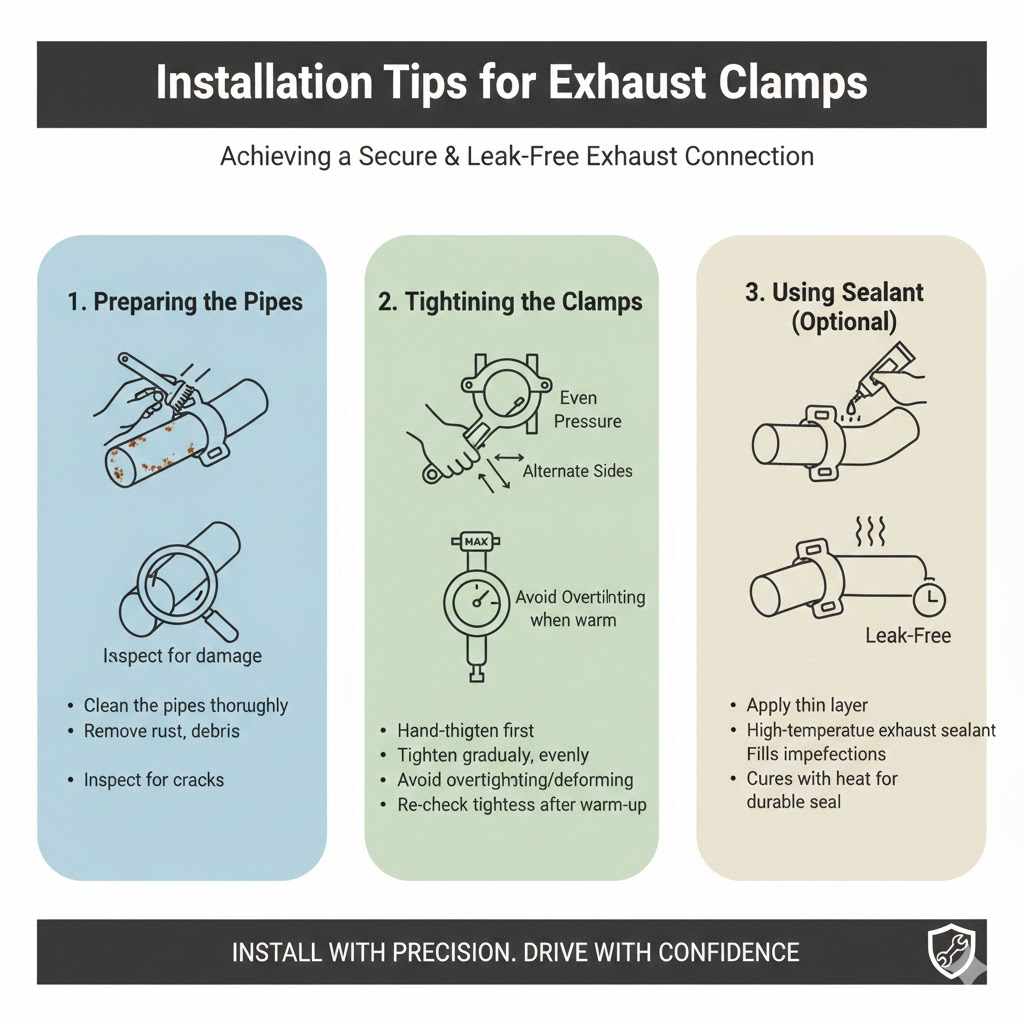
Installation Tips for Exhaust Clamps
Proper installation of exhaust clamps is just as important as having the right number. A poorly installed clamp can lead to leaks, rattles, or premature failure. Following a few key steps will ensure a secure and long-lasting connection.
The goal is to create a seal that can withstand the exhaust system’s vibrations, heat cycles, and external elements like moisture and road salt. Using the correct tools and techniques makes all the difference in achieving a professional and reliable result.
Preparing the Pipes
Before you install any clamp, ensure the surfaces of the exhaust pipes that will meet are clean and smooth. Any rust, debris, or old gasket material can prevent a proper seal.
- Clean the pipes thoroughly. Use a wire brush to remove any surface rust or carbon buildup where the pipes join. For slip-fit connections, make sure the inner surface of the outer pipe and the outer surface of the inner pipe are clean.
- Inspect the pipes for any damage. Cracks or excessive corrosion at the joint can compromise the seal, and the pipe might need to be replaced.
Tightening the Clamps
The way you tighten the clamps is critical for creating a leak-proof seal. It’s a process that requires gradual and even tightening.
Start by hand-tightening the clamp to position it correctly over the joint. Then, use a wrench to tighten the nuts. Tighten them gradually, alternating between sides (for U-bolts) or working your way around the band (for band clamps).
This ensures even pressure is applied to the pipes.
- Avoid overtightening. This can deform the exhaust pipes, especially thinner-walled aftermarket pipes, leading to leaks or weakening the joint. It can also strip the threads on the clamp nuts or bolts.
If you have a torque wrench, refer to the clamp manufacturer’s specifications. If not, tighten them firmly but avoid excessive force. The clamp should be snug and secure, creating a tight seal without crushing the pipes.
- After initial tightening, start the engine and let it run for a few minutes to warm up the exhaust. Then, carefully re-check the tightness of the clamps while the exhaust is still warm (but not dangerously hot). Exhaust components often expand when heated, and re-tightening can ensure a final, secure seal.
Using Sealant (Optional but Recommended)
For an extra layer of security, many mechanics and DIYers recommend using an exhaust sealant along with the clamp. This specialized paste can help fill any tiny imperfections in the joint and ensure a completely leak-free connection.
Apply a thin, even layer of high-temperature exhaust sealant to the male end of the pipe (the one that slides into another) or around the joint area before sliding the pipes together and applying the clamp. Once the clamp is tightened, any excess sealant will typically squeeze out and can be wiped away. This sealant cures with heat, creating a very durable and leak-proof seal.
Frequently Asked Questions
Question: Do I need one clamp for each exhaust pipe connection on my 2005 Audi S4?
Answer: Yes, generally each connection point where exhaust pipes are joined using a slip-fit or butt joint method will require at least one clamp to ensure a secure and leak-free seal. For a dual exhaust system like your S4’s, this means clamps on both sides.
Question: What is the most common type of exhaust clamp for an Audi S4?
Answer: The most common types of exhaust clamps you will find and use are U-bolt clamps and band clamps. Both are effective for sealing exhaust pipe connections.
Question: Can I reuse my old exhaust clamps if they look okay?
Answer: It’s generally not recommended to reuse old exhaust clamps, especially if they show signs of rust, corrosion, or damage. New clamps are inexpensive and ensure a more reliable seal for your exhaust system.
Question: Should I use exhaust sealant with the clamps on my 2005 Audi S4?
Answer: While not always strictly necessary, using a high-temperature exhaust sealant along with the clamps is highly recommended. It provides an extra layer of protection against leaks and can help ensure a more durable seal.
Question: How tight should I make the exhaust clamps on my Audi S4?
Answer: You should tighten the clamps firmly to create a secure seal, but avoid overtightening, which can damage the pipes or the clamp itself. Tighten gradually and evenly, and consider re-checking after the exhaust has warmed up.
Conclusion
To figure out how many exhaust clamps does a 2005 Audi S4 need, look at your specific exhaust system. A typical dual exhaust setup usually requires about 8 to 12 clamps for all the critical connection points, from the downpipes to the tailpipes. Using the right type of clamp and installing it correctly with good preparation ensures a leak-free and durable exhaust. Always check manufacturer instructions if you have an aftermarket system.