Why Microwaves Have Heat Shields Explained
Ever wondered why your microwave seems to have a little something extra inside? Sometimes figuring out how appliances work can feel tricky. The question Why Do Microwaves Have Heat Shields?

Wadoy
Waveguide Cover Compatible with Frigidaire 5304464061, Microwave…
- MATERIALS: Mixed with materials such as mica, paper, and silicone resin. Your Ideal Repairing Part for Microwave Oven
- SIZE: The total length of the protruding part is 4.65 inch (118mm), the width is 3.9 inch (99mm), and the thickness is 0.04 inch (…
- PERFORMANCE:Good material, of course Good quality, beautiful heat resistance and insulation, please rest assured to use
As an Amazon Associate I earn from qualifying purchases.
Explained might sound complicated, but it’s actually quite simple. We’ll break it down step-by-step so you can understand it easily. Get ready to learn what these special parts do and why they are important for your kitchen safety.
Understanding Microwave Heat Shields
Microwave ovens are amazing tools for quickly heating food. They use a special kind of energy called microwaves to do this. But sometimes, these microwaves can bounce around in ways that aren’t ideal for the oven itself or for the food being cooked.
That’s where heat shields come in. They act like a clever barrier, making sure the microwave energy goes where it’s supposed to. This keeps the oven working well and helps your food heat up just right.
Let’s look closer at how they help make your microwave safe and effective.
What Are Heat Shields?
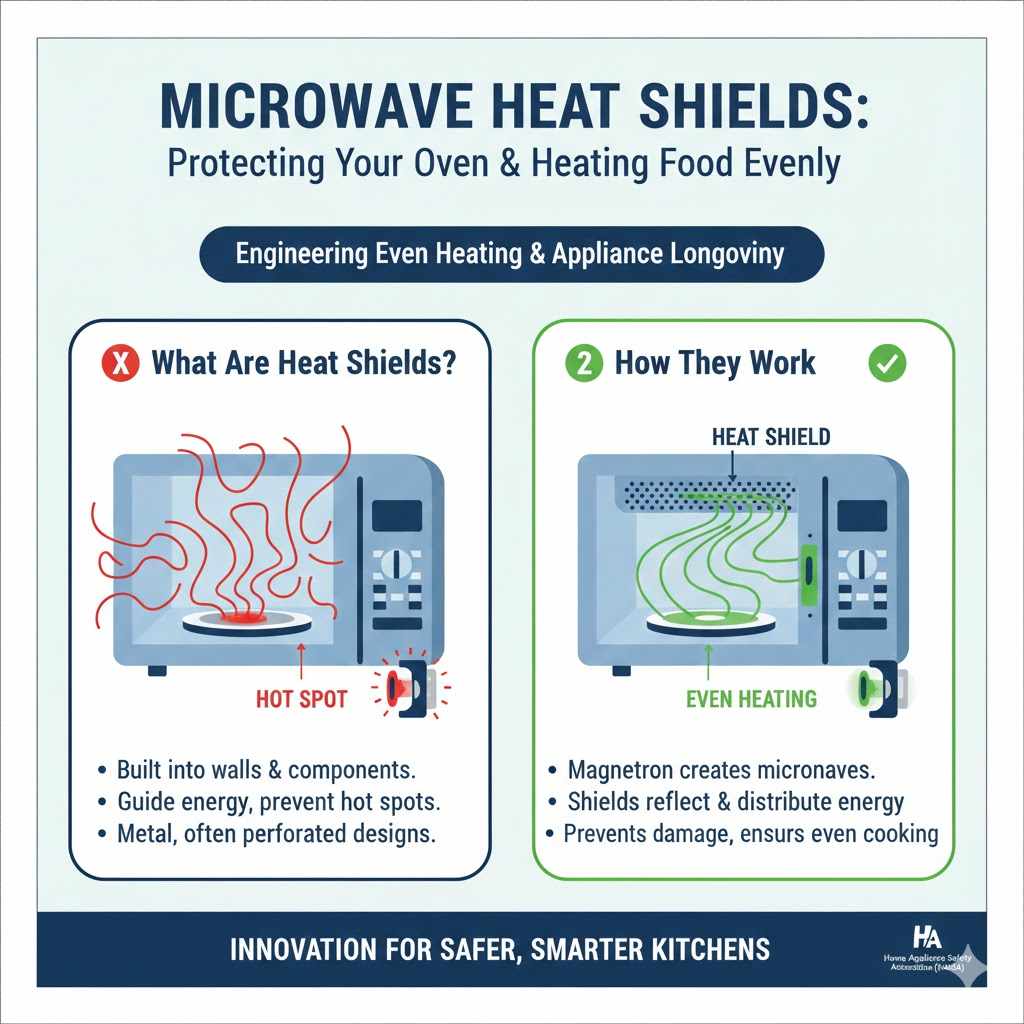
Heat shields in a microwave are not like the ones you might see on a spaceship. Instead, they are often built into the walls or components of the oven. Think of them as clever designers of energy flow.
They guide the microwaves produced by the magnetron, the heart of the microwave, towards the food. Without these shields, the microwaves could hit the metal walls of the oven too directly. This might not heat the food evenly and could even cause damage over time.
These shields are typically made of metal, just like the inside of your microwave. The metal is shaped in specific ways, often with perforated patterns or curved surfaces. This design is key to how they work.
It’s not about blocking the microwaves entirely, but about controlling their direction and intensity. They help to distribute the microwave energy more evenly throughout the cooking cavity.
The main goal is to prevent hot spots and ensure the energy reaches your plate. This leads to better cooking results and protects the internal parts of the microwave. So, the next time you see the inside of your microwave, remember these subtle but important features are at work.
How Do They Work With Microwaves?
Microwaves are a type of electromagnetic radiation. They are generated by a component called the magnetron. This magnetron sends these waves into the cooking chamber.
The waves then bounce off the metal walls of the oven. Normally, this bouncing is what cooks the food as the waves pass through it. However, without proper control, these waves can reflect back to the magnetron or create areas where the energy is too concentrated.
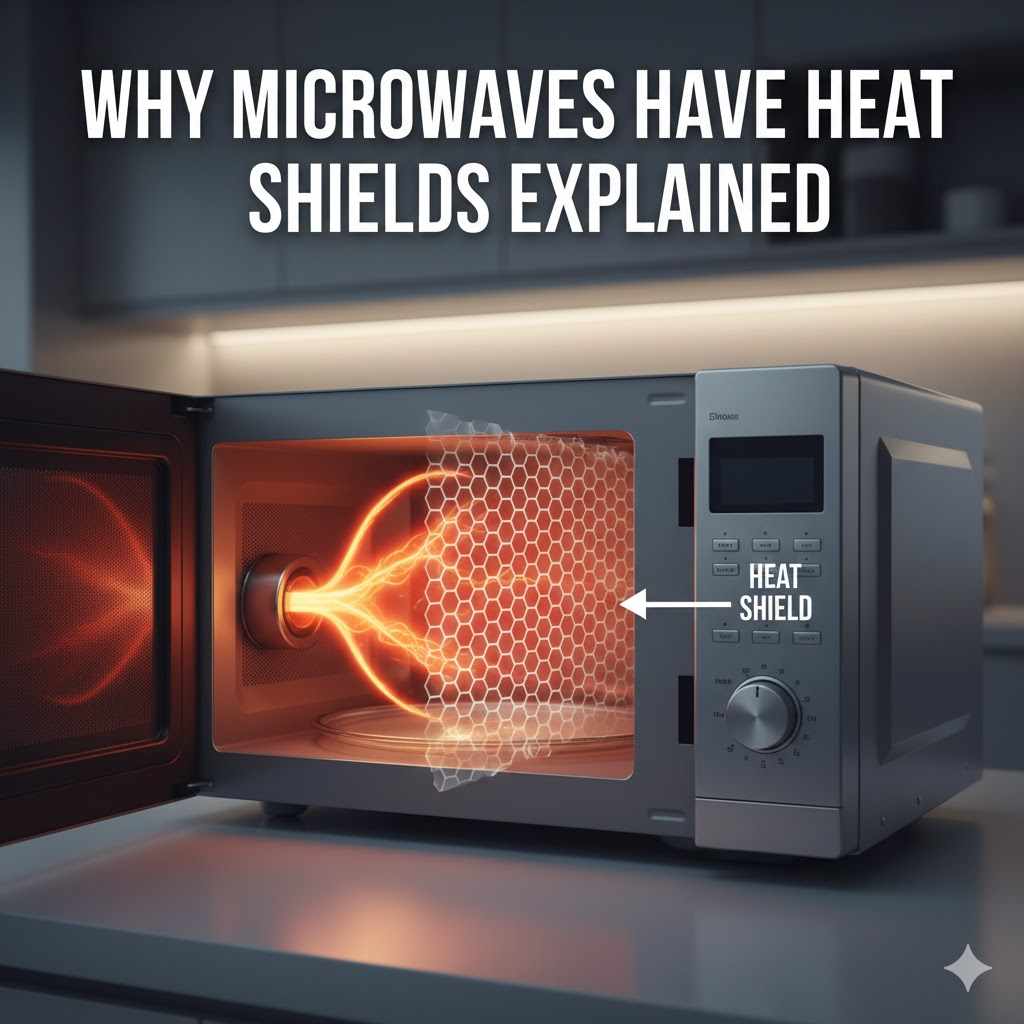
Heat shields, often integrated into the oven’s waveguide or antenna, help manage this. The waveguide is like a pipe that carries the microwaves from the magnetron to the cooking cavity. The antenna, located at the end of the waveguide, distributes the waves into the oven.
The shielding around these parts ensures that the microwaves are directed efficiently into the oven and spread out as much as possible.
This controlled distribution is vital. It helps to avoid overcooking certain parts of the food while leaving others cold. It also protects the magnetron from being damaged by reflected microwaves.
Imagine a sound engineer adjusting speakers to fill a room evenly; heat shields do a similar job for microwave energy.
Materials Used In Heat Shields
The materials used for heat shields in microwaves are generally conductive metals. This is because metals are excellent at reflecting electromagnetic waves, including microwaves. The most common metal used is stainless steel, often with a specific finish or coating.
Aluminum is also sometimes used.
The design of the shield is just as important as the material. For example, the metal plate you might see at the top of the microwave cavity, often called a stirrer fan cover, is actually a type of heat shield. It has small holes that allow microwaves to pass through but reflect them in a way that helps spread them around.
The perforations are sized just right so that the microwaves don’t escape but are redirected.
These materials and their careful shaping are crucial. They are designed to withstand the operational conditions inside the microwave oven. This includes exposure to heat generated during cooking and the high-frequency microwave energy itself.
The choice of material and its precise form factor ensure the shield performs its intended function reliably over the lifetime of the appliance.
Why Do Microwaves Have Heat Shields Explained
Now we get to the heart of the matter: Why Do Microwaves Have Heat Shields? Explained clearly means understanding their protective and performance-enhancing roles. These shields are not just random pieces of metal; they are essential components designed to solve specific problems related to microwave energy.
Their primary jobs are to ensure safety, improve cooking efficiency, and prolong the life of the microwave oven itself. Without them, the appliance wouldn’t work as well, and it might even pose a risk.
The most crucial reason is to prevent microwave energy from escaping the cooking cavity. Regulations set strict limits on how much microwave energy can leak from an oven. Heat shields, along with the oven’s door seal and casing, are the first line of defense in meeting these safety standards.
They act as a barrier, reflecting stray microwaves back into the oven where they can be used for cooking.
Another major function is to protect the magnetron. The magnetron is the component that generates the microwaves. If too many microwaves are reflected back directly into the magnetron, it can overheat and fail prematurely.
The heat shields help to absorb or redirect this reflected energy, keeping the magnetron at a safe operating temperature.
Protecting The Magnetron
The magnetron is the powerhouse of your microwave oven. It’s where the magic of generating microwaves happens. This sensitive electronic component works by emitting high-frequency radio waves.
These waves are then channeled into the cooking chamber. However, like any energy source, it can be affected by what happens to its output.
If the microwaves are not properly guided into the cooking cavity, they can bounce back from the oven walls and head straight back towards the magnetron. This reflected energy is essentially wasted energy and can cause significant problems. It’s like shouting into a very small, enclosed room and having all the sound waves bounce directly back into your ears, but for an electronic component.
This can lead to overheating.
Overheating can degrade the magnetron’s performance over time. In severe cases, it can cause the magnetron to fail completely, rendering the microwave unusable. Heat shields, often integrated into the design of the waveguide and the antenna that distributes microwaves, help to prevent this.
They absorb some of the reflected energy and redirect the rest. This ensures that the magnetron operates within its safe temperature limits, extending its lifespan and the overall life of the microwave.
Ensuring Even Heating
One of the biggest challenges in microwave cooking is achieving even heating. Microwaves don’t heat food like a conventional oven that heats from the outside in. Instead, they penetrate the food and cause water molecules to vibrate, generating heat throughout.
However, the way microwaves distribute within the oven can be uneven. This can lead to hot spots, where food is overcooked, and cold spots, where it remains undercooked.
Heat shields play a vital role in combating this issue. By carefully controlling the direction and reflection of microwaves, they help to scatter the energy more evenly throughout the cooking chamber. This scattering action means the microwaves are more likely to reach all parts of the food from multiple angles.
The goal is to create a more uniform microwave field inside the oven.
Many microwaves also have a rotating turntable. This helps move the food through the microwave field. However, even with a turntable, the distribution of microwaves is critical.
The heat shields work in tandem with the turntable and sometimes a component called a stirrer fan (which is itself often shielded) to ensure that every bite of your food gets heated properly. This results in better tasting meals with no surprising cold centers or dry, burnt edges.
Safety Standards and Leakage Prevention
Microwave ovens operate using electromagnetic radiation, and ensuring this radiation stays contained is paramount for consumer safety. Government agencies worldwide set strict limits on the amount of microwave energy that can leak from an oven. These limits are set very low to ensure no harm comes to users.
Microwave ovens are designed with multiple layers of protection to meet these stringent safety standards.
Heat shields are a fundamental part of this safety system. They are strategically placed to reflect microwaves back into the cooking cavity. This prevents them from escaping through openings or weak points in the oven’s structure.
The metal casing of the microwave itself acts as a Faraday cage, which is a common method for blocking electromagnetic fields. However, additional shielding is necessary, especially around areas where microwaves are introduced or where there might be potential leakage paths.
The door seal is also a critical safety feature, designed to be airtight and microwave-proof. The mesh pattern in the microwave door window is another form of shielding. Combined with the heat shields inside, these elements work together to create a robust containment system.
This ensures that when you are cooking, you are only exposed to the very low levels of microwave energy permitted by law, which are considered safe.
How Microwave Heat Shields Differ From Other Heat Shields
It’s interesting to think about the term “heat shield” and how it’s used in different contexts. When we talk about microwave heat shields, we’re dealing with a very specific application of electromagnetic wave management. This is quite different from heat shields used in other areas, like aerospace or industrial furnaces.
The fundamental difference lies in what they are shielding against. In a microwave, the shields are primarily there to manage and contain microwave energy. While this process generates heat, the shield’s main job isn’t to block heat radiation in the way a thermal insulator would.
Instead, it’s about reflecting and guiding electromagnetic waves. The metals used are chosen for their reflective properties to microwaves.
In contrast, heat shields in aerospace are designed to protect spacecraft from extreme temperatures, often generated by atmospheric friction during re-entry. These shields are made from materials that can withstand very high temperatures and often work by ablating (burning away in a controlled manner) to dissipate heat. They are about thermal insulation and heat dissipation, not electromagnetic wave control.
Aerospace Heat Shields
When rockets or space shuttles return to Earth, they experience incredible friction with the atmosphere. This friction generates intense heat, often thousands of degrees Celsius. Without protection, the spacecraft would burn up.
Aerospace heat shields are designed to prevent this catastrophe. They are typically made from specialized ceramic tiles or composite materials that can withstand these extreme temperatures.
These materials work in a few ways. Some materials have very low thermal conductivity, meaning they don’t transfer heat easily. Others are designed to ablate.
Ablation is a process where the outer layer of the material is designed to burn away, carrying heat with it. This sacrifices a small amount of the shield’s material but effectively protects the underlying structure from the intense heat.
The purpose is entirely about thermal protection – preventing the absorption and transfer of heat. This is a physical barrier against incredibly high temperatures. It’s a testament to advanced material science and engineering, focused on surviving conditions far beyond anything experienced in a kitchen appliance.
Industrial Furnace Heat Shields
In industrial settings, heat shields are used in furnaces, kilns, and other high-temperature equipment. Their primary role is to reflect heat back into the heating chamber, improving efficiency and reducing energy loss. They also protect surrounding equipment or personnel from radiant heat.
These shields are often made of refractory materials, like ceramic fibers or specialized metal alloys that can withstand high temperatures. They might be placed around heating elements or as barriers to direct heat flow. The goal is to keep the heat where it’s needed, whether that’s for melting metal, firing ceramics, or curing materials.
Unlike microwave heat shields, which control electromagnetic waves, these industrial shields primarily deal with infrared radiation (heat). They are designed to reflect this radiant heat, similar to how a mirror reflects light, but with materials that can tolerate extreme heat. The focus is on thermal management and energy conservation in very hot environments.
Microwave Heat Shields: A Unique Role
So, to reiterate, the heat shields in your microwave oven serve a unique purpose. They are not primarily about blocking heat in the traditional sense. Instead, they are expertly engineered components that manage and reflect microwave energy.
This ensures that the energy is used efficiently to cook your food, and that it is safely contained within the appliance.
Their material choice, typically metals like stainless steel, is based on their conductivity and ability to reflect microwaves. Their specific shapes and perforations are designed to scatter the microwave field and prevent direct reflections back to the magnetron. This precise control over electromagnetic waves is what sets them apart from heat shields in other applications.
Think of them as energy directors, guiding the invisible power of microwaves to do their job effectively and safely. This careful design is a critical part of why your microwave is such a convenient and safe appliance to use in your home every day.
Common Microwave Heat Shield Components
When you look inside a microwave oven, you might not immediately spot a component labeled “heat shield.” This is because they are often integrated into other parts of the oven’s design. Understanding these components helps to demystify the question Why Do Microwaves Have Heat Shields? Explained.
These are not separate, add-on pieces but essential parts of the oven’s structure and function. They are cleverly disguised within the components that manage the microwave energy.
The most visible example is often the metal plate with holes at the top of the oven cavity. This is not just for looks; it plays a crucial role. Other shielding is integrated into the waveguide system, the pathway for microwaves from the magnetron.
Even the door has multiple layers of shielding. These various elements work in concert to ensure the microwave operates safely and efficiently.
Let’s explore some of the specific components that incorporate heat shielding features and how they contribute to the overall performance and safety of your microwave.
The Waveguide and Antenna
The magnetron, the source of microwaves, is usually located outside the main cooking chamber. A component called a waveguide acts like a channel or tunnel to direct the microwaves from the magnetron into the cooking cavity. This waveguide is typically made of metal and is designed to efficiently carry the microwave energy.
At the end of the waveguide, there’s usually an antenna or a distribution plate. This part is responsible for spreading the microwaves into the oven. The design of the waveguide and the antenna assembly incorporates shielding.
The metal walls of the waveguide reflect microwaves internally, preventing them from escaping. The antenna itself is designed with shielding to distribute the waves evenly into the cooking cavity, helping to avoid hot spots near the entry point.
Some microwaves might have a rotating antenna or a stirrer fan, which is also a form of heat shield. This component spins to help distribute the microwaves more randomly as they enter the oven. The stirrer fan is often housed behind a perforated metal plate, which is itself a heat shield.
This entire system is engineered to ensure that the microwave energy is delivered safely and effectively to the food.
The Stirrer Fan Cover
Many microwaves, especially older or simpler models, feature a stirrer fan. This fan is typically located at the top of the cooking cavity, behind a perforated metal plate. Its job is to mechanically move the microwaves around.
As the fan rotates, it creates a more random pattern of microwave reflection within the oven, leading to better heat distribution.
The perforated metal plate covering the stirrer fan is a critical heat shield. The small holes are sized precisely so that microwaves cannot pass through them and escape the oven. However, they allow the air to circulate and the microwaves to be scattered.
This plate reflects microwaves back into the oven, ensuring they are contained.
The fan itself is driven by a small motor, and the entire assembly is designed to withstand the microwave environment. The cover acts as a protective barrier, reflecting stray microwaves and preventing them from directly hitting the fan motor or other internal components. It’s a clever piece of engineering that enhances both cooking performance and safety.
The Door and Door Seal
The microwave door is one of the most important safety features. It’s designed to keep the microwaves contained inside the oven. The door itself is constructed with multiple layers, including metal shielding.
The inner surface of the door is often a solid metal panel or contains a metal mesh.
The metal mesh in the window is a key heat shield. The size of the holes in the mesh is much smaller than the wavelength of the microwaves used in the oven. This means that the microwaves are reflected back into the oven cavity, preventing them from escaping through the window.
You can see this mesh clearly when you look through the door.
Equally important is the door seal. This is the gasket that runs around the edge of the door and makes contact with the oven cavity when the door is closed. The seal is designed to be microwave-tight, preventing any leakage.
It’s made of materials that can withstand heat and microwave exposure. Any damage to the door seal can compromise the oven’s safety by allowing microwaves to leak out. Therefore, keeping the door and seal in good condition is vital for safe operation.
Examples and Scenarios
Understanding the “Why Do Microwaves Have Heat Shields? Explained” concept is much clearer with real-world examples. These scenarios show how these shields function in everyday use and what might happen if they weren’t there or weren’t working correctly.
They highlight the importance of these seemingly small design features for both performance and safety.
Consider a common task like reheating leftovers. The heat shields ensure that the energy used to warm your food is directed efficiently. If they weren’t present, you might find that parts of your meal get scorching hot while others remain cold.
Or, if the shields failed to protect the magnetron, the oven might stop working altogether.
Let’s walk through a couple of typical situations to see these principles in action.
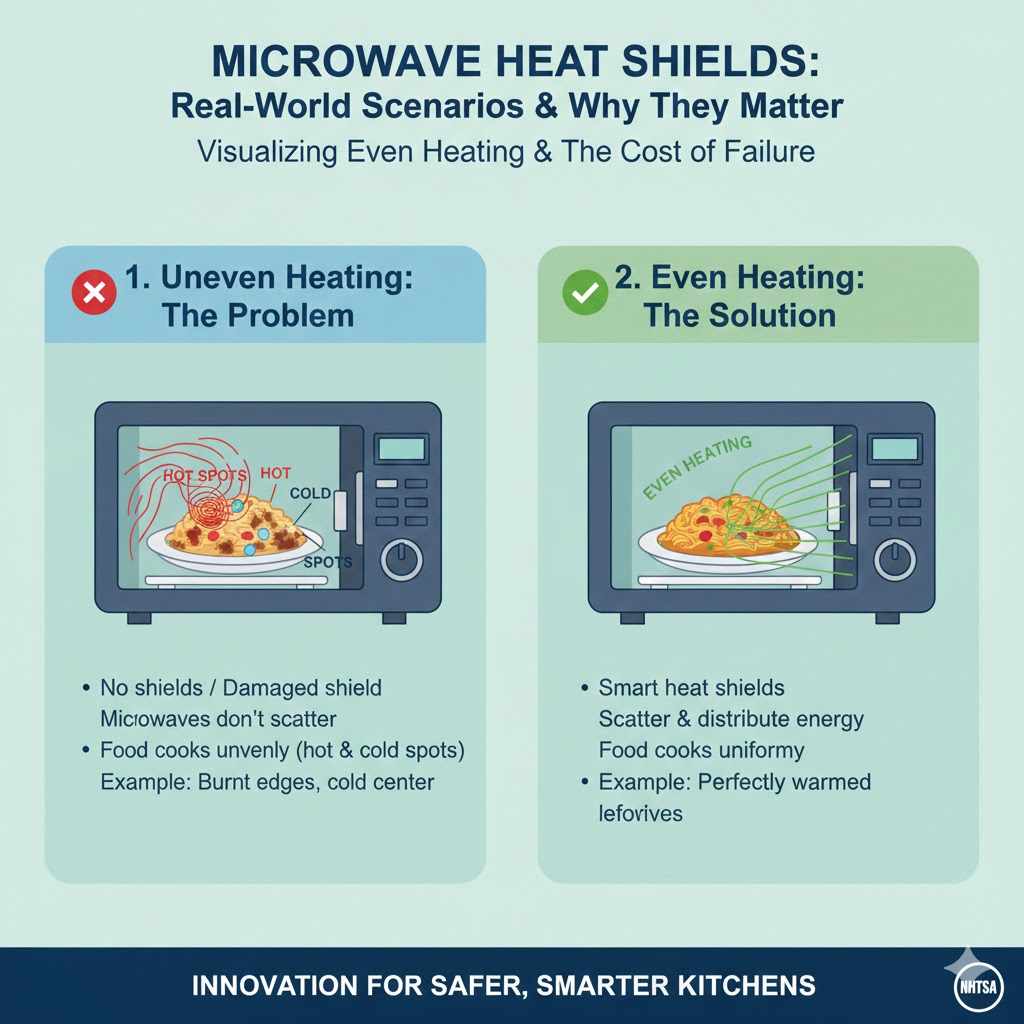
Scenario 1 Reheating Leftovers
Imagine you’ve just put a plate of pasta into your microwave. The magnetron starts generating microwaves. These waves travel through the waveguide and are distributed into the cooking cavity.
The heat shields, integrated into the oven walls and the stirrer fan cover, bounce these microwaves around. This scattering effect helps the waves reach all sides of the pasta.
Without these shields, the microwaves might travel in a more direct path and reflect unevenly. You could end up with a plate of pasta where the edges are overcooked and dry, while the center is still lukewarm or even cold. The heat shields help create a more consistent microwave field.
This ensures that the energy is absorbed by the pasta more uniformly, leading to a better reheating experience. The absorbed energy causes the water molecules in the pasta to vibrate, generating heat and warming your meal evenly.
Scenario 2 A Failed Shield Component
Now, let’s consider what might happen if a critical heat shield component, like the perforated metal cover of the stirrer fan, were to become damaged or dislodged. The stirrer fan’s purpose is to distribute microwaves randomly, and the cover ensures that these microwaves are reflected back into the oven. If the cover is compromised, the microwaves might escape more easily or reflect in a very focused, unpredictable way.
This could lead to two main problems. First, the microwave energy might leak out of the oven at a higher rate than permitted by safety standards. This is a serious safety concern.
Second, the reflected microwaves might be directed back into the magnetron more strongly. This could cause the magnetron to overheat and potentially fail sooner. The oven might start making unusual noises, or the cooking power could decrease significantly over time before a complete breakdown.
This scenario underscores the vital protective role these shields play.
Case Study Microwave Efficiency Improvement
Manufacturers constantly strive to improve the efficiency of microwave ovens. One way they achieve this is by optimizing the design of their heat shielding systems. By carefully shaping the waveguides and internal shielding, engineers can ensure that a higher percentage of the microwave energy produced by the magnetron is delivered to the cooking cavity.
For instance, studies have shown that by refining the antenna design at the end of the waveguide, which is part of the heat shield assembly, manufacturers can increase the effective power delivered to the food by up to 10%. This means that a microwave with a stated power of 1000 watts might deliver closer to 1100 watts of usable microwave energy to the food if its shielding is highly efficient. This not only cooks food faster but also reduces the overall energy consumption of the appliance.
This efficiency gain directly results from the intelligent design and placement of heat shielding components.
Frequently Asked Questions
Question: Do all microwaves have heat shields?
Answer: Yes, all microwave ovens contain heat shielding elements as a fundamental part of their design for safety and functionality. These shields are integrated into various components.
Question: Can I see the heat shields inside my microwave?
Answer: Yes, you can often see parts of the heat shielding. The perforated metal plate covering the stirrer fan at the top of the cavity and the mesh in the microwave door window are visible heat shields.
Question: Are heat shields the same as insulation?
Answer: No, heat shields in microwaves are different from thermal insulation. They are designed to reflect and manage electromagnetic energy (microwaves), not to block heat transfer like insulation.
Question: What happens if a heat shield is damaged?
Answer: If a heat shield is damaged, it can lead to uneven cooking, reduced efficiency, and potentially unsafe leakage of microwave radiation. Damaged components should be addressed by a qualified technician.
Question: Why is the metal mesh in the microwave door important?
Answer: The metal mesh in the door is a heat shield. Its holes are smaller than the microwave’s wavelength, reflecting microwaves back into the oven and preventing them from escaping, which is crucial for safety.
Summary
Microwaves have heat shields to control and contain microwave energy. These shields protect the magnetron, ensure food heats evenly, and meet strict safety standards by preventing leakage. They are vital for efficient and safe operation.
Related pick: Check today's price on Amazon