Do Resonator Exhaust Tips Fix Straight Pipe Rasp

Do Resonator Exhaust Tips Fix Straight Pipe Rasp?

If you’re into cars and modifying them, you’ve probably heard the term “straight pipe rasp.” This annoying sound comes from exhaust systems, especially after upgrades. Many people wonder, Do Resonator Exhaust Tips Fix Straight Pipe Rasp? It’s a common question, and getting a clear answer can be tough when you’re just starting out. Don’t worry, we’re going to explore this step-by-step. We will talk about what causes the rasp, how resonator exhaust tips work, and if they are a good solution. Let’s get started!

The Annoying Sound of Exhaust Rasp

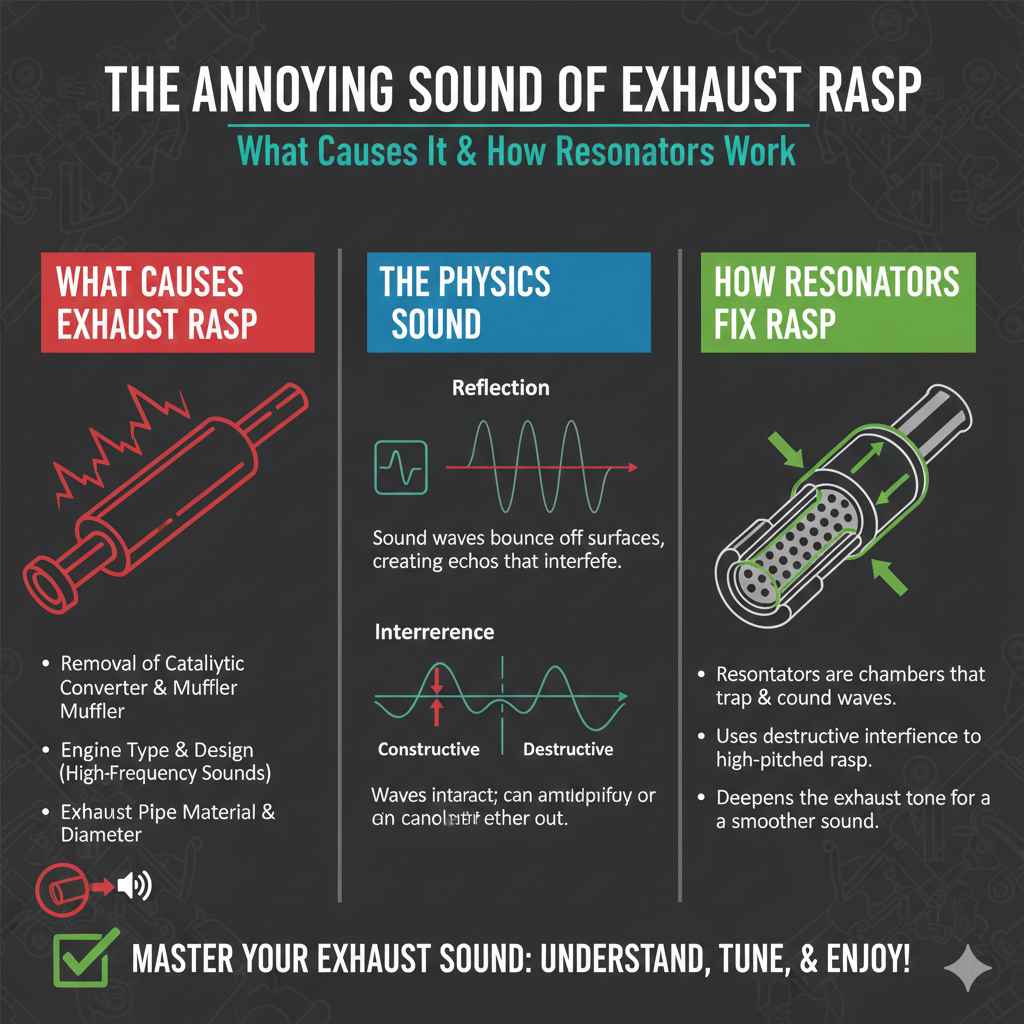
The “rasp” in a car’s exhaust is a high-pitched, sometimes metallic noise that many car enthusiasts find undesirable. It’s often compared to a tin can or a harsh buzzing sound. This issue usually arises when the exhaust system lacks proper sound-dampening components, mainly the catalytic converter and the muffler. Removing these or switching to a straight pipe – which means, essentially, a pipe without these parts – can lead to rasp. The sound waves produced by the engine’s combustion travel through the pipe, reflecting and interfering with each other. This creates the unpleasant rasp sound. Different factors contribute to the intensity of the sound, including the engine type, the diameter of the exhaust pipe, and the materials used.

What Causes Exhaust Rasp?

Several factors contribute to the development of exhaust rasp. Understanding these aspects is key to addressing the issue. The primary culprit is the absence of exhaust system parts designed to absorb sound waves. Straight pipes remove these, leading to more direct sound emissions. Engine design also plays a part; some engines naturally produce more high-frequency sounds that cause rasp. Furthermore, the construction materials of the exhaust system impact sound. Stainless steel, for instance, can produce a different sound than other materials. The pipe’s diameter is also important. Larger pipes may generate lower frequencies, which can amplify the rasp. Ultimately, solving this problem involves understanding how each of these elements interacts.

Removal of Catalytic Converter and Muffler: These components are essential for sound control. Removing them is a common practice to boost performance, but it often worsens the rasp. The catalytic converter converts harmful exhaust gases into less harmful ones, while the muffler dampens the sound. Without these, the sound waves travel freely.

Removing the catalytic converter and muffler often amplifies the rasp due to the loss of sound-dampening capabilities. These parts are meant to manage the sound from the engine and their absence leads to the release of harsher sound waves.

Engine Type and Design: Some engines naturally produce exhaust sounds that can contribute to rasp. Engines with specific firing orders or valve timing can create certain frequencies that are prone to creating this problem. Tuning can sometimes make it better.

Engine design is a key contributor to rasp, as certain engine types produce sound frequencies more likely to create this problem. Different firing orders, valve timing, and engine architectures can lead to varying degrees of rasp.

Exhaust Pipe Material and Diameter: The type of metal used in the exhaust system affects the sound. Stainless steel, often used for its durability, may also make the rasp sound more noticeable. The pipe’s diameter is also important.

The materials that make up the exhaust pipe and its size play a role in sound quality. Stainless steel, while strong, can enhance sound characteristics. Diameter impacts the frequencies, potentially amplifying the problem.

Expand your knowledge about Exhaust Tips with this article. Dodge Charger Exhaust Tip Choices to Boost Your Ride’s Style

The Physics of Sound and Exhaust Systems

To really get what’s happening, you need to know a little about sound waves and how they act in exhaust systems. Sound travels in waves, and these waves are influenced by the objects they bump into. Inside an exhaust pipe, the sound waves from the engine’s explosions move at high speeds. When these waves reach a change in shape or a flat surface, some bounce back (reflection), and some go on (transmission). This creates patterns of sound waves that can interfere with each other, either making the sound louder or softer in different places. This is why adding parts like resonators, that change these wave patterns, helps fix the rasp.

Reflection: This is when sound waves bounce off surfaces. In an exhaust system, sound waves reflect off the pipe walls, creating echoes. These echoes can mix with the original sound waves.

Reflection is a key idea in how sound acts within an exhaust system, where waves rebound off of the pipe walls. These reflected waves can interfere with the original sounds and can change their intensity.

Interference: Sound waves can meet and interact. If two waves line up, they can make the sound louder (constructive interference), or if they’re out of sync, they can make it softer (destructive interference). This is how resonators change the sound.

Interference explains what happens when sound waves meet. Constructive interference leads to amplification, while destructive interference lessens sound, which is what resonators use to reduce rasp.

Resonance: Every object has natural vibration. When a sound wave matches this vibration, the object starts to vibrate strongly, and this amplifies the sound. This can happen in exhaust systems, making the rasp worse.

Resonance explains how objects react to sound waves at specific frequencies. When the engine’s sound waves match the natural vibration of the exhaust system, the sound can increase in volume.
The Annoying Sound of Exhaust Rasp

Interested in more about Exhaust Tips? Here's an article you might find helpful. Dodge Ram 1500 Exhaust Tips Explained Guide for Truck Owners

Resonator Exhaust Tips: How They Work

Resonator exhaust tips are designed to reduce exhaust rasp. They work by using clever engineering to change the way sound waves move through the exhaust. Unlike a straight pipe, resonator tips have chambers and passages that mess with the sound waves. When the sound waves enter these chambers, they bounce around, and many cancel each other out. This reduces the high-frequency sounds that create the annoying rasp. Resonator exhaust tips are usually welded onto the end of the exhaust pipe, and they are pretty simple to install.

The Design and Function of Resonator Exhaust Tips

Resonator exhaust tips are made with specific designs aimed at sound manipulation. The key parts are chambers, tubes, and the materials used. The chambers provide space where sound waves can bounce around and collide with each other. This interference cancels out certain frequencies. The design of the tubes also matters. These tubes have precise lengths and shapes to help control the interference, and to target the rasp frequencies. The materials used, like stainless steel, also play a part. The thickness and density of the metal can affect how well the sound waves are controlled. This engineering gives a balance between good looks and a better sound profile.

Chambers and Passages: The chambers inside the tip create space for sound waves to move around. These chambers are shaped to cause the sound waves to reflect and interfere with each other, reducing harsh frequencies.

The chambers within a resonator tip are its most important design feature. They have shapes that cause sound waves to bounce around, which leads to interference and cancels the unwanted frequencies that create rasp.

Internal Structure and Construction: The inner parts of resonator exhaust tips can vary greatly. Some have straight-through designs, while others use more complex setups with multiple chambers and passages. These inner elements are put together to get the best possible sound reduction.

The construction inside a resonator tip is just as important as the external design. Different internal layouts will handle sound waves differently, so the construction determines the tip’s sound performance.

Materials Used and Impact on Sound: Stainless steel is commonly used for these tips, as it provides a good balance of looks, durability, and sound characteristics. Other metals can affect the sound produced. The thickness and overall build will change how well the tip controls the exhaust sound.

The materials play a role in how a resonator tip affects sound. Stainless steel, strong and durable, often provides the best sound dampening qualities. The materials directly influence the overall performance of the tip.

Interested in more about Exhaust Tips? Here's an article you might find helpful. Do Exhaust Tips Add Power to Diesel Engines? Exploring the Facts

Installation Process and Considerations

Putting in a resonator exhaust tip is pretty straightforward, but you should still pay attention. First, make sure you choose the right tip for your exhaust pipe size. You’ll need to cut off the existing exhaust tip and weld the new resonator tip in its place. It’s important to make sure the weld is strong and the tip is lined up correctly. If you’re not comfortable welding, it’s best to have a professional do it. This will make sure that the tip is installed correctly and safely. A properly installed resonator tip can make a big difference in reducing rasp.

Selecting the Right Resonator Tip: Choosing a resonator tip that matches the size of your exhaust pipe is the very first step. If the tip is too big or too small, it won’t fit correctly or won’t work as it should. Look at your pipe’s diameter before buying.

Matching the resonator tip to the exhaust pipe is a critical step. A correct fit ensures both functionality and performance. Take precise diameter measurements for optimal outcomes.

Cutting and Welding the New Tip: This requires cutting off the old tip (if present) and welding the resonator tip. Correct welding is important for a strong seal and to prevent exhaust leaks. Make sure your welds are strong and clean.

Proper welding is crucial in this process. Clean and secure welds prevent leaks and guarantee the resonator tip’s durability. Secure welds will ensure safe operation.

Safety Precautions: Always use safety equipment, like gloves and eye protection, when welding. Ensure the exhaust system is cool before working on it. Work in a well-ventilated space to avoid inhaling fumes.

Safety is key, especially when working with hot metals and exhaust systems. Wear the right safety gear and make sure your work area is well-ventilated to stay safe while doing the work.

Explore more about Exhaust Tips with this related post. Do Exhaust Tips Reduce Emissions? Exploring the Truth

Does a Resonator Exhaust Tip Actually Fix Rasp?

Whether a resonator exhaust tip fixes rasp really depends on the car, the engine, and how bad the rasp is to begin with. In a lot of cases, they can make a clear difference. By changing the sound waves, the tip can greatly reduce the annoying high-pitched sounds that cause rasp. But, it’s not a guaranteed fix. For some cars, more work may be needed to get the perfect sound. Other parts of the exhaust system, like the catalytic converter or the muffler, may still need to be adjusted. The best result is usually a mix of different changes to fine-tune the exhaust sound. Resonator tips are a good starting point, and they often help, but they are not always the only fix.

Real-World Results: Case Studies and Examples

Examining real-world instances shows how well resonator tips work in various scenarios. Some people have seen big improvements, while others have seen only small changes. These results show that the effectiveness of the tip relies on many things. Some cars might only need a resonator tip to sound better, while other cars might need more work, like adding a muffler or changing the exhaust system layout. Knowing that these results can change will give you a better idea of what to expect.

Case Study 1: Honda Civic with Straight Pipe: Many owners of Honda Civics add resonator tips to stop the rasp. A common setup involves a straight pipe combined with a resonator tip. The tip often greatly reduces the rasp, making the exhaust sound smoother.

The Honda Civic is frequently modified with resonator tips, helping manage the rasp sound. Straight pipe setups benefit, with the tip producing noticeable sound improvements.

Case Study 2: Ford Mustang with Exhaust Modifications: Ford Mustang owners, known for modifying their exhaust systems, often install resonator tips to improve sound quality. Some see a significant difference when using a resonator tip, especially when the vehicle has aftermarket exhaust components.

Mustang enthusiasts use resonator tips to refine exhaust notes. Resonator tips often make a big change, particularly for vehicles with updated exhaust systems.

Case Study 3: BMW with Sport Exhaust: BMWs with sport exhausts often experience rasp. Adding a resonator tip can smooth out the sound. However, the best results sometimes come from combining the resonator with other changes.

Sport exhausts on BMWs sometimes have rasp. Resonator tips can make these better. Success can often involve more than just a tip, like combining other changes.

Find out more about Exhaust Tips by exploring this related topic. Does the Inside of Exhaust Tips Get Black? What You Need to Know

Comparing Resonator Tips to Other Solutions

When solving the problem of exhaust rasp, it’s helpful to see how resonator tips stack up against other ideas. Mufflers are designed to dampen all exhaust sound, so they are very effective at reducing rasp, but they can also make the exhaust quieter overall. Catalytic converters also reduce the sound, and they also clean the exhaust gases. Resonator tips give a balance, reducing rasp without making the exhaust too quiet. They are frequently used with other changes, to get the desired sound profile.

SolutionEffect on RaspImpact on Overall SoundCost
Resonator Exhaust TipReduces rasp significantlyMinor change to exhaust volume, can improve toneGenerally low to moderate
Muffler ReplacementHighly effective at reducing raspSignificantly reduces overall exhaust volumeModerate to high
Adding a Catalytic ConverterReduces rasp and cleans emissionsReduces exhaust volume and can affect performanceModerate to high
Exhaust System RedesignCan be customized to address raspOffers full control over exhaust soundHigh

Alternatives to Resonator Exhaust Tips

Even though resonator exhaust tips are a good option, other ideas can also help fix exhaust rasp. For those who want more control over the sound, adding a muffler is a strong option. Mufflers are designed to cancel out sound waves, and so they work well at reducing rasp. Another way is to change the exhaust system layout. You can change the shape and size of the pipes to change the sound. Another option is a catalytic converter. Catalytic converters are designed to lower emissions but they also cut down on exhaust noise. If you want a more custom sound, combining these approaches is a great way to fine-tune the exhaust sound.

Mufflers and Their Role in Reducing Rasp

Mufflers are a main part of controlling exhaust sound, especially the annoying rasp. They’re designed to dampen sound waves using different methods, like sound absorption and wave cancellation. These methods can cancel out the frequencies that cause rasp. There are many different types of mufflers, each with its own sound profile. You can pick a muffler based on your sound goals. Some mufflers are made for the most sound dampening, while others are aimed at giving a deeper tone. Adding a muffler is an easy method to lower rasp and change the sound of your exhaust.

Types of Mufflers: Several muffler types are available. These include absorption mufflers, which use sound-absorbing materials to soak up sound waves; and reflection mufflers, which use internal chambers and baffles to cause the waves to interfere with each other.

Muffler choices have many designs, including absorption, that use materials to absorb sound, and reflection mufflers. The best choice depends on what kind of sound and noise reduction you are looking for.

Muffler Placement and Installation: The muffler is often placed after the catalytic converter. Proper installation is key. It’s important to make sure the muffler is properly sized and securely installed to prevent exhaust leaks and guarantee that it’s working well.

The muffler is usually positioned after the catalytic converter. Correct mounting is key. Proper sizing and installation avoid exhaust leaks and ensure the best sound.

Impact on Performance and Sound: Mufflers affect both performance and sound. While mufflers can reduce rasp, they can also slightly cut down on exhaust flow. The right choice is based on what you want from your car’s sound and performance.

Mufflers affect both sound and performance. Mufflers reduce rasp and affect the flow. The proper choice balances sound and performance requirements.

Exhaust System Layout and Tuning

Changing the exhaust system’s layout can change the way sound moves, and help get rid of rasp. This includes changing the pipe size, shape, and angles. You can change the sound by carefully planning the design. Larger pipes can lower the exhaust tone, while smaller pipes can increase it. The shape of the exhaust pipes also changes the sound waves. For example, using bends and curves can help control the rasp. These changes can change how sound waves reflect and mix inside the exhaust system, helping to reduce the rasp.

Pipe Diameter and its Effect on Sound: The diameter of the exhaust pipe changes the exhaust sound. Larger diameter pipes usually give a deeper tone, while smaller ones can make the sound sharper. The right size balances sound and performance goals.

The size of the exhaust pipe affects the sound. Larger pipes typically produce a deeper sound. Choosing the right size balances what you want from sound and performance.

Pipe Bends and Angles: Pipe bends and angles also control the way sound waves move. Smooth bends help the flow of exhaust gases, while sharp angles can lead to turbulence and can change the sound.

Pipe bends and angles affect the way sound waves travel. Smooth bends improve flow. These design choices affect sound quality.

Exhaust Tuning and Customization: Exhaust tuning and customizing involves adjusting the exhaust system’s components to achieve the best sound. This can mean adding resonators, changing mufflers, or changing the pipe layout. It allows for a customized sound.

Exhaust tuning and customizing mean tweaking the components to get the best sound. This can involve adding resonators or changing the pipe layout to create a unique sound.

Catalytic Converters and Their Influence

Catalytic converters, which are designed to lower harmful emissions, also have a big effect on exhaust sound. Inside a catalytic converter, a structure with a honeycomb design filters the exhaust gases. This process not only cuts down on pollutants but also cuts down on exhaust noise. The design and structure of the catalytic converter also help to change the sound. For people who want to remove rasp and also keep their emissions low, the catalytic converter is a good choice. Adding or switching the catalytic converter is a powerful way to reduce rasp and make sure the car meets emission standards.

Catalytic Converter Design and Function: The catalytic converter works by causing chemical reactions that change dangerous exhaust gases into less harmful ones. It uses a honeycomb structure made of ceramic or metal, and uses chemicals like platinum and palladium.

Catalytic converters use internal structures and chemical reactions to cut down on harmful emissions. The honeycomb design maximizes the surface area for these reactions.

Impact on Exhaust Sound and Performance: Catalytic converters reduce the exhaust volume and change the tone. The design can affect both sound and exhaust flow. Higher-flowing converters can help balance the need for sound control and performance.

Catalytic converters reduce noise and change the sound quality. The design can affect exhaust flow. Choosing a well-designed converter can help balance sound control and good performance.

Types of Catalytic Converters: There are different types of catalytic converters, including the three-way catalytic converter (for gasoline engines) and diesel particulate filters (for diesel engines). They all change the exhaust emissions, but they affect sound differently.

Different types of catalytic converters exist for different fuel types. Each type works to lessen exhaust emissions. They all alter the sound differently.

Alternatives to Resonator Exhaust Tips

Frequently Asked Questions

Question: What causes the rasp sound in a straight pipe exhaust?

Answer: The rasp is generally produced by the lack of sound-dampening components, like mufflers and catalytic converters, and the direct reflection and interference of sound waves within the pipe.

Question: Will a resonator exhaust tip completely eliminate the rasp?

Answer: A resonator exhaust tip can often greatly reduce the rasp, but it might not fully eliminate it in all situations. Results vary based on the specific exhaust system and engine.

Question: Can I install a resonator exhaust tip myself?

Answer: Yes, installing a resonator exhaust tip can be done by those who are handy with tools. It involves cutting off the old exhaust tip and welding the new one in place, but professional welding is recommended for best results.

Question: What’s the main difference between a resonator and a muffler?

Answer: A resonator is usually designed to target specific frequencies, and can often reduce rasp. Mufflers generally lower the overall exhaust noise. Mufflers tend to make the exhaust quieter, while resonators alter the tone.

Question: Are there any downsides to using a resonator exhaust tip?

Answer: While resonator exhaust tips can help get rid of rasp, they may not always be a perfect fix. They can slightly change the overall exhaust sound, and the results depend on the specific car and system.

Final Thoughts

So, Do Resonator Exhaust Tips Fix Straight Pipe Rasp? The answer is often yes, but it’s not always a guaranteed fix. Resonator tips are a good starting point for solving the rasp problem by changing the sound waves in the exhaust system. They are easy to install, but their effectiveness depends on factors like the engine, the exhaust setup, and the severity of the rasp. Keep in mind that for the best results, you might need to try different strategies like changing the muffler or exhaust system layout. By experimenting and adjusting different components, you can usually fine-tune your exhaust sound to something you like better. When customizing your exhaust, balance the sound with the car’s performance goals. With a little work, you can create the perfect sound for your car and your personal preferences!

Similar Posts