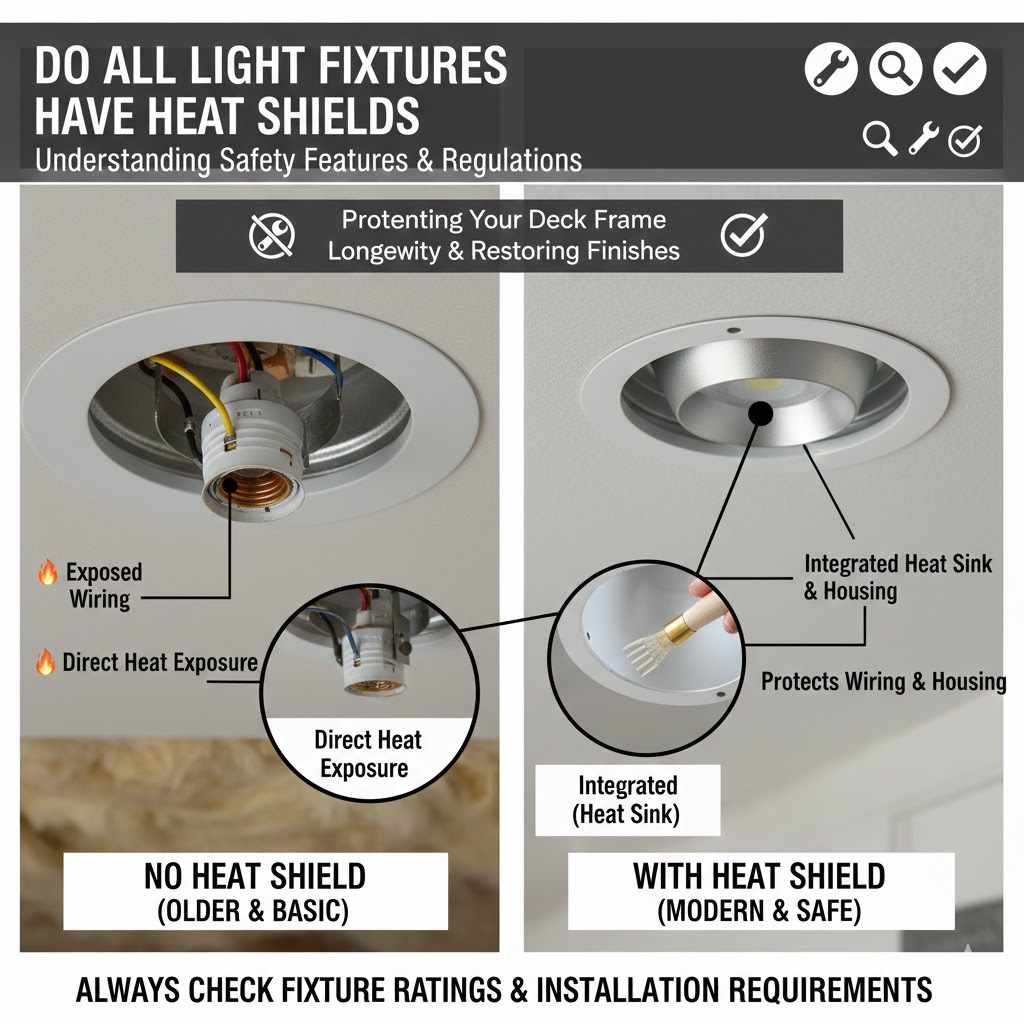
Do All Light Fixtures Have Heat Shields?
When you’re working with lights at home, a question that pops up is, Do All Light Fixtures Have a Heat Shield? This can seem a bit tricky, especially if you’re new to fixing things. Many people wonder if every light needs one. But don’t worry!
We’ll break it down simply and show you exactly what you need to know. Get ready for an easy guide that clears everything up.
Understanding Light Fixture Heat Shields
This section explains what heat shields are for in light fixtures. We will look at why they are important for safety and how they help your lights last longer. You’ll learn the basic purpose of these shields and why they are a common part of many lighting designs.
This will help you understand the next steps we’ll take.
What is a Heat Shield?
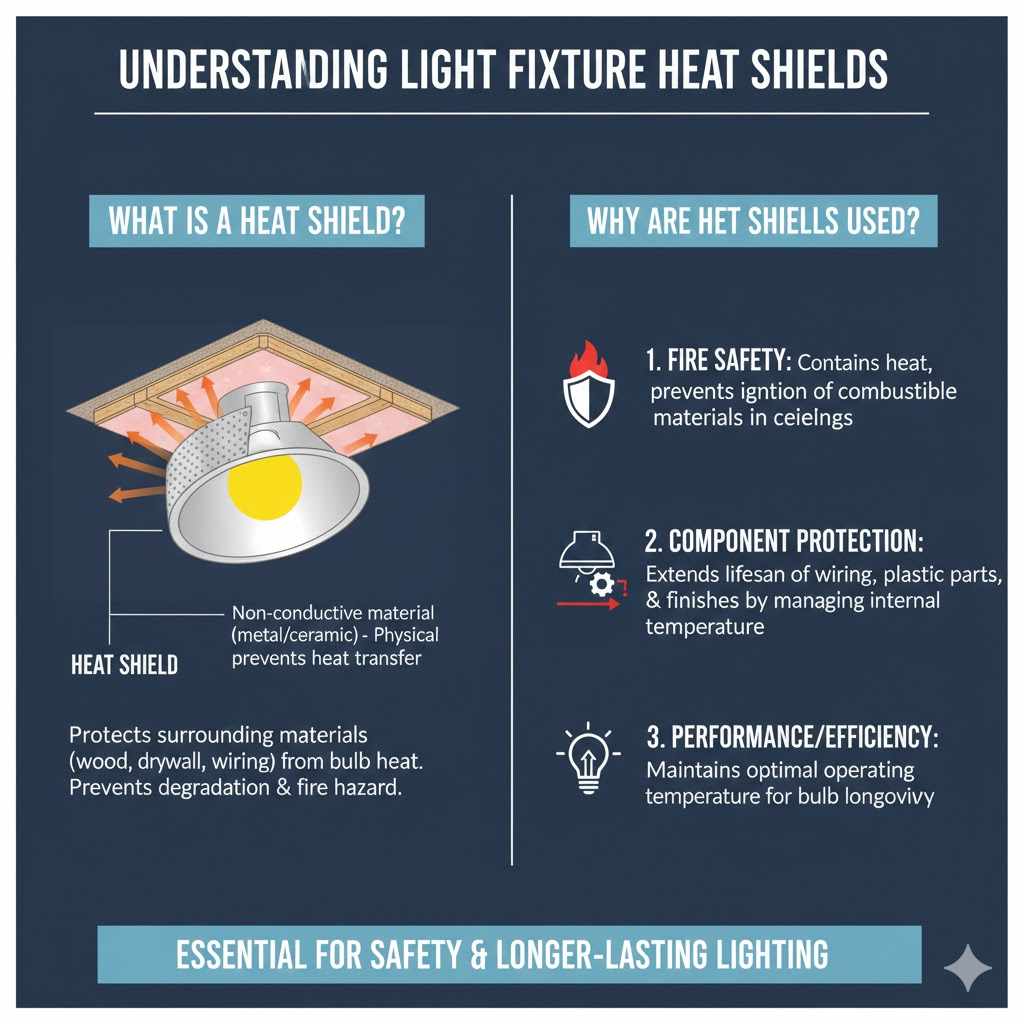
A heat shield, also known as a thermal barrier or insulation barrier, is a component designed to protect surrounding materials from heat generated by a light source. In the context of light fixtures, these shields are typically made from materials that do not conduct heat well, such as metal or specially treated ceramics. They act as a physical barrier, preventing heat from reaching areas where it could cause damage or become a fire hazard.
The primary goal of a heat shield is to manage heat safely. Light bulbs, especially older incandescent types, can get very hot. If this heat isn’t controlled, it can warm up nearby wood, drywall, or electrical wiring.
Over time, this can lead to materials degrading or, in worst-case scenarios, igniting. Heat shields are a vital safety feature that helps prevent such incidents.
Why Are Heat Shields Used?
Heat shields are used for several critical reasons. The most important is fire safety. By containing the heat produced by the bulb, they prevent it from transferring to combustible materials that might be close by within the fixture’s housing or in the ceiling.
This is particularly important for fixtures installed directly against ceiling joists or insulation.
Another reason is to protect the fixture’s components. Excessive heat can degrade the quality of plastic parts, wiring insulation, and even the metal finishes of the fixture itself. A heat shield helps to keep the internal temperature within acceptable limits, extending the lifespan of the entire light fixture and its electrical connections.
This means fewer replacements and less maintenance over time.
They also play a role in energy efficiency and light output. While not their primary purpose, managing heat can sometimes help maintain the optimal operating temperature for certain bulb types, ensuring they perform as intended. For some advanced lighting technologies, precise temperature control is key to their longevity and performance.
Do All Light Fixtures Need Heat Shields?
This part directly addresses the main question: Do All Light Fixtures Have a Heat Shield? We will explore the different types of light fixtures and bulb technologies to see when heat shields are essential and when they might be less critical. You will learn about the rules and standards that guide these decisions and what to look for when choosing or installing fixtures.
Fixture Design and Heat Management
The necessity of a heat shield often depends heavily on the design of the light fixture itself. Some fixtures are built with ample space and ventilation, allowing heat to dissipate naturally. Others are more compact or designed for specific installation environments, like recessed into ceilings with insulation nearby, where heat needs more directed management.
For instance, a simple surface-mount fixture with an open design might not require a dedicated heat shield if the bulb is far from flammable materials and air can freely circulate around it. However, a recessed can light, which is built into the ceiling cavity, is much more likely to have a heat shield. This is because these fixtures often sit close to insulation, wood framing, and drywall, all of which can be flammable.
The materials used in the fixture’s construction also play a part. Fixtures made from heat-resistant metal are generally better at handling heat than those with significant plastic components. The way the fixture is wired and sealed also impacts heat build-up.
Bulb Type and Heat Output
The type of light bulb used is a major factor in determining if a heat shield is necessary. Incandescent bulbs are known for producing a lot of heat as a byproduct of generating light. This is why older fixtures designed for incandescent bulbs almost always incorporated heat shields.
In contrast, modern LED and CFL (Compact Fluorescent Lamp) bulbs generate significantly less heat. LEDs, in particular, are very energy-efficient and convert most of their energy into light rather than heat. While they still produce some heat, it’s usually much lower and often dissipated through a built-in heat sink on the bulb itself.
This means that fixtures designed specifically for LED bulbs might not need the same kind of robust heat shield as an older incandescent fixture.
However, even with low-heat bulbs, regulations and safety standards often mandate the presence of some form of thermal protection, especially in enclosed fixtures or those installed in sensitive locations like attics or wall cavities.
Building Codes and Safety Standards
Building codes and electrical safety standards are the ultimate arbiters of whether a heat shield is required. These codes are developed to prevent fires and ensure electrical safety for occupants. Organizations like the National Electrical Code (NEC) in the United States provide guidelines for the installation of electrical fixtures.
These codes often specify requirements based on the type of fixture, its location, and the type of insulation it might be in contact with. For example, certain types of recessed lighting fixtures, known as IC-rated (Insulation Contact) fixtures, are specifically designed to be installed directly against building insulation without a heat shield being necessary, as their design inherently prevents heat transfer. Non-IC rated fixtures, however, require a clearance from insulation and may need a heat shield to maintain this clearance safely.
Electrical inspectors enforce these codes. When a new fixture is installed or a renovation is done, these codes ensure that safety features like heat shields are present where needed. It’s always best to consult local building codes or a qualified electrician to ensure compliance.
Types of Light Fixtures and Heat Shields
Here, we will look at common types of light fixtures and explain how their designs relate to the presence and type of heat shields. Understanding these differences will help you identify what’s in your home. We will cover recessed lights, track lighting, pendant lights, and more, explaining their heat shield requirements.
Recessed Lighting (Can Lights)
Recessed lights, often called “can lights,” are built into the ceiling. Because they sit within the ceiling cavity, where insulation and wooden joists are often present, heat management is crucial. Recessed fixtures are typically classified as either IC-rated or non-IC-rated.
IC-rated fixtures are designed to be installed in direct contact with insulation. They have a sealed housing and built-in thermal protection to prevent heat from reaching the insulation. While they might not have a separate, visible heat shield in the traditional sense, their construction provides the necessary thermal barrier.
Non-IC-rated fixtures must be kept a minimum distance away from insulation and combustible materials. This often means a metal collar or shield extends from the fixture housing to create a safe air gap. The purpose is to prevent the heat generated by the bulb from warming the surrounding wood or insulation to a dangerous temperature.
Many modern recessed fixtures designed for LED bulbs are IC-rated. These bulbs produce less heat, making them safer for direct contact with insulation. However, older fixtures or those designed for incandescent bulbs require careful attention to their rating and clearance requirements.
Track Lighting
Track lighting systems consist of a track mounted to the ceiling or wall, with adjustable light heads that can be moved along the track. The heat shield requirements for track lighting depend more on the individual light heads rather than the track itself.
Each light head has its own housing and design. If a light head is enclosed or designed to be positioned close to ceiling materials, it is likely to have some form of heat shielding. Many track light heads, especially those designed for higher wattage bulbs like halogens or certain LEDs, will have internal shields or heat sinks to manage temperature.
Open-style track lights where the bulb is exposed and has plenty of airflow around it might not require a prominent heat shield. However, building codes still apply regarding the proximity of the light source to combustible materials.
For example, a track light installed directly under a wooden soffit might need a specific type of fixture head that includes thermal protection to prevent overheating the wood. The manufacturer’s specifications and installation instructions are key here.
Pendant Lights and Chandeliers
Pendant lights and chandeliers are typically decorative fixtures that hang from the ceiling. Since they are usually in open spaces and not directly enclosed within ceiling cavities, the need for a heat shield is often less critical than for recessed lighting.
These fixtures usually have more airflow around the bulbs. The heat generated by the bulbs dissipates more easily into the room. However, the design of the fixture can still influence heat management.
If the decorative elements of a chandelier are made of plastic or are very close to the bulbs, they might incorporate small shields or use heat-resistant materials.
For example, a metal shade that surrounds a bulb in a pendant light can act as a heat shield, directing heat upwards or away from the fixture’s wiring and mounting points. Even in these fixtures, using bulbs that produce less heat, like LEDs, is a good practice to reduce overall temperature.
The main concern with pendants and chandeliers is often the heat affecting the mounting hardware or the electrical connections where the fixture meets the ceiling. Good quality fixtures will have these areas designed to withstand typical bulb temperatures.
Surface-Mount Fixtures
Surface-mount fixtures are attached directly to the surface of the ceiling or wall. Unlike recessed fixtures, they don’t sit inside the ceiling cavity. This often means they have better natural ventilation.
Many simple surface-mount fixtures, like flush-mount ceiling lights or sconces, may not have a distinct heat shield. Their design allows for air to circulate freely around the bulb. The fixture’s housing itself, often made of metal, can help dissipate some heat.
However, enclosed surface-mount fixtures, such as certain vanity lights or ceiling domes, might incorporate some form of heat management. If the enclosure is made of plastic, or if it seals the bulb closely, a heat shield or heat-resistant materials might be used within the design to protect the plastic or prevent excessive heat build-up.
As with all lighting, the type of bulb is important. Using an LED bulb in a surface-mount fixture that wasn’t specifically designed with a heat shield is generally safe because LEDs run much cooler than older bulb types.
Heat Shield Materials and Construction
This section will detail the common materials used for heat shields and how they are constructed within light fixtures. Understanding these materials helps appreciate their function. We will discuss metals, special coatings, and integrated designs.
Common Shielding Materials
Heat shields are typically made from materials that can withstand high temperatures and are poor conductors of heat. The most common material is metal, usually aluminum or steel. These metals are shaped into plates or cones that surround the bulb or are placed between the bulb and sensitive parts of the fixture.
Aluminum is often preferred because it’s lightweight and an excellent conductor of heat, meaning it can absorb heat from the bulb and then radiate it away into the surrounding air more efficiently than some other metals. Steel is also used, particularly for its durability and higher melting point.
In some fixtures, especially those intended for high-temperature applications or requiring specific electrical isolation, ceramic or mica-based materials might be used. These are excellent electrical insulators and also have good thermal resistance. They are often used in conjunction with metal components for added protection.
Manufacturers also use specially treated materials or coatings on metal parts to enhance their heat resistance and reflectivity, helping to bounce heat away from critical areas.
Integrated vs. Separate Heat Shields
Heat shields can be either separate components installed within the fixture or integrated into the fixture’s overall design. Understanding this distinction helps in identifying them.
Separate heat shields are often visible as distinct metal plates or cones. In recessed fixtures, you might see a metal baffle or housing that sits between the bulb and the ceiling insulation. These are clearly identifiable components added for thermal protection.
Integrated heat shields are built into the fixture’s structure. For instance, an IC-rated recessed fixture’s entire housing might be designed to prevent heat transfer, rather than having a single, added shield. The metal used for the fixture itself might be thicker or shaped in a way that provides thermal insulation.
Similarly, LED bulbs often have built-in heat sinks, which are a form of integrated heat management.
The choice between integrated and separate designs depends on the fixture type, its intended use, and manufacturing costs. Both aim to achieve the same goal: safe temperature management.
Testing and Certification
To ensure heat shields and the fixtures they are part of are effective and safe, they undergo rigorous testing and certification processes. Agencies like Underwriters Laboratories (UL) or ETL (Intertek) test electrical products to ensure they meet safety standards.
When a fixture is certified, it means its design, including any heat shielding, has been evaluated for fire hazards, electrical shock risks, and overall safety. The UL mark or ETL mark on a fixture is an indicator that it has met these safety requirements.
These certifications often include specific guidelines for installation, such as clearance requirements from insulation or other building materials. Following these guidelines is crucial for maintaining the safety provided by the heat shield.
For example, a fixture marked “IC” has been tested for direct contact with insulation, meaning its heat shield (integrated or separate) is sufficient to prevent the insulation from overheating. A non-IC fixture, even with a heat shield, requires clearance.
When Do You Need To Worry About Heat Shields?
This section will provide practical advice on when you should pay attention to heat shields. We will discuss common scenarios and red flags. You’ll learn what to do if you suspect a problem with a fixture’s heat shielding, ensuring your home remains safe.
Installation in Attics and Insulated Ceilings
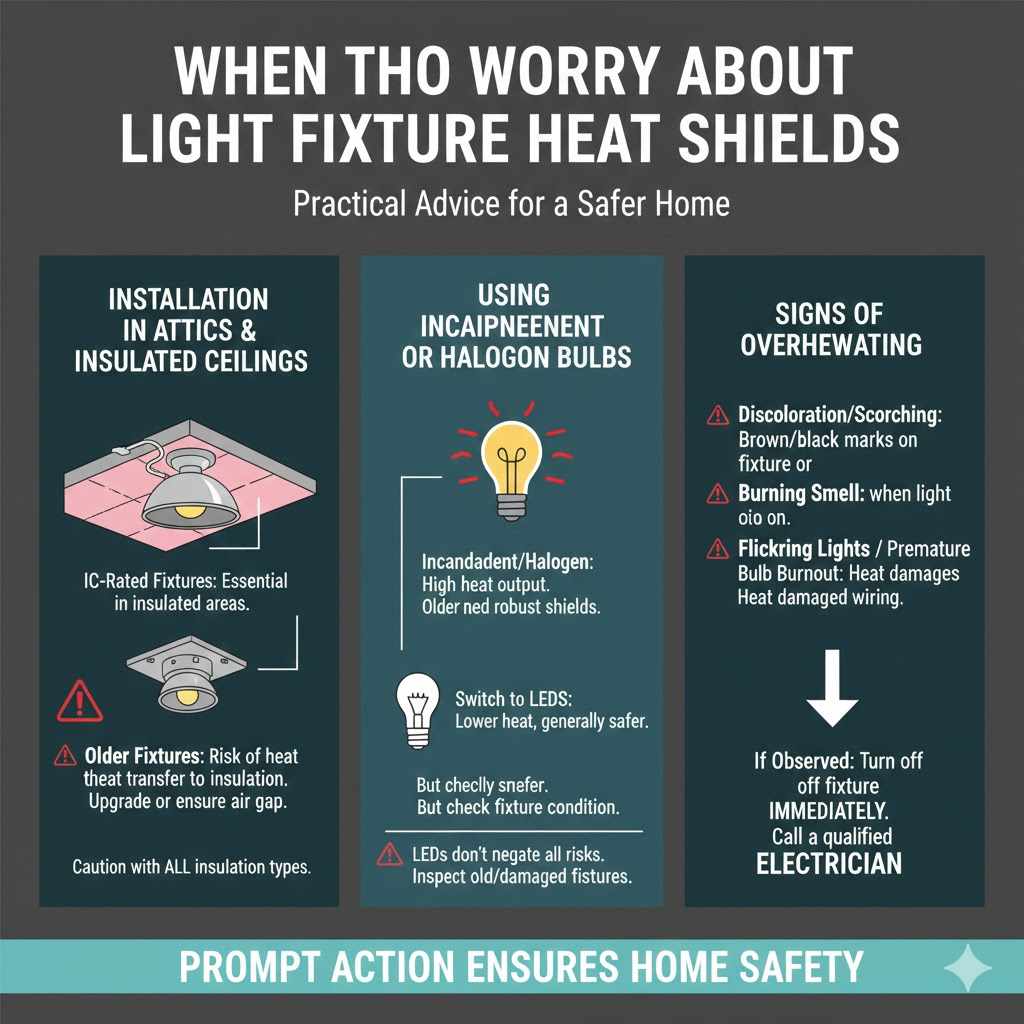
If you are installing or have fixtures in attics or ceilings that are heavily insulated, this is where heat shields are most critical. As mentioned earlier, recessed lights in these areas must be IC-rated or have adequate clearance maintained by a heat shield.
If you have older, non-IC-rated recessed lights in an insulated ceiling, you might be at risk. The heat from the bulbs can transfer to the insulation, potentially causing it to degrade or even ignite. In such cases, you might need to upgrade the fixtures to IC-rated ones or ensure there is a safe air gap around the existing fixtures.
The type of insulation also matters. Some modern insulation materials are less flammable than older ones, but the risk of heat damage or component degradation still exists. Always err on the side of caution when dealing with heat and insulation.
Using Incandescent or Halogen Bulbs
If your light fixtures use incandescent or halogen bulbs, you should pay more attention to heat shields. These bulb types produce a significant amount of heat. Older fixtures were designed with this heat output in mind.
If you have an older fixture that you suspect has inadequate heat shielding and you are using incandescent bulbs, it is a good idea to consider switching to LED bulbs. LEDs produce far less heat and are generally safer for use in a wider range of fixtures, even those without robust heat shields.
However, simply switching to LEDs does not automatically make an unsafe fixture safe. If the fixture itself is old or damaged, or if it’s installed in a sensitive location, it’s always best to have it inspected by a qualified electrician.
Signs of Overheating
There are several signs that a light fixture might be overheating, indicating a potential issue with its heat shield or overall design.
One sign is discoloration or scorching on the fixture’s housing, the surrounding ceiling material, or even the bulb itself. If you notice brown or black marks, it’s a strong indicator of excessive heat.
Another sign is a burning smell coming from the fixture, especially when it’s turned on. This smell can be due to plastic components or insulation materials beginning to degrade under heat.
Flickering lights, premature bulb burnout, or intermittent operation can also be symptoms of overheating. Excessive heat can damage the internal wiring and components of the fixture, leading to these problems.
If you observe any of these signs, turn off the light fixture immediately and have it inspected by a qualified electrician. Do not attempt to fix it yourself unless you have the necessary expertise.
Frequently Asked Questions
Question: Do all light bulbs come with heat shields?
Answer: No, light bulbs themselves do not typically come with heat shields. Heat shields are part of the light fixture’s design, not the bulb. While some LED bulbs have built-in heat sinks, these are designed to manage the bulb’s own heat, not act as a shield for the fixture.
Question: Can I remove a heat shield if my light fixture has one?
Answer: It is strongly advised not to remove a heat shield. Heat shields are a safety feature installed by the manufacturer to prevent fires and damage. Removing one could make the fixture unsafe to use, especially if it’s installed near flammable materials.
Question: Are LED lights safe in any fixture without a heat shield?
Answer: While LEDs produce less heat, safety regulations still apply. If a fixture is installed near insulation or combustible materials, it may still require an IC rating or proper clearances, regardless of the bulb type. Always check the fixture’s rating and installation instructions.
Question: What happens if a light fixture overheats?
Answer: Overheating can cause damage to the fixture’s components, wiring, and surrounding building materials. In severe cases, it can lead to electrical fires, posing a significant safety risk to your home and occupants.
Question: Where can I find information about my light fixture’s heat shield requirements?
Answer: The manufacturer’s label on the fixture or its original packaging will typically indicate its rating (e.g., IC-rated) and any specific installation requirements. If this information is missing or unclear, consult a qualified electrician.
Summary
So, do all light fixtures have a heat shield? Not necessarily in every single case, but many do, especially those designed for enclosed spaces or to be near insulation. The need for a heat shield depends on the fixture’s design, the type of bulb used, and building codes. Modern LED bulbs generate less heat, but safety standards remain important for all fixtures to prevent overheating and fire risks.
Always check fixture ratings and consult an electrician if you have concerns.