Best Diesel Exhaust Materials for Rust Prevention (2026): Research Shows
For diesel exhaust rust prevention, choose 409 stainless for mixed-use trucks, 304 stainless for heavy salt or coastal exposure, and aluminized steel only for dry, low-cost applications. Avoid plain carbon steel if you want the longest service life. Wrong material choice can mean pinholes, clamp leaks, exhaust rattles, and a replacement bill that arrives years early. This guide compares 409, 304, aluminized, and coated steel by heat tolerance, corrosion resistance, and typical diesel duty cycle.
Quick comparison
| Product | Badge | Best for | Price | ||
|---|---|---|---|---|---|
 | 2.5 Inch T304 Stainless Steel Exhaust Pipe KitYOLANDO | Our pick | 2.5-inch · T304 stainless · 16-piece tubing kit | $159.99 Price as of 3 Nov 2026 | View |
 | Floshine 409 Stainless Steel Diesel 2.5”inlet/2.5”outletFloshine | Budget pick | 2.5-inch · stainless steel · X-pipe crossover | $26.99 Price as of 3 Nov 2026 | View |
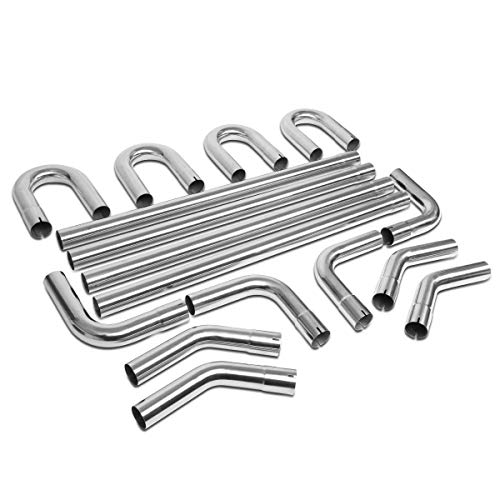 | DNA Motoring ZTL-25SS 16 Pcs 2.5 Inches Stainless Steel DIYDNA MOTORING | Also great | 2.5-inch · stainless steel · 16-piece bend kit | $175.99 Price as of 3 Nov 2026 | View |
 | FGJQEFG 4 Inch Stainless Steel Polished Diesel Exhaust ElbowFGJQEFG | Upgrade pick | 4-inch inlet · stainless steel · polished elbow tip | $69.99 Price as of 3 Nov 2026 | View |
The right choice depends on where corrosion starts and how the truck runs. Short trips, road salt, DPF heat, and SCR chemistry all push the answer in different directions.
How we chose
This comparison weighs four things: rust resistance in salt and condensate, heat tolerance downstream of the turbo, weldability and fitment for custom or replacement work, and cost versus service life. It also separates use cases, because a commuter in a snow belt does not need the same material as a tow rig or a weekend high-performance build.
Diesel exhaust material matrix
| Material | Rust resistance | Heat tolerance | Weldability | Cost tier | Best diesel use case |
|---|---|---|---|---|---|
| Mild carbon steel | Poor; fast external rust and internal condensate damage | Moderate, but short service life in corrosive duty | Easy to fabricate | Lowest | Legacy baseline, temporary repairs, dry-climate low-cost work |
| Aluminized steel | Better than plain steel, but vulnerable in harsh salt exposure | Good for common exhaust temperatures | Good | Low to mid | Budget replacement for mild climates and lighter salt exposure |
| 409 stainless | Moderate to good | Good for most diesel exhaust sections | Good | Mid | Best all-around value for mixed-duty diesel trucks |
| 304 stainless | Very good; stronger choice for salt and condensate | Very good, but downstream heat and chemistry still matter | Very good | High | Snow-belt and coastal use, longer-life systems |
| 316 stainless | Excellent; strongest common stainless option here | Very good | Very good | Higher | Severe salt, coastal spray, premium long-life systems |
| Titanium | Virtually immune to rust | Excellent for demanding builds | Specialized | Premium | Extreme premium or high-performance builds where weight matters |
Stainless steel exhaust tubing needs at least 10.5% chromium to qualify as stainless, and that chromium forms a protective oxide layer when heated. That is why stainless holds up better than carbon steel, but it can still stain, pit, or corrode at welds, seams, hangers, and low spots.
409 stainless: best for mixed-duty diesel exhaust
409 stainless is often described as a strong all-around value for many diesel exhausts because it balances corrosion resistance, heat tolerance, and cost. It is a practical step up from aluminized steel, especially when the truck sees mixed highway, towing, and winter use without full coastal exposure.

Most exhaust materials must resist high temperature oxidation, condensate corrosion, and salt corrosion. Since the mid-1990s, plain carbon and low alloy steels have largely been replaced by stainless steel downstream of the exhaust manifold or turbocharger, and 409 is a common fit for that role.
Why 409 is the common upgrade
409 stainless gives you better life than mild steel and usually better value than jumping straight to 304. It fits the common diesel pattern of heat cycles, road spray, and occasional short trips, where the pipe needs real corrosion resistance but the whole system does not need premium marine-grade protection.
A common first-timer mistake is buying by pipe diameter alone and ignoring the environment. A 2.5-inch 409 section can be the smarter buy for a tow truck that sees winter roads, while a cheaper coated-steel part may look fine on paper and still fail early at a hanger or weld.
Where 409 still needs help
409 stainless is not a cure-all. It can still discolor, stain, or corrode where road salt sits in seams and where exhaust condensate collects in cooler downstream sections, especially after repeated short trips that never let the system dry out fully.
Regular washing helps remove road salt and mud, and coatings or sprays can slow corrosion on the outside of the system. They do not replace a better material choice when the exhaust spends its life in severe salt, condensate, or high-heat service.
Best use case
Choose 409 for mixed-duty trucks, moderate winter exposure, and owners who want a long-lasting replacement without paying premium stainless prices. It is also a sensible choice for many fleet trucks that need dependable service life and easy repairability.
- Stainless steel construction for corrosion resistance
- Can be welded or clamped in place
- Made for matching pipe diameters
Floshine 409 stainless X-pipe: best for budget crossovers
This Floshine crossover fits owners who need a simple stainless replacement for a matching-diameter diesel exhaust section. Based on the manufacturer’s specs and published product details, it suits a budget-conscious custom exhaust path where a weldable or clampable crossover matters more than premium material grade.
Its main strength is the stainless construction for corrosion resistance, which makes more sense than plain steel for a part that sits under the truck and sees road spray. The drawback is that it is a focused crossover piece, not a full-system solution, so you still need the rest of the exhaust matched to the truck’s exposure level.
If you are replacing a rust-prone crossover section on a work truck, this kind of part can extend service life without stepping into higher-cost tubing kits. It is not the best answer for severe coastal salt or for owners who want a complete long-life exhaust from front to back.
304 stainless: best for high-salt exposure
304 stainless is often the stronger corrosion choice when road salt, slush, or coastal air dominate the truck’s life. It is one of the premium stainless exhaust choices, and it gives more headroom than 409 where condensate and salt attack the system at the same time.
Stainless steel is more resistant to condensate and salt corrosion than carbon steel, but stainless is not immune. The practical advantage of 304 is that it buys more margin in places where rust starts first: clamps, welds, seams, hangers, and low spots that stay wet after the truck is parked.
Why 304 resists rust better
304 belongs to the austenitic stainless family and is a common upgrade when corrosion exposure is severe. Because stainless forms a protective chromium oxide coating when heated, 304 generally outlasts lower-grade steel in wet, salty service, especially after the first few winters.
Stainless steel tubing is often used downstream of the exhaust manifold or turbocharger, where the material sees both heat and moisture. That makes 304 a stronger fit for snow-belt trucks that idle, make short trips, and spend time on treated roads.
Where 304 pays off most
Use 304 when replacement labor is expensive, the truck stays in a salt belt, or the exhaust sits close to the road and traps spray. It is also a good pick for coastal use where salt air reaches hangers, brackets, and seams from every angle.
Say your 3/4-ton diesel spends weekdays on salted highways and weekends towing a camper. A 304 system can make sense because the truck sees both heat and chemical exposure, and the added upfront cost is easier to justify when you want to avoid another exhaust job too soon.
Limits under heavy heat and chemical exposure
304 is strong, but it is not perfect. Active DPF regeneration can produce exhaust temperatures as high as 800°C in parts of the system, and urea SCR systems add exposure to urea decomposition products that can stress some common stainless steels, including type 304, in high-temperature environments.
That does not mean 304 should be avoided. It means the material choice should reflect where the part sits. Downstream sections that see repeated regen heat, chemistry, and condensate need a more careful look than a basic muffler replacement on an older truck.
Aluminized steel: best budget upgrade
Aluminized steel is a sensible low-cost step up from mild carbon steel, especially where winters are mild and the truck sees limited salt exposure. It uses a hot-dipped aluminum coating on ferrous metal, which improves corrosion resistance versus plain carbon steel.
That said, aluminized steel still loses ground in harsh road-salt environments. It can work well as a budget replacement, but it does not belong in the same durability class as stainless when the truck lives in a snow belt or near the coast.
What the coating does
The aluminum layer slows oxidation and buys time against surface rust. In ordinary dry service, that can be enough to keep the system functional for a reasonable period, especially on shorter, simpler exhaust runs.
The limits show up at welds, cut edges, and impact points. Once the coating is breached, corrosion can move faster, and exhaust condensate inside the pipe can keep feeding the problem from the inside.
Where it works well
Aluminized steel fits dry climates, lower annual mileage, and owners who need an economical replacement on a truck that is not exposed to repeated road salt. It is also a reasonable choice when the goal is to restore function on a vehicle with modest remaining service life.
Why it still fails in salt-heavy service
Road salt corrosion is a major external driver, especially in snow-belt and coastal regions. In those places, aluminized steel can still fail early at clamps, seams, and low spots because salt holds moisture against the coating and keeps the surface wet long after the truck is parked.
Do not treat it as a long-life answer for a winter truck. It is cheaper than stainless, but the cheap part can turn into repeat labor if the truck sees heavy salt and short winter trips.
Titanium: best for extreme premium builds
Titanium is the premium option for owners who want extreme rust resistance and major weight savings. Titanium exhaust systems are described as having virtually complete immunity to rust and corrosion, and they weigh approximately 40% less than comparable stainless steel systems.
That performance comes with a high price and more specialized fabrication needs. For most diesel owners, the extra cost is hard to justify unless the build is high-performance, weight-sensitive, or intended to stand apart from standard replacement work.
Why titanium resists rust
Titanium does not rely on the same corrosion behavior as carbon steel or stainless. It holds up exceptionally well against moisture and salt, which is why it can make sense in premium or especially demanding applications.
Weight and heat advantages
The weight reduction is real and useful where unsprung or overall vehicle mass matters. It also handles demanding exhaust conditions well, which is part of why it appears in niche performance systems rather than ordinary replacement jobs.
Still, DPF regeneration heat and SCR chemistry do not make titanium the default answer for diesel owners. The material is excellent, but the cost and fabrication complexity put it far outside the normal value range for a work truck.
Why most diesel owners do not need it
Most trucks need a durable, repairable exhaust, not a boutique system. If the truck is a daily hauler, tow rig, or fleet vehicle, 409 or 304 will usually make more sense because they solve the rust problem without turning the exhaust into a premium project.
Which one should you buy?
If you want the shortest path to the right material, match the exhaust to the truck’s exposure first and the budget second. The best answer changes with salt, trip length, heat load, and whether the truck spends most of its life under load or in cold start cycles.
Best pick for snow-belt trucks
Choose 304 stainless if the truck lives where road salt is common and the replacement is meant to last. 409 stainless is still a smart value pick for mixed-duty snow-belt use, but 304 gives you more margin where hangers, seams, and low spots stay wet.
Best pick for coastal use
Choose 304 stainless first, and consider 316 stainless when the salt exposure is severe enough that you want the strongest common stainless option in this comparison. Coastal air and spray punish the same weak points that road salt does, but they do it year-round.
Best pick for towing and fleet duty
Choose 409 stainless for the best balance of price and durability on trucks that see regular towing, idling, and mixed-road use. If the fleet runs in severe salt, move up to 304 where repeat downtime costs more than the material upgrade.
Best pick when budget matters most
Choose aluminized steel only if the truck is in a dry or low-salt area and you need a lower upfront cost. Avoid plain carbon steel unless you are comparing against a legacy baseline or a temporary repair, because it has poor corrosion resistance when exposed to road salt and exhaust condensate.
Picture a 6.7L diesel that makes short school-run trips in January and then sits overnight on salted pavement. The same pipe may look fine on the outside but rot at the clamp and low spot first, because condensate and salt work together there long before the middle of the tube gives up.
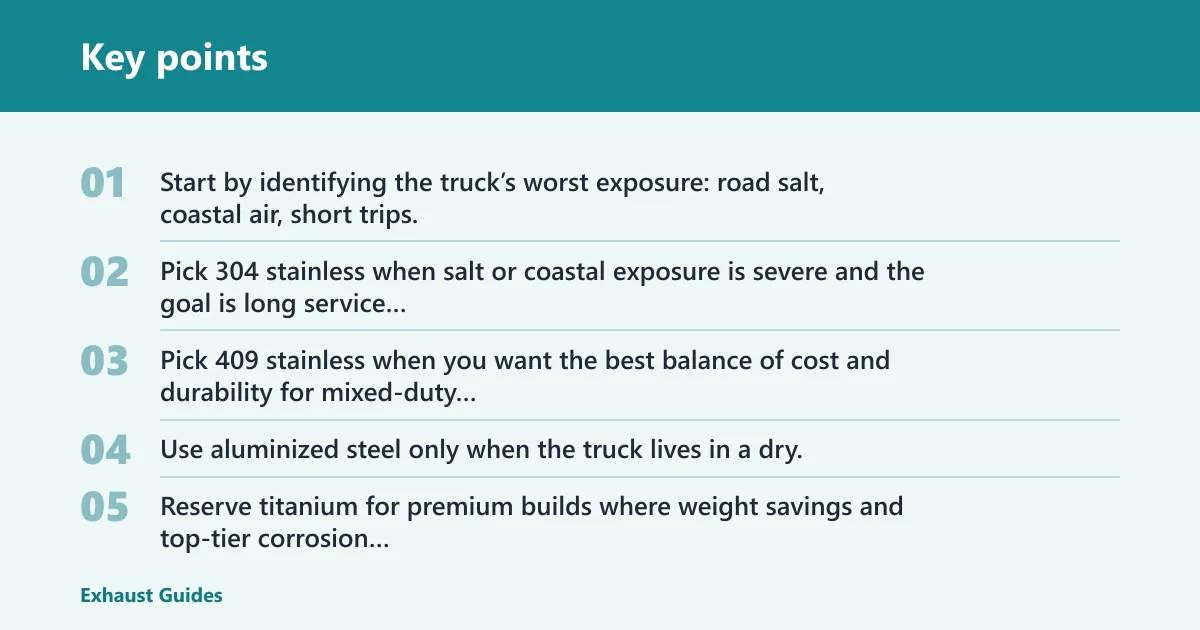
- Start by identifying the truck’s worst exposure: road salt, coastal air, short trips, or heat-heavy duty.
- Pick 304 stainless when salt or coastal exposure is severe and the goal is long service life.
- Pick 409 stainless when you want the best balance of cost and durability for mixed-duty use.
- Use aluminized steel only when the truck lives in a dry, low-salt setting and budget is the main concern.
- Reserve titanium for premium builds where weight savings and top-tier corrosion resistance justify the expense.
Regular washing helps remove road salt and mud, and coatings or sprays can slow corrosion on the outside of the system. They do not replace a better material choice when the exhaust spends its life in severe salt, condensate, or high-heat service.
What parts rust first? Clamps, welds, seams, hangers, low spots, and cooler downstream sections are usually the first failure points. Those are the places where water sits, salt accumulates, and heat cycles keep opening small defects until they become leaks.
Frequently asked questions
What exhaust material resists rust best on a diesel?
Titanium offers the strongest rust resistance in this comparison, but it is a premium niche choice. For most diesel owners, 304 or 316 stainless is the practical answer, with 316 giving the best common stainless margin in severe salt or coastal service.
Is aluminized steel good enough for a diesel exhaust?
It can be good enough for dry, low-cost use, and it is better than plain carbon steel. It is not the best pick for harsh road-salt or coastal environments, where the coating still has to fight repeated moisture and salt exposure.
Does stainless steel rust on diesel exhaust systems?
Yes, stainless can still stain, pit, or corrode, especially at welds, seams, clamps, hangers, and low spots. It resists rust much better than carbon steel, but condensate, salt, and high heat can still wear it down over time.
What grade of stainless steel is best for exhaust pipes?
For many diesel exhausts, 409 stainless is the best value. For severe salt or coastal exposure, 304 stainless is the stronger all-around choice, and 316 is the premium stainless option when the environment is especially harsh.
Should I use 409 or 304 stainless for a diesel exhaust?
Use 409 for mixed-duty trucks when you want solid durability without jumping to the highest cost. Use 304 when the truck sees heavy road salt, coastal air, or longer replacement intervals that justify the higher upfront price.
Can DPF regeneration make exhaust material requirements different?
Yes. Active DPF regeneration can produce exhaust temperatures as high as 800°C in parts of the system, which raises the durability demand downstream of the turbo. That heat, plus SCR chemistry, makes material choice more important than it was on older exhaust layouts.
What parts of a diesel exhaust system rust first?
Clamps, welds, seams, hangers, and low spots usually fail first because they trap moisture and salt. Cooler downstream sections are also vulnerable because they stay damp longer, especially after short trips that never fully dry the exhaust.
Is titanium worth it for a diesel exhaust?
Usually no. Titanium is excellent for rust resistance and weight reduction, but the cost is high and the fabrication demands are greater. It makes sense for premium or high-performance builds, not for most daily-driven diesel trucks.