Why a Catalytic Converter Rattles and What It Means
A catalytic converter rattle usually means either a loose heat shield or a broken catalyst core; if it changes with RPM, treat it as a converter problem, and if it only happens over bumps, suspect external exhaust parts. Ignoring it can lead to a louder exhaust, a clogged converter, drivability problems, and a failed emissions test. This guide shows how to separate internal converter damage from bracket, hanger, and shield noise, then judge how urgent the repair is.
What a catalytic converter rattle means

- Solves terrible rattling on exhaust systems
- Multiple holes allow height adjustment for different vehicles
- EPDM rubber handles -40°F to +248°F temperatures
The converter’s job is “the catalytic purification of exhaust gases.” Inside the housing is a ceramic or metal monolith, often described in patent language as a “substantially cylindrical monolithic catalyst carrier” with “axially extending passages” for flow. When that substrate cracks, breaks, or collapses, loose pieces can shift and make a metallic rattle. (OSTI)
That internal failure is different from a loose shell or bracket noise. A damaged monolith tends to rattle in step with engine vibration, exhaust pulses, or changes in engine speed. If the noise gets louder with throttle input, or if it changes from a faint buzz to a sharper metallic clatter, treat it as more than a cosmetic sound.
The housing itself also has an exhaust gas supply connection and a discharge connection, and the support system inside can include a “radially prestressed compacted metal mesh,” an “elastic support,” and an “elastic seal ring” at the ends. Those parts keep the carrier centered. If the carrier loses that support, the fragments can move and strike the housing.
How the monolith fails inside the converter
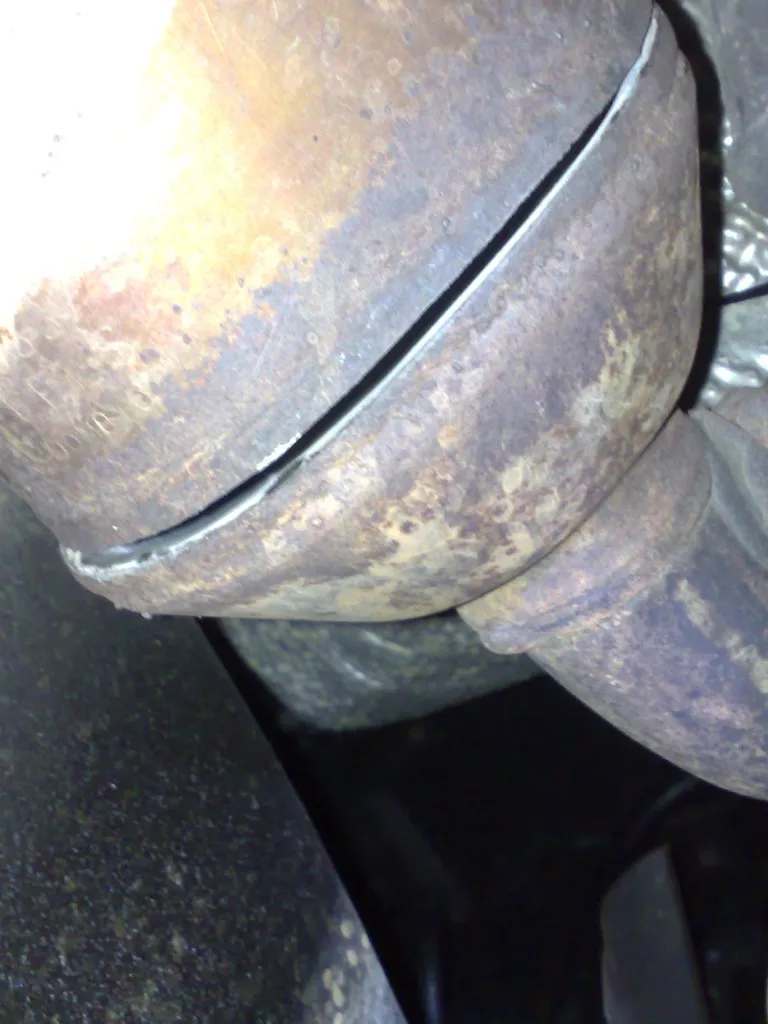
The monolith can crack from age, overheating, impact, or long-term vibration. Once the honeycomb channels break apart, the pieces may shift freely at startup, while idling, or during a quick blip of the throttle. A collapsed substrate can narrow the exhaust path and increase backpressure.
Why loose fragments make a metallic rattle
Loose ceramic or metal fragments bounce inside the shell like small stones in a can. The sound is often sharper than a shield buzz. It may show up as a light tick at idle, then become a heavier clatter when the engine speed rises, because exhaust flow and vibration both increase.
When the sound points to a real converter problem
If the rattle follows engine speed, comes from the converter body itself, or is paired with reduced power, suspect internal damage first. If the noise is strongest only on rough roads or over bumps, the source is more likely external. That distinction matters because the repair path is very different.
Catalytic converter rattle vs other exhaust noises
External exhaust parts cause a lot of false alarms. A heat shield can vibrate at idle or on bumps. A flex pipe can make a metallic rattle or buzz. Exhaust hangers and mounts can let the system touch the body or subframe. Those noises can sound close to a failed converter, but the cause is outside the brick.
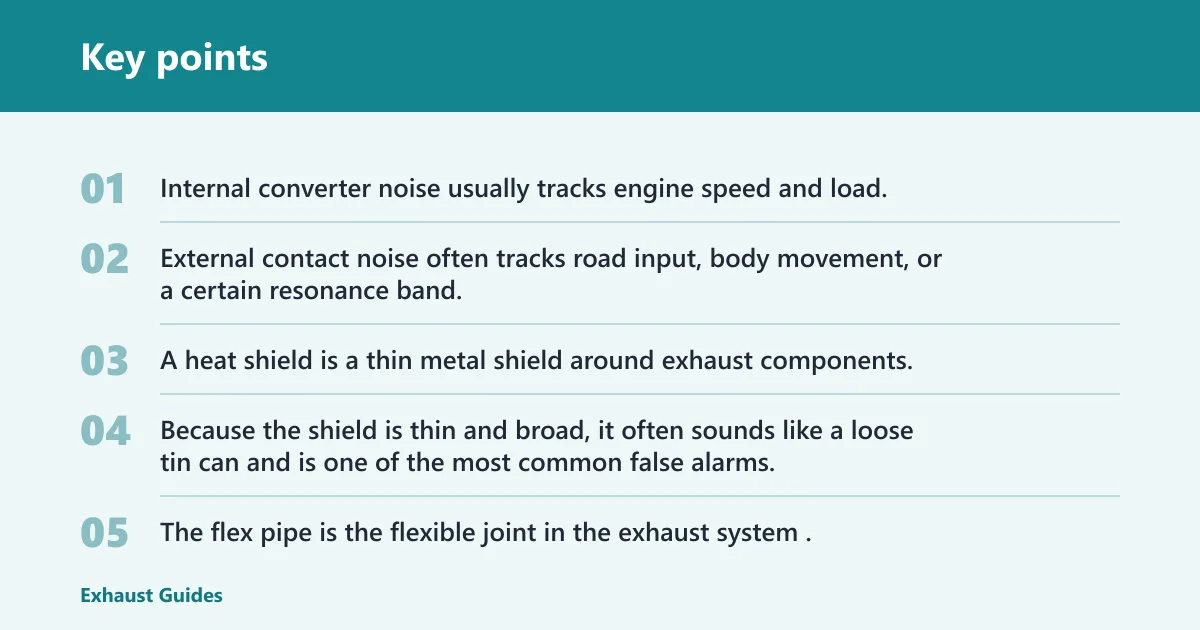
A quick listen helps. Internal converter noise usually tracks engine speed and load. External contact noise often tracks road input, body movement, or a certain resonance band. If the sound changes when you tap the exhaust shell lightly with a gloved hand or push on the tailpipe, that points away from the monolith.
Heat shield vibration
A heat shield is a thin metal shield around exhaust components. It can buzz, ring, or rattle at idle, on startup, or over bumps. Because the shield is thin and broad, it often sounds like a loose tin can and is one of the most common false alarms.
Exhaust flex pipe noise
The flex pipe is the flexible joint in the exhaust system. If the braid or inner joint fails, it can produce a metallic buzzing or rattling sound that may change with engine speed. That noise can mimic converter rattle, especially when the engine is revved in place.
Exhaust hangers and mounts
Rubber hangers and mounts support the exhaust and keep it off the body and subframe. If a hanger tears or a mount loosens, the pipe can shift and strike nearby metal. The result is often a rattle, clunk, or buzz that shows up on bumps or during acceleration.
Rattle source vs. what it means
| Symptom pattern | Likely cause | Urgency | Simple check | Next step |
|---|---|---|---|---|
| Cold-start rattle | Loose monolith, shield, or hanger that shifts before heat expansion | Medium | Listen for the first 30-60 seconds after startup | Inspect shield and mounts, then read stored and pending codes |
| Idle-only rattle | Heat shield vibration or exhaust contact at low engine speed | Low to medium | Rev slightly to see whether the sound fades | Check shields, hangers, and pipe clearance |
| Bump-dependent rattle | Loose shield, hanger, or pipe contact | Low to medium | Drive slowly over a rough surface and listen for change | Inspect hardware and body clearance first |
| Metallic buzzing at 2,000 rpm | Resonance from a cracked monolith or flex pipe | Medium to high | Hold engine speed steady near 2,000 rpm in park if safe | Check for converter damage and flex pipe failure |
| Smell plus rattle | Overheating, exhaust leak, or efficiency loss | High | Watch for sulfur or raw exhaust odor | Get a shop diagnosis soon |
| Check-engine-light present | Possible efficiency fault, often with oxygen sensor code logic | Medium | Read stored and pending codes with an OBD2 scan tool | Confirm whether the issue is mechanical or emissions-related |
| Restricted acceleration | Collapsed substrate causing backpressure | High | Notice whether the engine feels strangled under load | Stop hard driving and seek diagnosis |
| Exhaust contact noise | Pipe, shield, or mount touching the body or subframe | Low to medium | Look for shiny rub marks or displaced hangers | Repair the contact point before replacing the converter |
Why does it rattle at startup?
Startup rattle is often caused by loose parts moving before heat expansion tightens the exhaust system. A converter with a cracked monolith may rattle most on a cold start, but a shield, hanger, or flex pipe can do the same. The key clue is whether the sound fades as the exhaust warms.
Cold-start looseness and heat expansion
Cold metal has more play at its mounts and joints. Once the exhaust heats up, parts expand and the clearance can change. If the rattle fades after a minute or two, external hardware is a strong suspect, though a damaged converter still stays on the list if the noise returns under load.
Idle-only versus engine-speed rattle
An idle-only rattle often points to a shield or mount that resonates at low frequency. A sound that appears at one specific engine speed, such as around 2,000 rpm, suggests resonance in the exhaust shell, flex pipe, or substrate. A monolith failure is more likely when the sound follows revs instead of road surface.
What a bump-dependent rattle suggests
If the noise shows up mostly on bumps, speed humps, or rough pavement, start with the external exhaust first. That pattern fits a loose shield, broken hanger, or pipe touching the body. A broken catalyst core can rattle too, but bumps alone usually do not point to it.
Say your car makes a light metallic tick only when leaving a driveway, then goes quiet at idle in park. That pattern fits a shield or hanger more than a failed core. Suppose the same car then starts buzzing at 2,000 rpm under light throttle; the diagnosis shifts toward internal converter damage or a flex pipe issue.
Can you still drive with a rattling converter?
Sometimes, yes. A light rattle with no loss of power and no strong odor is often a monitoring issue rather than an emergency. The risk rises fast if the sound grows louder, the car loses acceleration, or the exhaust smells hot or sulfur-like. Those signs can mean restriction or a converter that is breaking down further.
Low-risk symptoms
If the car drives normally, the noise is intermittent, and the only clue is a light buzz at idle or over bumps, you may have time for a planned inspection. That said, the sound should not be ignored, because loose fragments can keep breaking apart and the repair can grow more expensive.
Warning signs of restriction or collapse
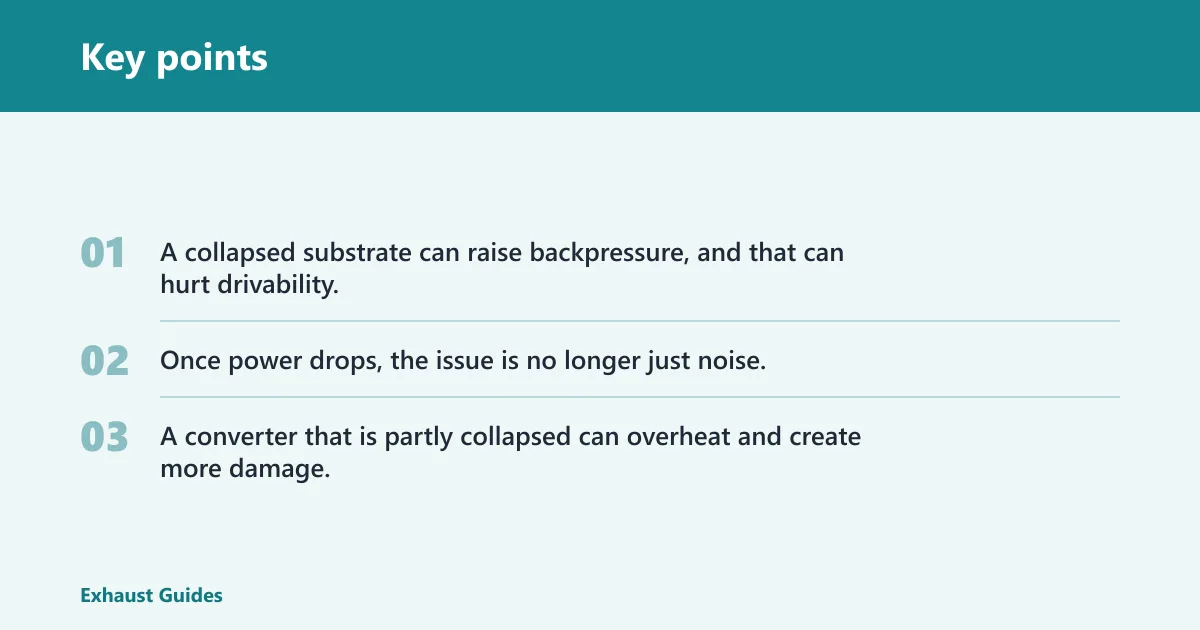
A collapsed substrate can raise backpressure, and that can hurt drivability. Common signs include weak acceleration, trouble climbing hills, higher-than-normal exhaust heat, and a sound that changes from rattle to a muffled restriction. Once power drops, the issue is no longer just noise.
When to stop driving and get a shop diagnosis
Stop driving hard and schedule diagnosis if the rattle gets louder, the check-engine light comes on, the car smells strongly of exhaust, or acceleration falls off. A converter that is partly collapsed can overheat and create more damage. That is the point where replacement is often the common fix.
How to check for the real cause
-
Listen at idle, startup, and bumps.
Start with the engine cold, then listen at idle, during a short throttle blip, and over a few slow bumps. Note when the rattle appears and whether it follows engine speed or road input. That pattern is the fastest way to separate internal damage from external vibration.
-
Scan for codes.
Use an OBD2 scan tool to read stored and pending codes. Oxygen sensor data and P0420-related diagnostics can point to reduced converter efficiency, but they do not prove the physical rattle source. A code check helps separate a mechanical noise from an emissions fault.
-
Check clearances and hardware.
Look for loose heat shields, torn exhaust hangers, bent brackets, and shiny rub marks where the pipe may touch the body or subframe. A flashlight and a small pry bar are often enough for this first pass. If hardware is broken, fix that before condemning the converter.
-
Judge the driveability.
If the engine feels restricted, the sound changes under load, or the car struggles to accelerate, the substrate may be partially collapsed. That calls for a shop diagnosis sooner rather than later, because backpressure can climb and the converter can finish breaking apart.
A common mistake is assuming the catalytic converter is failing when the real culprit is a loose heat shield that buzzes only at idle. If the shield clip is loose or the rear hanger has torn, the sound can be identical from the driver’s seat. The cheap check is to find whether the noise follows bumps or engine speed before any parts are ordered.
Does a rattling converter affect emissions?
Yes, it can, but the result depends on what failed and how the vehicle is tested. A rattling converter may still pass if efficiency remains within limits, or it may fail if the substrate damage is severe. Noise alone does not decide the result, and state rules vary.
What oxygen sensor codes can tell you
Upstream and downstream oxygen sensors help the engine computer judge converter efficiency. If the converter stops storing oxygen properly, the computer may flag a P0420-related fault. That points to low efficiency, not usually to the physical source of the rattle itself.
Backpressure and performance effects
A broken or collapsed substrate can restrict flow and raise backpressure. That can reduce power, dull throttle response, and increase exhaust heat. In severe cases, drivability gets bad enough that the car should be inspected before more driving.
Why emissions-test results vary
Some inspection programs check tailpipe gases, others rely on on-board diagnostics, and some use both. A converter with a rattle may pass one emissions test and fail another. If the substrate is damaged, expect higher risk of failure, even if the car still runs acceptably.
Frequently asked questions
Why is my catalytic converter rattling when I start the car?
Startup rattle often comes from loose internal pieces or from external parts that shift before heat expansion tightens the exhaust. If the sound fades after a minute or two, a heat shield, hanger, or flex pipe is a strong suspect. If it returns with revs, the converter core moves higher on the list.
Is a rattling catalytic converter dangerous to drive with?
A light rattle with normal power is usually less urgent than a rattle paired with smell, weak acceleration, or a check-engine light. The danger rises when the converter starts to collapse and restrict flow. At that point, driving can become harder, hotter, and less predictable.
What does a loose catalytic converter sound like?
A loose converter core usually sounds like a metallic shake or clatter inside the shell. It may be sharper than a shield buzz and more noticeable when the engine speed changes. If the sound is tied to bumps instead of RPM, look first at mounts, shields, and pipe contact.
Can a catalytic converter rattle without throwing a code?
Yes. A converter can physically rattle long before the engine computer flags an efficiency problem. The oxygen sensors and OBD2 tool help with codes, but they do not catch every mechanical failure. That is why sound pattern and underbody inspection still matter.
Will a rattling catalytic converter fail emissions?
Not automatically. Noise alone does not decide the test result. If the converter still controls emissions well enough and the readiness monitors pass, it may pass. If the substrate is damaged and efficiency drops, failure becomes much more likely.
Should I replace the catalytic converter if it rattles?
Replace it if the core is broken, collapsed, or causing restriction. Do not replace it first if the noise clearly comes from a shield, hanger, or flex pipe. A quick inspection order is: listen, scan codes, check hardware, then decide whether the converter itself is the problem.