How to Choose the Right Exhaust Pipe Material
Choose 304 stainless if you want the best all-around exhaust pipe material for long-term street use. Choose 409 stainless for lower cost and good durability. Choose aluminized steel for short budgets or temporary builds, and mild steel only if cost matters most. Pick wrong and you pay in rust, cracked welds, exhaust leaks, and replacement labor. This guide compares climate, heat load, fabrication difficulty, and ownership horizon so you can match tubing material to the job.
How do you choose exhaust pipe material?
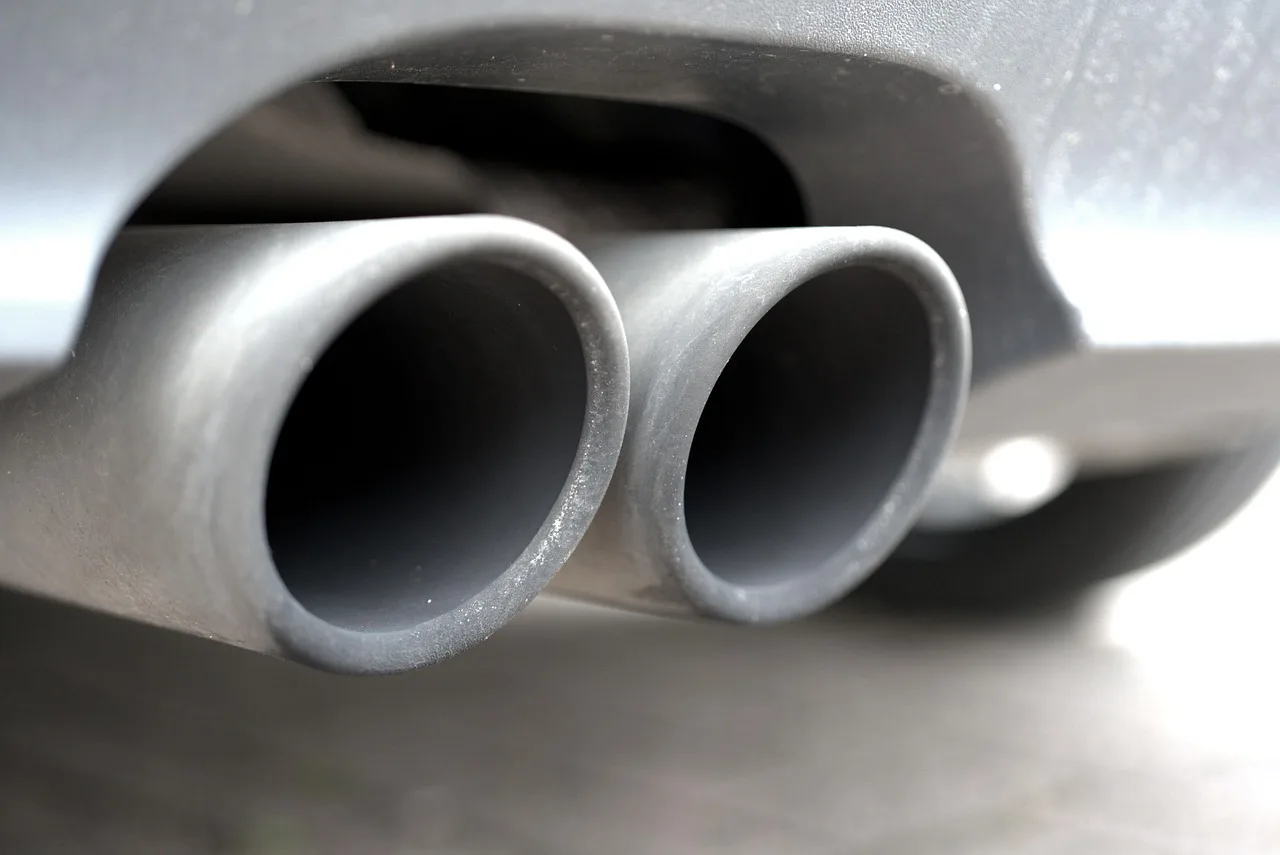
Start with corrosion exposure, because that usually decides the winner before sound does. Road salt, wet storage, short trips, and repeated heat cycles create far more real-world failure than a clean garage and a mild climate.
Start with climate and road exposure
If the car or truck sees winter salt, choose a material with real corrosion resistance, not just a coating. Short-trip driving matters too, because condensation can sit inside the pipe long enough to start internal rust even when the outside still looks clean.
Dry-climate garage cars have more freedom. A budget material can make sense if the vehicle stays out of salt, gets driven long enough to dry out, and is not expected to stay in service for many years.
Match material to how long you will keep the vehicle
Ownership horizon changes the math. A short-life build can justify mild steel or aluminized steel because the tubing may outlast the plan for the car. A keeper car usually rewards stainless because replacement labor often costs more than the material gap over time.
That is especially true on trucks, tow rigs, and daily drivers that rack up cold starts. Fewer replacements matter as much as the pipe price.
Balance heat load against fabrication skill
Turbocharged engines, header-adjacent sections, and track cars push heat harder than a stock commuter exhaust. That heat can discolor coatings, stress welds, and shorten life in lower-grade materials. Fabrication skill matters because thin-wall tubing, tight bends, and imperfect fit-up raise the chance of warping or leak-prone welds.
Easy-to-form materials can save time on a mockup. Harder-to-weld alloys can save time later if the system needs less corrosion repair.
Separate daily use from track use
Daily use rewards corrosion resistance and predictable fit-up. Track use rewards weight savings and heat tolerance. Those goals do not always point to the same material, so the right choice depends on where the car spends its time.
Exhaust material decision table
| Product | Badge | Best for | Price | ||
|---|---|---|---|---|---|
 | 2.5 Inch T304 Stainless Steel Exhaust Pipe KitYOLANDO | Our pick | 2.5" · T304 stainless · 16-piece kit | $159.99 Price as of 9 Nov 2026 | View |
 | DNA MOTORING ZTL-25SS-8P 8 Pcs 2.5 Inches Stainless SteelDNA MOTORING | Also great | 2.5" · stainless steel · 8-piece kit | $98.99 Price as of 9 Nov 2026 | View |
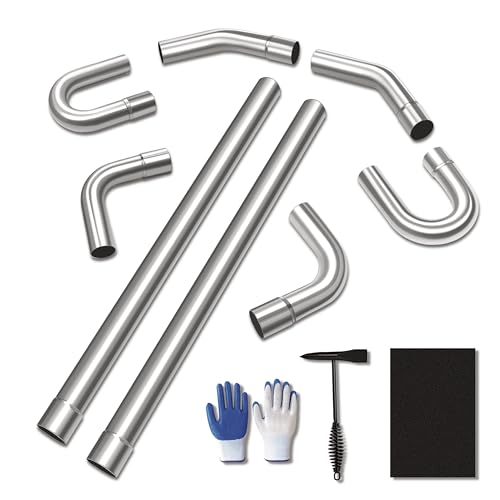 | VONLX 2.5‑Inch Exhaust Pipe Kit 8Pcs Mild Steel CustomVONLX | Budget pick | 2.5" · mild steel · 8-piece kit | $77.99 Price as of 9 Nov 2026 | View |
 | TitanFlow Grade 1 Titanium Exhaust TubingTitanFlow | Upgrade pick | 3" · Grade 1 titanium · straight tube | $79.99 Price as of 9 Nov 2026 | View |
| Material | Cost | Corrosion resistance | Weldability | Heat tolerance | Weight | Best-use case |
|---|---|---|---|---|---|---|
| Mild steel | Lowest | Low; needs coating or paint | Very easy with MIG; forgiving fit-up | Good for normal exhaust temps | Baseline | Budget builds, short-life projects, tack-welded mockups |
| Aluminized steel | Low to mid | Better than bare mild steel | Easy; common OEM-style fabrication | Good for street use | Baseline | Budget daily drivers, replacement systems, middle-ground builds |
| 409 stainless | Mid | Moderate; can surface-rust | Good with MIG or TIG; common production choice | Good | Baseline | OE-style long-life systems, winter-capable street use at lower cost |
| 304 stainless | Higher | High | Good, but needs cleaner fit-up and control | Very good | Baseline to slightly heavier than thin titanium | Long-life street builds, performance exhausts, custom systems |
| 321 stainless | Higher than 304 | High | Good, especially for high-heat sections | Excellent near hot spots | Baseline | Turbo outlets, headers, high-heat sections |
| Titanium | Highest | Good, but fabrication quality matters | Harder; needs careful TIG work and cleanup | Excellent | Lightest | Racing, weight-sensitive builds, premium special projects |
What is the best material for exhaust pipes?
304 stainless is often considered a strong all-around choice for long-term street use. It gives strong corrosion resistance, good heat tolerance, and a long service life without the premium fabrication burden of titanium. If budget is tighter, 409 stainless is often a better value than bare steel for many street and winter-capable systems.
There is no single best choice for every vehicle. The right material depends on how much salt it sees, how hot the system runs, and whether you care more about purchase price or long-term replacement labor.
Choose by use case
- Daily driver: 304 stainless if you want long life; 409 stainless if cost matters more.
- Winter car: 304 stainless first, 409 stainless second, aluminized steel only for tighter budgets.
- Track car: titanium for weight-sensitive builds, 321 stainless for high-heat sections, 304 stainless for a strong lower-cost alternative.
- Truck or tow rig: 304 stainless or 409 stainless, because long heat cycles and road spray punish mild steel.
- Off-road vehicle: 304 stainless if mud, water, and washdowns are frequent; aluminized steel only if replacement is expected.
- Turbocharged engine: 321 stainless near the turbo and hot-side transitions; 304 stainless farther downstream.
How do I choose exhaust pipe material for a daily driver?
For a daily driver, pick the material that best handles cold starts, condensation, and road spray over the longest expected ownership period. In most cases that is 304 stainless. If the car is mainly a commuter in a moderate climate and cost matters, 409 stainless is a sound compromise.
Daily use punishes exhausts through repetition. Short trips leave moisture inside the pipe, winter storage can trap condensation, and salt spray attacks any weak coating or seam. Those are the conditions that separate good-looking tubing from durable tubing.
Daily-driver decision rule
- Choose 304 stainless if the car sees winter roads, wet parking, or you plan to keep it for years.
- Choose 409 stainless if you want a stainless system without paying for 304’s higher corrosion resistance.
- Choose aluminized steel if the car is temporary, the climate is mild, and you need lower parts cost.
- Choose mild steel only for mockups, short-term builds, or projects that will be coated and monitored closely.
Say your sedan runs a 2.5-inch exhaust, lives outdoors, and sees five winter months each year. A 304 system costs more up front, but it is the safer choice if the plan is to keep the car long enough for replacement labor to matter.
What exhaust material should I choose for salt, snow, or winter driving?
Salt and snow push the choice toward stainless, especially 304 stainless, because external corrosion becomes the main failure mode. 409 stainless can work well too, but it will often show surface rust and still needs better care than 304 in harsh winter use.
Winter driving also increases condensation. Cold exhaust pipes stay wet longer, and short trips may never fully dry the system. That is why “stainless” is not a single answer; alloy choice matters.
Winter ranking
- Best: 304 stainless for the best mix of corrosion resistance and street durability.
- Good value: 409 stainless for OE-style systems that need lower cost.
- Budget option: Aluminized steel if the system will be inspected and replaced as needed.
- Least suitable: Mild steel unless coated and accepted as a short-life option.
Is stainless steel better than aluminized steel for exhaust?
Yes, stainless steel is generally better than aluminized steel for long-term corrosion resistance, but the type of stainless matters. 304 stainless outlasts aluminized steel in harsh conditions, while 409 stainless sits closer to aluminized steel in real-world rust resistance and often costs less than 304.
Aluminized steel is still useful. It offers a practical middle ground for budget systems and common replacement exhausts, especially when you want better corrosion resistance than bare mild steel without paying for full stainless everywhere.
Why 409 and 304 do not age the same
409 stainless is widely used in OE exhaust systems because it balances cost and durability, but it can surface-rust and is often magnetic. That means it is stainless in the practical sense, yet not rust-proof. 304 stainless resists corrosion much better and is the preferred pick for long-life street builds.
That difference matters most in wet climates, salt belt regions, and short-trip use. If the vehicle is kept long enough, the extra resistance of 304 often pays for itself in fewer replacements.
Does exhaust pipe material affect rust and longevity?
Yes. Material choice strongly affects both rust and service life, and the biggest driver is the corrosion environment rather than sound. Road salt, humidity, winter storage, and short-trip condensation can shorten the life of any system, especially mild steel and aluminized steel.
Longevity also depends on weld quality and fit-up. Poor welds, contamination, and trapped moisture can fail before the parent tubing does.
Common failure modes
- Surface rust: common on 409 stainless and especially on aluminized or bare steel where coating is damaged.
- Internal condensation rot: common on short-trip cars that do not fully heat-soak the exhaust.
- Weld contamination: can create weak spots and rust starting points around joints.
- Coating failure: paint or finish on mild steel can chip and open the door to corrosion.
How much more does stainless exhaust cost than mild steel?
Stainless exhaust usually costs more than mild steel because the tubing itself is pricier and fabrication often takes more care. The exact gap varies by pipe size, bend count, and local labor, but the practical comparison is simple: mild steel saves money now, stainless often saves labor and replacement cost later.
That is why the cheapest parts are not always the cheapest build. If the exhaust will need to be removed and replaced again in a few seasons, a higher-priced stainless system can be the lower total-cost choice.
Cost rule of thumb
- Mild steel: lowest upfront cost, best for temporary or budget mockups.
- Aluminized steel: modest step up from mild steel, often the best budget-to-durability compromise.
- 409 stainless: more expensive than aluminized steel, usually less than 304.
- 304 stainless: one of the most common long-life upgrades for street systems.
- 321 stainless and titanium: premium choices where heat or weight justifies the price.
How does fabrication change the choice?
Fabrication can make a good material a bad choice if the shop setup is wrong. MIG and TIG both work on many exhaust materials, but fit-up tolerance, heat distortion, post-weld cleanup, and bend quality vary enough that the easiest-to-buy material is not always the easiest-to-finish.
Mild steel is the easiest to mock up, while stainless needs cleaner joints and more control. Titanium is the most demanding of the group and is rarely the right place to learn exhaust fabrication.
MIG versus TIG fit
Mild steel and aluminized steel are usually the easiest for MIG work. 409 stainless also fits common exhaust fabrication well. 304 and 321 stainless can be MIG welded, but cleaner prep and better control reduce contamination and ugly discoloration. Titanium generally calls for careful TIG work and disciplined shielding.
Bendability and mandrel bends
Mild steel mandrel bends are easy to fabricate and common in custom work. They are also a smart choice for tack-welded mockups because they fit easily and cost less. The drawback is simple: without coating or paint, they rust fast.
Aluminized steel bends are also common in replacement-style exhaust work. Stainless bends cost more, but they help the system last longer. Titanium bends are light and premium, yet they are expensive and less forgiving when you need to change the layout.
Heat distortion and weld cleanup
Heat distortion rises as tubing gets thinner and the alloy gets harder to handle. Stainless often needs better fit-up and more cleanup around the welds. Titanium is especially sensitive, so fabrication mistakes can turn into expensive scrap quickly.
For builders who expect to cut and rework sections, mild steel offers the most tolerance. For builders who want to weld once and keep the car for years, stainless usually makes more sense.
Mixing materials in one system
Yes, you can mix materials in one exhaust system, and many builders do. A common setup is mild steel for mockup, then stainless for the final system, or 321 stainless near the turbo and 304 stainless farther back.
If you mix metals, pay attention to transition joints, thermal expansion, and corrosion at the interface. Use proper weld-on transitions and keep dissimilar materials from creating weak spots that trap moisture.
Picture a turbo truck with a short downpipe section that runs extremely hot and a longer rear section that sees less heat. Using 321 stainless near the turbo and 304 stainless downstream can make more sense than paying for 321 everywhere.
Which material is easiest to bend and weld?
Mild steel is the easiest to bend, fit, and weld. Aluminized steel is also approachable and is common in replacement work. 409 stainless sits in the middle. 304 stainless takes more care, and titanium is the most difficult because it needs tight control over cleanliness, heat, and shielding.
If you are building a first custom exhaust, easy fit-up matters. Better material later is no help if the joints are hard to align or the welds warp the system out of position.
Fabrication ranking
- Easiest: mild steel.
- Very manageable: aluminized steel.
- Moderate: 409 stainless.
- More demanding: 304 stainless.
- High heat specialty: 321 stainless.
- Most demanding: titanium.
What should you avoid?
Avoid choosing by sound alone. Material choice is mostly about rust, heat, and how long the system must last. Also avoid assuming every stainless grade behaves the same, because 409 and 304 age differently in the real world.
Do not buy premium tubing for a short-life build unless there is a clear reason. And do not ignore coating or finish on mild steel, because unprotected steel can turn a cheap system into a repeat job.
Common mistakes
- Buying mild steel for a salt-belt winter car without a coating plan.
- Using aluminized steel for a high-heat turbo section that really needs better heat tolerance.
- Assuming 409 stainless is the same as 304 stainless.
- Choosing titanium for a street car when weight savings do not justify the fabrication cost.
- Ignoring weld cleanup and fit-up on stainless, which can shorten life and create leaks.
Our picks by need
Budget mockup: VONLX mild steel kit
- 16-gauge mild steel tubing for custom fabrication
- Includes straight pipes and multiple bend angles
- Comes with gloves and basic cutting aid
The VONLX 2.5-inch mild steel kit is the budget-friendly pick for mockups, temporary systems, and low-cost custom fabrication. Its mild steel construction keeps the buy-in low, and the included bends make layout work easier. The tradeoff is clear: it needs coating or paint, and it is the least durable choice in salt or wet climates.
Based on the published details, it fits the common use case of a tack-welded trial system before final material selection. That makes it practical for builders who want to confirm routing before spending on stainless.
Middle-ground street build: DNA MOTORING stainless kit
- 8-piece universal kit for custom exhaust layouts
- Slip-fit joints simplify fabrication
- Mandrel-bent stainless steel adds strength and durability
The DNA MOTORING 8-piece stainless kit is a sensible middle ground for custom exhaust work. Slip-fit joints help fabrication, and the mandrel bends add strength and durability. The main drawback is the smaller 8-piece layout, which may limit more complex routing compared with a larger kit.
For a budget-conscious street system, this is the kind of product that makes sense when you want stainless durability without jumping straight to a premium full kit.
Long-life street build: YOLANDO T304 kit
- 16-piece kit includes straight, 45°, 90°, and U-bends
- 2.5-inch slip-fit ends help easier assembly
- T304 stainless with mandrel bends for durability
The YOLANDO T304 stainless kit is the strongest all-around choice for long-term street use among the listed kits. The 16-piece layout gives more routing options, and the 2.5-inch slip-fit ends can make assembly easier. The drawback is price, and the larger kit may be more material than a simple replacement job needs.
Based on the manufacturer details, this is the safer choice when the goal is durability, custom fit, and fewer corrosion worries over time.
Weight-sensitive build: TitanFlow Grade 1 titanium tube
- Commercially pure Grade 1 titanium
- 1mm wall thickness for custom exhaust fabrication
- Multiple diameter and length options available
The TitanFlow Grade 1 titanium tube is the premium option for weight-sensitive or racing-focused projects. Titanium’s biggest advantage is low weight, but the tradeoffs are steep: careful fabrication is required, cost is high, and heat management matters more than with stainless. It is not the practical default for a street car.
As a straight tube, it is best for targeted sections or custom layouts where a builder already knows the routing and weld plan.
Frequently asked questions
Can I mix different exhaust pipe materials in one system?
Yes. A common approach is to use mild steel for mockup, then switch to stainless for the final build, or use 321 stainless near a turbo and 304 farther downstream. Just manage transitions carefully so dissimilar metals do not create weak joints or moisture traps.
Which exhaust material is easiest to bend and weld?
Mild steel is easiest to bend and weld, especially for MIG fabrication and quick mockups. Aluminized steel is also approachable. Stainless takes more control, and titanium is the most demanding because it needs careful cleanliness, shielding, and heat management.
Where to buy exhaust pipe?
Buy from exhaust parts suppliers, fabrication shops, and large online marketplaces that list exact alloy, wall thickness, diameter, and bend type. Check whether the tubing is mild steel, aluminized steel, 409 stainless, 304 stainless, or titanium before ordering, because “stainless” alone is not enough detail.