
Were Ram Horn Exhaust Manifolds Only High Performance?
Many people wonder about the performance of ram horn exhaust manifolds. If you’re new to car parts, the name itself sounds powerful, leading to the question: Were Ram Horn Exhaust Manifolds Only High Performance? It can be confusing to know if these parts are just for race cars or if they offer benefits for everyday driving. This guide will break it down simply. We will look at what ram horn manifolds are and explore their actual performance impact step by step.
Understanding Ram Horn Exhaust Manifolds
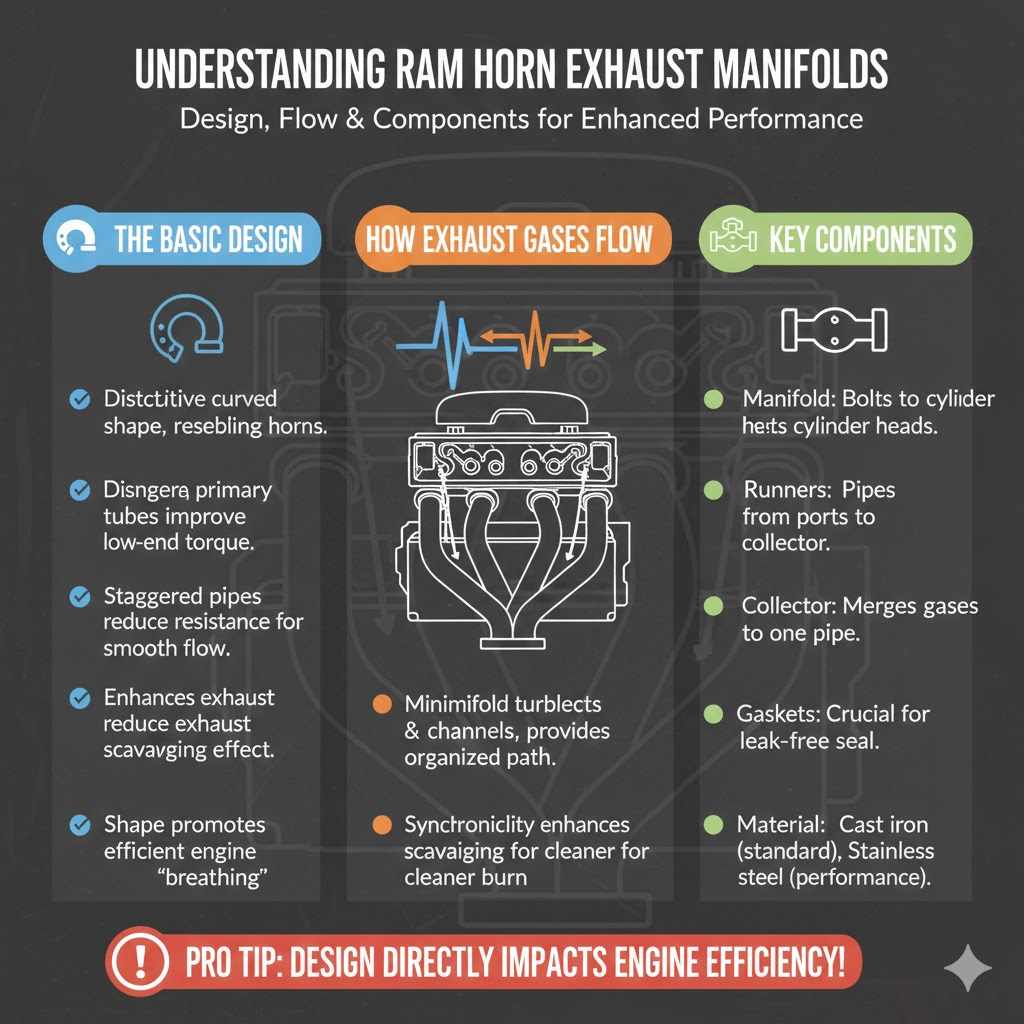
Ram horn exhaust manifolds get their name from their distinctive shape, resembling a ram’s horns. This unique design is not just for looks; it plays a direct role in how exhaust gases flow out of the engine. For beginners, it’s important to grasp that exhaust manifolds are a fundamental part of any internal combustion engine. They collect exhaust gases from each cylinder and direct them into a single pipe, which then leads to the rest of the exhaust system. The design of the manifold can significantly affect engine performance by influencing backpressure and exhaust scavenging.
The question Were Ram Horn Exhaust Manifolds Only High Performance? often arises because their appearance suggests a focus on speed and power. This perception is fueled by their frequent use in performance vehicles and custom builds. However, the reality is more nuanced. While they can contribute to enhanced performance, their benefits aren’t limited to just high-speed racing applications. Understanding their design principles helps clarify their advantages for a wider range of vehicles. This section will explore the basic construction and function of these manifolds.
The Basic Design of Ram Horn Manifolds
Ram horn exhaust manifolds feature a design where the exhaust ports from multiple cylinders are routed in a way that promotes smooth flow. Instead of a simple, direct exit, the pipes curve and merge, often in a staggered or progressive manner. This curvature is key to their performance characteristics. Each pipe is carefully angled to reduce resistance as exhaust gases exit the engine. This smoother exit helps the engine “breathe” more efficiently.
The shape often leads to longer primary tubes compared to some other manifold designs. These longer tubes can help improve torque, especially at lower engine speeds. They also contribute to better exhaust scavenging. Exhaust scavenging is the process where the exiting exhaust pulse from one cylinder helps pull the exhaust gases from another cylinder. This effect is more pronounced with well-designed exhaust manifolds.
How Exhaust Gases Flow
Exhaust gases are a byproduct of combustion, and their efficient removal is vital for engine operation. When fuel and air combust in a cylinder, they create high-pressure gases that need to be expelled. The exhaust manifold’s job is to collect these gases from all cylinders. The way these gases are collected and channeled can impact how quickly they are removed and how much pressure builds up within the exhaust system.
In a standard manifold, gases might mix and create turbulence, hindering smooth flow. Ram horn manifolds aim to minimize this by providing a more organized path for the gases. The individual runners are often designed to be of equal length, or very close to it. This equal length helps ensure that the exhaust pulses from each cylinder arrive at the collector point at roughly the same time. This synchronicity enhances the scavenging effect, leading to a cleaner burn in the next combustion cycle.
Key Components of an Exhaust Manifold System
An exhaust manifold system involves several parts working together. The manifold itself is the primary component, bolted directly to the engine’s cylinder heads. It has individual ports for each exhaust valve. From these ports, the exhaust pipes, called runners, extend. These runners then merge into a collector. The collector funnels the exhaust gases into the rest of the exhaust system, which includes the catalytic converter, muffler, and tailpipe.
The material used for the manifold also plays a role. Most are made of cast iron, but performance applications might use stainless steel for lighter weight and better heat dissipation. The gaskets between the manifold and the cylinder head are crucial for a leak-free seal. Any leaks can reduce performance and create unpleasant exhaust noise.
Ram Horn Manifolds and Performance Gains
The distinctive “ram’s horn” shape of these manifolds is engineered to optimize exhaust flow. This optimization directly translates into performance benefits, but the extent of these gains depends on several factors. For enthusiasts, understanding these factors is key to appreciating the true value of this manifold design. It’s not just about looks; it’s about physics and engineering working together to improve an engine’s efficiency.
The question Were Ram Horn Exhaust Manifolds Only High Performance? is often posed because their design prioritizes smooth, efficient exhaust extraction. This efficiency can lead to noticeable improvements in horsepower and torque. However, these gains are not exclusive to racing or extreme performance builds. Even a moderately tuned engine can benefit from the improved exhaust flow that ram horn manifolds provide. This section will detail the specific ways these manifolds contribute to better engine performance.
Improved Horsepower and Torque
One of the primary advantages of ram horn manifolds is their ability to increase both horsepower and torque. By reducing the resistance that exhaust gases encounter, the engine can expel them more freely. This allows the engine to take in a fresh charge of air and fuel more effectively, leading to a more powerful combustion event. The improved scavenging effect also means that residual exhaust gases from the previous cycle are minimized, further enhancing the efficiency of the new charge.
This results in a noticeable boost in power, especially when the engine is working hard. Drivers often report a crisper throttle response and a stronger pull through the RPM range. The torque improvements are particularly beneficial for daily driving, making the vehicle feel more responsive and capable in various situations, not just at high speeds. This enhanced performance is a direct result of the manifold’s ability to manage exhaust gas flow efficiently.
Reduced Engine Stress and Heat
Efficient exhaust flow also contributes to reduced stress and heat within the engine. When exhaust gases are trapped or struggle to exit, they can increase the temperature inside the combustion chambers. High temperatures can lead to premature detonation (knocking) and can put a strain on engine components. By facilitating a quicker and smoother exit of hot gases, ram horn manifolds help keep engine temperatures more stable.
This reduced heat can lead to greater engine longevity. Over time, consistent exposure to excessive heat can degrade engine parts. A cooler-running engine is generally a healthier engine. Furthermore, less backpressure means the engine doesn’t have to work as hard to push the exhaust out. This reduction in effort can contribute to overall engine health and efficiency.
Enhancing Exhaust Scavenging
Exhaust scavenging is a critical concept in engine performance. It refers to the process where the outgoing exhaust pulse from one cylinder helps to pull the exhaust gases out of another cylinder. This creates a lower pressure in the cylinder at the end of its exhaust stroke, which aids in the intake of the fresh air-fuel mixture for the next cycle. Ram horn manifolds, with their carefully tuned runner lengths and angles, are particularly good at promoting effective scavenging.
The precise timing and force of the exhaust pulses are managed by the manifold’s design. When designed correctly, the pulses from different cylinders can create a wave effect that effectively “sucks” the exhaust out. This is a passive form of boosting, as it doesn’t require extra energy from the engine itself. It’s a testament to how smart design can optimize a fundamental engine process.
Factors Influencing Performance Gains
The actual performance gains from ram horn manifolds are not solely dependent on the manifold itself. Several other factors play a crucial role. The overall exhaust system, including the catalytic converter, muffler, and piping diameter, must be compatible with the manifold’s design. A restrictive muffler, for example, can negate the benefits of a high-flowing manifold.
Engine tuning is also paramount. For optimal results, the engine’s fuel and ignition timing may need to be adjusted to take full advantage of the improved airflow. Camshaft profiles, cylinder head porting, and even the type of air intake system can influence how effectively the ram horn manifold performs. It’s a system, and all parts need to work in harmony.
Are Ram Horn Manifolds Universally High Performance?
The idea that ram horn exhaust manifolds are exclusively for “high performance” applications is a common simplification. While they are frequently found on performance-oriented vehicles, their benefits extend beyond just racing. Understanding their design reveals that their core function is about efficiency, which benefits many types of engines. The term “high performance” can be relative, and what constitutes a performance gain for one vehicle might be standard operation for another.