How to Tell If Your Exhaust Is Leaking From Sound
A sharp ticking on cold start, a puffing sound that rises with throttle, or a louder-than-normal exhaust note usually points to an Exhaust leak; if fumes enter the cabin or the noise is suddenly very loud, stop driving. Ignoring it can burn more fuel, damage nearby parts, and let carbon monoxide collect inside the vehicle. The CDC and NHTSA warn that carbon monoxide exposure can cause headache, dizziness, nausea, weakness, confusion, and loss of consciousness. This guide shows how to use the sound to narrow the leak location and judge whether the car is safe to drive.
What does an exhaust leak sound like?
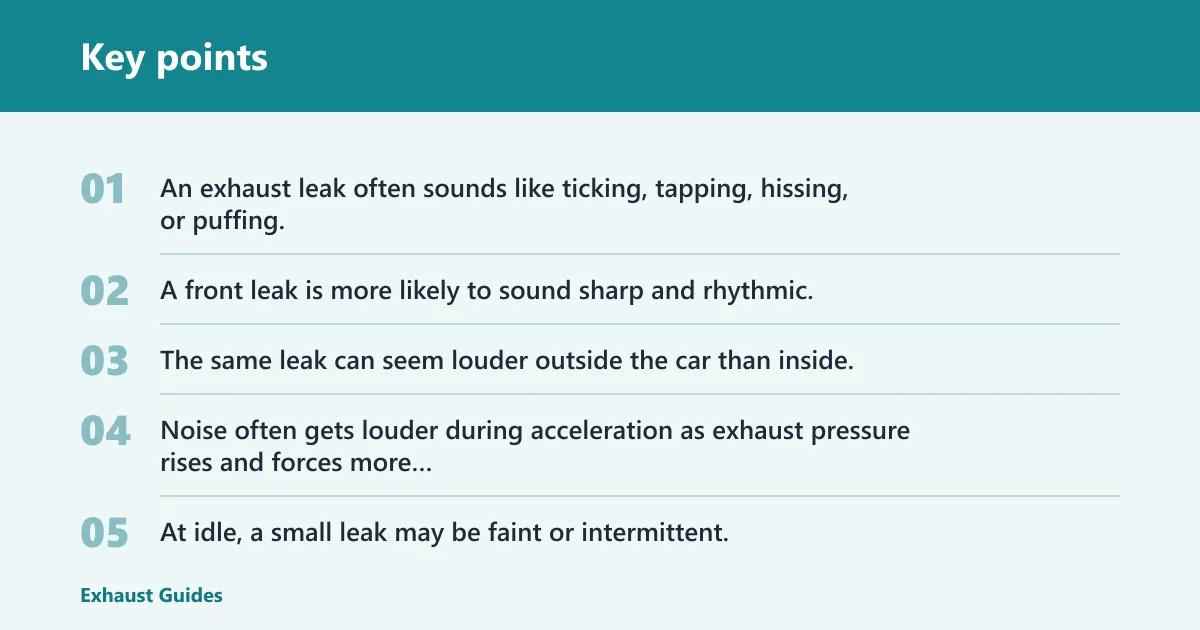


An exhaust leak often sounds like ticking, tapping, hissing, or puffing, and the tone usually changes with engine speed and load. A front leak is more likely to sound sharp and rhythmic, while a rear or mid-pipe leak often sounds deeper or boomy. The same leak can seem louder outside the car than inside, so compare what you hear from both positions and against normal engine noise.
How the sound changes with engine speed
Noise often gets louder during acceleration as exhaust pressure rises and forces more gas through the opening. At idle, a small leak may be faint or intermittent. On deceleration, some leaks become easier to hear because the exhaust note drops and the leak stands out from normal engine noise. A leak that sharpens with throttle and softens when you lift is more suggestive of an exhaust issue than a random underbody rattle.
Cold start is especially useful. A small exhaust-manifold leak often creates a ticking or tapping noise during cold starts, then quiets somewhat as metal expands with heat. The exhaust manifold experiences extreme temperatures, so cracks can open when cold and change shape as the parts warm up.
Why it can be louder outside the car
Rear leaks and holes under the floor can sound louder from behind or beside the vehicle than from the cabin. Windows up, higher road speed, and the HVAC fan can all change what you hear inside. A leak may still be audible only outside if the opening is small or if cabin airflow keeps fumes away from you.
Sound-to-location triage table
| Noise type | When it happens | Likely leak location | Urgency level | First two checks to confirm |
|---|---|---|---|---|
| Sharp ticking or tapping | Cold start, then may fade at idle | Front, near exhaust manifold or manifold gasket | High if fumes are present; otherwise moderate | Check for soot at the manifold flange; listen with the hood open near the front of the engine |
| Puffing or chuffing | Idle and acceleration | Front or mid-pipe seam | Moderate to high | Look for a damaged gasket or loose joint; inspect for black soot around clamps and slip joints |
| Hissing | Acceleration and light throttle | Mid-pipe crack or small hole | Moderate | Inspect the pipe for rust holes; feel for pulses only when the exhaust is cool enough to touch safely |
| Deeper boomy note | Acceleration, sometimes steady cruising | Rear section, muffler, or tailpipe area | Moderate unless fumes enter the cabin | Check the muffler shell and tailpipe for corrosion; inspect hangers and seams for movement |
| Rattle or buzz with the exhaust note | Idle, bumps, or certain engine speeds | Loose heat shield or hanger | Low to moderate | Tap the shield lightly when cool; look for contact marks where the shield touches the body or pipe |
Can you tell the leak location from the sound?
Often, yes. Front-end leaks near the manifold or gasket usually sound tighter, faster, and more rhythmic. Mid-pipe leaks are more likely to hiss or puff. Rear leaks tend to sound deeper and may be louder outside the vehicle than inside. Sound alone is not proof, but it gives you a strong starting point.
Front exhaust noise near the manifold
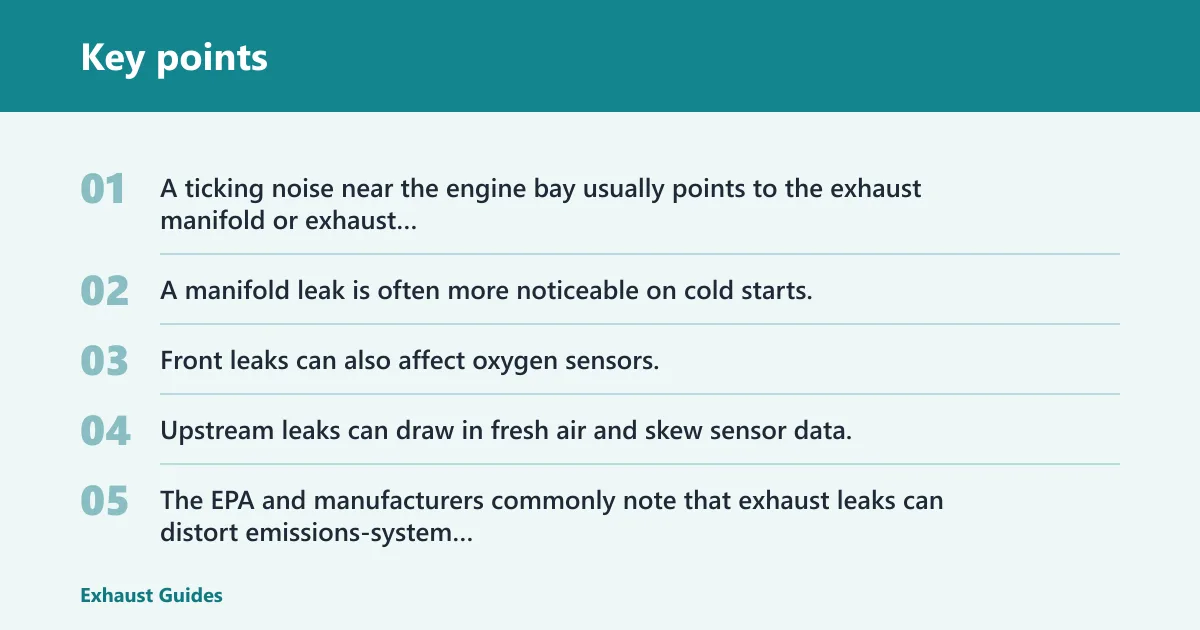
A ticking noise near the engine bay usually points to the exhaust manifold or exhaust manifold gasket. A manifold leak is often more noticeable on cold starts, and a ticking or tapping sound is a classic symptom. Front leaks can also affect oxygen sensors, which may trigger a check engine light and change fuel-control readings. Upstream leaks can draw in fresh air and skew sensor data, which can lead to fuel-trim codes, catalyst-efficiency codes, or related drivability complaints. The EPA and manufacturers commonly note that exhaust leaks can distort emissions-system readings before the catalyst.
Mid-pipe leaks and body resonance
A leak in the middle of the system may sound like a steady hiss or soft puffing under acceleration. Road salt and moisture often drive rust in this area, especially on older vehicles. Exhaust pipe corrosion can create holes or pinholes, and many start from the inside out where moisture collects. Mid-pipe leaks are less likely than front leaks to alter sensor readings directly, but they can still create noise, fumes, and efficiency loss.
Rear leaks and tailpipe cracks
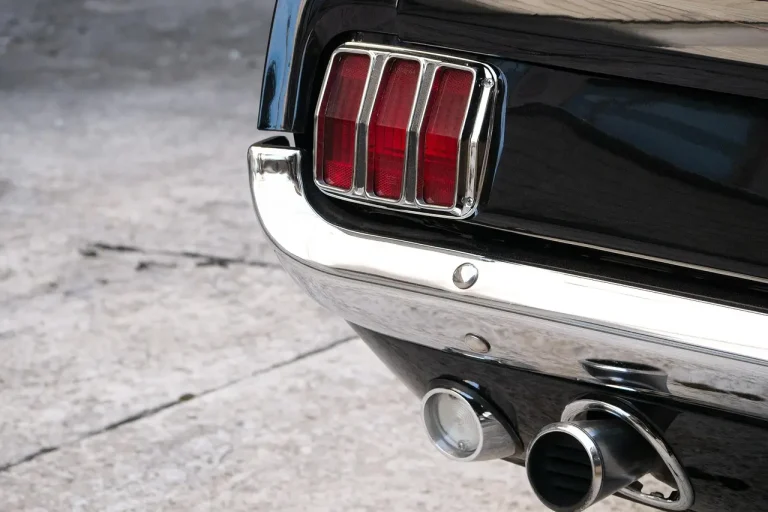
Rear leaks often sound deeper and less mechanical. If the muffler, tailpipe, or rear pipe has a crack, the note can turn boomy or hollow. These leaks may be easier to hear outside the car than inside, especially with the windows closed and the cabin fan on low. Rear leaks are less likely to affect drivability than front leaks, but they are still unsafe if exhaust can enter the cabin or pool near the vehicle.
Is a ticking noise always an exhaust manifold leak?
No. Ticking can come from an exhaust manifold leak, but it can also come from valvetrain noise, an intake leak, or a loose heat shield. Cold start makes exhaust leaks easier to spot because the metal is contracted, which can open a crack or gap before the parts heat up and expand. If the sound follows engine speed exactly and comes from the top end, it may be engine-related rather than exhaust-related.
Lookalikes that confuse diagnosis
A valvetrain tick usually follows engine speed very closely and often sounds like it comes from the top of the engine, not the exhaust side. An intake leak can make a light hiss but usually changes with throttle in a different way. Loose heat shields can rattle from underneath and may mask the real exhaust noise. If the sound changes when you blip the throttle in neutral but stays centered near the engine rather than under the car, suspect engine or accessory noise before the exhaust.
Say your SUV makes a sharp puffing or tapping noise near the engine bay that gets faster with RPM and is loudest just after startup. That pattern points more toward a manifold-area leak than a rear muffler leak. If the same sound is a metallic rattle over bumps, check the heat shields before assuming the exhaust itself is cracked.
What causes ticking or puffing noise
Ticking or puffing usually comes from exhaust gas escaping through a gap, crack, or failed gasket. The exhaust manifold gasket can leak between the manifold and cylinder head. The manifold itself can crack from thermal expansion and contraction, especially where temperatures swing hard between cold start and full operating heat. A leak at the front of the system can also create a false-air condition that affects oxygen sensor readings and fuel-trim calculations.
What other symptoms go with the noise?
Noise is often only one clue. Exhaust leaks can cause exhaust odors inside the vehicle, reduce fuel economy, and hurt performance. A check engine light can also appear from exhaust-related issues, especially when a leak affects sensor readings near the front of the system. The CEL may be tied to fuel-trim, oxygen-sensor, or catalyst-efficiency codes rather than the leak itself.
Cabin fumes and carbon monoxide risk
A smell of exhaust fumes inside the cabin is a warning sign, not a minor nuisance. Headaches, dizziness, nausea, tiredness, and unconsciousness are listed carbon monoxide danger symptoms by the CDC and NHTSA. If you notice fumes and any of those symptoms, treat it as urgent and get fresh air right away. Even if the smell seems faint, do not keep driving with windows cracked as a substitute for repair.
Fuel economy and performance changes
An exhaust leak can reduce fuel economy, and a leak can also make the vehicle feel less responsive. Front leaks can disturb oxygen sensor readings, which can affect fuel control. If the car suddenly needs more throttle for the same road speed, the exhaust fault may be part of the problem. When a leak is upstream of the front oxygen sensor, the engine computer may add or subtract fuel incorrectly; rear leaks are less likely to change drivability in the same way.
Should you keep driving?
If the exhaust is loud but there is no smell, the car may be drivable for a short trip to a repair shop, depending on how loud the leak is and where the leak seems to be located. If fumes enter the cabin, or if headaches, dizziness, or nausea appear, stop driving and get help. Sound alone is not the whole decision. A loud exhaust without odor can still be unsafe if the leak is near the cabin, the floorpan, or a rear opening where gases can collect.
Quick checks before you drive again
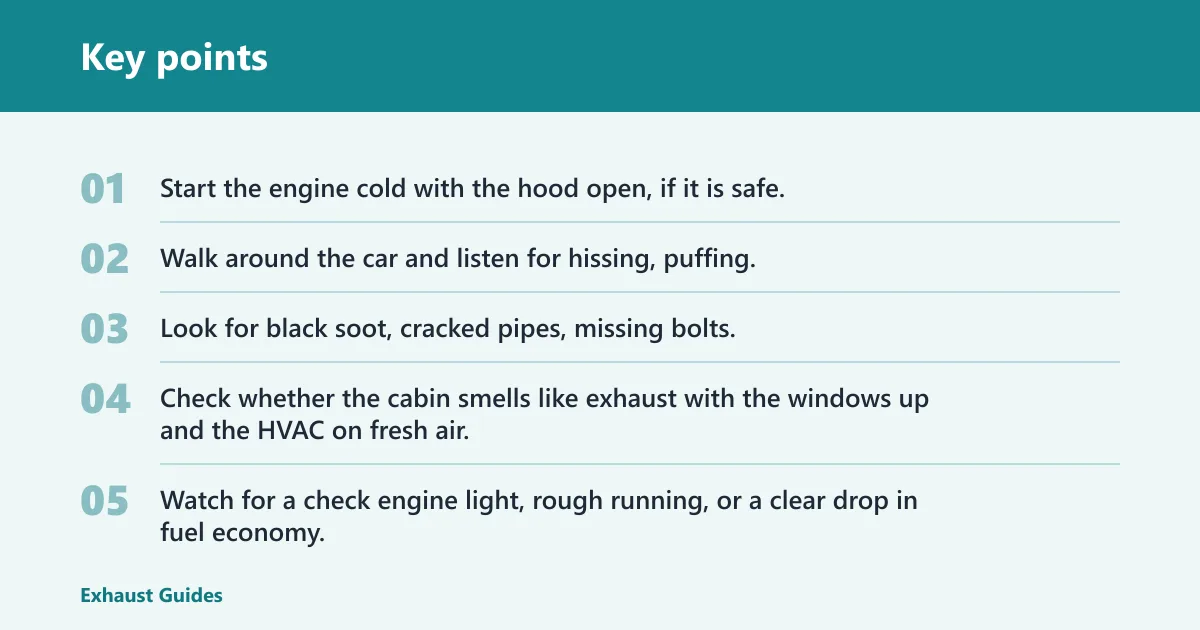
- Start the engine cold with the hood open, if it is safe, and listen for ticking near the manifold area.
- Walk around the car and listen for hissing, puffing, or a deeper rear note near the tailpipe and muffler.
- Look for black soot, cracked pipes, missing bolts, or a loose heat shield under the vehicle.
- Check whether the cabin smells like exhaust with the windows up and the HVAC on fresh air.
- Watch for a check engine light, rough running, or a clear drop in fuel economy.
A practical sound-first workflow is: cold start, idle, snap the throttle briefly, then let off and listen on decel; walk around the outside of the vehicle; inspect for soot at joints and flanges; check shields and hangers for movement or contact marks; scan for codes if the check engine light is on; then decide whether the car is safe for a short, direct drive or should be towed. If the noise gets louder with load, is accompanied by fumes, or the cabin smell changes, skip the drive.
Suppose an older hatchback develops a deeper exhaust tone after a wet winter and road-salt season. If the sound grows with acceleration and there is no cabin odor, a corroded mid-pipe is more likely than a manifold crack. If the same car also fills the cabin with fumes at idle, the urgency jumps immediately.
Common causes by location
Front leaks usually come from the exhaust manifold or manifold gasket. Mid and rear leaks often trace to rust, pinholes, and seam failure in the pipe or muffler. Loose hangers and heat shields can add a rattle or buzz that hides the real leak, so listen for both sounds before you decide where the problem is. If the vehicle is excessively loud, many localities accept complaints through non-emergency police, code-enforcement, or noise-reporting channels rather than 911.
Rust and corrosion are common causes of exhaust leaks, especially on older vehicles. Moisture and road salt attack the pipe from the outside, while internal condensation can start damage from the inside out. That is why a pipe can look fine in one spot and still leak at a seam or under a rust blister.
Frequently asked questions
How can I tell if your exhaust is leaking from the sound?
Start with when the noise happens. Cold-start ticking near the front often points to the manifold area, while acceleration hissing or puffing can point to a pipe leak. Rear leaks usually sound deeper. Match the sound with smell, location, and whether the noise changes with engine speed.
What does an exhaust leak sound like when accelerating?
It often gets louder during acceleration as exhaust pressure rises. The sound may turn from a light hiss into a sharper puffing or from a faint tick into a more constant tapping. If the noise rises with throttle and fades on deceleration, suspect a leak rather than a random rattle.
Can an exhaust leak make the car louder only outside?
A rear or mid-pipe leak can often be easier to hear outside the car than inside, especially with the windows closed and the fan on. The cabin can block some sound while still letting exhaust fumes in. Do not assume it is harmless just because the inside stays quiet.
How dangerous is an exhaust leak if I smell fumes in the cabin?
It is a serious warning. Exhaust fumes in the cabin can point to carbon monoxide exposure, and headaches, dizziness, nausea, tiredness, or unconsciousness are danger signs. Stop driving, get fresh air, and have the car checked before you drive it again. Do not ignore a cabin smell.
What causes a ticking or puffing exhaust noise?
Ticking or puffing usually means exhaust gas is escaping through a crack, hole, or failed gasket. The most common front source is the exhaust manifold or manifold gasket. Corrosion, broken joints, and loose fittings can do the same farther back in the system, often with a deeper tone.