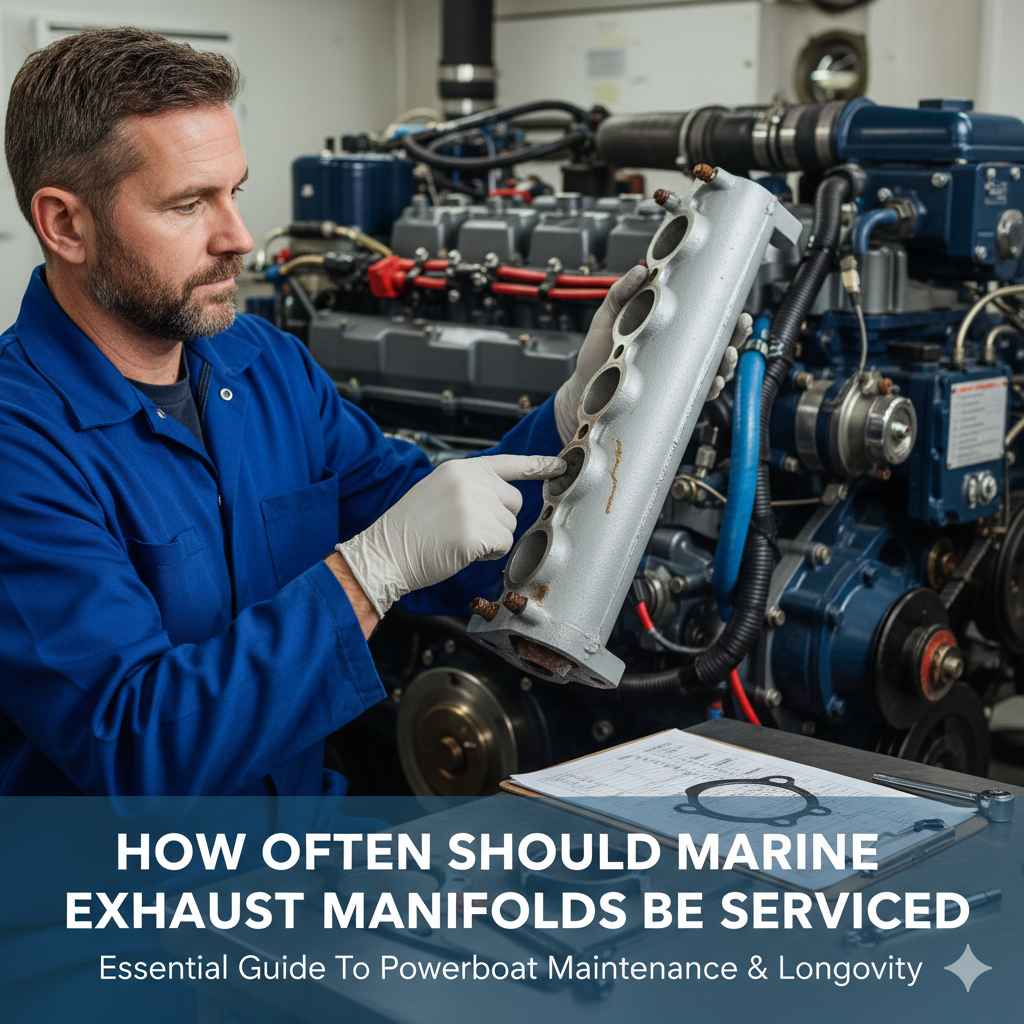
How Often Should Marine Power Exhaust Manifolds Be Serviced: Essential Guide
Marine power exhaust manifolds should generally be inspected every 100 hours of use or at least once per boating season, whichever comes first. Regular inspection is key, as failure can cause serious engine overheating, corrosion, and expensive damage. This guide simplifies the service schedule for you.

Sinister Products LLC
316L Stainless Steel Marine Through Hull 4"…
- 316L Mirror Polished Stainless Steel
As an Amazon Associate I earn from qualifying purchases.
Welcome! Dealing with engine maintenance can feel overwhelming, especially when it comes to the parts sitting near the water, like your marine exhaust manifolds. These components are vital for safely venting hot gases, but they often suffer from rust and leaks because they deal with hot exhaust mixing with cool saltwater. If you’ve been wondering exactly how often should marine power exhaust manifolds be serviced, you’re asking the right question. Getting this wrong can lead to costly repairs. Don’t worry; we are going to break down the maintenance schedule into simple, easy steps. By the end of this guide, you’ll feel confident knowing exactly when and how to keep your exhaust system running perfectly.
Why Marine Exhaust Manifolds Need Special Attention
Unlike the exhaust system on your car, marine exhaust manifolds operate in a much harsher environment. They are exposed to extreme heat from the engine on one side and cooler, corrosive raw water (or lake water) on the other. This constant temperature shock and the presence of salt or minerals create the perfect recipe for trouble.
The Danger of Neglected Manifolds
Ignoring your manifolds is risky business. A small leak in a manifold can quickly turn into a major problem. When water leaks into the exhaust ports, it can lead to:
- Engine Overheating: Leaks disrupt the cooling flow, causing the engine temperature to spike dangerously high.
- Water Intrusion: Water entering the cylinders can cause hydrostatic lock—a catastrophic failure where the engine physically cannot turn.
- Rust and Corrosion: Accelerated rusting weakens the metal, leading to eventual cracking and complete failure.
- Reduced Performance: Poor exhaust flow means your engine can’t breathe well, leading to sluggish operation and poor fuel economy.

Determining the Ideal Service Interval: How Often?
There isn’t one single answer that fits every boat. The correct service frequency depends heavily on how you use your boat and the materials your manifolds are made from. We must look at both visual inspection frequency and full replacement timing.
General Rule of Thumb for Inspection
For most recreational boaters, whether you have gasoline or diesel engines, the standard recommendation is:
- Every 100 Hours of Operation: This is the industry benchmark for a thorough visual inspection. If you use your boat frequently, stick to this hour count.
- At Least Once Per Year (Annually): If your boat sits for long periods, always perform a thorough check before launching for the season. For winterizing, this inspection is crucial.
Factors That Require More Frequent Service
If any of the following apply to your vessel, you should consider inspecting your manifolds every 50–75 hours, or perhaps every six months:
- Saltwater Use: Salt is incredibly corrosive. If you regularly operate in the ocean, corrosion happens much faster.
- High-Performance or Heavy Use: Engines run hard, hot, and often, wear out components faster.
- Older Engines: As parts age, they become more brittle and prone to cracking, even if they look okay externally.
- Engine Type: Some specific engine models are known to have historically weak manifold designs that require proactive replacement schedules.
The Material Matters: Cast Iron vs. Stainless Steel
The material your manifolds are constructed from plays a huge role in their lifespan. Understanding the difference helps you set realistic expectations for service and replacement.
Table 1: Comparison of Marine Exhaust Manifold Materials
| Material | Typical Lifespan (Inspections) | Corrosion Resistance |
|---|---|---|
| Cast Iron (Standard) | 3–7 Years or 500–1000 Hours | Low (Prone to rusting) |
| Stainless Steel (Upgrade) | 10+ Years or Significantly Longer | High (Best for saltwater) |
If you have standard cast iron manifolds, you should lean closer to the 100-hour inspection mark. If you have upgraded to stainless steel, you might be able to stretch the visual inspection interval slightly longer, but never ignore the annual check.
Step-by-Step: What to Look For During a Manifold Inspection
Servicing your manifold doesn’t always mean replacing it. Often, it means a careful inspection to catch small issues before they become big ones. This is something most boat owners can handle with basic tools.
Tools You Might Need:
- Flashlight (a bright one is best)
- Small mirror on a telescoping stick
- Rag or shop towels
- Basic socket set (for removing access panels, if necessary)
- Gloves and safety glasses (always wear safety gear!)
The Visual Inspection Checklist
Follow these steps when you check your manifolds:
- Ensure the Engine is Cold: Never inspect hot components. Wait until the engine has completely cooled down to avoid burns and to see condensation patterns clearly.
- Look for Rust Stains (The “Weeping” Sign): Check the exterior of the manifold heavily. Look for bright orange streaks running down the sides. These streaks usually indicate a slow water leak or rust bleeding through a crack.
- Inspect the Seams and Joints: Pay close attention to where the manifold bolts to the engine block and where the riser (the pipe leading from the manifold to the exhaust outlet) connects. These are common failure points.
- Check the Gaskets: If you can easily see the gasket material between the manifold and the block, look for signs of crushing, burning, or water seepage around the edges.
- Examine the Cooling Water Fittings: Look at the hose connections that feed cooling water into the manifold jacket. Ensure the hose clamps are tight and that there is no corrosion or wetness around the fittings. Water cooling failure here leads to overheating fast.
- Look Underneath: Use your mirror to inspect the underside of the manifold where it meets the engine. Rust and corrosion are often worst on the bottom side, hidden from view.
- Check the Risers: Risers (the section connecting the manifold to the elbow that exits the hull) can often rust through internally. If the exterior looks pitted or bubbled, they are likely failing internally.
If you find rust streaks, pitting, or moisture, it’s time to move to the next step: removal and deep inspection or replacement.
When Inspection Turns into Replacement: Recognizing End-of-Life
Knowing how often should marine power exhaust manifolds be serviced is only half the battle. The other half is knowing when service isn’t enough, and replacement is required. Most manufacturers provide a general service life, but real-world conditions dictate the actual end.
Signs Your Manifold MUST Be Replaced Immediately
Do not wait for your next scheduled service if you notice any of these critical signs:
- Visible Cracks: Any hairline crack on the cast iron body is a major threat. Water can easily push through under pressure.
- Exhaust Leak Sounds: Hearing a “puffing” or sputtering sound coming from the engine bay instead of the usual exhaust exit indicates a serious leak.
- Coolant Loss Without External Leak: If your engine is losing coolant but you can’t find an external leak, water is likely entering the exhaust path internally and escaping through the exhaust outlet or worse, into the engine block.
- Severe External Pitting: If the metal surface looks heavily scaled, blistered, or has deep rust pits, the structural integrity is compromised.
The Replacement Timeline Based on Usage
As a proactive measure, many mechanics recommend replacing manifolds based on hours rather than waiting for failure, especially on raw-water cooled engines. A good proactive replacement window for standard cast iron manifolds is often around the 600–800 hour mark, even if they look okay, just to prevent sudden failure.
The Role of Risers and Elbows in Service Frequency
It’s crucial to remember that the exhaust system is a chain, and the manifold is just one link. The riser and the exhaust elbow (the component that connects the riser to the transom or exhaust outlet) wear out just as quickly, if not faster.
Riser and Elbow Lifespan
The riser and elbow often take the brunt of thermal shock and corrosive exhaust gasses. Because they are typically shorter sections, they can clog or rust through more quickly than the main manifold body.
Pro Tip: When you service or replace the manifold, always inspect the riser and elbow. In many cases, it is best practice to replace the manifold, riser, and elbow assembly together to ensure all components have the same remaining lifespan and fit perfectly.
Maintenance vs. Flushing: Keeping the Cooling System Clean
Proper maintenance of the cooling side of the manifold is just as important as checking the exhaust side. A clogged cooling passage will cause localized overheating, leading to manifold warping and cracking.
Flushing Procedures for Longevity
If you use your boat in freshwater or saltwater, regular flushing is essential to remove debris, mineral deposits, and scale build-up inside the cooling passages.
For example, systems like those used by the Environmental Protection Agency (EPA) often detail best practices for engine cooling to prevent pollution and ensure efficiency, which directly relates to component longevity. Regular flushing helps maintain these systems.
Use a flushing attachment (like muffs for outdrives or a closed-loop system for inboards) and run clean, fresh water through the engine until the water exits cleanly. This should be done:
- After every use in saltwater.
- At least once a month if operating frequently in brackish or heavily mineralized freshwater.
Service Intervals for Different Operating Environments
To simplify your schedule, here is a guide based on where you boat. Remember, always prioritize the 100-hour mark if you reach it before the time frame below.
Table 2: Recommended Service Based on Operating Conditions
| Operating Environment | Inspection Frequency | Proactive Replacement (Cast Iron) |
|---|---|---|
| Heavy Saltwater Use | Every 50–75 Hours or 4 Months | Every 4–5 Years |
| Freshwater Cruising (Light Use) | Every 100 Hours or Annually | Every 7–10 Years |
| Heavy Commercial Use (Any Water) | Every 50 Hours | Follow Manufacturer’s Strict Schedule |
The Repair Process: Replacing a Manifold (A Beginner Overview)
If your inspection revealed a failure, knowing the general replacement steps builds confidence. While this is a job that often requires mechanical skills, understanding the process helps you talk to a mechanic or tackle it yourself if you are ready for a bigger project.
Safety First!
Before starting any work, always disconnect the battery cables (negative terminal first). Ensure the engine is completely cool, and ventilate the area well. Exhaust components can hold heat for hours.
Basic Replacement Steps:
- Access the Manifold: This is often the hardest part. You may need to remove engine covers, air intake components, or surrounding hoses to get clear access to the manifold bolts.
- Disconnect Hoses: Carefully remove the cooling water hoses leading to and from the manifold. Have a bucket ready to catch residual water.
- Unbolt the Riser/Elbow: Remove the bolts holding the riser or elbow to the manifold. Inspect the gasket here first.
- Unbolt the Manifold: Carefully remove the bolts connecting the manifold to the engine block. These bolts can be severely rusted and may require penetrating oil and patience.
- Remove the Old Manifold: Gently wiggle and pull the old manifold away. Use a plastic scraper or gasket remover to carefully clean all old gasket material from the engine mounting surface. A clean surface is critical for a leak-free seal on the new part.
- Install the New Manifold: Place the new gasket (always use new gaskets!) onto the mounting surface. Carefully align the new manifold and install the bolts. Tighten them in a crisscross or specified sequence pattern to ensure even pressure, often to a specific torque setting (check your engine manual for exact torque specifications, as this is critical for sealing).
- Reconnect and Test: Reinstall the riser, reconnect all hoses, and reattach any removed engine components. Before running the engine hard, perform a short test run and check immediately for leaks around the new gaskets.
It’s important to note that many sources, including technical guides from organizations focusing on maritime safety, emphasize proper torque specifications when reassembling exhaust components to prevent immediate failure due to uneven pressure.
Preventative Steps to Extend Manifold Life
If you want to push past the standard 100-hour mark safely, preventative maintenance is your best friend. These steps add peace of mind between major services.
- Use Corrosion Inhibitors: For saltwater users, circulating a fresh water/antifreeze mixture with corrosion inhibitors through the cooling system during winterization is vital. This treatment cleans the internal passages and protects against rust during storage.
- Upgrade Materials: If your engine is older or sees heavy saltwater use, swapping cast iron manifolds for high-quality stainless steel units is the single best investment you can make to extend service intervals significantly.
- Check Belt Tension: A loose water pump belt can slow the flow of cooling water, leading to hotter running temperatures and increased thermal stress on the manifolds, even if the pump itself is working fine.
- Monitor Engine Temperature Closely: Use your gauge religiously. If the temperature rises even slightly above normal cruising temperature, shut down and investigate immediately. Early detection of cooling issues saves manifolds.

Frequently Asked Questions (FAQ) About Marine Exhaust Manifolds
Q1: Can I use automotive manifolds on my boat?
A: Absolutely not. Marine manifolds must be designed to handle raw or lake water cooling directly circulating through them. Automotive manifolds are only designed for dry heat and will rust through and fail almost immediately on a boat.
Q2: What is the most common cause of marine manifold failure?
A: Internal corrosion due to saltwater exposure and thermal shock (the constant heating and cooling cycle) are the top two culprits. Leaks often start internally before you can see them externally.
Q3: If I see light surface rust, do I need to replace the manifold?
A: Not necessarily. Light surface rust on the exterior of a cast iron manifold is normal. However, if you see active rust stains (streaks) indicating water weeping out, or if the surface is pitted deeply, replacement is needed.
Q4: How can I tell if my manifold is leaking internally?
A: Look for white or rusty residue coming out of the exhaust tip when the engine is running, or listen for strange bubbling sounds in the exhaust flow. The most serious sign is rapid coolant loss without an external leak.
Q5: How long does it take a mechanic to replace manifolds?
A: It varies greatly. For an experienced mechanic on an accessible V8 engine, replacing a pair of manifolds and risers might take 3–5 hours. However, for heavily corroded or tightly packed engine bays, it can take significantly longer due to seized bolts.
Q6: Should I replace the thermostat when replacing the manifold?
A: Yes, it’s a great idea. The thermostat is an inexpensive part that controls the flow of cooling water. If the manifold was failing due to overheating, the thermostat is a prime suspect and should be replaced as cheap insurance during the service.
Conclusion: Making Exhaust Maintenance a Habit, Not a Chore
Understanding how often should marine power exhaust manifolds be serviced boils down to consistency. For the average boater, making a commitment to inspect them every 100 hours or at the beginning of every season is the safest path forward. Remember, these components operate under constant stress from extreme heat and corrosive water.
By establishing this simple inspection habit, you are proactively protecting the heart of your engine from catastrophic failures like hydrostatic lock or severe overheating. A few minutes spent with a flashlight and mirror can save you thousands in emergency repairs. If you see signs of trouble, don’t delay—addressing corrosion early means you might only replace a gasket instead of the entire manifold assembly. Keep checking those rust streaks, keep flushing your system, and enjoy smooth, reliable boating season after season!
Related pick: Check today's price on Amazon