How to Stop Smoke from Tailpipes Fast
Dealing with smoke coming from your car’s tailpipe can be a bit confusing, especially if you’re new to car care. You might wonder if it’s a big problem or if there’s a simple fix. The good news is, for many common causes, there are straightforward steps you can take to address it.

Generic
Entek Smokeless Motor Oil - Synthetic No…
- STOPS ENGINE OIL SMOKING FAST: Instantly stop engine oil smoking at the tailpipe with a simple oil and filter change. ENTEK’s synt…
- REDUCES MINOR OIL LEAKS AND CONSUMPTION: This smokeless motor oil helps reduce minor oil leak issues. It helps keep oil where it b…
- RESTORES AND PROTECTS WORN ENGINES: Formulated to restore engine performance and reduce wear in aged or high-mileage engines. Our…
As an Amazon Associate I earn from qualifying purchases.
This guide will walk you through the process step-by-step to help you figure out what’s happening and how to stop smoke from tailpipes fast.
Understanding Tailpipe Smoke Colors
What Different Smoke Colors Mean
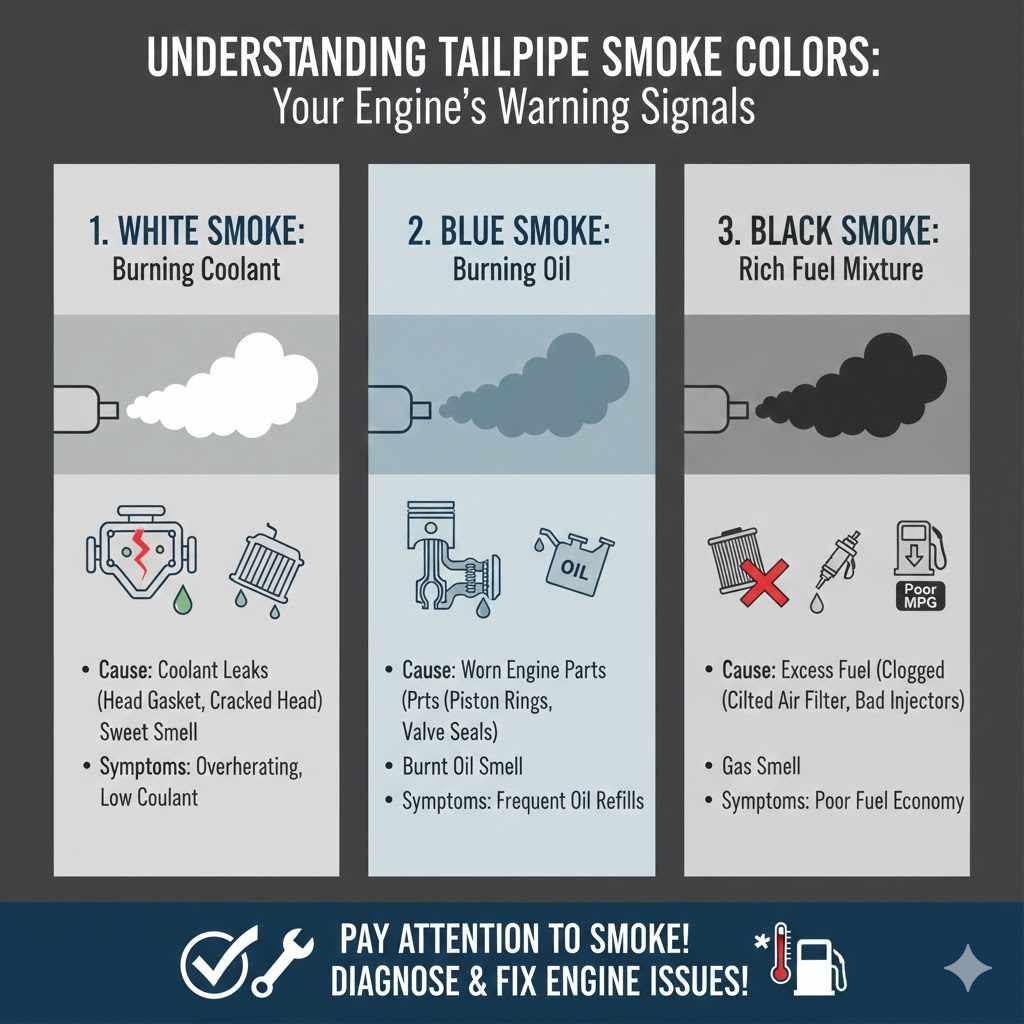
The color of the smoke coming from your car’s exhaust is a key indicator of what’s going on inside your engine. It’s like a warning light, but with smoke instead of a dashboard symbol. Different colors signal different issues, ranging from minor concerns to more serious problems that need immediate attention.
Paying attention to these colors can help you pinpoint the cause and take the right action quickly.
Mechanics often use smoke color as a first diagnostic clue. For example, white smoke might suggest coolant issues, while blue smoke usually points to oil burning. Black smoke is often related to fuel problems.
Understanding these basic color codes is the first step in knowing how to stop smoke from tailpipes fast.
White Smoke Explained
White smoke, especially when it’s thick and persistent, is often a sign that your engine is burning coolant. This happens when coolant leaks into the combustion chamber. It can leak from a cracked cylinder head, a blown head gasket, or a faulty intake manifold gasket.
When coolant enters the cylinders, it burns along with the fuel, creating a white, steamy exhaust. It might smell sweet due to the glycol in the coolant. If you notice your car overheating or your coolant level dropping without any visible external leaks, this is a strong indicator of an internal coolant leak.
A blown head gasket is a common culprit for white smoke. The head gasket seals the cylinders from the coolant and oil passages. When it fails, these fluids can mix or enter the combustion chamber.
Blue Smoke and Oil Burning
Blue or bluish-gray smoke usually means your engine is burning oil. This happens when engine oil gets into the combustion chamber and is burned along with the fuel. It typically smells like burnt oil.
Several parts can cause oil to enter the combustion chamber. Worn piston rings are a common cause; they’re supposed to scrape oil off the cylinder walls, but if they’re worn, oil can slip past and get burned. Worn valve seals or guides can also allow oil to leak down into the cylinders when the engine is off or at idle.
In older or high-mileage engines, wear and tear on these components are more likely. If you consistently need to add oil between changes, and you see blue smoke, it’s a strong sign that oil is being consumed.
Black Smoke and Fuel Issues
Black smoke is almost always an indication that your engine is running too rich, meaning it’s getting too much fuel relative to the amount of air. This is often called a “rich fuel mixture.” It can make your car smell like gasoline and might lead to poor fuel economy.
Common causes for a rich mixture include clogged air filters, faulty fuel injectors that are stuck open or leaking, a malfunctioning fuel pressure regulator, or sensor issues. A dirty or clogged air filter restricts airflow, making the engine think it needs more fuel.
Modern cars use various sensors, like the oxygen sensor and mass airflow sensor, to determine the correct fuel mixture. If these sensors are not working correctly, they can send incorrect information to the engine’s computer, leading to an improper fuel mixture and black smoke.
Common Causes and How to Stop Smoke from Tailpipes Fast
Addressing White Smoke Causes
If you’re seeing white smoke, the primary concern is coolant loss and potential engine damage. The most critical step is to have your cooling system inspected thoroughly. This involves checking the head gasket, cylinder head, and intake manifold for any signs of leaks or damage.
A mechanic will typically perform a “block test” to check for combustion gases in the coolant, which indicates a blown head gasket. They might also do a cooling system pressure test to find leaks. If a head gasket is blown, it’s a significant repair that involves removing the cylinder head.
In some less severe cases, very minor coolant leaks might be temporarily addressed with additives, but this is not a permanent solution and is generally not recommended for internal leaks. For persistent white smoke, repair is essential.