How Do Phone Car Mount Hangers Work
Lots of people wonder about How Do Phone Car Mount Hangers Work? It can seem a bit tricky at first glance, with all the different types out there. But don’t worry, it’s simpler than you think!
We’ll break it down step by step, making it super easy to grasp. Get ready to learn how to keep your phone safely in view on your next drive.
Understanding Phone Car Mount Hanger Mechanisms
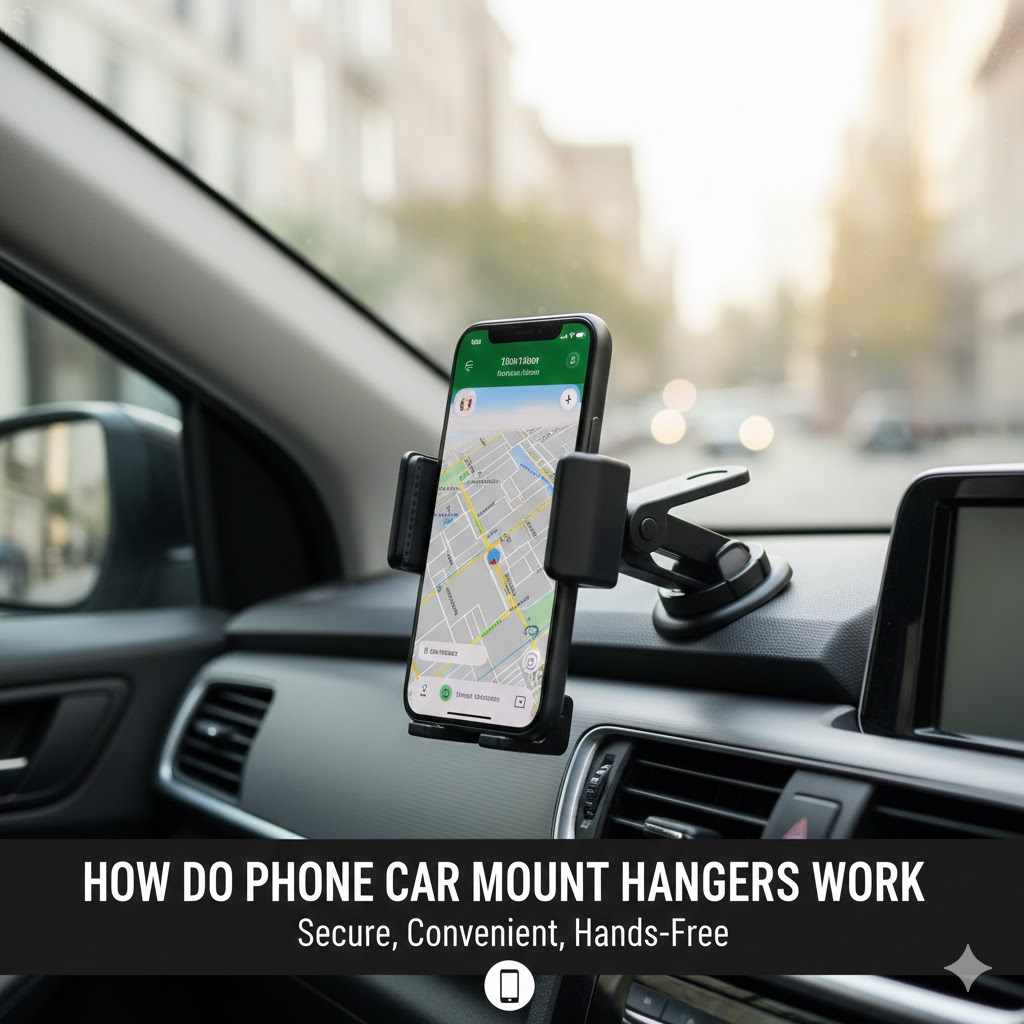
Phone car mount hangers are designed to keep your smartphone accessible and visible while you’re driving. This is crucial for navigation, hands-free calls, and even playing music. The main goal is to provide a secure and stable platform for your phone, preventing distractions and potential accidents.
Different designs use various methods to achieve this, but they all rely on basic physics and clever engineering to grip your phone and attach to your car.
Types of Phone Car Mounts
There are several common types of phone car mount hangers, each with its own way of attaching and holding your device. Understanding these differences helps you choose the best one for your car and your needs.
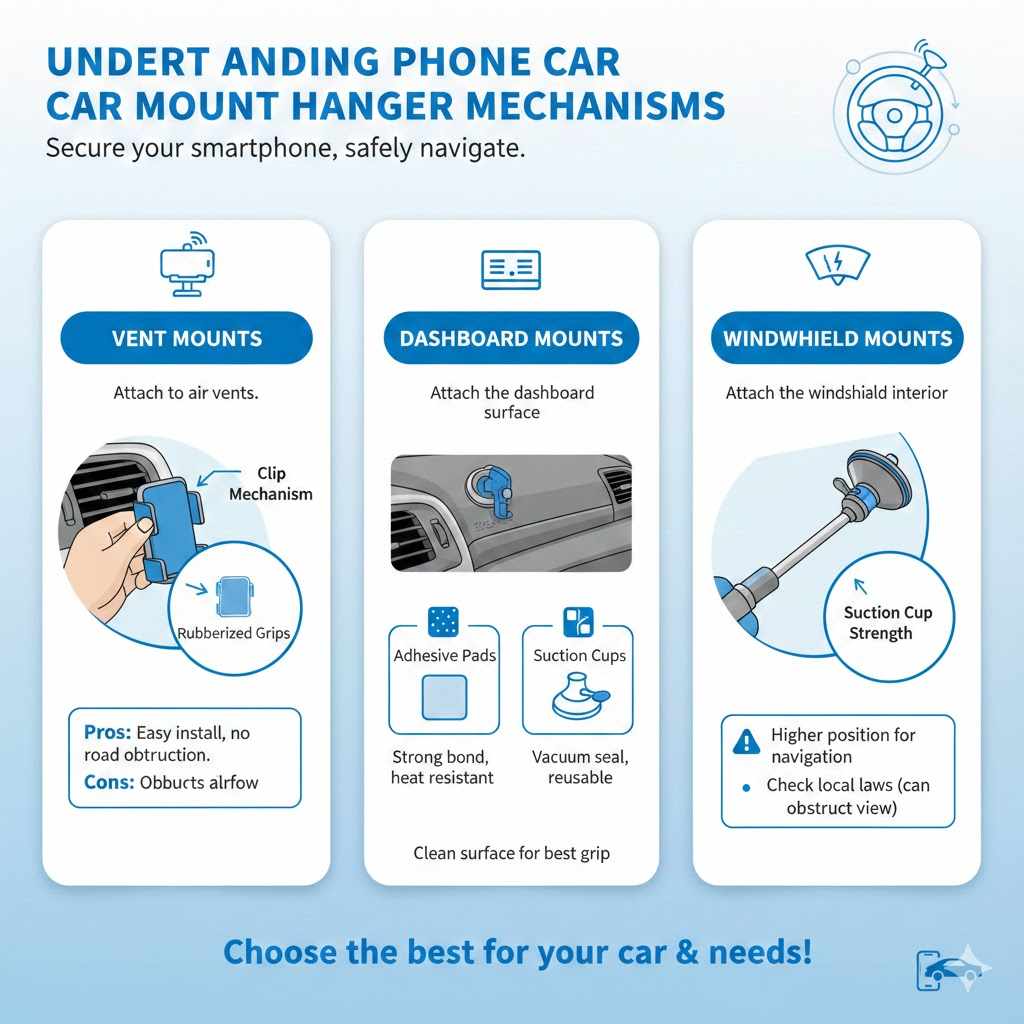
Vent Mounts
Vent mounts attach to your car’s air vents. They usually have clips that grip the slats of the vent. A holder then secures the phone, often with adjustable arms.
- Clip Mechanism: The clips are designed to be strong enough to hold the mount and phone without falling off, even on bumpy roads. They often have rubberized coatings to prevent scratching the vent slats.
These mounts are popular because they are easy to install and remove, and they don’t block your view of the road. However, they can sometimes obstruct airflow from the vent, which might be an issue in very hot or cold weather.
Dashboard Mounts
Dashboard mounts use adhesive pads or suction cups to attach to your car’s dashboard. Some have flexible arms that allow you to position the phone at the perfect angle.
- Adhesive Pads: These use a strong sticky backing that forms a bond with the dashboard surface. The adhesive is designed to withstand heat and vibration.
- Suction Cups: Similar to how a shower caddy sticks to a wall, suction cups create a vacuum seal. These are often reusable and can be repositioned.
Dashboard mounts offer a stable mounting solution. The adhesive types provide a very firm hold, while suction cup models offer flexibility. It’s important to clean the dashboard surface thoroughly before applying any adhesive or suction cup mount for the best grip.
Windshield Mounts
Windshield mounts also use suction cups, but they attach to the inside of your car’s windshield. They often have long, adjustable arms.
- Suction Cup Strength: The effectiveness of windshield mounts relies heavily on the quality of the suction cup and the condition of the windshield.
These mounts position the phone higher up, which can be convenient for navigation. However, in some regions, it’s illegal to obstruct your view of the road with any item on the windshield.
CD Slot Mounts
If your car has a CD player that you rarely use, a CD slot mount can be a great option. It slides into the CD slot and expands to create a secure fit.
- Expansion Mechanism: This involves a screw or lever that forces the mount to widen, gripping the sides of the CD slot.
These mounts are stable and don’t use adhesive or suction, which is appealing to many drivers. They also keep the phone within easy reach.
Phone Holding Mechanisms
Once the mount is attached to your car, it needs to hold your phone securely. This is where the phone holding mechanisms come into play.
Adjustable Claws or Arms
Many mounts feature adjustable arms or claws that expand to grip your phone. These are typically spring-loaded and can be widened or narrowed.
- Spring-Loaded Tension: The spring provides the force needed to keep the arms clamped onto your phone.
- Padding: The parts of the claws that touch your phone are usually padded with rubber or foam to prevent scratches and improve grip.
These are very common because they can accommodate phones of various sizes, including those with bulky cases. The tension ensures a firm hold so the phone doesn’t slip out during movement.
Magnetic Mounts
Magnetic mounts are very popular for their simplicity. They typically involve a magnetic base that attaches to your car and a metal plate that you stick to your phone or its case.
- Neodymium Magnets: These are very strong rare-earth magnets. They create a powerful magnetic field that holds the phone to the mount.
- Metal Plates: These can be thin discs or rectangular shapes. They are attracted to the magnet on the car mount.
To use a magnetic mount, you attach the metal plate to the back of your phone, usually with an adhesive. Then, when you place your phone near the magnetic base in your car, it snaps securely into place. The strength of the magnet is key to preventing the phone from falling off.
Gravity-Link Mounts
Gravity-link mounts use the weight of your phone to secure it. As you place your phone in the mount, the weight causes the sides to close in and grip the device.
- Leverage and Weight: The design uses the phone’s own weight to activate a lever system that pulls the gripping arms inward.
These are often very sleek and easy to use with one hand. You simply slide the phone in, and it automatically locks into place. Removing the phone is just as easy, usually requiring a simple lift.
Installation and Attachment Methods
The way a phone car mount hanger attaches to your car is fundamental to its function and stability. The chosen method must be robust enough to withstand the vibrations and movements of driving.
Adhesive Bases
Many dashboard and even some vent mounts utilize strong adhesive pads. These are often made from viscoelastic materials that provide a strong bond while allowing for some flexibility.
- Surface Preparation: For optimal adhesion, the car’s dashboard surface must be clean, dry, and free of dust or grease. Many manufacturers recommend cleaning the area with an alcohol wipe before applying the adhesive.
The adhesive’s effectiveness can be influenced by temperature. Extreme heat can soften some adhesives, while extreme cold can make them brittle. Proper application ensures the mount stays put even on spirited drives.
Suction Cups
Suction cup mounts are common for windshield and some dashboard models. They work by creating a vacuum seal between the cup and the surface.
- Vacuum Creation: When pressed onto a smooth, non-porous surface, the air between the cup and the surface is expelled. This pressure difference creates a strong holding force.
- Gel-Pads: Some high-quality suction cups have a gel-like layer that helps them stick to slightly textured surfaces and maintain a seal over time.
Suction cups can lose their grip if the seal is broken by dirt or temperature changes. Regularly cleaning both the suction cup and the mounting surface can help maintain a secure attachment. Many are designed to be washable and reusable.
Clamps and Grips
Vent mounts and CD slot mounts employ clamping or gripping mechanisms. These are designed to fit specific car features securely.
- Vent Clips: These often have multiple points of contact with the vent slats to distribute weight and prevent damage. Some have rubberized or silicone tips for better grip and protection.
- CD Slot Expanders: These mounts insert into the CD slot and then expand internally, using a screw or lever mechanism to create outward pressure against the slot walls.
The success of these mounts depends on the design of your car’s vents or CD slot. For instance, some car vents are too fragile or oddly shaped for certain vent mounts.
How Phone Car Mount Hangers Work A Step-by-Step Explanation
Let’s walk through the typical process of how these hangers function from start to finish. Understanding this process makes using them second nature.
- Attachment to Car: First, the base of the mount is secured to a suitable surface in your car. This could be an air vent, dashboard, windshield, or CD slot, using one of the methods described above (adhesive, suction, clamps). The key is a firm, stable connection to the car’s structure.
- Positioning the Mount: Once attached, you can often adjust the angle or extension of the mount’s arm to position it within your line of sight, without obstructing your view of the road.
- Securing the Phone: Next, you place your phone into the part of the mount designed to hold it. This could involve expanding adjustable claws, snapping the phone onto a magnetic plate, or letting its weight engage a gravity mechanism.
- Phone Held Securely: The holding mechanism applies pressure or magnetic force to keep the phone firmly in place. This prevents it from moving or falling, even when the car encounters bumps or turns.
- Phone Ready for Use: Your phone is now safely mounted and accessible for navigation, hands-free calls, or other functions.
The entire system works by combining a secure attachment to the vehicle with a reliable method to grip the phone itself. This synergy ensures your device remains stable and accessible throughout your drive.
The Science Behind Stability and Grip
Stability and grip are the two most critical aspects of any phone car mount. Without them, the mount is useless, and potentially dangerous. This section explores the scientific principles that make these mounts effective.
Friction and Adhesion
Friction is a force that opposes motion between two surfaces in contact. Adhesion is the tendency of dissimilar particles or surfaces to cling to one another.
- Friction in Clamps: When adjustable claws or clamps grip your phone, friction between the rubberized or padded surfaces of the mount and the phone’s surface prevents it from sliding out. The tighter the grip, the greater the friction.
- Adhesion on Surfaces: Suction cups rely on atmospheric pressure and adhesion to stick. Adhesion is also what helps adhesive pads bond to your dashboard. The materials used are engineered to maximize these forces on specific surfaces.
The surfaces themselves play a role. A smooth plastic phone case will have different frictional properties compared to a textured silicone case. Similarly, a smooth, glossy dashboard will interact differently with an adhesive pad than a rough, matte one.
Magnetic Force Principles
Magnetic mounts utilize the power of magnets. For these to work effectively, the magnets need to be strong enough to counteract gravity and inertia.
- Magnetic Attraction: The force of attraction between two magnets, or between a magnet and a ferromagnetic material (like iron or nickel), is what holds the phone.
- Strength of Magnets: Mounts often use neodymium magnets, which are among the strongest permanent magnets available. The size and number of these magnets determine the mount’s holding power.
The placement of the metal plate on the phone is also important. It needs to be centered and securely attached so the magnetic pull is evenly distributed. A phone with a very heavy battery case might require a stronger magnetic mount.
Mechanical Advantage and Leverage
Some mount designs use mechanical principles like leverage to enhance their grip or ease of use.
- Gravity Mounts: These mounts use the phone’s weight acting on a lever arm. As the phone is inserted, it pushes down on a pivot point, causing other arms to swing inward and clamp down on the sides.
- Spring-Loaded Mechanisms: The spring in adjustable arms provides a constant force. By using a lever system, the force of the spring can be amplified or controlled to create a secure grip without requiring excessive manual effort.
These mechanisms are designed to make it easy for the user to secure and release their phone, often with just one hand, while ensuring the phone remains stable during travel.
Material Science in Mount Design
The materials used in phone car mount hangers are crucial for their durability, grip, and ability to withstand varying environmental conditions within a car.
- ABS Plastic and Polycarbonate: These are commonly used for the main body of mounts due to their strength, durability, and resistance to impact and UV radiation.
- Silicone and Rubber: These materials are used for grips, pads, and suction cups. They provide excellent friction, protect the phone from scratches, and help create airtight seals.
- Metal Alloys: Some internal components, like springs or adjustment knobs, may use durable metal alloys to ensure longevity and consistent performance.
The combination of these materials allows the mounts to be both robust and gentle on your devices, while also being resistant to the temperature fluctuations common in a car cabin.
Practical Considerations and User Experience
Beyond the mechanics, how a phone car mount hanger actually performs in everyday use is what matters most to drivers. This section looks at the real-world application and user satisfaction.
Ease of Installation and Removal
A good mount should be straightforward to install and remove. This is especially important if you frequently switch cars or want to take the mount with you.
- Tool-Free Installation: Most modern mounts are designed for tool-free installation, relying on simple clamping, suction, or adhesive methods.
- Reusable Adhesives: Some mounts feature washable adhesives or suction cups that can be repositioned multiple times without losing their stickiness, offering flexibility.
Consider how long it takes to attach and detach the mount. For a quick setup, a magnetic or gravity mount is often preferred. For a more permanent fixture, a strong adhesive might be better.
Phone Compatibility and Case Considerations
Mounts need to work with a wide range of phones and also accommodate protective cases.
- Universal Fit: Many adjustable mounts are designed to fit most smartphones, from smaller models to larger “phablets.”
- Case Thickness: The thickness and material of your phone case can affect how well a mount grips or holds your phone. Some mounts may struggle with very thick rugged cases.
It’s wise to check the mount’s specifications or read reviews to see how well it performs with phones similar to yours and with common case types.
Adjustability and Viewing Angles
The ability to adjust the mount’s position is key for optimal viewing and safety.
- Articulating Arms: Many mounts feature ball joints or flexible gooseneck arms that allow for 360-degree rotation and tilting.
- Extension Options: Some mounts offer telescopic arms that can extend outwards, bringing the phone closer to the driver.
Proper adjustability ensures the phone screen is always visible without requiring the driver to crane their neck or look too far away from the road. This enhances both convenience and safety.
Durability and Longevity
A car mount is an investment, so its durability is important. It needs to withstand daily use and exposure to varying car environments.
- Material Quality: Mounts made from high-quality plastics, metals, and robust rubber components tend to last longer.
- Resistance to Heat and Cold: Materials should be able to withstand the extreme temperature fluctuations found inside a car, from scorching summer days to freezing winter nights.
Reviews often highlight how well a mount holds up over time, so checking user feedback can be very informative. A mount that holds up against vibrations, bumps, and temperature changes will provide a better long-term experience.
Real-World Performance Statistics
While specific statistics for phone car mount hangers can vary, general data on distracted driving highlights their importance.
According to the National Highway Traffic Safety Administration (NHTSA), in 2021, 3,522 people were killed in distracted driving crashes in the United States. This underscores the need for devices that keep phones safely mounted and accessible.
Surveys often show that over 70% of drivers use their smartphones for navigation, and a significant portion also use them for music or hands-free calls, making a reliable mount essential for a large segment of the driving population.
Common Issues and Troubleshooting
Even the best phone car mount hangers can sometimes present minor issues. Knowing how to troubleshoot them can save you frustration.
Mount Falling Off
This is the most common complaint. It can stem from several causes, depending on the mount type.
- Adhesive Issues: If an adhesive mount falls, the surface might not have been properly cleaned and prepped. Dust, dirt, or oily residues prevent a strong bond. Also, extreme temperature changes can weaken some adhesives.
- Suction Cup Failure: Suction cups can lose their seal due to dirt on the cup or surface, or a gradual loss of vacuum over time. Sometimes, the plastic can become brittle with age and exposure to sunlight.
- Vent Clip Looseness: If a vent mount falls, the clips might not be gripping the vent slats securely, or the slats themselves might be loose or angled in a way that the mount can’t hold.
Solution Steps: For adhesive mounts, try re-cleaning the surface with alcohol and reapplying. For suction cups, wash the cup with warm water and let it air dry completely before reapplying. For vent mounts, try different vent positions or consider a mount with stronger, more adaptable clips.
Phone Slipping Out
If your phone keeps slipping from the holder, the problem lies with the phone’s gripping mechanism.
- Insufficient Grip Tension: For spring-loaded or gravity mounts, the tension might not be enough for your phone’s weight or case.
- Magnetic Strength Weakness: For magnetic mounts, the magnet might not be strong enough, or the metal plate might be too small or poorly positioned on the phone.
- Phone Case Interference: Bulky, slippery, or unusually shaped phone cases can prevent the mount from gripping effectively.
Solution Steps: For adjustable grips, ensure they are fully extended and clamped tightly. For magnetic mounts, try repositioning the metal plate or using a stronger magnet if possible. If the case is the issue, try removing it or using a mount designed for larger phones or cases.
Obstruction of View or Controls
Some mounts can inadvertently block important parts of your car’s interior.
- Dashboard Placement: Placing a mount too high or too low on the dashboard can block air vents, the radio display, or critical buttons.
- Windshield Placement: In some regions, placing any object on the windshield can be a legal issue if it obstructs the driver’s view of the road.
Solution Steps: Carefully consider the placement of the mount before fully securing it. Look for mounts with flexible arms or extension poles that allow you to position the phone precisely where you need it without interfering with car functions or visibility.
Overheating of Phone
Prolonged use of navigation or charging can cause phones to overheat, and some mounts can exacerbate this.
- Blocked Airflow: Mounts that completely cover the back of the phone can trap heat. Vent mounts that block airflow to the phone from the car’s AC can also contribute.
- Direct Sunlight: Leaving a phone mounted in direct sunlight, especially on a hot day, can quickly lead to overheating.
Solution Steps: Choose mounts that allow for good airflow around the phone. Consider using mounts that position the phone in a shaded area or use the car’s AC to direct cool air towards it. Avoid leaving your phone in a hot car, even if it’s mounted.
Degradation of Car Interior
Improper installation or removal can sometimes damage your car’s dashboard or vents.
- Adhesive Residue: Strong adhesives can sometimes leave sticky residue on the dashboard, which can be difficult to remove.
- Damaged Vents: Overly aggressive clamping or the weight of a mount can bend or break fragile vent slats.
Solution Steps: Always use mounts made with quality materials designed to minimize damage. Follow installation instructions carefully. For adhesive residue, specialized cleaning products can often remove it without harming the dashboard finish.

Frequently Asked Questions
What is the strongest type of phone car mount?
The strongest type often depends on the specific product and how it’s installed, but generally, high-quality dashboard mounts with strong adhesive or very secure vent mounts with robust clips are considered very stable. Magnetic mounts can also be very strong if they use powerful neodymium magnets.
Can phone car mounts damage my phone or its case?
Generally, no. Most phone car mounts are designed with soft, padded surfaces (like rubber or silicone) where they come into contact with your phone or case to prevent scratches. However, a very poorly designed or cheaply made mount could potentially cause issues.
How often should I check my phone car mount’s attachment?
It’s a good practice to check your phone car mount’s attachment periodically, especially after driving on rough roads or if you’ve recently reinstalled it. A quick visual check and a gentle tug can ensure it’s still secure.
Will a phone car mount block my car’s air vents?
Some vent mounts can partially or fully block an air vent. This depends on the design of the mount and the layout of your car’s dashboard. It’s important to consider this when choosing a vent mount if you rely on that specific vent for airflow.
Are there any legal restrictions on using phone car mounts?
Yes, in some regions, there are laws about obstructing your view of the road. Mounting your phone on the windshield in a way that blocks your line of sight can be illegal. Always check your local traffic laws regarding phone use and mounting devices.
Conclusion
Phone car mount hangers work by using a secure attachment to your vehicle and a reliable mechanism to grip your phone. They employ principles like friction, adhesion, magnetic force, and mechanical advantage to keep your device stable. Choosing the right type for your car and phone, and ensuring proper installation, leads to a safe and convenient driving experience.