Does My Honda Civic EK Need Both Oxygen Sensors?
Many car owners wonder, “Does My Honda Civic EK Need Both Oxygen Sensors?” It’s a common question, especially for those new to car maintenance. Figuring out if you need one or both can seem a bit tricky. Don’t worry, we’ll make it super simple.
We’ll walk through exactly what you need to know, step-by-step, so you can get your Civic running its best. Let’s get your car back in top shape!
Understanding Oxygen Sensors in Your Honda Civic EK
Your Honda Civic EK, like most modern cars, uses oxygen sensors to help manage how your engine runs. These little devices are super important for keeping your car efficient and clean. They tell your car’s computer how much oxygen is in the exhaust. This information helps the computer adjust the fuel mix. A good fuel mix means your engine runs smoothly and uses fuel wisely. It also helps reduce pollution.
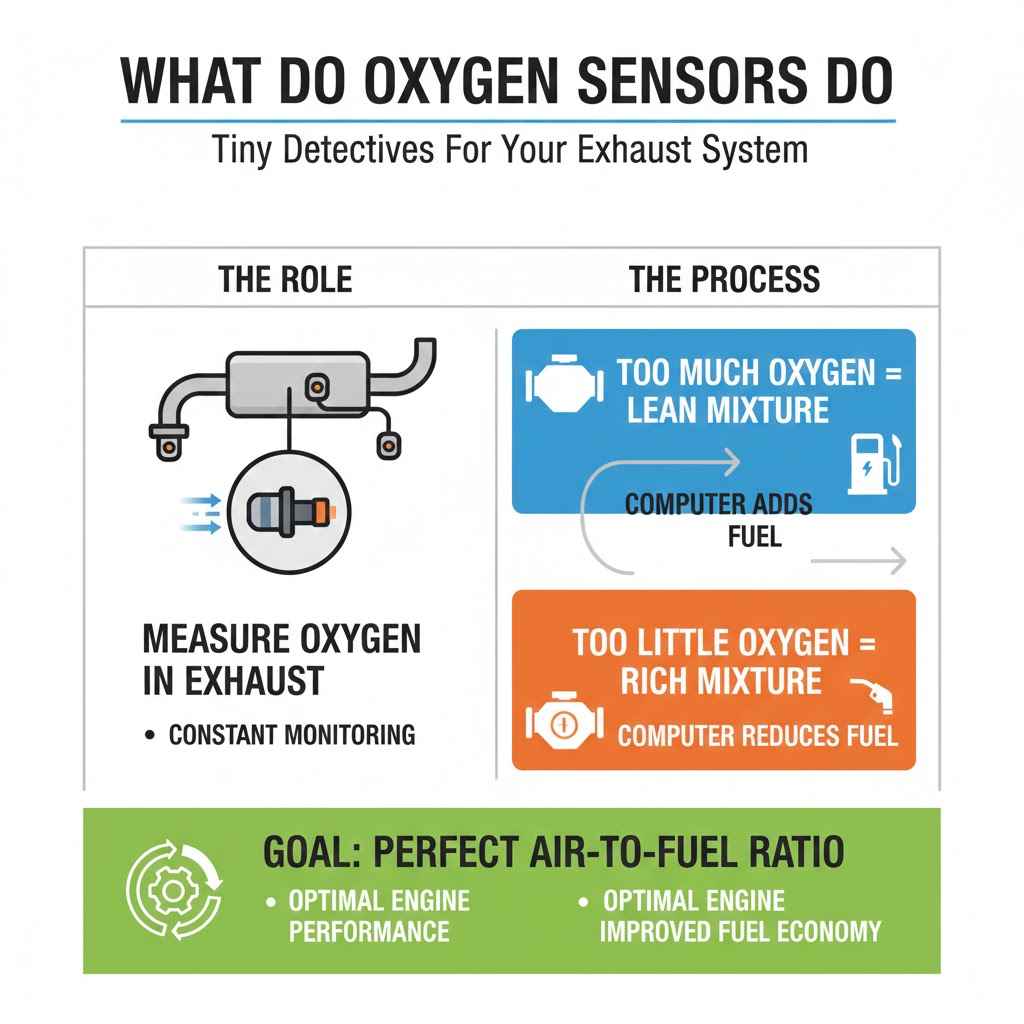
What Do Oxygen Sensors Do?
Think of oxygen sensors as tiny detectives for your exhaust. They sit in your car’s exhaust system. They measure the amount of oxygen that passes through.
Here’s a simple breakdown:
- If there’s too much oxygen, it means the engine isn’t getting enough fuel. The computer adds more fuel.
- If there’s too little oxygen, it means the engine is getting too much fuel. The computer reduces the fuel.
This constant back-and-forth helps maintain the perfect air-to-fuel ratio. This ratio is key for engine performance and fuel economy.
Why Two Oxygen Sensors?
Many cars, including your Honda Civic EK, have more than one oxygen sensor. Usually, there’s one before the catalytic converter and one after it.
Upstream Oxygen Sensor (Sensor 1): This one is located before the catalytic converter. It’s the primary sensor. It provides real-time data to the engine computer to control the air-fuel mixture during driving.
Downstream Oxygen Sensor (Sensor 2): This one is located after the catalytic converter. Its main job is to monitor the catalytic converter’s performance. It checks if the converter is cleaning the exhaust gases effectively.
Does My Honda Civic EK Need Both Oxygen Sensors?
Generally, yes, your Honda Civic EK needs both oxygen sensors to function correctly. Each sensor plays a distinct and vital role.
The upstream sensor directly influences your engine’s fuel injection and combustion. If it fails, you’ll likely notice performance issues.
The downstream sensor is critical for emissions control. If it fails, your car might still run, but it will be polluting more, and you might get a check engine light.
Symptoms of Bad Oxygen Sensors
If one or both of your oxygen sensors are going bad, you might notice some common signs. These can help you figure out if a sensor is the problem.
Common Symptoms
Check Engine Light Illuminates: This is the most common sign. The check engine light can come on for many reasons, but bad O2 sensors are a frequent culprit.
Reduced Fuel Economy: When an oxygen sensor isn’t working right, the engine computer can’t accurately control the air-fuel mixture. This often leads to the engine burning more fuel than it should.
Rough Idling or Engine Misfires: An incorrect fuel mixture can cause the engine to run unevenly. You might feel the car shaking or sputtering, especially when stopped or at low speeds.
Failing Emissions Tests: Because oxygen sensors are key to controlling emissions, a faulty sensor can cause your car to fail an emissions inspection.
Sulfur or Rotten Egg Smell from Exhaust: This can sometimes indicate that the catalytic converter isn’t working properly, which the downstream O2 sensor monitors.
Identifying Which Sensor Might Be the Issue
Pinpointing which specific oxygen sensor is causing trouble can sometimes be tricky. However, understanding their roles can offer clues.
Problems related to engine performance, fuel economy, and immediate drivability issues often point to the upstream (Sensor 1).
Problems primarily related to emissions or a check engine light with specific codes related to catalytic converter efficiency might indicate an issue with the downstream (Sensor 2).
How to Check Your Oxygen Sensors
Checking your oxygen sensors doesn’t always require a professional mechanic, though they have specialized tools.
DIY Checks (with caution)
1. Read the Check Engine Light Codes: The most straightforward way is to use an OBD-II scanner. This tool plugs into a port under your dashboard and reads trouble codes. Codes like “P0130” to “P0167” often relate to oxygen sensors. The code will usually specify which sensor circuit is having an issue (e.g., “Bank 1 Sensor 1” or “Bank 2 Sensor 2”).
2. Visual Inspection: If you’re comfortable working under your car (with it safely supported!), you can visually inspect the sensors. Look for physical damage, corrosion on the wiring, or a sensor element that looks dirty or clogged.
3. Observe Sensor Readings (Advanced DIY): A more advanced scanner can show live data from the oxygen sensors. You can watch how their voltage changes. A healthy upstream sensor’s voltage should fluctuate constantly. The downstream sensor’s voltage should be more stable, indicating the catalytic converter is working.
Replacing Oxygen Sensors in Your Honda Civic EK
Replacing oxygen sensors is a task many DIYers can tackle. However, it’s important to have the right tools and knowledge.
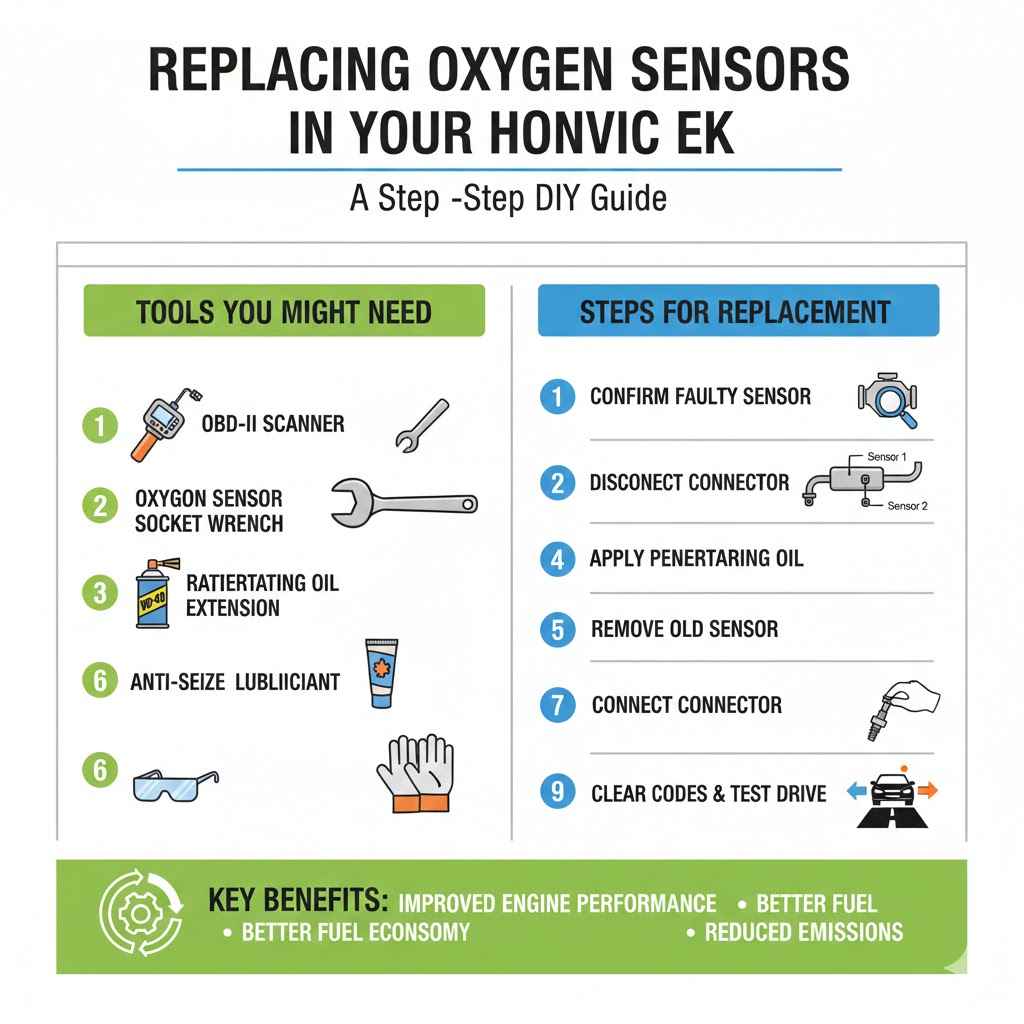
Tools You Might Need
OBD-II scanner (to confirm the issue and clear codes)
Oxygen sensor socket wrench (specialized tool for easier removal)
Ratchet and extension
Penetrating oil (like WD-40, to loosen stubborn sensors)
Anti-seize lubricant (for the new sensor threads)
Safety glasses and gloves
Steps for Replacement
1. Confirm the Faulty Sensor: Use your OBD-II scanner to identify the specific sensor that needs replacement.
2. Locate the Sensor: Find the old oxygen sensor in the exhaust system. Remember, Sensor 1 is usually before the catalytic converter, and Sensor 2 is after.
3. Disconnect the Electrical Connector: Carefully unplug the electrical connector from the old sensor.
4. Apply Penetrating Oil: Spray penetrating oil around the base of the old sensor where it screws into the exhaust pipe. Let it sit for a while to help loosen it.
5. Remove the Old Sensor: Use the oxygen sensor socket wrench and your ratchet to unscrew the old sensor. It might be tight.
6. Prepare the New Sensor: Apply a small amount of anti-seize lubricant to the threads of the new sensor. Be careful not to get any on the sensor tip itself.
7. Install the New Sensor: Screw the new sensor into place by hand to avoid cross-threading. Then, use your socket wrench to tighten it securely.
8. Connect the Electrical Connector: Plug the electrical connector for the new sensor into its corresponding wiring harness.
9. Clear the Codes and Test Drive: Use your OBD-II scanner to clear the check engine light codes. Then, start your car and go for a test drive to ensure the light stays off and the engine runs smoothly.
Using Quality Parts
When replacing oxygen sensors, it’s always best to use high-quality parts. Your Honda Civic EK is designed to work with specific types of sensors. Using a reputable brand ensures better performance and longevity. Many manufacturers recommend using Original Equipment Manufacturer (OEM) parts for the best fit and function.
When to Call a Professional
While many people can replace their own O2 sensors, there are times when it’s best to let a professional handle it.
If you’re not comfortable working under your car or with its electrical systems.
If the old sensor is extremely corroded or stuck, and you risk damaging the exhaust pipe.
If you’ve replaced a sensor and the check engine light comes back on, there might be a more complex issue.
If you don’t have an OBD-II scanner or the technical know-how to interpret the codes.
Frequently Asked Questions
Question: How do I know if my Honda Civic EK needs an oxygen sensor?
Answer: The most common sign is your check engine light coming on. You might also notice a drop in gas mileage, rough engine performance, or a rotten egg smell from your exhaust.
Question: Can I drive my Honda Civic EK with a bad oxygen sensor?
Answer: Yes, you can typically drive with a bad oxygen sensor, but it’s not recommended for long. It will reduce your fuel efficiency, increase pollution, and can potentially damage other engine components over time.
Question: Are upstream and downstream oxygen sensors interchangeable?
Answer: No, they are not interchangeable. The upstream and downstream sensors have different functions and are calibrated differently to monitor specific parts of the exhaust system.
Question: What happens if I only replace one oxygen sensor?
Answer: If your car requires both sensors and you only replace one, the other faulty sensor will continue to cause problems. This can lead to continued poor performance, bad fuel economy, and the check engine light staying on or returning.
Question: How long do oxygen sensors typically last in a Honda Civic EK?
Answer: Oxygen sensors are wear-and-tear items. They typically last between 60,000 and 100,000 miles, but this can vary based on driving conditions and the quality of the sensor.
Final Thoughts
Your Honda Civic EK likely needs both its oxygen sensors for optimal performance and emissions. Each sensor has a specific job. The upstream sensor manages your engine’s fuel mixture, while the downstream sensor checks your catalytic converter. Recognizing the symptoms, like a check engine light or poor gas mileage, helps identify issues. Using an OBD-II scanner can pinpoint which sensor needs attention. Replacing them is often a manageable DIY task with the right tools and care, but don’t hesitate to seek professional help if needed. Keeping your sensors in good shape ensures your Civic runs efficiently and cleanly on every drive.