Do X And Z Exhaust Manifolds Flow Very Well? Essential
Yes, “X and Z” style exhaust manifolds, often referring to performance or header designs, can flow exceptionally well when properly designed and matched to the engine. Proper flow depends heavily on tube length, diameter, and collector design, which directly impacts performance and efficiency.
Are you looking to boost your car’s power or just trying to figure out what those funny-looking exhaust pieces under the hood actually do? You’ve probably seen terms like “X-pipe” and “Z-pipe” thrown around, especially when talking about exhaust upgrades. It can feel confusing, like learning a whole new language just to get your car running better. Many car owners worry that swapping out their stock parts might hurt efficiency or make too much noise. Take a deep breath! I’m Monowar, and I’m here to walk you through exactly what these parts are and how they affect the way your engine breathes. We will break down the science behind exhaust flow into simple steps so you understand the real benefits—and if they are right for you. Let’s demystify exhaust manifolds and see how they boost performance safely.
Understanding the “Breathing” Job of Your Exhaust System
Your engine needs to breathe, just like you do. It pulls in air and fuel (inhale), makes power, and then pushes out the used gases (exhale). The exhaust manifold is the very first piece in that “exhale” process. Its main job is simple: collect the hot gases from each cylinder and funnel them smoothly into one pipe so they can head toward the muffler and out the tailpipe.
If these gases get stuck or confused, it’s like trying to run a marathon while breathing through a tiny straw. This restriction is called back pressure. Good exhaust flow means less back pressure, which lets the engine run freer, delivering more power and often better fuel efficiency.
What Makes Exhaust Flow “Well”?
When we say an exhaust flows “very well,” we mean it minimizes the resistance the exhaust gases meet on their way out. This involves three main ideas:
1. Smooth Path: Fewer sharp bends or tight squeezes.
2. Correct Sizing: Pipes that are neither too big (which slows down gas velocity) nor too small (which causes restriction).
3. Scavenging: A fancy word for using the vacuum created by one cylinder emptying to help pull the gases out of the next cylinder.

Decoding “X” and “Z” in Exhaust Systems
When people ask if “X” and “Z” exhaust components flow well, they are usually talking about specific design elements found after the manifold, specifically in the mid-pipe section, which is crucial for flow balance. While manifolds collect gases, these components manage how those gases mix before hitting the catalytic converter or mufflers.
The X-Pipe: The Balanced Flow King
The X-pipe gets its name because the two exhaust pipes are joined in the middle by an ‘X’ shaped connector.
How the X-Pipe Works
The magic of the X-pipe is flow equalization and scavenging. When the exhaust pulses move down the left and right sides of the exhaust:
The X shape allows the faster-moving pulses from one side to cross over and enter the opposite (often slower) side pipe.
This crossover briefly equalizes the pressure between the two banks of the engine (especially important on V6 or V8 engines).
This pressure balancing creates a slight vacuum effect, helping to pull the exhaust gases out of the cylinders more efficiently—this is scavenging.
Flow Benefits of the X-Pipe
X-pipes generally offer excellent flow characteristics, often improving mid-range and high-RPM power delivery compared to standard systems.
| Feature | Description | Flow Impact |
|---|---|---|
| Balance | Equalizes pressure between exhaust banks. | Excellent high-RPM flow. |
| Scavenging | Uses gas pulses to assist cylinder emptying. | Improves engine breathing. |
| Sound | Creates a smoother, higher-pitched tone. | Less rasp, more refined sound profile. |
The Z-Pipe (or H-Pipe): A Different Approach
The “Z-Pipe” term is less common in formal performance circles than the H-pipe, but often in casual conversation or specific aftermarket setups, people refer to an H-pipe installed in a “Z” configuration (though functionally, they are related or sometimes confused with an H-pipe). Let’s focus on the H-Pipe, as it represents the alternative to the X-Pipe.
The H-Pipe joins the two exhaust pipes with a simple crossover section shaped like an ‘H’.
How the H-Pipe Works
The H-pipe functions similarly to the X-pipe by allowing gases to cross over, but the connection is less direct. Exhaust pulses meet at a 90-degree junction.
Flow Benefits of the H-Pipe
H-pipes excel at scavenging at lower RPMs because the crossover is more isolated than the X-pipe’s open connection. They are often favored on classic muscle cars because they produce a deeper, traditional “rumble” sound.
In terms of raw, peak horsepower flow, the X-pipe usually wins because its smooth crossover creates less resistance, especially at very high engine speeds. However, the H-pipe offers fantastic low-to-mid-range torque improvement.
Performance Exhaust Manifolds: The Real Flow Bottleneck
While X and Z/H pipes manage flow after the manifold, the manifold itself is where the gas journey begins. For the best overall flow, the manifold must be optimized. This is where aftermarket headers come into play, replacing the thick, restrictive factory manifold.
Stock Cast Iron Manifolds
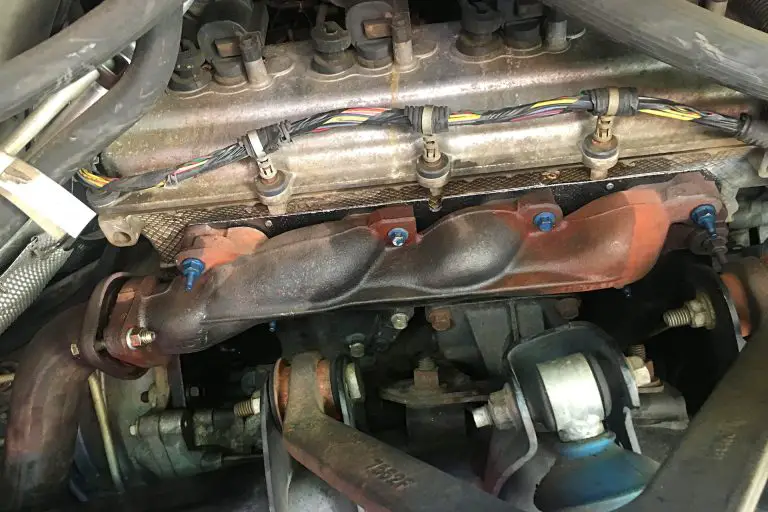
Most factory manifolds are made from heavy cast iron. They prioritize durability and noise dampening over performance. Because they are cast in a rough mold, the internal pathways are often uneven, leading to turbulence and high back pressure.
Pros: Cheap to produce, very durable.
Cons: Heavy, restrictive flow, poor high-temperature resistance.
Aftermarket Headers (Tubular Exhaust Manifolds)
Headers are specifically designed pipes (usually stainless steel or coated mild steel) that replace the stock manifold. They are the gold standard for improving the initial exhaust flow.
Tuning Header Design for Maximum Flow
When we ask if they flow well, we are asking if the header tubes are designed correctly. High-flow headers focus on:
- Equal Length Primary Tubes (ELHT): Every tube coming from a cylinder is the same length before joining the collector. This is vital for achieving true, predictable scavenging across all cylinders.
- Collector Design: The point where pipes merge. A well-designed collector (often 4-into-1 or 4-into-2-into-1) smoothly merges the flows rather than forcing them together abruptly.
- Tube Diameter: The size must match the engine’s displacement and power goals. Too large, and exhaust velocity drops; too small, and you choke the engine.
A set of properly sized, equal-length headers flows significantly better than stock, maximizing the potential of any exhaust crossover system (X or H).
Does the Manifold Type Affect X or H-Pipe Performance?
Absolutely! The best flow comes from a complete system working in harmony.
Imagine an X-pipe is a massive six-lane highway interchange. If the roads leading to that interchange (the manifolds/headers) are narrow dirt paths, the cars (exhaust gases) will still back up before they get to the smooth interchange.
Best Practice: Headers + X-Pipe
For maximum peak power and the best possible flow rate (especially on naturally aspirated or moderately modified engines), the combination is generally:
1. High-Flow Headers: Equal-length primary tubes feeding into a well-designed collector.
2. X-Pipe: Used downstream to balance flow across the entire RPM range and improve scavenging at high speeds.
This setup offers the smoothest path from the cylinder head to the rest of the exhaust system, resulting in the best breathing capability. If you are building a dedicated performance car aiming for top-end horsepower, this is often the route taken.
Flow for Daily Drivers vs. Race Cars
It’s important to remember that “flows very well” means different things depending on how you use your car.
Daily Driver Goals (Efficiency & Sound Control)
If your car is a commuter, you need great efficiency and quiet operation.
Stock Manifolds + H-Pipe: A good starting point. The H-pipe balances the sound slightly better than true duals and offers a minor flow improvement over stock without significant noise increases. Check out the EPA’s guidelines on vehicle maintenance for maintaining stock efficiency.
Why It Works: Low flow restriction is needed to maintain stock fuel economy, and loud exhaust is generally unwanted.
Performance Driver Goals (Maximum Power)
If you track your car or want quick acceleration, you need aggressive flow.
Performance Headers + X-Pipe: These offer the highest theoretical flow potential. The trade-off is usually more noise and higher cost.
Why It Works: Engines making more power push out more gas faster, demanding the smoothest possible exit route to prevent choking at high RPMs.
Safety and Legal Considerations for High-Flow Systems
When upgrading to a free-flowing system, especially headers, safety and legality are paramount. Improved flow means hotter exhaust gases move faster.
Catalytic Converter Placement
High-flow exhaust systems often necessitate removing or relocating critical components like catalytic converters (cats).
- Never Remove Cats: Removing factory catalytic converters is illegal for street-driven vehicles in the United States under the Clean Air Act, as enforced by the EPA. They are essential for scrubbing harmful pollutants.
- High-Flow Cats: If you want better flow while staying legal, look for performance “high-flow catalytic converters.” These use thinner materials or larger internal surfaces to reduce the pressure drop while still cleaning the exhaust.
Gasket Sealing
High-flow headers often stress the exhaust gaskets more than stock manifolds due to increased thermal expansion and vibration. Poor sealing leads to exhaust leaks, which not only sound bad but can also introduce fresh oxygen into the exhaust stream, confusing your oxygen sensors and potentially causing the engine computer (ECU) to run poorly.
Always use high-quality, multi-layer steel (MLS) gaskets designed for performance headers when upgrading.
Tools You Might Need for Exhaust Component Swaps
If you decide to upgrade or inspect flow components, having the right tools makes the job safer and faster. Never work under a car supported only by a jack; always use quality jack stands rated for your vehicle’s weight.
| Tool Category | Specific Tool Examples | Why You Need It |
|---|---|---|
| Lifting & Support | Hydraulic Jack, Jack Stands (rated appropriately) | For safe access beneath the vehicle. |
| Removal | Wrench Set (Metric/SAE), Socket Set, Penetrating Oil (like WD-40 or PB Blaster) | To break loose rusted manifold or crossover bolts. |
| Installation | Torque Wrench | Crucial for tightening new header or X-pipe flanges to the correct specification to prevent leaks. |
| Safety | Safety Glasses, Gloves | Protect eyes and hands from heat and debris. |
Step-by-Step: Assessing Your Current Exhaust Flow
Before spending money on an X-pipe or new headers, you need to confirm if your current setup is restricting flow. This is a simple, visual check any beginner can perform.
Step 1: Visual Inspection of Your Manifold
Crawl safely under the car (using stands!) and look at where the exhaust pipes meet the engine block.
Are the manifolds cracked or visibly warped? Cracks allow exhaust gas to escape early, reducing pressure needed for scavenging downstream.
Look closely at any bends in the pipe right after the manifold. Sharp, tight bends significantly hurt flow more than gentle curves.
Step 2: Inspecting the Factory Crossover (If Applicable)
If you have a V-engine, check how the two sides connect before the catalytic converters.
If you see a pipe joining the banks, that is your factory equalizer (H-pipe style). Is it rusted through or blocked?
If you have a true dual system with no connection, you have zero flow balancing, which is why many stock V8s have a noticeable sound difference between banks.
Step 3: Listening for Obstructions
Start your cold engine and listen. A healthy exhaust will sound even.
If one bank sounds noticeably louder or “poppier” than the other, it often indicates a blockage or a significant leak on the quieter side (meaning gases aren’t exiting well).
Listen for rattling sounds from the catalytic converters. If the honeycomb material inside breaks loose, it can partially block flow, making even the best X-pipe useless.
Step 4: Confirming Through Performance Checks
The ultimate test is how the car feels.
Does the car feel sluggish above 4,000 RPM, even when you floor the pedal? This “falling flat” is a classic symptom of an exhaust system choking the engine due to back pressure.
If upgrading to headers proves difficult or expensive, swapping a restrictive factory crossover (if one exists) for a properly designed X-pipe is usually the most noticeable, safe, and cost-effective flow improvement you can make on the exhaust side.

FAQ: Beginner Questions About Exhaust Flow
Here are some common questions new enthusiasts have about exhaust components and flow.
Q1: Will an X-pipe make my car louder?
A: Generally, yes, but it changes the quality of the sound more than just adding raw volume. An X-pipe smooths out the choppy V8 sound into a higher-pitched, more refined tone. It usually makes the exhaust sound less “raspy” but slightly louder overall.
Q2: How much horsepower do X and Z/H-pipes actually add?
A: On a typical V8 engine with stock manifolds, the increase is modest, maybe 3–7 horsepower. The real benefit comes when paired with performance headers or a performance intake system; together, they can unlock 15–30 HP based on the engine design.
Q3: Is it better to have an X-pipe or an H-pipe?
A: For maximum top-end horsepower and flow, the X-pipe is usually technically superior due to its smoother merging of pulses. For classic muscle car sound and excellent low-end torque, many enthusiasts prefer the H-pipe.
Q4: Do I have to tune my car’s computer if I install headers?
A: If you only install headers and keep the factory catalytic converters and oxygen sensors in place, most modern cars will run fine without a tune. However, adding a performance tune maximizes the potential gains from the improved flow!
Q5: What is scavenge ratio in headers?
A: It refers to how effectively the exhaust pulse from one cylinder helps pull the exhaust from the next. Headers designed with equal-length primaries and the correct firing order pairing are engineered to maximize this helpful scavenging effect, improving efficiency while flowing better.
Q6: Are cheap eBay headers worth installing?
A: Quality matters immensely in exhaust flow. Very cheap headers often have poor welds, unequal tube lengths (ruining scavenging), and thin metal that warps quickly. While they look like headers, they might flow only slightly better than stock and could cause leaks or cracks soon after installation.
Conclusion: Achieving Excellent Exhaust Flow
Understanding “Do X and Z exhaust manifolds flow very well?” boils down to understanding the entire system. While “X” and “Z/H” components are vital for balancing and scavenging exhaust gases downstream*, the real foundation for excellent flow starts at the engine head with high-quality, properly tuned exhaust manifolds (headers).
If you are chasing every last bit of power, investing in performance headers paired with an X-pipe crossover is your best path to superior breathing. For the everyday driver, ensuring your stock manifolds aren’t cracked and occasionally installing a quality X-pipe can provide a noticeable, low-restriction improvement in overall engine response and efficiency. Always prioritize quality components, ensure tight seals with good gaskets, and most importantly, keep those catalytic converters in place for safe, legal operation. With this knowledge, you are now equipped to make smart decisions that keep your engine breathing freely and performing at its best!