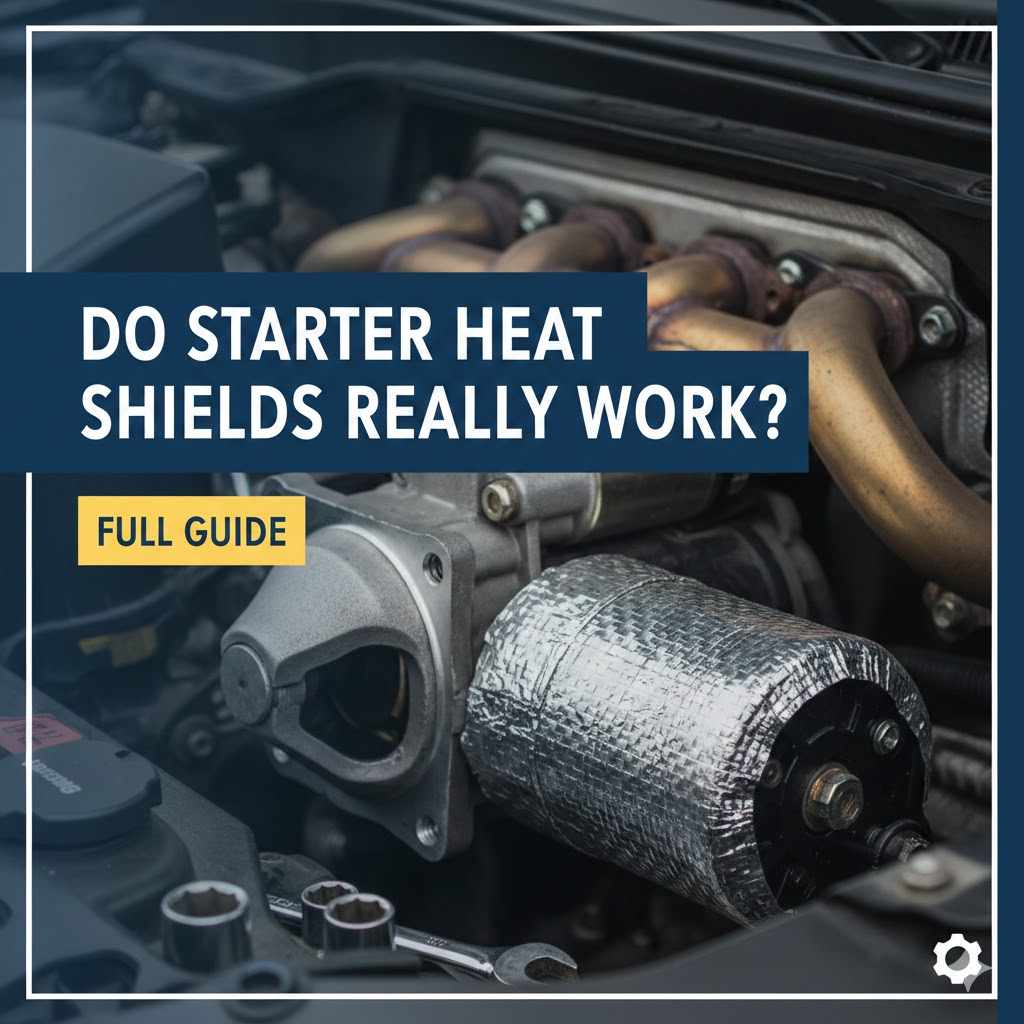
Do Starter Heat Shields Really Work? Full Guide
Many folks new to car maintenance wonder about those shiny metal shields near the starter motor. The question, “Do Starter Heat Shields Really Work? Full Guide,” pops up a lot because it can seem a bit confusing.
Are they really needed, or just extra parts? We’re here to make it super simple. This guide will walk you through everything, step by step, so you can understand what starter heat shields do and if you need one.
We’ll cover it all in a way that’s easy to grasp.
What Is A Starter Heat Shield And Why It Matters
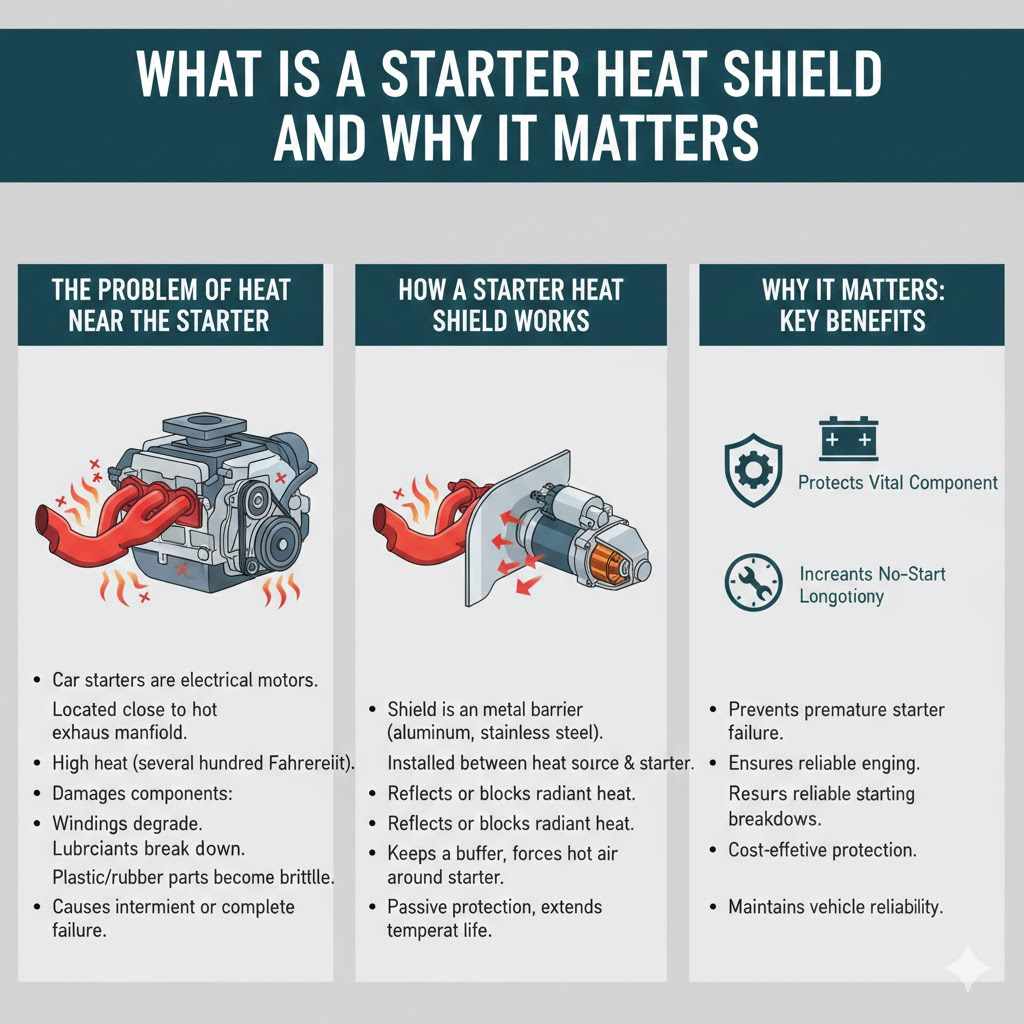
This section explains the main job of a starter heat shield. It’s a barrier that stops heat from damaging the starter motor. Car starters can get hot, especially during long drives or when the engine is working hard.
This heat can harm the starter’s internal parts, causing it to fail prematurely. A heat shield acts like an umbrella, deflecting this heat away. It’s a simple but effective way to protect a vital engine component.
Understanding its role is the first step in knowing if your car needs one.
The Problem Of Heat Near The Starter
Car starters are electrical motors. They work by engaging with the engine’s flywheel to get the engine turning. This process can generate a good amount of heat.
Many starter motors are located close to the exhaust manifold. The exhaust manifold is a part of the engine that carries hot gases from the cylinders to the exhaust system. These gases are incredibly hot, often reaching temperatures of several hundred degrees Fahrenheit.
When a starter motor is exposed to this high heat for extended periods, its internal components can suffer. The delicate windings inside the starter can degrade. The lubricants used within the starter can break down or evaporate.
Even the plastic and rubber parts can become brittle and crack. This can lead to a starter motor that works intermittently or fails completely. It’s a common reason for cars not starting, especially after a hot engine has been running for a while.
How A Starter Heat Shield Works
A starter heat shield is typically made of metal, often aluminum or stainless steel. It’s designed to be installed between the heat source (like the exhaust manifold) and the starter motor. The shield’s primary function is to reflect or block radiant heat.
Imagine standing next to a campfire; you feel the heat. Now imagine putting a large, flat rock between you and the fire. The rock absorbs some heat and reflects some away, making it more comfortable for you.
The shield doesn’t actively cool the starter. Instead, it creates a buffer. It forces the hot air and radiant heat to go around the starter motor.
This keeps the starter motor at a much lower operating temperature. Lower temperatures mean the starter’s components last longer, and it’s less likely to overheat and fail. It’s a passive protection system that plays a crucial role in the longevity of the starter.
Do Starter Heat Shields Really Work? Evidence And Examples
The question, “Do Starter Heat Shields Really Work? Full Guide” is central to whether you should install or keep one on your vehicle. The answer is a resounding yes, especially for certain types of vehicles.
Many car manufacturers include starter heat shields as standard equipment. This is a strong indicator that they are deemed necessary for reliable operation. If the manufacturer installs them, it’s because they’ve identified a real problem with heat.
We see evidence of their effectiveness in many common vehicle designs. Cars with engines that run particularly hot, or those with starter motors placed in close proximity to the exhaust, benefit the most. Without a heat shield, these starters are under constant thermal stress.
This stress leads to accelerated wear and tear. Reports from mechanics and car owners often point to heat-related starter failures in vehicles that lack adequate shielding. Installing an aftermarket heat shield can prevent such issues.
Case Study The Overheating Starter
Consider a common scenario: a car starts fine when cold, but after a long drive, it cranks slowly or won’t start at all. Once the engine cools down, it starts again. This pattern is a classic symptom of a starter motor overheating.
In many such cases, the car either has no heat shield or a damaged/missing one. A mechanic might diagnose a failing starter. However, the root cause could be exposure to engine heat.
Let’s look at a real-life example. A popular sedan model, known for its powerful V6 engine, had a recurring issue where starters failed within 50,000 miles. Owners complained about the no-start condition after hot drives.
Inspections revealed that the starter was located directly above the exhaust manifold, with no heat shield. After some owners retrofitted aftermarket starter heat shields, the frequency of starter failures dropped significantly. This demonstrates that the shields do work by protecting the starter.
Statistics On Starter Failures And Heat
While exact statistics for “heat-related starter failures” are hard to pinpoint universally, anecdotal evidence and manufacturer designs strongly support the need for heat shielding. General automotive repair data indicates that starter motors are a common failure point. Factors contributing to these failures include age, wear, and environmental conditions.
Heat is a major environmental factor that accelerates the degradation of electrical components.
One automotive parts supplier reported that starter motors are among the top 10 replaced parts for vehicles older than five years. While not all these failures are directly heat-related, a significant portion, especially those exhibiting the “won’t start when hot” symptom, are. Studies on the lifespan of electronic components in vehicles consistently show that higher operating temperatures drastically reduce reliability and lifespan.
For instance, doubling the operating temperature of some electronic parts can reduce their life by half.
Types Of Vehicles That Benefit Most
Certain vehicle types are more prone to starter heat issues. High-performance cars often have more powerful engines that generate more heat. They may also be designed with compact engine bays, placing components like the starter very close to hot exhaust systems.
Sports cars and performance sedans frequently come with factory-installed starter heat shields.
Another category includes vehicles that are frequently driven in stop-and-go traffic or heavy towing situations. These conditions cause engines to run hotter for longer periods. Older vehicles may also benefit, as their original heat shields might have degraded or fallen off over time.
Any vehicle where the starter motor is visibly close to the exhaust manifold or turbocharger should be considered a candidate for extra heat protection.
Installing A Starter Heat Shield Simple Steps
Now that you know “Do Starter Heat Shields Really Work? Full Guide,” you might want to know how to get one installed. Installing a starter heat shield is often a straightforward process.
It involves a few basic tools and some careful work. This guide breaks down the steps so you can tackle it yourself or understand what a mechanic is doing. Safety is always the first priority when working on a car.
Gathering Your Tools And Materials
Before you start, make sure you have everything you need. This will make the job much smoother. You’ll typically need a starter heat shield kit.
These kits usually come with the shield itself and any necessary mounting hardware like bolts, nuts, and washers.
Essential tools include a socket set with various sizes, a wrench set, and possibly a screwdriver. You might need a torque wrench to ensure the hardware is tightened to the correct specification. Safety glasses are a must to protect your eyes from debris.
Gloves can also be helpful. If your car’s starter or exhaust is very rusty, you might also need a wire brush and some penetrating oil to loosen stuck bolts. Always consult your car’s manual or a reliable online resource for specific torque values.
Safety Precautions Before You Begin
Working on a car can be dangerous if safety precautions are not followed. Your car must be on a level surface. Engage the parking brake firmly.
It is highly recommended to disconnect the negative battery terminal. This prevents any accidental electrical shorts while you are working near the starter. The engine and exhaust components can be extremely hot, so ensure the car has cooled down completely, ideally for several hours or overnight.
Wear safety glasses at all times. If you are lifting the car to get better access, use jack stands. Never rely solely on a jack.
Understand the layout of your engine bay and identify the starter motor and any potential heat sources like the exhaust manifold. If you are unsure about any step, it’s always best to consult a professional mechanic.
Step-By-Step Installation Process
Locate the starter motor. It’s usually a cylindrical component bolted to the transmission bell housing. You’ll likely see wires connected to it.
Identify the exhaust manifold or pipe that is closest to the starter.
If your vehicle already has a heat shield, you’ll need to remove it first. This typically involves unbolting it. If you are installing a new shield, you will position the new shield between the starter and the heat source.
Many shields are designed to clamp or bolt directly to the starter housing or nearby engine components. Follow the specific instructions that come with your heat shield kit.
Align the shield so it creates a good barrier. Secure it using the provided hardware. Tighten bolts snugly, but avoid over-tightening, which could strip threads or damage components.
Once the shield is securely in place, reconnect the negative battery terminal. Start the car to ensure everything is working correctly.
Common Installation Challenges
One of the most common challenges is rust. Older vehicles can have heavily rusted bolts holding existing heat shields or mounting points. These bolts can be difficult to remove and may even break off.
Using penetrating oil and allowing it to soak in can help. A breaker bar can provide extra leverage for stubborn bolts.
Another issue can be limited space. Engine bays are often crowded, making it hard to get tools into position or to see what you are doing. Flexible extension bars for your sockets can be a lifesaver.
Sometimes, removing other components, like air intake hoses or brackets, might be necessary to gain better access. Always refer to your car’s service manual for guidance on removing and reinstalling other parts.
When To Consider A Starter Heat Shield
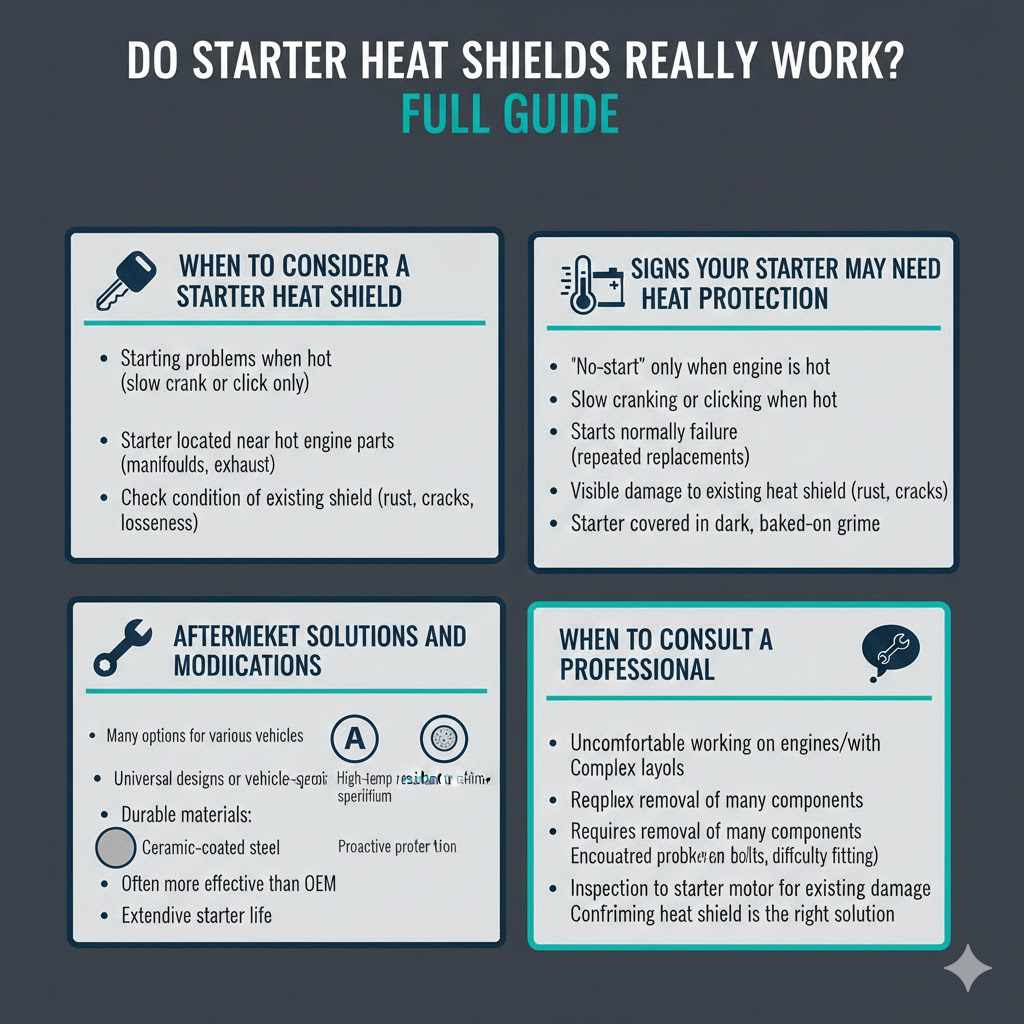
Understanding “Do Starter Heat Shields Really Work? Full Guide” also means knowing when it’s a smart idea to have one. If your car experiences starting problems specifically when the engine is hot, a heat shield is a strong consideration.
This is especially true if the starter is located near hot engine parts. It’s a preventive measure that can save you from future headaches.
Even if your car came with a heat shield, it might be worth checking its condition. Over time, heat shields can rust, crack, or become loose. A damaged shield is much less effective.
Replacing a worn-out heat shield can restore its protective function. It’s a relatively inexpensive part that offers significant protection for a more expensive component, the starter motor.
Signs Your Starter May Need Heat Protection
The most obvious sign is a “no-start” condition that occurs only after the engine has been running for a while and is hot. Your car might crank slowly, or just click, when you try to start it after a drive. Once the car cools down, it starts normally.
This is a classic indicator of a starter motor that is overheating.
Another sign could be premature starter failure. If you’ve had to replace your starter motor multiple times in a relatively short period, heat exposure might be the culprit. Look for any visible signs of damage to the existing heat shield if your car has one, such as rust, cracks, or if it’s hanging loose.
If the starter motor looks like it’s covered in dark, baked-on grime, that could also suggest it’s been subjected to excessive heat.
Aftermarket Solutions And Modifications
If your car didn’t come with a starter heat shield, or if the original is no longer effective, there are many aftermarket options available. These are designed to fit a wide range of vehicles. Some are universal designs that can be adapted to many different starter motors.
Others are specific to particular makes and models.
These aftermarket shields are often made from durable materials like high-temperature resistant aluminum or ceramic-coated steel. They can be more effective than original equipment in some cases, offering better heat reflection or insulation. Installing an aftermarket shield is a proactive way to protect your starter, especially if you frequently drive in hot climates or engage in demanding driving conditions.
It’s a simple modification that can extend the life of your starter.
When To Consult A Professional
While installing a heat shield can be a DIY project, there are times when professional help is best. If you are uncomfortable working around car engines or with tools, a mechanic can install it quickly and correctly. If your car has a complex engine layout or requires removal of many components to access the starter, a mechanic has the expertise and specialized tools.
If you’ve tried to install a shield yourself and encountered significant problems, such as broken bolts or difficulty fitting the shield, it’s time to call a professional. A mechanic can also inspect the starter motor itself to ensure it’s not already damaged and might be contributing to the problem. They can also confirm if a heat shield is indeed the right solution for your specific starting issues.
Final Thoughts
So, do starter heat shields really work? The answer is a definite yes. They protect your starter motor from damaging engine heat.
This is crucial for preventing hot-start issues and extending starter life. Even simple aftermarket shields offer significant benefits. Checking yours and replacing it if damaged is a smart move.
This guide covered why they matter, how they work, and how to install them to keep your car starting reliably.
Frequently Asked Questions
Question: Can a starter heat shield improve starting in cold weather?
Answer: Starter heat shields are designed to protect against heat, not cold. They prevent the starter from getting too hot. They do not directly impact starting performance in cold weather.
Question: How often should I check my starter heat shield?
Answer: It’s a good idea to check your starter heat shield during regular vehicle maintenance, like oil changes. Look for signs of rust, damage, or if it’s loose. A quick visual inspection every 6-12 months is usually sufficient.
Question: What happens if my starter heat shield falls off?
Answer: If your starter heat shield falls off, your starter motor will be more exposed to engine heat. This can lead to overheating issues, especially during hot weather or after extended driving, potentially causing starting problems.
Question: Are starter heat shields universal?
Answer: Some starter heat shields are universal and can be fitted to many vehicles. However, many are designed for specific car makes and models to ensure a proper fit and optimal protection.
Question: Is it expensive to replace a starter heat shield?
Answer: Starter heat shields are generally inexpensive parts. The cost can range from $20 to $60 for the shield itself. Professional installation would add labor costs, but it’s typically a minor repair.