How to Choose the Right Heat Shield Material
Choose heat shield material by the main failure mode first: radiant heat calls for reflective foil or stainless, contact heat calls for thicker barriers, vibration calls for layered or mechanically fastened pieces, and corrosion calls for aluminum or stainless in wet areas. Choose badly, and you get cooked wiring, warped panels, rattles, or a shield that rusts out early. This guide shows how to match material to heat type, location, and mounting method.
Heat shield decision table
| Scenario | Heat type | Clearance | Vibration | Corrosion exposure | Durability | Cost tier | Recommended fastening method | Best material choice |
|---|---|---|---|---|---|---|---|---|
| Firewall near exhaust tunnel | Mostly radiant | Moderate air gap available | Medium | Low to moderate | Good | Low to mid | Clips, screws, or stand-offs; keep an air gap | Aluminum or aluminized fabric |
| Turbo or downpipe area | Radiant plus contact heat | Tight | High | Moderate to high | High | Mid to high | Mechanical retention with clamps and stainless steel ties | Stainless steel, or basalt fiber close to hot parts |
| Wiring loom near manifold | Radiant and localized contact | Tight | Medium | Low | Moderate | Low to mid | Stainless steel ties or clamps; avoid adhesive alone | Fiberglass sleeve with aluminum coating or silicone coating |
| Fuel hose near exhaust route | Conductive contact risk | Moderate | Medium | Moderate | Moderate | Low to mid | Clamps plus stand-off spacing | Fiberglass or basalt fiber sleeve, preferably silicone coated |
| Undercarriage in salt exposure | Radiant plus moisture | Moderate | High | High | High | Mid | Stainless hardware, clamps, and secure edges | Stainless steel or aluminum with corrosion-safe mounting |
| Plastic trim near exhaust tunnel | Radiant | Good | Low to medium | Low | Moderate | Low | Stand-offs and mechanical fasteners | Aluminum sheet or aluminized fabric with an air gap |
What heat shield material should you choose?
Start with the heat type, then check space and the fastener path. Radiant heat favors a reflective layer with an air gap. Contact heat near a turbo or downpipe needs a tougher barrier that can take abuse. Vibration and road spray push you toward stainless steel or corrosion-resistant aluminum, especially where adhesive would fail.
Aluminum is a practical default for many under-hood shields because it is low density, lightweight, and reflects heat well. Its thermal conductivity is about 205 W/m·K, so it can also spread heat across a larger panel instead of letting one spot overheat. Copper conducts much better at approximately 385 W/m·K, but it is heavier and costlier, so it fits heat-spreading roles more than large-area automotive shields.
Radiant heat cases
Use a reflective surface when hot exhaust parts are heating nearby plastic, paint, or trim without direct contact. Aluminum foil, aluminized fabric, and aluminum sheet work best when you can keep an air gap behind the shield. Without that gap, the shield absorbs more heat and gives back less protection than readers expect.
For a large firewall or floorpan, aluminum is the usual starting point. For smaller wrap-style jobs, aluminized fabric or a fiberglass substrate with an aluminum layer is a better fit because it trims and bends around tight shapes. Copper is usually the wrong starting point here; it spreads heat well, but it is not the normal choice for broad automotive heat blocking.
Contact heat cases
When a part may touch the shield or sit extremely close to it, the priority changes. A reflective face alone is not enough. Stainless steel holds up better than basic aluminum where abuse resistance matters, and it tolerates higher temperatures than untreated light-gauge metal in many real vehicle locations.
Basalt fiber is the stronger pick when the shield or sleeve sits close to a hot exhaust path. It is used in sleeves and tapes and is often chosen as a tougher alternative to fiberglass. That matters near a turbo outlet or downpipe, where vibration and heat cycling can wear through a softer wrap faster.
Vibration and corrosion cases
Road vibration changes the answer. A material that looks fine on the bench can crack, fray, or loosen once the vehicle moves. In those cases, mechanical fastening matters as much as the material itself. Clamps and stainless steel ties matter because they keep sleeves and shields in place where adhesive backing can soften, creep, or peel.
Moisture and salt point you toward aluminum or stainless steel, with stainless doing better when abuse and corrosion come together. Aluminum forms a natural oxide layer that helps resist corrosion, which is why it is common in mass production and in many formed panels. Stainless steel adds more margin where the shield may see splash, grime, and repeated heat cycling.
Which material fits each heat type?
Match the material to the heat path, not to a generic “high temperature” label. Reflective layers help against radiant heat. Insulated barriers matter more when the part is close enough to get heated by contact or convection. A shield that blocks the wrong mode may still let the problem part overheat.
Aluminum and aluminized fabric
Aluminum is the best general-purpose option for reflective under-hood shielding. It is lightweight, easy to shape, and practical for custom panels. Aluminum foil or aluminized fabric works best when installed with an air gap, because the reflective face then sends radiant heat away instead of soaking it up.
Aluminized fabric is useful when you need a flexible sheet that can fit around tighter contours. It pairs well with fiberglass cloth underneath, especially for firewall, tunnel, and panel applications. Its drawback is simple: a thin reflective layer does little if it is pressed flat against the hot source or left with poor edge support.
Stainless steel
Stainless steel is the stronger choice when durability and abuse resistance matter more than low weight. It handles higher temperatures than basic aluminum in many automotive uses and resists corrosion better than untreated metals. That makes it a good fit for shields near exhaust components, splash zones, and underbody mounting points.
The tradeoff is mass. Stainless steel is heavier than aluminum, so it is not the first pick for every large cover. Use it where the extra durability earns its keep, especially if the shield will see vibration, repeated service work, or direct proximity to hot exhaust hardware.
Copper, fiberglass, and basalt fiber
Copper has excellent thermal conductivity at approximately 385 W/m·K, which is why it is preferred in high-heat-flux environments like CPUs and GPUs. That same strength is also why it is less suitable for weight-sensitive designs and for most large-area automotive shields. In practice, copper is a premium heat-spreading material, not the default answer for under-hood shielding.
Fiberglass is more often used as a sleeve or wrap substrate for wires and hoses. It protects the component by adding insulation, and it is often combined with aluminum coating or silicone for durability. Correct installation matters here because a loose sleeve can rub through against a bracket or bracket edge.
Basalt fiber is the tougher sibling in this category. It is used in sleeves and tapes for hot exhaust proximity, where fiberglass may need extra help. If you need protection close to a downpipe or turbo housing, basalt gives more margin against heat and wear.
Silicone-coated sleeves and tapes
Silicone coating improves durability and moisture resistance while adding temperature resilience. It matters on fiberglass sleeves and tapes because bare fiberglass is not the same thing as a finished, coated product. The coating helps the sleeve survive splash, grime, and handling better than an uncoated wrap.
Use silicone-coated options when a wire loom or hose sits near heat and also needs protection from road spray. They are still not a substitute for a true barrier shield on the hottest exhaust surfaces, but they do a better job of keeping protected lines serviceable over time.
When is a shield needed?
You need a shield when heat reaches a part by the wrong path or with too little clearance. Plastic trim, wiring, hoses, and nearby panels are the usual warning signs. If the hot part is close enough that touch, splash, or heat soak becomes likely, choose the shield material and fastening method before the problem shows up.
Plastic and wiring nearby
Say your wiring loom runs across the back of a firewall near a hot exhaust passage. A reflective aluminum barrier with an air gap is usually the first thing to try. If the loom itself needs protection, add a fiberglass or basalt sleeve and secure it with stainless steel ties so the wrap does not move and wear through.
Plastic clips, loom tape, and adhesive pads are weak points in this setting. Adhesive-backed material can work on cooler panels, but it is a poor bet close to the hottest exhaust or turbo surfaces where heat cycling and vibration attack the bond.
Hoses near exhaust parts
Suppose a fuel or coolant hose passes near a header or downpipe. The issue is not only radiant heat; it is also contact risk if the hose shifts. A fiberglass or basalt sleeve with silicone coating is a better fit than a bare reflective sheet because the sleeve insulates the line itself.
Use clamps or stainless steel ties to keep the sleeve from creeping along the hose. That matters because a shield that slides leaves the hottest section exposed. If you cannot keep the line away from the heat source, choose the tougher sleeve material first and the fastening second.
Turbo and downpipe proximity
Turbo and downpipe areas call for the highest caution. These spots combine high heat, vibration, and tight clearance, so the material must survive repeated cycling and mechanical abuse. Stainless steel shields and basalt fiber sleeves are the most sensible starting points here, with mechanical fastening instead of adhesive-only attachment.
Picture a downpipe only a small gap from a harness clip. The right move is not a thin stick-on patch. It is a mechanically held barrier, a secure clamp path, and enough spacing so the shield can reflect heat instead of turning into another hot surface.
Salt and moisture exposure
Underbody shielding in salted or wet conditions needs corrosion resistance as much as heat resistance. Aluminum works well when weight matters and the exposure is moderate, while stainless steel is safer when the shield will see repeated splash, mud, or service abuse. A shield that rusts through early is the wrong choice, even if it handles heat on day one.
Moisture also changes mounting. Use stainless steel ties, clips, or fasteners where possible, because the fastening system is often the first part to fail. If the fastening point fails, the material choice stops mattering.
Our picks by need
These picks follow the material logic above, based on the manufacturer’s product details and buyer feedback patterns. The aim is not to crown one universal winner. It is to match a real product to a real use case so you do not buy a shield that solves the wrong problem.
Best for radiant heat near panels: BSTFLEX Exhaust Heat Shield Wrap

- Flexible sheet cuts to fit tight spaces
- Aluminum-fiberglass composite for heat shielding
- Works on exhaust, firewall, and undercarriage
This flexible 12 x 24 inch aluminum-fiberglass sheet is the best fit when you need a cut-to-fit reflective barrier for a firewall, undercarriage panel, or exhaust-adjacent surface. Its aluminum-fiberglass composite lines up with the most common radiant-heat jobs, and the format suits awkward shapes better than a rigid plate.
Its main drawback is the same thing that makes it versatile: it is a sheet, not a structural shield. You still need good attachment and enough air gap for reflective performance. For the hottest turbo spots, a thicker barrier or a more abuse-resistant material may be the better choice.
Best for exhaust proximity and abuse: FLASLD Adhesive Heat Shield
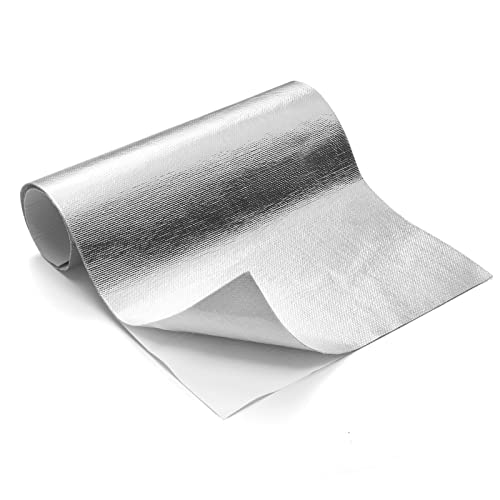
- Reflective aluminized surface helps reduce radiant heat
- Peel-and-stick backing simplifies installation
- Thin sheet trims easily for custom fit
This 24 x 40 inch reflective aluminized sheet is the better fit for broad radiant-heat coverage where you want a thin barrier and quick trimming. It is useful on larger panels or floor areas where a reflective face can do the work and the surface is smooth enough for a peel-and-stick install.
The drawback is the adhesive. That backing simplifies installation, but adhesive-only mounting is less convincing near the hottest exhaust or turbo surfaces, where heat cycling can shorten bond life. It is a better choice for cooler panel work than for direct abuse zones.
Best for wiring and hose protection: BOMEI PACK heat shield tape

- Self-adhesive tape is easy to apply
- Fiberglass fabric with aluminum-plated outer layer
- Long roll suits sealing and patching smaller areas
This 3 inch by 66 foot fiberglass thermal insulation tape with an aluminum-plated outer layer is the right fit when the problem is a line, loom, or hose rather than a panel. The roll format makes it useful for wrapping smaller runs and patching spot areas that need a reflective outer face.
The drawback is that tape is only as good as its installation. If it is wrapped too loosely or left where it can rub on a bracket, abrasion becomes the new failure mode. Use it where a sleeve or patch needs a neat wrap, then secure the ends mechanically if the route sees vibration.
Mistakes to avoid
The biggest mistake is choosing by price or finish alone. A shiny surface does not mean the material can survive contact heat, road splash, or vibration. Pick the material for the failure mode first, then check whether the mounting method matches the heat level and service access.
- Do not use adhesive-only mounting near the hottest exhaust or turbo zones.
- Do not treat copper as a standard large-area automotive shield material.
- Do not press a reflective layer tight against the heat source and expect the same result as an air-gapped install.
- Do not assume fiberglass alone is enough if the sleeve will see abrasion or moisture.
- Do not forget stainless steel ties or clamps where vibration can loosen a wrap.
- Do not ignore corrosion exposure on underbody parts, especially in salted roads.
A common first-timer mistake is using a thin reflective sheet for a hose that sits 1 or 2 inches from a turbo housing. The sheet may look correct on the bench, but the hose still cooks because the real problem is contact heat and movement, not just radiant heat. In that case, a sleeve plus mechanical retention is the better path.
How to mount a heat shield
Good mounting is part of the material choice. A shield that can move, rattle, or rub will fail early even if the material itself is sound. For automotive use, mechanical retention is the safest default near hot zones, and stainless steel ties or clamps are often the most reliable hardware.
Map the heat source. Identify whether the problem is radiant heat from a nearby manifold, contact risk near a downpipe, or a hose or wire that needs insulation. That tells you whether a reflective barrier, a sleeve, or a tougher shield is the better starting point.
Check clearance and movement. Leave enough space for airflow behind reflective shields, and make sure the part will not touch when the engine rocks under load. If the route moves, select a material and fastener that can tolerate vibration without creeping.
Choose the fastener first. Use clamps, stainless steel ties, clips, or stand-offs where heat and vibration are present. Adhesive can help on cooler, smoother panels, but it should not be the only retention method near the hottest exhaust surfaces.
Protect the edges. Trim cleanly and keep sharp edges away from wiring, hoses, and painted surfaces. A rough edge can act like a saw under vibration, especially on fiberglass-based sleeves or cut sheet material.
Inspect after heat cycling. Recheck tightness and position after the shield has been through several drive cycles. Heat makes materials move, and a fastener that felt secure cold may loosen once the system expands and contracts.
For sheet shields, mount them where the reflective face can see the heat source and the back side can breathe. For sleeves, wrap snugly but not so tightly that abrasion becomes a problem. If the area is exposed to water or salt, confirm that both the shield and the hardware can tolerate the environment, not only the temperature.
Frequently asked questions
What is a heat shield?
A heat shield is a barrier that reduces heat transfer between a hot part and a sensitive part. In automotive use, that usually means blocking radiant heat from exhaust parts, slowing conductive heat near close-clearance components, or protecting wiring, hoses, trim, and panels from heat soak and splash.
When is a heat shield needed?
You need one when heat is reaching something that should stay cooler, especially plastic, wiring, hoses, or paint. It becomes more important when clearance is tight, the part vibrates, or the vehicle sees moisture and salt. In those cases, the shield has to match both the heat and the environment.
Best heat shield material?
There is no single best material for every job. Aluminum is the practical default for many reflective panels because it is lightweight and resists corrosion well enough for common under-hood use. Stainless steel is better where durability matters more. Copper is usually a premium heat-spreading material, not the normal large-area automotive answer.