Exhaust Odor After Cold Start: Causes and Fixes
A brief exhaust odor after a cold start is often normal condensation burn-off from the exhaust and catalyst, but a strong odor that lasts about 1 to 3 minutes or more, gets worse with the heater on, or changes inside the cabin can point to a leak, rich cold-start fueling, oil burning, coolant intrusion, or HVAC intake ingress. Ignoring the wrong cause can waste money on parts that do nothing and can expose you to carbon monoxide. This guide shows how to sort the smell by timing and odor type, then check the most likely fixes first.
Cold-start odor matrix
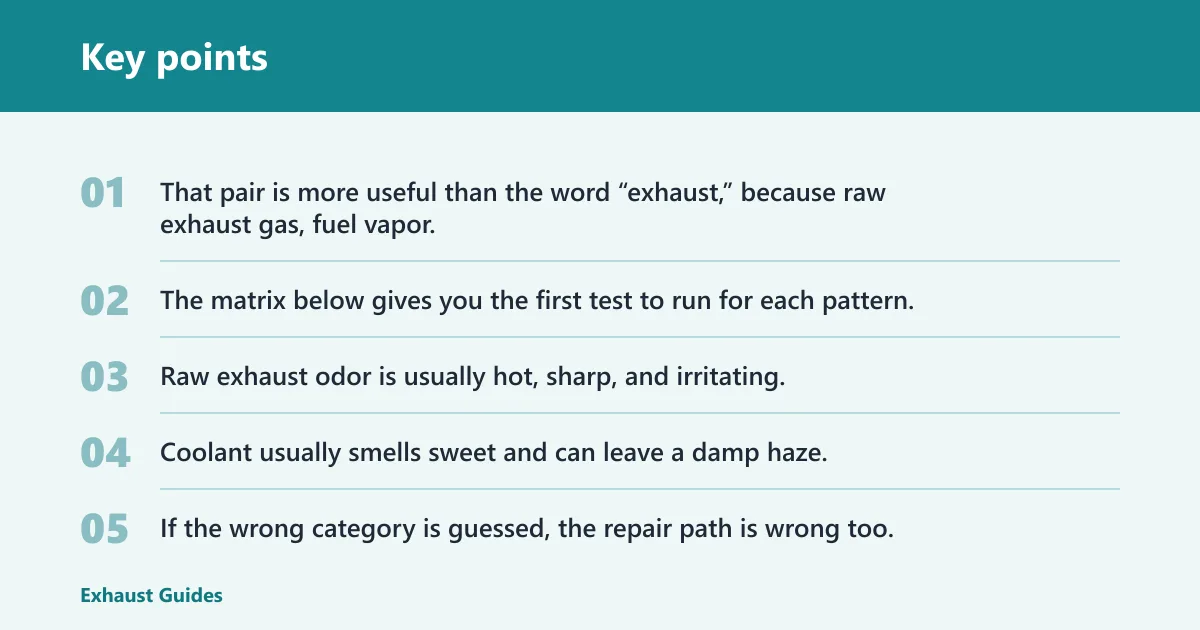


Start with timing, then smell character. That pair is more useful than the word “exhaust,” because raw exhaust gas, fuel vapor, burning oil, and coolant each point to different parts of the car. The matrix below gives you the first test to run for each pattern.
| Odor timing | Smell character | Most likely source plus next test |
|---|---|---|
| First 30 seconds | Raw exhaust | Cold-start enrichment plus a small manifold, flex pipe, or gasket leak. Check for ticking, soot, and a puff that fades as the metal warms. |
| First 2 minutes | Raw exhaust or slightly sharp fuel smell | Cold catalyst and rich mixture behavior, or an oxygen sensor that is slowing fuel control. Scan for codes and watch fuel trims after startup. |
| Only in cabin | Raw exhaust or fuel vapor | Cabin intake, cowl, or HVAC intrusion. Switch between fresh-air and recirculation, then inspect the cowl area and hood seals while idling. |
| Only outside | Burning oil or sweet coolant | Valve cover gasket seep, oil on hot exhaust parts, or coolant leak onto a hot surface. Look for wet spots, smoke, or residue above the exhaust. |
What the matrix is trying to separate
Raw exhaust odor is usually hot, sharp, and irritating. Fuel vapor smells like gasoline. Burning oil often smells smoky and acrid. Coolant usually smells sweet and can leave a damp haze. If the wrong category is guessed, the repair path is wrong too.
Say your sedan smells strongly for 20 seconds after a winter start, then fades while you back out. That pattern fits cold enrichment plus a leak that opens before the exhaust warms and expands. If the same car smells only inside with the fan on fresh air, the cabin intake path becomes the first place to inspect.
Why a cold start can smell worse
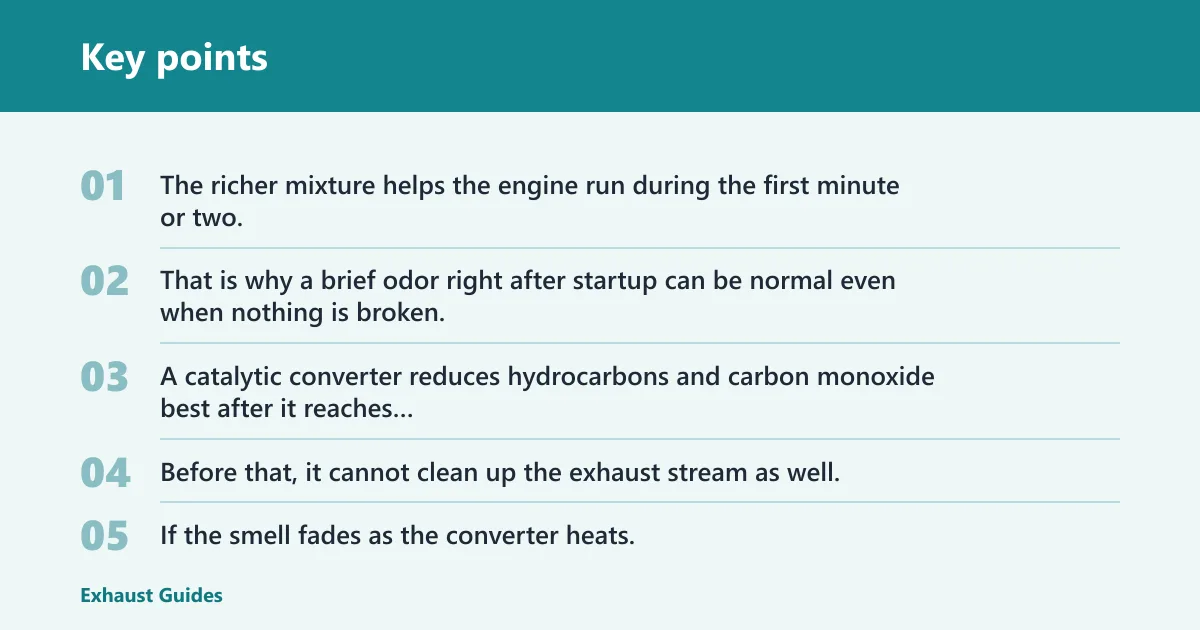
A cold engine typically runs richer during startup. The ECU adds extra fuel for a short time so the engine lights off cleanly, and that richer mixture can leave more hydrocarbon odor if combustion is incomplete. Cold converters are also least effective until they warm up, so more odor can pass through for the first minute or two.
Cold-start enrichment
Cold-start enrichment is normal. The richer mixture helps the engine run during the first minute or two, but it also means more unburned fuel can reach the exhaust stream. That is why a brief odor right after startup can be normal even when nothing is broken.
Cold catalyst behavior
A catalytic converter reduces hydrocarbons and carbon monoxide best after it reaches operating temperature. Before that, it cannot clean up the exhaust stream as well. If the smell fades as the converter heats, the odor may be a cold-start characteristic rather than a constant exhaust leak.
Why the smell fades
Heat changes the size of metal parts and seals small openings. It also improves catalytic conversion and combustion quality. That is why a smell that is strongest in the first 30 to 120 seconds often points to heat expansion, not to a leak that is equally large all the time.
Is the smell normal or a fault?
A light odor for a brief cold start can be normal, especially in winter. It becomes abnormal when it lasts past a few minutes, is strong enough to notice at the windshield or in the cabin, comes with soot or smoke, or appears with warning lights, rough running, or a ticking noise.
What a winter startup odor can mean
Cold air and a cold catalyst make startup odor easier to notice in winter. Short trips, frequent idling, and garage parking can make it stronger too. The key test is whether the smell is brief and outside only, or whether it persists and moves into the cabin.
When the pattern changes after a short trip or remote start
Short-trip vehicles often never get fully hot, so the smell can repeat every time. Remote start can also make the odor more noticeable because the engine runs while the car is parked and stationary, and the fumes may drift toward the HVAC intake or garage wall.
A common first-timer mistake is to replace a sensor because the odor is strongest in the first minute. If the smell only happens at idle after a remote start, the next check should be airflow and leak location, not parts replacement by guesswork.
Exhaust leaks that open cold
Cold-start exhaust odor often comes from a leak that changes size with heat. Manifold gaskets, cracked manifolds, flex pipes, and loose clamps can leak more when the engine and exhaust are cold, then quiet down after warm-up. That behavior is classic, and it is easy to miss if the car is checked only after a long drive.
Exhaust manifold leak clues
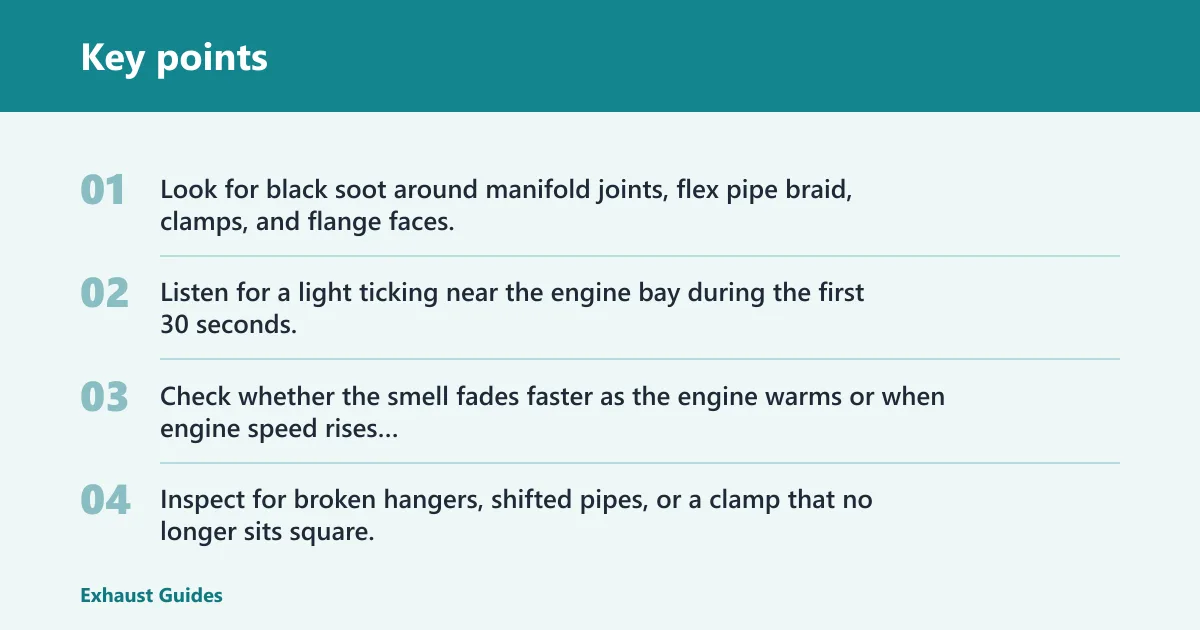
An exhaust manifold leak can be a cold-start odor source. It may leave soot traces around the flange or gasket area, and it may make a ticking noise that is loudest right after startup. As the metal expands, the leak can seal partially and the smell can fade.
Flex pipe failures
The flex pipe sits in a vibration-prone part of the exhaust. It can crack or separate where the engine moves against the rest of the system. These leaks often show up most on cold starts, before heat expansion changes the pipe shape and closes the gap a little.
Why leaks quiet down after warm-up
Exhaust parts expand as they heat. A small gap at a gasket, flange, or crack can become smaller once the system warms. That does not mean the leak is gone. It often means the leak is being masked after the first minute or two.
- Look for black soot around manifold joints, flex pipe braid, clamps, and flange faces.
- Listen for a light ticking near the engine bay during the first 30 seconds.
- Check whether the smell fades faster as the engine warms or when engine speed rises slightly.
- Inspect for broken hangers, shifted pipes, or a clamp that no longer sits square.
Odor that is not raw exhaust
Not every startup smell is exhaust gas. Burning oil, fuel vapor, and coolant can be mistaken for exhaust odor, especially when the smell drifts under the hood or into the cabin. Separating those odors matters because the likely fix changes completely.
Valve cover gasket leaks and burning oil smell
A valve cover gasket leak can drip oil onto hot exhaust parts. That usually creates a burning oil odor rather than a raw exhaust smell. The smell may be strongest after startup or at idle, when heat rises under the hood and oil has time to contact the hot surface.
EVAP purge faults and fuel-vapor odor
The EVAP system controls fuel vapor routing. A purge valve fault can send fuel vapor where it should not go, and the smell is often mistaken for exhaust. This is especially relevant after refueling or right after startup, when fuel vapor movement is most noticeable.
Coolant odor versus exhaust odor
Sweet coolant odor is different from raw exhaust. It may come with a damp smell, a slight film on nearby parts, or a sweet haze from a leak onto hot surfaces. A coolant odor should not be treated as a simple exhaust leak, even if both are noticed at startup.
Can the smell come through the cabin?
Yes. Outside fumes can be drawn into the cabin through the HVAC intake, cowl area, or small body openings. If the odor changes with the fan setting or gets stronger when the car is idling in place, cabin intrusion becomes a major suspect, not a side note.
Cowl and HVAC intake paths
The cowl area sits near the base of the windshield, where the HVAC system draws outside air. If exhaust leaks or fuel vapors collect near that area, they can be pulled into the cabin. Fresh-air mode may bring the smell in, while recirculation can reduce it.
Fresh-air versus recirculation mode
Recirculation limits outside air entry. If the smell drops when you switch to recirculation, the issue may be outside air intrusion rather than a leak directly inside the cabin. That clue is useful, but it does not make the source safe to ignore.
Garage and idle conditions
Parked idling or warm-up in a garage can make cabin intrusion obvious. Exhaust can collect around the vehicle, then get pulled inward when the HVAC is drawing fresh air. If the odor is strongest with the vehicle stationary, the intake path deserves attention.
Sensor and emissions faults to scan
Some startup odors are caused by control faults that make the engine run too rich. A slow oxygen sensor can delay fuel-trim correction. A faulty catalytic converter can let more hydrocarbons pass through. These problems can make the same cold-start smell much stronger.
Oxygen sensor faults and rich running
An oxygen sensor helps the engine control fuel trim. If it is slow or failed, the mixture can stay richer than it should, and startup odor can intensify. That odor is often sharper and longer-lasting than the brief smell of a normal cold start.
Catalytic converter problems
A weak or failed catalytic converter can raise raw exhaust odor at startup because it is not cleaning up hydrocarbons well. A rotten-egg or sulfur smell can point in that direction, but it is only one clue. A bad converter can also coexist with a leak or rich-running condition.
Useful codes and live-data checks
Scan for check-engine lights and fuel-system codes. Live data can show whether fuel trims are unusually rich after startup, whether an oxygen sensor is responding slowly, or whether the converter is taking too long to light off. That data helps separate cause from guesswork.
What to check next
Start with a visual inspection, then move to a smoke test or leak check if the source is not obvious. If fumes reach the cabin, or if the odor is strong enough to make breathing uncomfortable, stop driving and get the car inspected before another trip.
Visual inspection points
Look for soot around manifold joints, black marks on the flex pipe, loose clamps, and wet spots above the exhaust that could be oil or coolant. Check the valve cover area, the back of the engine, and the cowl intake zone near the windshield.
Smoke test and exhaust leak checks
A smoke test can find leaks that are too small to see. An exhaust leak check can confirm whether a ticking sound or soot trace matches a gasket, flange, or crack. A mechanic can also scan for codes and review fuel trims to see whether the engine is running rich.
- Note when the smell starts, how long it lasts, and whether it changes in the cabin.
- Switch the HVAC between fresh air and recirculation.
- Inspect the engine bay and exhaust for soot, wet spots, or loose joints.
- Scan for codes and review fuel-trim data.
- Stop driving if the smell enters the cabin or if you feel dizzy, headachy, or nauseated.
Suppose the odor appears only on a cold start, fades in 90 seconds, and never reaches the cabin. That pattern leans toward cold enrichment plus a small leak that opens cold. If the same smell gets stronger with the heater on and shows up in fresh-air mode, cabin intrusion moves up the list.
Frequently asked questions
Why does my car smell like exhaust only when I first start it cold?
Cold-start enrichment adds extra fuel during startup, and the catalytic converter is least effective until it warms up. That combination can create a brief exhaust smell for the first minute or two. If the smell is strong, lasts longer, or shows up in the cabin, a leak or intake-path problem is more likely.
Is exhaust smell after cold start normal in winter?
A light, short-lived odor can be normal in winter because cold air, a cold catalyst, and richer startup fueling all make fumes more noticeable. It should fade as the engine warms. If it lingers beyond a few minutes, smells like fuel, or gets into the cabin, treat it as a fault.
Can a small exhaust leak smell worse when the engine is cold?
Yes. Small leaks often open more before metal expands with heat, so they can smell worse right after startup and then quiet down later. Ticking sounds and soot near a manifold, gasket, or flex pipe are strong clues. A smoke test is useful when the leak is hard to see.
Why do I smell exhaust more after a short trip or remote start?
Short trips leave the exhaust, catalyst, and engine less fully warmed, so odor can stay stronger. Remote start can also make fumes build while the vehicle is parked, which increases the chance of cabin intrusion or garage buildup. Repeated short trips can make the pattern seem constant even if the smell is brief each time.
How do I tell exhaust smell from a coolant or oil leak?
Raw exhaust smells sharp and irritating, fuel vapor smells like gasoline, burning oil smells smoky and acrid, and coolant smells sweet. Oil leaks often leave wet residue above hot exhaust parts. Coolant leaks may leave a sweet smell or damp film. If the odor changes with the heater, cabin intake deserves attention too.
Is it safe to drive if I smell exhaust after startup?
If the smell is brief, outside only, and fades quickly, the car may be drivable while you plan a repair. If fumes enter the cabin, stop driving and ventilate the car right away. Carbon monoxide can accompany exhaust odor even though you cannot smell it, so cabin fumes need immediate diagnosis.