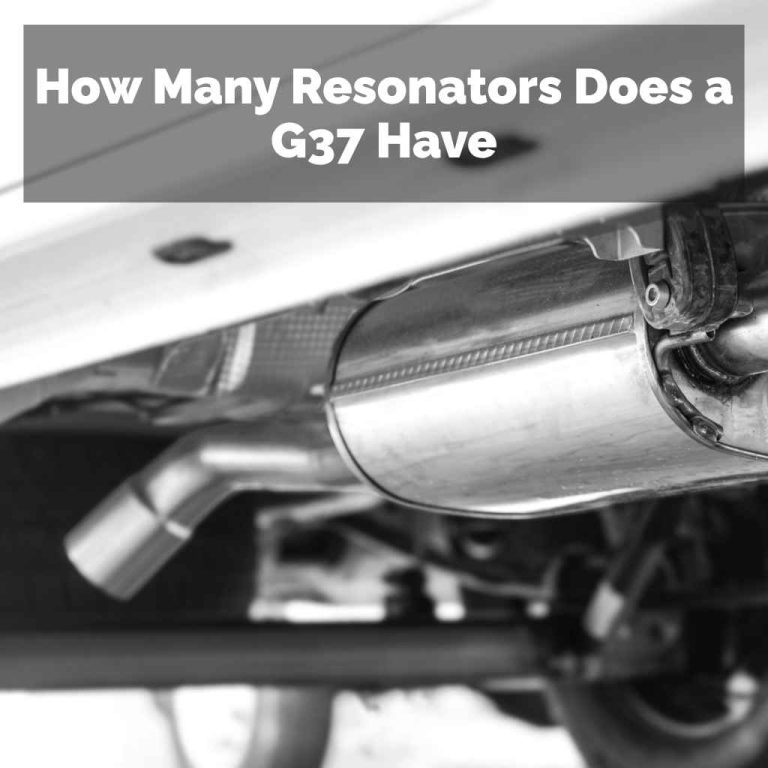
Resonator vs No Resonator
Keep the resonator if you want a cleaner, calmer daily-driver tone and less chance of highway drone. Remove it only if you want more edge and can live with extra cabin boom. Ignore that tradeoff, and the exhaust can sound harsher on the highway even when it does not get dramatically louder. This guide explains what a resonator does, what changes after a delete, and how to choose between keeping, removing, or replacing it.
| Factor | resonator | no resonator | Winner |
|---|---|---|---|
| Cruise drone | Usually lower risk of steady cabin resonance at cruise. | More likely to expose or create drone after a delete. | resonator |
| Rasp and harshness | Targets ugly frequencies before they reach the muffler. | Can leave more rasp and high-frequency edge in the note. | resonator |
| Overall loudness | Usually changes tone more than total volume. | May sound louder, but the result varies by layout and muffler choice. | no resonator |
| Cabin comfort | Usually easier to live with on the street. | Can feel tiring on long drives if drone shows up. | resonator |
| Legal or inspection risk | Lower risk if the factory layout expects one. | Higher risk if the missing part triggers noise, emissions, or inspection issues. | resonator |
What changes when you remove a resonator?
Removing a resonator often changes tone before it changes loudness. The exhaust can sound sharper, raspier, or more hollow, and some cars pick up steady drone at highway speed. Results vary by engine layout, factory tuning, and the muffler already on the car.
Tone changes more than volume
A resonator is a sound-tuning exhaust component, usually installed between the catalytic converter and the muffler. It targets certain frequencies and helps quiet the exhaust by cancelling a range of sound waves, while the muffler does the bigger job of lowering overall loudness.
Why some cars get raspier or dronier
On some setups, a delete lets more high-frequency harshness through. On others, the bigger change is a steady cabin boom at cruising speed, which is what many drivers call drone. A car can still run without a resonator in many cases, but the note may become less pleasant. (Thedrive)
Why results vary by engine and layout
A 4-cylinder often shows a different problem than a V6 or V8. Different engine layouts can react differently, and V6 and V8 setups are often more likely to reveal a low, steady cruise boom if the rest of the system is thin on baffling. Factory sound targets are vehicle-specific.
Resonator vs non resonator
This comparison comes down to tone control and drone risk. A resonator usually keeps the exhaust cleaner and calmer, while no resonator can make the car sound sharper or louder in some cases, especially when the muffler is already free-flowing. Pick the resonator for quiet commuting, or skip it if a harder-edged note matters more than comfort.
| Decision factor | Keep resonator | Delete resonator | Swap smaller resonator | Swap larger resonator |
|---|---|---|---|---|
| Cold-start volume | Usually calmer | May sound louder or more abrupt | Slightly louder than stock in many cases | Closest to stock calmness |
| Cruise drone | Lowest risk | Highest risk | Moderate risk | Lowest risk |
| Rasp | Best at filtering it out | Most likely to expose it | Some rasp may remain | Best at softening it |
| Cabin comfort | Best for long drives | Least predictable | Mixed | Best if you want a softer note |
| Legal or inspection risk | Lowest | Higher | Varies by local rules | Lowest |
Keep resonator
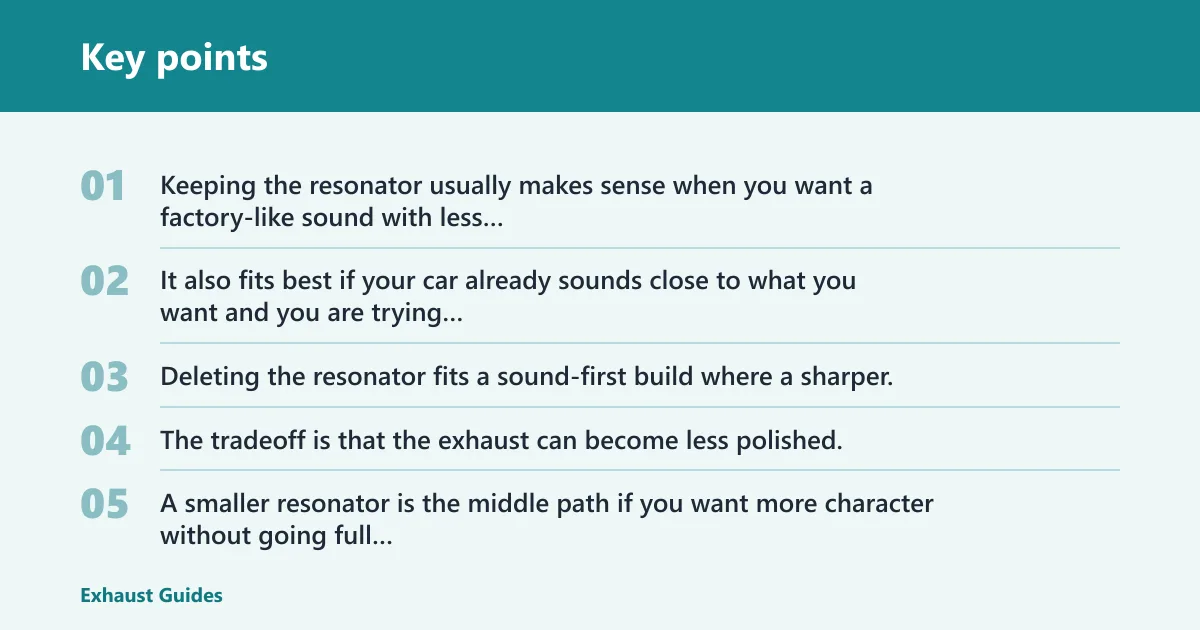
Keeping the resonator usually makes sense when you want a factory-like sound with less cabin boom. It also fits best if your car already sounds close to what you want and you are trying to avoid trial-and-error changes that may bring drone without giving much more volume.
Delete resonator
Deleting the resonator fits a sound-first build where a sharper, louder note matters more than comfort. The tradeoff is that the exhaust can become less polished, and some cars develop a highway resonance that sounds fine in the driveway but gets tiring at speed.
Swap smaller or larger resonator
A smaller resonator is the middle path if you want more character without going full delete. A larger resonator is the safer move if the current setup is too loud, too raspy, or too drony and you want to clean up the note without changing the rest of the system.
How does a resonator shape exhaust sound?
A resonator shapes exhaust sound by targeting specific frequencies, especially the high-frequency harshness that makes some systems sound tinny or raspy. It works like an echo chamber in the exhaust path, changing engine noise before it reaches the muffler. It does not primarily lower sound volume the way a muffler does.
Frequency targeting in plain language
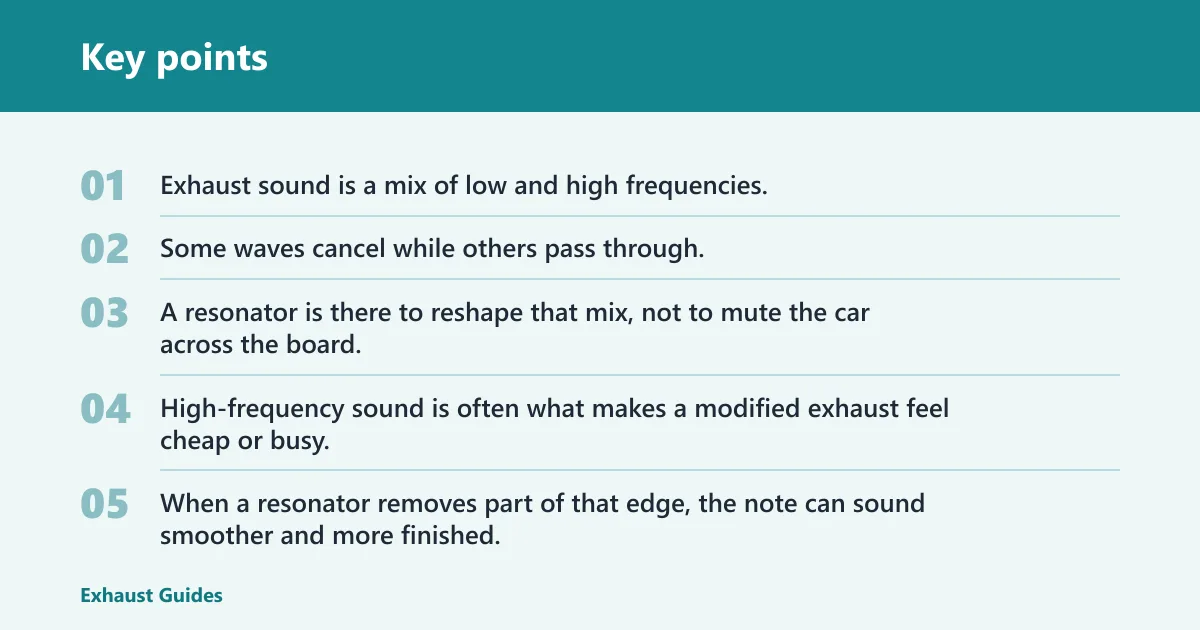
Exhaust sound is a mix of low and high frequencies. Some waves cancel while others pass through, so two cars with the same engine size can sound very different. A resonator is there to reshape that mix, not to mute the car across the board.
Why high-frequency harshness matters
High-frequency sound is often what makes a modified exhaust feel cheap or busy. When a resonator removes part of that edge, the note can sound smoother and more finished. That is why a resonator and muffler together often create a more pleasant sound than a muffler alone.
Why some setups sound cleaner with one
Some vehicles leave the factory with a resonator and a muffler, while others use a muffler only. That layout depends on the vehicle-specific sound target. If the system was tuned around a resonator, deleting it can uncover frequencies the muffler was not meant to handle by itself.
Suppose your sedan has a 2.0-liter four-cylinder and you remove the resonator but keep the stock muffler. The car may still idle quietly, yet the 65 mph cruise note can pick up a thin rasp that was not there before. That is a tone change, not a guaranteed jump in total volume.
Purpose of resonator
The purpose of a resonator is sound control, not emissions control. The catalytic converter is the emissions device in the stack, and it can affect sound somewhat, but it is not usually the main tone-control part. The resonator sits between the catalytic converter and the muffler and helps the system sound cleaner.
Muffler and catalytic converter are different jobs
The muffler has the biggest effect on loudness because it uses tubes, partitions, baffling, and packing materials to reduce noise after the resonator. The catalytic converter is there to chemically reduce pollutants. If a car sounds wrong, you should not treat the catalytic converter as a substitute for a missing resonator.
Why some vehicles have one and others do not
Some factory exhaust layouts include both a resonator and a muffler. Some use only a muffler. That difference is normal and depends on the make, model, engine, and the sound target chosen by the manufacturer.
Do you need a resonator?
You do not always need a resonator for the car to run, but you may need one if you care about cabin comfort, highway noise, or keeping the factory sound balance. Daily drivers usually benefit from keeping it. Sound-first builds can skip it if they accept more rasp, more drone, or both.
Daily driving and cabin comfort
If you spend time on highways, a resonator is usually the safer choice. It helps keep the cabin calmer at steady throttle, where drone is most annoying. If your current exhaust is already borderline loud, a delete can push it past what feels easy to live with.
Sound-first builds and straight-pipe contrast
A straight-pipe design uses minimal baffling and is the clearest contrast to a resonator-equipped exhaust. It can raise harshness and volume, but it also removes a major sound-shaping part of the system. If you are chasing a sharper note, that may be the goal; if you want a polished street car, it usually is not.
When to keep factory tone control
Keep the resonator when the car already sounds close to right, when drone matters more than extra edge, or when you need to stay closer to factory noise behavior. If odor, noise, or performance changes show up after a change, the system needs inspection rather than guesswork.
Resonator decision matrix
This matrix helps you decide between keeping the resonator, deleting it, or changing size. The strongest pattern is simple: keep or enlarge the resonator for calmer street use, delete it for a louder and sharper note, and choose a smaller one only if you want a middle step. The tradeoff is comfort versus sound character.
| Factor | Keep resonator | Delete resonator | Smaller resonator | Larger resonator |
|---|---|---|---|---|
| Cold-start volume | 2 | 4 | 3 | 1 |
| Cruise drone | 1 | 5 | 3 | 1 |
| Rasp | 1 | 5 | 3 | 1 |
| Cabin comfort | 5 | 2 | 3 | 5 |
| Legal or inspection risk | 1 | 4 | 3 | 1 |
Scale: 1 = best, 5 = worst for the driver. The exact result still depends on vehicle-specific tuning and the rest of the exhaust.
A common first-timer mistake is to remove the resonator after hearing a car at idle and assuming the same sound will carry through a long commute. Suppose a coupe sounds fine in the driveway after a delete, then develops a low boom at 2,200 rpm on the freeway. That is the kind of change the matrix is meant to catch early.
Choose resonator if… / Choose no resonator if…

Choose resonator if you want a calmer street car, less drone risk, better highway comfort, or a sound that stays closer to factory tuning. Choose no resonator if you want more character, can accept more rasp or cabin boom, and are already planning a louder exhaust path.
Choose resonator if…
You drive long distances and do not want the cabin to feel busy. Your current exhaust already has enough volume. You want a cleaner tone rather than a louder one. You are trying to avoid inspection or noise trouble tied to a deleted part.
Choose no resonator if…
You are building for sound first and understand that louder is not the only change. You want a sharper note and can live with the chance of drone. Your muffler and the rest of the system are already set up to handle the extra edge.


How do you tell if your car came with one?
Look under the car for a separate canister in the exhaust path between the catalytic converter and the muffler. If you see only a muffler after the converter, the car may have been built without a resonator. Factory layouts vary by model, so the parts diagram or owner’s manual is the cleanest check.
What to look for under the car
A resonator is usually a smaller chamber than the muffler and often sits farther forward in the exhaust. It may look like a simple straight-through can with less baffling than the rear muffler. If the exhaust has been modified, the visible layout may no longer match stock.
When paperwork helps more than guesswork
Owner’s manual details and factory parts diagrams can confirm whether your model used both pieces or only one. That matters because some vehicles have a muffler and no resonator, while others have both. If the car has been changed already, those records help separate factory design from aftermarket work.
Frequently asked questions
Resonator vs without resonator
“Without resonator” usually means the same comparison as a delete: more exposed exhaust character, less filtering of certain frequencies, and a greater chance of drone. The exact change depends on the engine and the muffler. A car can still run, but the sound quality may take the bigger hit.
Exhaust resonator vs no resonator sound
With a resonator, the exhaust usually sounds cleaner and less sharp. Without one, the note can become louder in some setups, but the more reliable change is tone: more rasp, more boom, or both. The muffler still controls the biggest share of loudness.
Does removing the resonator add drone or rasp?
It can add both, but not always to the same degree. Drone is the steady cabin resonance that shows up at cruising speed, while rasp is the harsh, buzzy edge in the note. A delete often exposes one or the other, depending on the engine and exhaust layout.
Do I need a resonator on my exhaust?
Need depends on your goal. If you want street comfort, a resonator is usually the better fit. If you want a louder, less polished note and can accept more cabin noise, you can often run without one, but check the local rules and your tolerance for drone.
What happens if I replace a resonator with straight pipe?
A straight pipe removes the sound-shaping chamber and leaves minimal baffling in that section. The exhaust may sound more direct, but it can also get harsher and less controlled. That is why straight-pipe setups are best treated as a sound choice, not a quieting fix.
How do I tell if my car came with a resonator?
Check the exhaust path from the catalytic converter back to the muffler. If you see a separate mid-pipe canister, that is often the resonator. If the car has been modified, confirm with a parts diagram or your owner’s manual before assuming the current layout is factory.
Resonator vs no resonator banjo
The word “banjo” does not change the exhaust decision. If you meant a specific pipe shape or a nicknamed section, compare the actual parts on your car instead of the label. The useful question is still whether you want cleaner tone or more sound at the cost of comfort.
Resonator vs no resonator motorcycle
Motorcycles use different exhaust layouts, so the comparison does not translate directly. The same sound-control idea still applies: more baffling usually means less harshness and less drone, while less baffling usually means more volume and more edge. Check the exact system before assuming a car rule carries over.