Slip on Exhaust vs Full System
For most street riders, a slip on exhaust is the better buy if you want a louder note and a modest weight drop for less money. Choose a full system only if you also want maximum power and can budget for a tune. Skip the tradeoffs and you can spend more, lose midrange, or end up with a setup that needs fueling changes. This guide compares sound, weight, power, tune needs, legality, and total cost so you can pick the right setup.
| Factor | slip on exhaust | full system | Winner |
|---|---|---|---|
| Sound change | Stronger exhaust note, usually the main reason to buy one | Louder and deeper, with more chance of strong midrange and top-end tone changes | full system |
| Weight savings | Moderate drop from replacing the muffler only | Larger drop because more of the stock exhaust comes off | full system |
| Power gain | Usually about 0–3 hp | Can deliver real gains with tuning, especially on bikes that respond well to freer-flowing headers | full system |
| Tune requirement | Often runs without a tune on modern bikes | Needs a tune in practice | slip on exhaust |
| Emissions and legality risk | Lower, because it often keeps the factory catalytic converter intact | Higher, because cat deletion is common | slip on exhaust |
| Total installed cost | Lower parts cost and usually simpler labor | Higher parts cost plus tune, gaskets, and more labor | slip on exhaust |
Weighing sound, weight, and power against cost and legality
The core tradeoff is simple: a slip on exhaust is mainly a sound and weight purchase, while a full system is a performance purchase that usually needs fueling correction to pay off. On many street bikes, the slip-on gives the easier win. The full system makes sense when you want the bigger change and can accept the cost, tune, and legality risk.
Sound
A slip on exhaust usually changes the muffler tone and volume without rewriting the whole exhaust path. A full system changes more of the bike’s character because the headers, mid-pipe, catalyst, and muffler all change together. Sound clips can mislead here, because the same can sounds different on different engines and with different baffles.
Weight
A slip-on drops some weight, but not as much as removing the full stock assembly. A full system saves more because it replaces more parts, including the heavy factory headers and catalyst hardware. If weight loss is the main goal, the full system wins.
Power
Slip-on power gains are usually about 0–3 hp, so that change is small on most street bikes. A full system can make real gains only when the fuel map matches the new exhaust flow, and on some 600s that can mean about 5–8 hp with tuning. The difference is real, but only when the bike is one of the models that responds well.
Slip on exhaust decision matrix
| Criterion | slip on exhaust | slip on exhaust plus de-cat link pipe | full system | Best for |
|---|---|---|---|---|
| Sound | Noticeably louder | Louder again, with more raw tone | Largest change in volume and character | Street: slip on exhaust |
| Weight | Moderate savings | More savings than a slip-on alone | Largest savings | Track: full system |
| Power | Usually 0–3 hp | Can free up more flow, but tune becomes more important | Best chance at real gains with tune | Track: full system |
| Tune requirement | Often none | Strongly advised | Needed in practice | Street: slip on exhaust |
| Emissions risk | Lower | Higher | Highest | Street: slip on exhaust |
| Total installed cost | $250–$1,400 | Slip-on cost plus link pipe, gaskets, labor, and often a tune | $700–$4,000 plus tune | Mixed-use: slip on exhaust |
Sound: the de-cat link pipe sits
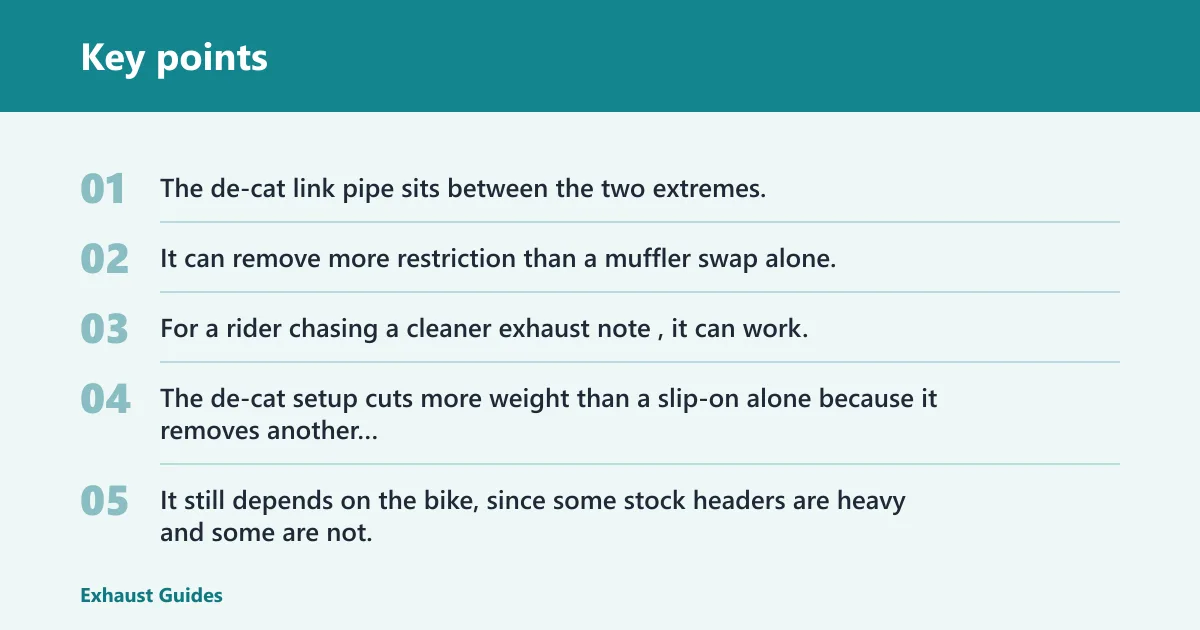
The de-cat link pipe sits between the two extremes. It can remove more restriction than a muffler swap alone, so the note often gets louder and less muted, but that can also increase the chance of drone at steady throttle. For a rider chasing a cleaner exhaust note, it can work; for a rider who wants calm commuting, it can be too much.
Weight: the de-cat setup cuts more
The de-cat setup cuts more weight than a slip-on alone because it removes another section of pipe and often the catalyst. It still depends on the bike, since some stock headers are heavy and some are not. The full system remains the lightest option of the three.
Power and tuning risk
The middle option often lands in an awkward spot. It can improve flow, but it also changes backpressure and scavenging enough that fueling corrections become more important. That is why many riders move from a slip-on straight to a full system rather than stop at a de-cat link pipe.
What does a slip-on change?
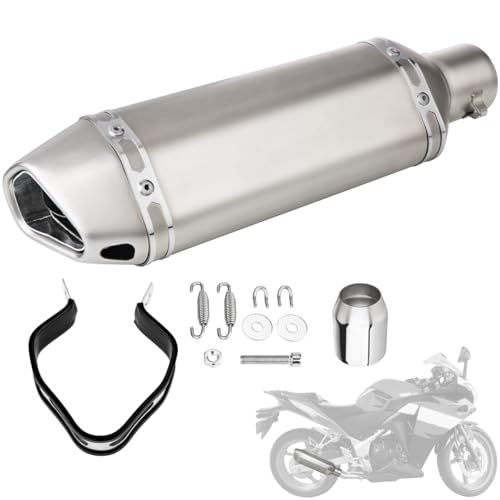
A slip-on replaces the muffler and usually leaves the stock mid-pipe in place. On many bikes it also keeps the factory catalytic converter intact. That is why it is mainly a sound and weight purchase, not a major horsepower mod.
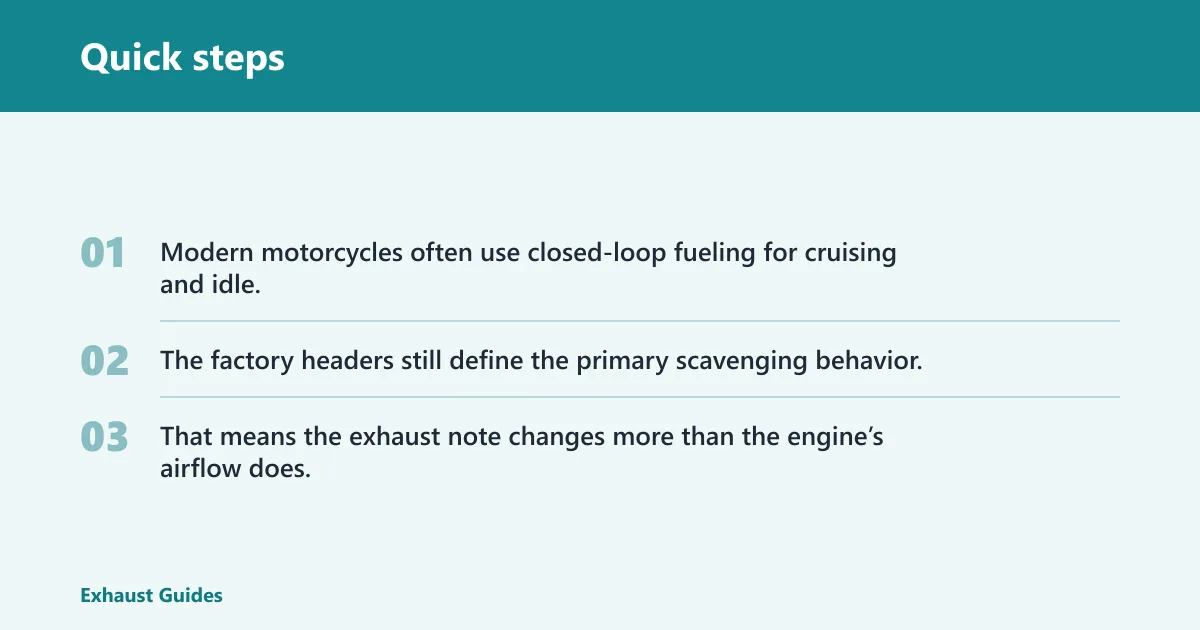
Modern motorcycles often use closed-loop fueling for cruising and idle, so the bike can usually adapt to a muffler-only change. The factory headers still define the primary scavenging behavior. That means the exhaust note changes more than the engine’s airflow does.
What does a full system change?
A full system replaces headers, mid-pipe, cat, and muffler. That is a much bigger change to exhaust flow, heat, and packaging. It also removes the stock catalyst on many kits, which raises emissions and inspection risk.
Fitment matters more here than with a slip-on. Model year, sensor placement, servo hardware, and header routing all have to match the bike. A poor match can cause rattles, leaks, fitment headaches, or warning lights.
Do you need a tune?
A slip-on usually does not need a tune if the bike runs well with the stock map. A full system needs a tune in practice, because the fueling that worked with the stock catalyst and headers is usually not the best match for the freer-flowing setup. Without correction, you can get lean cruising, popping on decel, or flat spots.
For a mail-in ECU flash, a common price range is $250–$400. A custom dyno tune is typically $400–$700. A piggyback fuel controller usually costs $300–$450 plus dyno time, and it is the older path many riders used with aftermarket exhausts.
Suppose a rider fits a slip-on to a 900cc naked bike and leaves the stock header and catalyst in place. The bike may run normally, sound better, and stay within the stock fueling window. Swap to a full system on the same bike, and the rider should budget for a flash or dyno session right away.
Will it trigger a check-engine light?
The risk rises when cat or sensor-related parts are removed. A slip-on has lower check-engine light risk because it often keeps the stock catalyst and sensors in place. A full system can trigger O2 sensor or servo-related faults, especially if the bike expects hardware that the new exhaust no longer uses.
Lean running, popping, and part-throttle hesitation can show up before a light does. That is one reason a full system without fuel correction is a poor street setup on many bikes. The warning lamp is only the visible part of the problem.
A common first-timer mistake is buying a full system for a street bike because the header looks “more complete,” then skipping the tune budget. The bike may still start and ride, but the owner now has more noise, less catalyst, and a setup that may run worse at steady throttle until it is corrected.
Choose slip on exhaust if… / Choose full system if…
Choose slip on exhaust if you want a cheaper change, better sound, lower legal risk, and little chance of needing fueling work. Choose full system if you want the most power potential, the largest weight drop, and you are ready to pay for tuning and accept higher emissions risk. For most street riders, the slip-on is the cleaner fit.
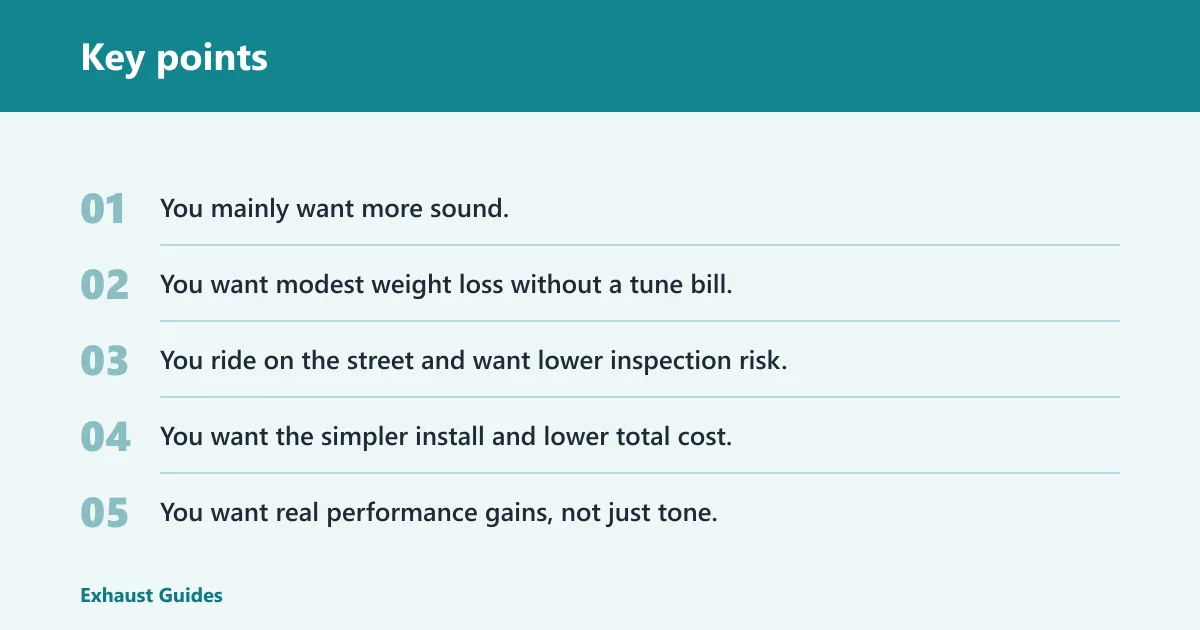
Choose slip on exhaust if…
- You mainly want more sound.
- You want modest weight loss without a tune bill.
- You ride on the street and want lower inspection risk.
- You want the simpler install and lower total cost.
Choose full system if…
- You want real performance gains, not just tone.
- You can budget for an ECU flash or dyno tune.
- You ride track days or care less about emissions compliance.
- You are ready to handle fitment, sensor, and servo issues if the bike needs them.

Frequently asked questions
Which is better slip on exhaust or full system?
For most street riders, slip on exhaust is the better choice because it gives the easiest sound upgrade, lower cost, and lower emissions risk. A full system is better only when you want maximum power and are ready to budget for tuning, added installation work, and a higher chance of compliance issues.
Should I get a slip on or full exhaust?
Get a slip-on if your goal is mainly sound, a small weight drop, and simple street use. Get a full exhaust if you want the most power potential and are willing to add an ECU flash or dyno tune. The right answer depends on whether you value convenience or output.
Are slip on exhaust worth it?
Yes, if you want a better exhaust note and some weight reduction without turning the bike into a tuning project. They are less compelling if you expect large horsepower gains, because most street bikes only see about 0–3 hp. For sound per dollar, they are often the better spend.
Is a full exhaust system worth it?
It is worth it when you care about real performance gains and can support the bike with proper fueling. The parts cost is higher, the install is more involved, and the emissions risk rises if the catalyst is removed. For a street-only bike, the payoff is narrower unless you also want the weight savings.
Slip on exhaust vs full system motorcycle
On a motorcycle, the difference is larger than many buyers expect. A slip-on changes the muffler and usually keeps the stock mid-pipe and catalyst, while a full system replaces headers, mid-pipe, cat, and muffler. That means the full system changes flow, fueling needs, and legality more aggressively.
Difference between slip on and full exhaust
The difference is how much of the factory exhaust stays on the bike. A slip-on is mostly a muffler change, so it is simpler and cheaper. A full exhaust replaces the larger flow path, which is why it can make more power but also needs more careful tuning and carries more risk.