How Much to Install Cat Back Exhaust?
A cat-back exhaust install usually costs about $400 to $1,500 out the door, with many shops landing near $700 to $1,100 once parts and labor are included. Skip the estimate math, and you can overpay for labor, clamps, gaskets, or rusty hardware that turns a simple swap into a bigger bill. This guide breaks down parts, labor, and add-ons so you can compare quotes line by line.
Cat-back install cost breakdown
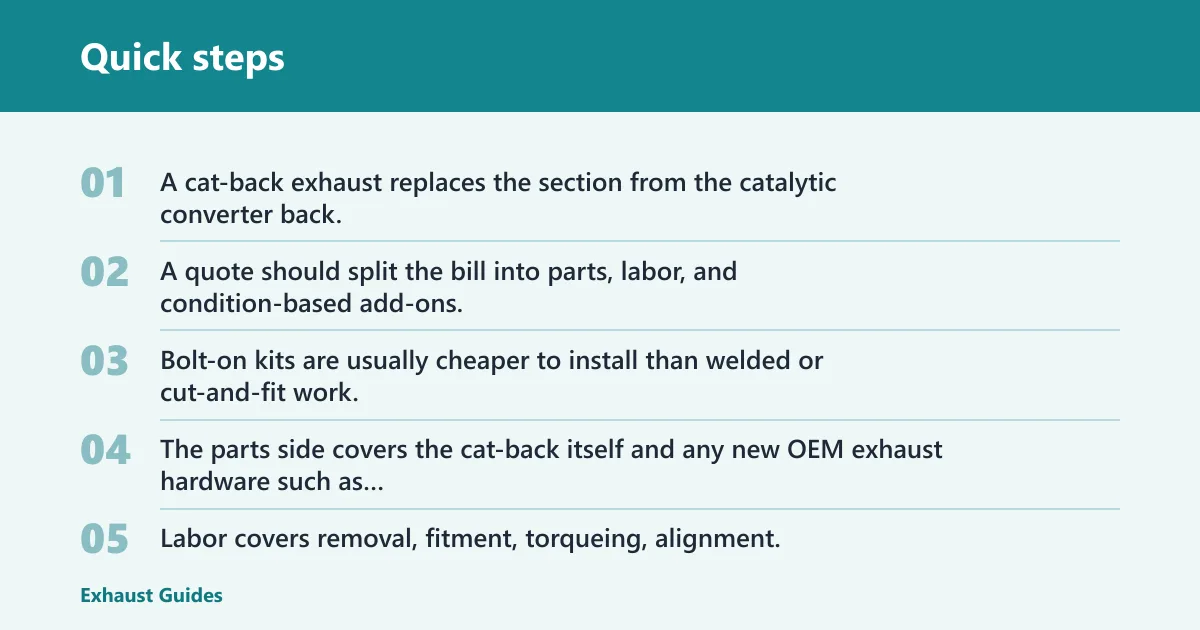


A cat-back exhaust replaces the section from the catalytic converter back. A quote should split the bill into parts, labor, and condition-based add-ons, because the same system can be quick on one car and time-consuming on another. Bolt-on kits are usually cheaper to install than welded or cut-and-fit work.
Parts cost versus labor cost
Parts and labor are different line items. The parts side covers the cat-back itself and any new OEM exhaust hardware such as gaskets, bolts, hangers, and clamps. Labor covers removal, fitment, torqueing, alignment, and any extra work caused by rust or poor access.
That separation matters because a shop quote can look low when the parts price is discounted, then climb after labor and hardware are added. A mild-steel system often costs less up front, while 304 stainless steel usually costs more and lasts longer in corrosive climates. The sourced example system uses 304 stainless steel, has a 76.2mm pipe diameter, 1.5mm wall thickness, four pieces, two mufflers, and five hangers.
Typical shop rate and labor hours
Most exhaust shops charge by the hour, and local rates change by region. For a straightforward cat-back on a clean vehicle, plan on about 1 to 2 labor hours. If the shop rate is $100 to $175 per hour, labor alone often lands between $100 and $350 before add-ons.
Longer labor is common when hangers are stiff, clamps are seized, or the system needs to be aligned carefully to avoid rattles and droop. Alignment matters because hanger count, hanger placement, and rubber isolators affect how the exhaust sits under load and heat.
Low, typical, and high total
A low total usually means a bolt-on cat-back, clean hardware, and no repair work. A typical total reflects normal shop labor and a few consumables. A high total reflects corrosion, broken fasteners, or flange work.
For a practical compare-and-quote model, use about this range: parts $300 to $1,200, labor $100 to $350, and add-ons from $0 to $400 or more depending on the car. That is why two estimates for the same product can differ by several hundred dollars.
What changes the quote?
Rust, seized fasteners, hanger damage, and flange mismatch are the main reasons a cat-back quote climbs. A clean southern car with intact hardware can be quick. A rust-belt vehicle with heat-cycled bolts can turn a “simple” install into a cutting and repair job.
Rust and seized fasteners
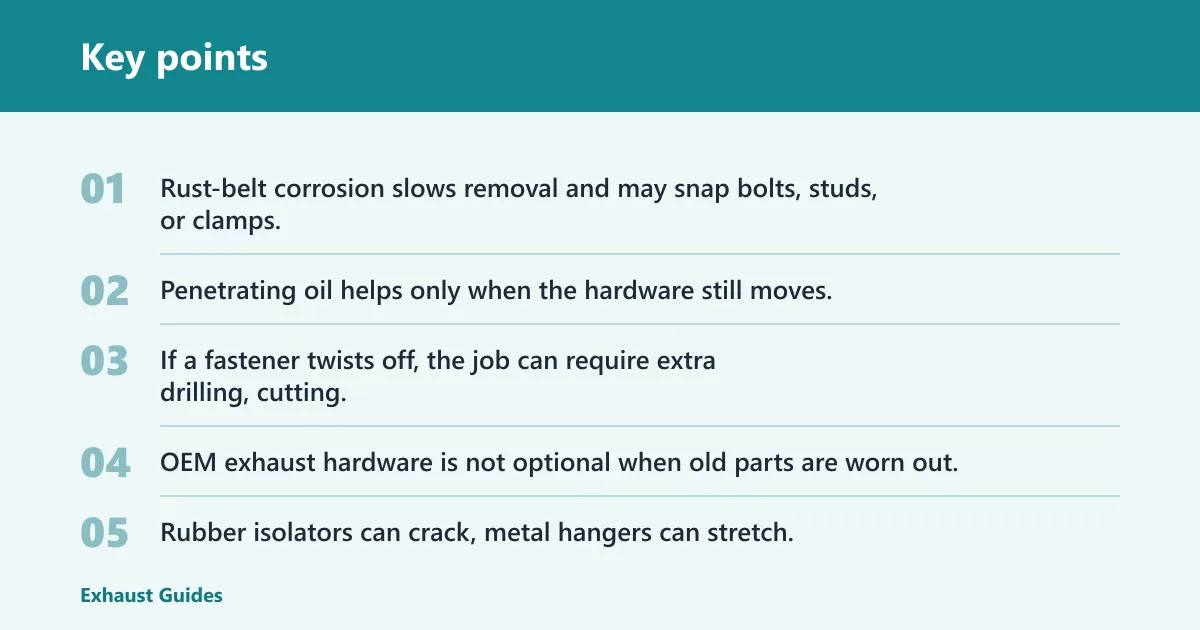
Rust-belt corrosion slows removal and may snap bolts, studs, or clamps. Penetrating oil helps only when the hardware still moves. If a fastener twists off, the job can require extra drilling, cutting, or replacement hardware, which adds both labor time and parts cost.
Hangers, clamps, and gaskets
OEM exhaust hardware is not optional when old parts are worn out. Rubber isolators can crack, metal hangers can stretch, and clamps may no longer seal cleanly. If a shop has to replace several of those pieces, the quote should list them separately so you can see what is driving the total.
Suppose a lifted pickup only needs the cat-back section swapped, but one exhaust hanger is torn and the mid-pipe bolts are badly corroded. The quote should include those parts and the extra labor, not bury them inside a vague “miscellaneous” fee.
Flange fitment and weld repairs
Flanges can be cast or laser-cut, and fitment matters. A mismatch in bolt pattern or flange thickness can force extra filing, re-drilling, or a different gasket choice to seal properly. If the old flange is warped or rusted through, the shop may need to cut and weld instead of bolting the new system on.
That is where pricing jumps. Cut-and-weld work adds setup time and usually moves the job away from a simple flat quote. It also raises the risk of later leaks if the flange faces are not parallel.
Text-only quote estimator
Use the table below to separate the real cost pieces. It is not a brand quote. It is a practical estimator for comparison shopping, with low, typical, and high totals built from parts, labor, and common failure-case add-ons.
| Quote item | Low | Typical | High |
|---|---|---|---|
| Cat-back parts | $300 | $700 | $1,200 |
| Base labor hours | 1.0 | 1.5 | 3.0 |
| Shop rate per hour | $100 | $140 | $175 |
| Rust or seized fastener add-on | $0 | $75 | $250 |
| Hanger replacement add-on | $0 | $40 | $120 |
| Flange repair add-on | $0 | $85 | $250 |
| Estimated total | $400 | $915 | $1,995 |
Read the table like a shop would. The low column assumes a clean bolt-on job. The typical column assumes normal labor plus one or two small surprises. The high column assumes rust, extra parts, or repair work that takes the install beyond a basic swap.
A common first-timer mistake is looking only at the cat-back parts price and ignoring labor, gaskets, and rusty hardware. A $650 parts quote and a $300 labor quote may still beat a $500 kit that needs $250 in hardware and another hour of labor. Out-the-door math is what matters.
Cat-back vs axle-back cost
An axle-back replaces only the rear section, while a cat-back replaces everything from the catalytic converter back. Because an axle-back uses fewer parts and less labor, it usually costs less and installs faster. If you only need the rear section changed, it is often the cheaper substitute.
What each system replaces
A cat-back can include the mid-pipe, mufflers, tailpipe(s), and tips in a bolt-on or welded layout. It may be single-exit or dual-exit. An axle-back generally stops at the rear section, so it avoids more of the mid-pipe work and related hardware.
Why axle-back usually costs less
Less pipe means fewer parts and fewer fitment points. That lowers both the product price and the labor time. The savings can be meaningful on a daily driver where the goal is a sound or replacement update, not a full rear system change.
When axle-back is the better buy
Choose axle-back when the mid-pipe is in good shape, the flange hardware is reusable, and you do not need a full replacement from the catalytic converter back. If the rear section is the only rusted part, spending for a full cat-back may not make sense.
Can you install it yourself?
Yes, a cat-back can be a DIY job if the hardware is clean, the system is truly bolt-on, and you have safe lifting gear. It is not a good first project if the car has rusted clamps, seized bolts, or a tight underbody layout that makes alignment difficult.
Tools you need
Plan on ratchets and sockets, penetrating oil, exhaust hanger pliers, a torque wrench, and either jack stands or a lift. You may also need a breaker bar, new clamps, and replacement gaskets or bolts if the old pieces are too corroded to reuse.
What makes a DIY install hard
Alignment is usually the hardest part. Hanger count and placement must be correct or the exhaust can sit crooked, rattle against the body, or droop after heat cycling. Flange mismatch, seized hardware, and rusted hangers make the job much harder than the average parts catalog suggests.
When a shop makes more sense
If the exhaust is rusted, the flange faces are damaged, or the system needs any cut-and-weld repair, a shop is usually the safer choice. Labor money buys you time, access to proper equipment, and a better chance of fixing leaks before they turn into repeat work.
How long does the install take?
Install time ranges from about an hour on a clean bolt-on job to several hours when rust or fabrication gets involved. The biggest timing variables are fastener condition, hanger alignment, and whether the system fits without modification. Shop speed also depends on lift access and parts quality.
Bolt-on timing
A clean bolt-on cat-back can often be installed in 1 to 2 hours. That assumes the old hardware loosens normally, the new flanges match, and the hangers line up without forcing. A well-designed four-piece system can reduce handling time if each section fits as intended.
Rusty-hardware timing
Rust and heat-cycled hardware can double the job time or more. Broken bolts, frozen clamps, and degraded hangers add removal time before the new parts even go on. This is where a quote with a labor ceiling matters.
Cut-and-weld timing
Cut-and-weld installs take longer because the technician must cut old pipe, fabricate or adjust connections, and verify seal and clearance after welding. If the flange is warped or the bolt pattern is off, the job can move from a straightforward swap to custom work.
What a shop should inspect first
A shop should inspect hardware condition, hanger health, flange fitment, and clearance before it quotes the job. That first look prevents surprise charges and tells you whether a cat-back is a simple install, a hardware refresh, or a repair-heavy replacement.
How much install cat checklist
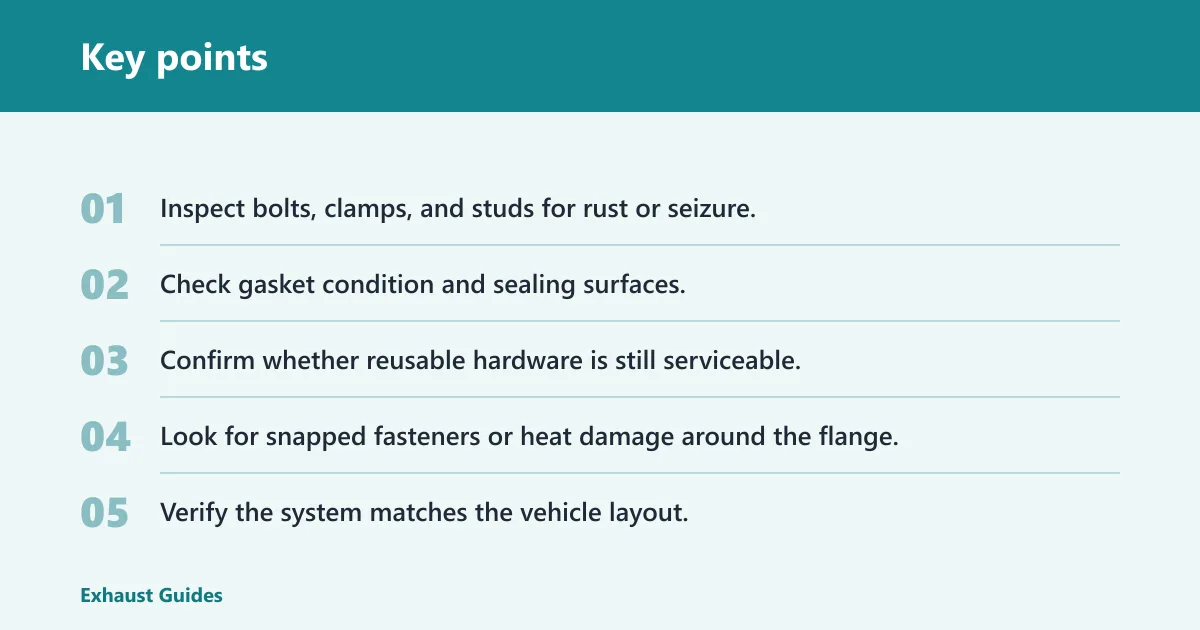
- Inspect bolts, clamps, and studs for rust or seizure.
- Check gasket condition and sealing surfaces.
- Confirm whether reusable hardware is still serviceable.
- Look for snapped fasteners or heat damage around the flange.
Hanger and flange inspection
The shop should confirm hanger count, hanger placement, and isolator condition before final pricing. Five hangers on one system can be easy when the rubber is healthy and the hangers are straight, but worn mounts can cause rattle or droop after installation.
Flange inspection matters just as much. Cast and laser-cut flanges do not always mate perfectly with old hardware, and a thickness mismatch can affect sealing and labor time. If the faces are warped, the estimate should include repair work, not just parts.
Fitment and clearance check
- Verify the system matches the vehicle layout.
- Check single-exit or dual-exit routing clearance.
- Confirm the tailpipe and tip do not contact suspension or bodywork.
- Test hanger tension so the exhaust does not bind.
- Recheck for leaks after warm-up and torque verification.
That checklist matters because materials and construction affect the quote. A 304 stainless steel system with 1.5mm wall thickness may cost more than a mild-steel alternative, but material choice also affects corrosion resistance and future hardware trouble. The system can still need attention if fitment is poor.
Frequently asked questions
How much do shops charge to install cat back exhaust?
Most shops charge a combined out-the-door total of about $400 to $1,500, depending on parts, labor rate, and vehicle condition. On a clean bolt-on install, labor may only add $100 to $350. Rust, seized hardware, and flange repair are the main reasons the price rises beyond that range.
How much to replace cat back exhaust
Replacing a cat-back usually costs the same as installing one if you are buying both parts and labor at once. A practical planning range is $400 to $1,500 total, with the biggest swing coming from parts material, shop rate, and whether old hardware can be reused.
How much to install cat back exhaust system
A cat-back exhaust system install often lands near $700 to $1,100 for many common vehicles, but the full spread is wider. Parts, labor hours, and condition-based add-ons all matter. A rust-free bolt-on setup is far cheaper than a corroded one that needs hardware replacement or repair work.
How long to install cat back exhaust
A straightforward cat-back install often takes 1 to 2 hours. Rusty fasteners, poor flange fitment, and alignment issues can push that much longer. If the job requires cutting or welding, the time can move well beyond a basic same-day swap.
Can I install a cat back exhaust myself?
Yes, if the system is bolt-on and the hardware is in good condition. You need safe lifting gear, hand tools, penetrating oil, hanger pliers, and a torque wrench. If the vehicle has rusted fasteners or needs fabrication, a shop is usually the better choice.
How much to install axle back exhaust
An axle-back usually costs less to install than a cat-back because it uses fewer parts and less labor. In many cases, the total falls below a cat-back quote by a noticeable margin. If only the rear section needs replacement, axle-back is often the lower-cost option.