Best Gasket for Honda Exhaust Flanges: Based on Specs and Reviews
The best gasket for a Honda exhaust flange is the exact match to your flange style and bolt pattern: donut/ball-and-socket, flat two-bolt, or four-bolt, with OEM Honda first when the original seal is still available. A wrong gasket can leak exhaust, trigger noise or odor, and force you to redo a job that should have sealed the first time. This guide shows how to identify the flange style by vehicle and engine, then choose OEM or aftermarket with confidence.
Quick comparison
| Product | Badge | Best for | Price | ||
|---|---|---|---|---|---|
 | Walker 31383 Exhaust Pipe Flange Gasket for Honda Civic |Walker | Our pick | Walker exhaust flange gasket · Honda Civic · OE-grade | $7.48 Price as of 24 Oct 2026 | View |
 | FEL-PRO MS 97036 Exhaust Manifold Gasket Set | CompatibleFel-Pro | Also great | Fel-Pro exhaust manifold gasket set · Honda Accord/CR-V · Premium | $6.49 Price as of 24 Oct 2026 | View |
 | Genuine Honda 18115-PRB-A01 Exhaust Manifold GasketCIVIC | Upgrade pick | Genuine Honda OEM exhaust manifold gasket · Exact factory fit | $30.24 Price as of 24 Oct 2026 | View |
 | SCUARI 2PCS Exhaust Gasket,Car Accessories Exhaust FlangeSCUARI | Also great | $6.99 Price as of 24 Oct 2026 | View |
Honda exhaust flange gaskets are not one-size-fits-all. The right choice depends on the joint design at the pipe, converter, or front pipe, plus the exact year, model, engine, and sometimes transmission or drivetrain.
Advance Auto lists 99 different types of exhaust pipe and flange gaskets for Honda, while HondaPartsNow lists 61 exhaust flange gaskets found. That spread is the reason a VIN check matters when the catalog does not show the sealing surface clearly.
How we chose
Selection starts with fitment evidence, not brand name. We prioritized listings that identify the Honda application by year range and part naming, then separated genuine Honda references from aftermarket options only after the flange type was identified.
We also looked for clues that help you avoid repeat leaks: bolt-hole style, surface shape, and whether the listing calls the joint a front pipe, converter, exhaust pipe, or manifold connection. Price examples are included only where the catalog data is specific.
- Fitment evidence by model family and year range.
- Flange geometry clues that help you identify the seal type.
- Clear naming on the listing, including pipe, converter, and front pipe variants.
- Practical guidance on OEM versus aftermarket after fit is verified.
Honda fitment matrix
| Model family | Years shown in the catalog | Flange style clue | Part naming used on the listing | Buying recommendation |
|---|---|---|---|---|
| Accord | 1995-2017 | Catalog fit spans multiple trims, transmissions, and 2 door and 4 door variants; check the joint shape against the pipe before you order. | Gasket, Exhuast Pipe (Ishino) | Use VIN lookup if the pipe shape or drivetrain is unclear; OEM is preferred when the original part number matches. |
| Civic | 1984-1987; 1999-2000 Si; 2012-2026 | Body style and trim vary across the catalog, so look for the exact flange style and engine callout. | Gasket, Exhuast Pipe; Honda exhaust flange gasket listings across multiple body styles | Use VIN lookup for Si and late-model fitment; OEM or verified aftermarket both work if the flange is matched exactly. |
| CR-V | 2010-2026 | Listings include 2WD and AWD variants, plus hybrid coverage; confirm the engine and pipe end before buying. | Honda exhaust pipe and flange gasket listings by year, trim, and drivetrain | Use VIN lookup on hybrid and AWD applications; OEM is a safe default when the exact listing is present. |
| Odyssey | 1999-2026 | Multiple trims appear, and the catalog uses front pipe naming on some entries. | Front pipe gasket, Gasket, Exhuast Pipe | Check the front pipe callout first; OEM is often the cleaner choice when the catalog shows the exact Honda number. |
| Passport | 2019-2026 | 2WD and AWD variants appear, so drivetrain matters as much as engine. | Gasket, Exhuast Pipe | Use VIN lookup before ordering; use OEM if the part number is listed for your exact configuration. |
Honda Genuine gasket: best for exact fit
- Genuine OEM factory part
- Exact fit guaranteed
- Highest quality assurance
Genuine Honda is the safer call when you have the exact part number and the factory listing is still available. HondaPartsNow identifies 18302-SP0-003 as a gasket, exhaust pipe, and also lists 18212-SA7-003 for multiple Honda applications, including Accord, Civic, Odyssey, and Passport fitment ranges.
This choice fits readers who want the most direct match to Honda naming and factory catalog logic. It is especially sensible when the original joint is sensitive, the flange shape is unclear, or the vehicle has had repeat leak repairs that may have distorted the sealing surface.
The drawback is cost and availability. Genuine Honda parts can cost more than a comparable aftermarket gasket, and the catalog still requires careful checking because naming varies between front pipe, converter, and exhaust pipe entries.
When OEM part numbers are worth the premium
Choose OEM when the catalog shows an exact Honda number for your VIN or when the vehicle has a long fitment range with drivetrain differences. That matters on Accord, Civic, CR-V, Odyssey, and Passport listings where the same year range can include multiple trims, body styles, and drivetrains.
A common first-timer mistake is choosing a generic gasket without checking the Honda exhaust flange shape or bolt spacing first. Say your 2016 Accord has a 2.4L engine and the catalog entry says front pipe, while a similar listing is for a different transmission. The gasket may look close, but the bolt spacing and mating surface can still differ.
How Honda catalog naming changes by pipe location
Honda listings may call the same family of gasket a front pipe gasket, converter gasket, exhaust pipe gasket, or converter and pipe gasket. Do not treat those names as interchangeable until you confirm the joint location on your car.
The naming matters because the gasket is sealing the pipe-to-flange joint, not a generic exhaust opening. If the listing says converter and your car needs a front pipe seal, the part can be wrong even when the model name looks right.
Walker exhaust pipe flange gasket: best budget pick
- OE-grade quality for reliable seal
- Honda Civic confirmed fitment
- Budget-friendly at $7.48
Walker is the clearest budget-minded aftermarket option in the sourced data. Walker part 31602 is priced from $8.99, and Walker part 31334 is priced from $3.59. Walker says its gaskets come in a variety of styles and sizes, are heat resistant, and may be easier to install with slotted bolt holes where applicable.
This makes sense when you already know the flange geometry and need a lower-cost replacement for a common pipe-to-flange repair. It is a better fit for a verified, standard-looking joint than for a vague catalog match that still needs VIN confirmation.
The drawback is fit variation. An aftermarket gasket can be the right answer only if the seal style, size, and bolt pattern match your Honda exactly. If the flange is bent, pitted, or warped, a new gasket alone may not stop the leak.
Part number examples and price range
Walker’s price examples give a useful range for comparison: $3.59 for part 31334 and $8.99 for part 31602. That spread suggests a family of parts rather than one universal Honda gasket size.
That is the key point for buyers. A low price does not mean a universal fit, and a higher price does not guarantee the wrong shape will seal. The part still has to match the pipe, bolt spacing, and mating surface.
Heat resistance, slotted bolt holes, and size differences
Walker describes the gasket as heat resistant, and says slotted bolt holes can make installation easier where applicable. Those details help on older flanges or parts with some alignment tolerance, but they do not replace a fit check.
Size differences matter because Honda exhaust flange gaskets vary by application. One Honda may use a flat two-bolt seal, another a donut-style joint, and another a converter-to-pipe gasket with a different bore and seat depth.
What gasket do you need for a Honda exhaust flange?
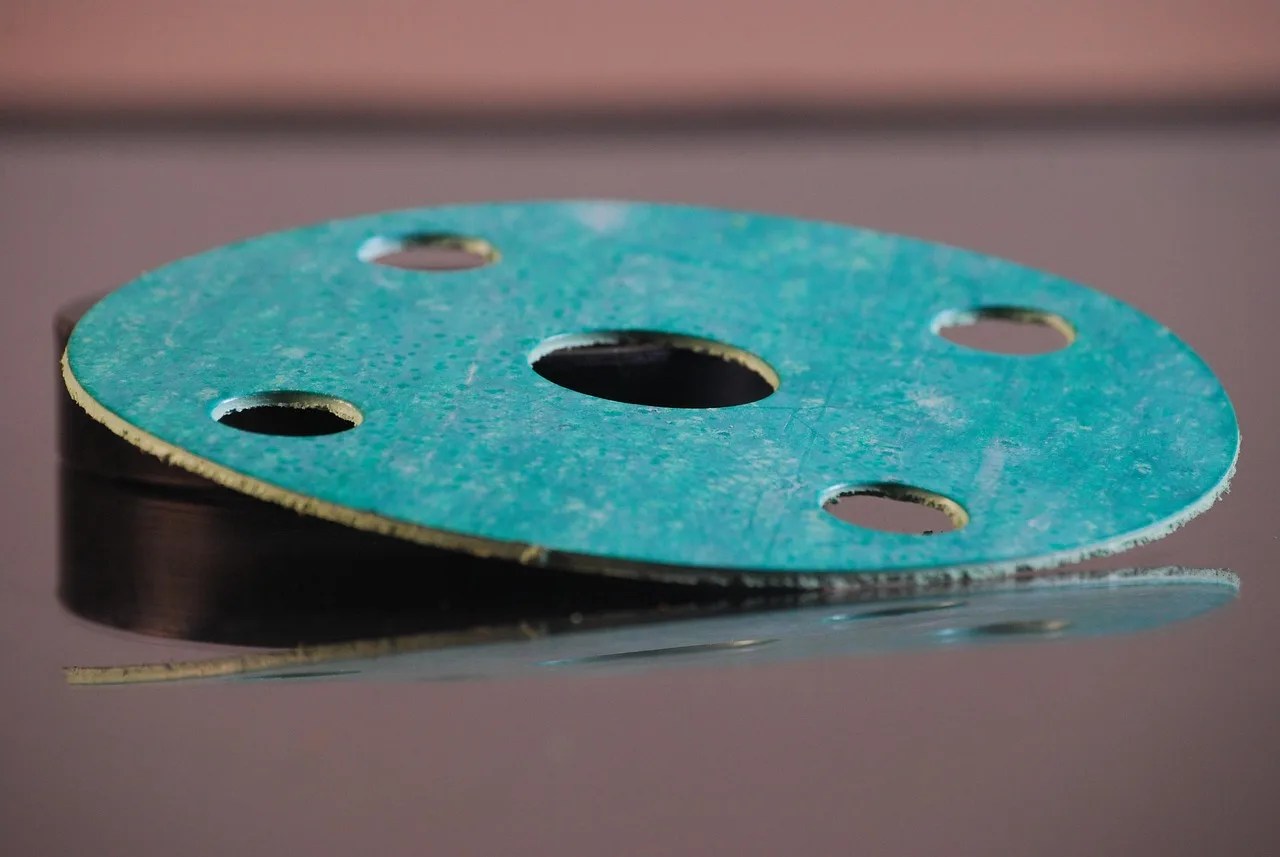
The gasket you need depends on the flange shape at the joint. Hondas use donut gaskets, flat flange gaskets, and converter-to-pipe gaskets in different applications, so the correct part is the one that matches the seating surface and bolt pattern on your vehicle.
Donut gasket versus flat flange gasket
A donut gasket belongs on a ball-and-socket style joint, where the pipe ends meet with a rounded sealing surface. A flat flange gasket belongs on a joint where two flat faces clamp together, usually with two or four bolts.
If the old gasket came out as a compressed ring and the flange has a rounded seat, do not substitute a flat sheet-style gasket. If the flange faces are flat and the old gasket was a ring, do not assume a donut will work just because the bolt count looks similar.
How bolt count and mating surface point you to the right type
Two bolts often suggest a flat flange gasket, but not always. Four bolts can still use a flat gasket, and some Honda joints use a different style entirely, so you need to inspect the mating faces and the seat shape together.
Picture a Civic exhaust repair where the flange has two bolts and a visibly cupped seat. The correct seal is not chosen by bolt count alone; it is chosen by the way the pipe and flange lock together.
How do you make sure it fits before you buy?
Use year, make, model, and engine first, then confirm the VIN if the catalog gives you that option. Honda fitment depends on the exact vehicle setup, and the same model can use different gaskets based on trim, drivetrain, body style, or engine family.
Use year, make, model, engine, and VIN when the catalog allows it
Start with the vehicle selector, then narrow to the engine and transmission if the listing asks for them. If the catalog supports VIN selection, use it. That is the best way to separate similar-looking Honda exhaust flange gaskets that are not interchangeable.
- Identify the vehicle year, make, model, and engine.
- Check whether the listing names the joint as front pipe, converter, exhaust pipe, or manifold.
- Confirm the flange style: donut, flat two-bolt, or flat four-bolt.
- Match the catalog entry to drivetrain details such as 2WD, AWD, trim, or transmission.
- Use VIN lookup if the fitment range is broad or the part number appears across multiple vehicles.
Check Accord, Civic, CR-V, Odyssey, and Passport fitment notes
HondaPartsNow shows 18212-SA7-003 fitting Accord models from 1995-2017, Civic models from 1984-1987, Odyssey models from 1999-2026, and Passport models from 2019-2026. That range proves how wide Honda fitment can be without meaning one gasket fits every version.
The same source lists 99 different types of exhaust pipe and flange gaskets for Honda and shows 25 Honda exhaust pipe and flange gaskets in the comparison view. That is another reason to avoid guessing from a title alone.
Suppose you are replacing the gasket on a 2022 CR-V hybrid. The year is right, but the drivetrain and engine matter too. If the catalog separates hybrid coverage from non-hybrid fitment, the VIN check is the safer path.
Should you buy OEM Honda or aftermarket?
Buy OEM Honda when the part number is known, the original seal is still available, or the vehicle has a sensitive joint that has already failed once. Buy a verified aftermarket gasket when the flange type is clear, the dimensions match, and the replacement is a standard service part rather than a model-specific seal.
When genuine Honda is the safer call
Genuine Honda makes sense on oddball catalog entries, wide fitment ranges, and vehicles where Honda uses front pipe or converter naming that can be easy to mix up. It is also the better choice when you want to match the original part number rather than a cross-reference.
That logic applies especially when the flange has unusual seat geometry or the repair must be right the first time. A correct OEM gasket can save you from buying twice.
When a verified aftermarket gasket makes sense
Aftermarket works best when the fitment is already confirmed and the old gasket was a common style. Walker gives examples of low-cost gaskets with heat resistance and slotted bolt holes, which can be useful on standard flange repairs.
The drawback is that aftermarket listings often assume the buyer has already identified the exact flange style. If the joint is still uncertain, aftermarket can become a guess instead of a solution.
Which one should you buy by budget and exhaust condition?
If the exhaust flange is straight, the catalog is clear, and you have the VIN match, a good aftermarket gasket is often the budget pick. If the flange has corrosion, a mixed catalog history, or a repeat leak, OEM is the safer first move.
Repeat blowouts usually point to one of three problems: the wrong gasket type, a bent flange, or a surface that was reused after it should have been replaced. In those cases, changing brands without fixing the joint shape rarely solves the problem.
Pros and cons
Pros
- Honda-specific fitment ranges help narrow the right gasket by model family and year.
- OEM part numbers are available for catalog matching.
- Aftermarket options can reduce cost when the flange style is already confirmed.
- Fitment clues make it easier to separate front pipe, converter, and exhaust pipe listings.
Cons
- Honda uses many gasket variants, so model name alone is not enough.
- Catalog wording can hide the real joint type.
- A damaged flange can cause a new gasket to leak again.
- Some listings cover multiple trims, drivetrains, or body styles, which makes VIN checking necessary.
Which Honda models use the same exhaust flange gasket?
Some Honda gaskets cross over across more than one model family, but only within the exact catalog listing. The same source shows 18212-SA7-003 across Accord, Civic, Odyssey, and Passport ranges, yet each of those ranges has its own year span and application limits.
That is why shared part numbers should be treated as catalog evidence, not a blanket rule. The same gasket can span several Honda nameplates and still be wrong for the wrong engine, drivetrain, or pipe location.
How much does a Honda exhaust flange gasket cost?
Prices vary by part number, brand, and how specific the application is.
For shoppers, the useful rule is simple: budget aftermarket fits the standard job, while OEM often costs more but can reduce fit risk when the catalog match is narrow or confusing. The price difference is usually smaller than the cost of redoing a leak repair.
Frequently asked questions
Are Honda exhaust flange gaskets a different size by model?
Yes. Honda exhaust flange gaskets vary by model family, year, engine, drivetrain, and pipe location. A listing that fits one Accord or Civic range may not fit another, even when both are called exhaust pipe gaskets.
Should I use a genuine Honda gasket or aftermarket?
Use genuine Honda when you have the exact part number, the fitment is broad or unclear, or the vehicle has already had a leak at that joint. Use aftermarket when the flange type is verified and you want a lower-cost replacement for a standard repair.
Can I reuse an exhaust flange gasket on a Honda?
Usually no. Once compressed, a gasket can lose its sealing shape, and a reused gasket can leak if the flange moved or the joint was overtightened. If the gasket was heat-damaged, crushed, or unevenly worn, replace it rather than reinstalling it.
Do Honda exhaust flange gaskets need sealant?
Usually they do not. The correct gasket should seal dry unless the catalog or service information says otherwise. Sealant can interfere with the seal on some donut or flat flange joints, so follow the application data rather than guessing.
How do I make sure the gasket fits before ordering?
Use year, make, model, engine, and VIN when the catalog allows it. Then confirm whether the listing is for a front pipe, converter, or exhaust pipe joint, and compare the flange shape and bolt count to the part on the car.