Are Aftermarket Heat Shields Worth It?
Aftermarket heat shields are generally worth buying only when the OEM shield is missing, cannot be repaired, or the replacement adds some added clearance or heat reduction. Otherwise, repairing the factory shield is usually cheaper and safer. Bad shielding can cook wiring, hoses, floorpan sealer, and nearby components, and a poor-fit part can rattle, trap moisture, or fail inspection. This guide weighs protection gains, fitment risk, and total cost against repairing or replacing the original shield.
Verdict
The best buy depends on where the heat problem is. For exhaust areas, a vehicle-specific replacement often beats a universal panel because mounting points, shape, and clearance matter. For intake heat soak, an intake shield can help if it actually separates the filter and tract from radiant heat and still leaves enough airflow for the engine.
Specs at a glance
| Attribute | What to look for | Why it matters |
|---|---|---|
| Material | Aluminum, steel, or ceramic composite | Material choice affects durability, heat reflection, and weight |
| Fitment type | Vehicle-specific or universal | Vehicle-specific parts usually match OEM mounting points better |
| Application | Intake heat shield or exhaust heat shield | They solve different heat problems |
| Mounting hardware | Bolts, clamps, fasteners, or existing brackets | Retention affects rattles and long-term durability |
| Heat transfer target | Radiation, conduction, convection | The shield has to block the right path of heat flow |
| Form factor | Flat, curved, or vented | Shape changes clearance and airflow |
Common materials
Aluminum is the lightest common choice and is usually picked for heat reflection and corrosion resistance. Steel is the budget option when cost and durability matter more than weight. Ceramic composite fits higher-heat jobs, where plain sheet metal can fall short of the temperature demand.
Fitment types: universal vs vehicle-specific
Vehicle-specific heat shields are usually the safer choice because they are built around the car’s mounting points and nearby parts. Universal pieces can work, but they depend more on trimming, drilling, or improvised retention, which raises the chance of rattles, poor clearance, and weak long-term fit.
Typical mounting hardware
Look for the same retention method the car already uses whenever possible. Bolts, clamps, and formed fasteners all matter because a shield that covers heat well but hangs loosely can make noise, shift under vibration, or touch another part when the engine or exhaust moves.
Who it
Aftermarket heat shields are for specific problems, not routine upgrades. They make sense when the factory shield is broken, missing, rusted through, or too close to a hot part after a modification. If the OEM shield still fits and fastens correctly, replacement or repair is usually the smarter move.
Broken OEM shield
If the factory shield is cracked, corroded, or hanging from one fastener, a replacement is often enough. The original part already matches the car’s mounting points and expected clearances, so restoring stock fitment usually gives the lowest-risk fix for exhaust heat near the catalytic converter or manifold.
Modified street car with intake heat soak
An intake heat shield can help when an open filter or relocated intake sits near engine-bay heat. Heat soak happens after shutdown and during slow driving, when the intake tract and surrounding air warm up. Cooler air is denser and contains more oxygen molecules, so a shield that keeps the filter away from radiant heat can support intake consistency.
Rust-prone daily driver or track use
Steel or ceramic composite makes more sense when the shield sees a harsh environment, frequent road spray, or sustained heat. A daily driver in salted conditions needs durability and secure retention. Track use adds more underhood and underbody heat, so shielding must survive repeated thermal cycles without loosening.
What works
A good heat shield works by blocking heat transfer, mainly radiation and conduction, while also limiting hot air movement by convection. It can lower how much heat reaches nearby parts, help protect fuel lines, wiring, seals, and plastics, and reduce heat soak around an intake setup when the shape and placement are right.
Heat reflection and radiant protection
Exhaust shields are frequently installed near the exhaust system and catalytic converter because those parts produce intense radiant heat. Flat shields usually sit under the car, while curved shields wrap around specific components. Venting designs can move heat out through airflow instead of trapping it against the body or floorpan.
Intake heat soak control
Intake shields try to separate the filter and intake tract from hot engine-bay air. That can matter more on modified cars with less factory ducting or exposed cone filters. The benefit depends on placement; a shield that still pulls hot air from the same area can look useful and do very little.
Protection for nearby lines, wiring, and seals
Exhaust heat shields protect nearby fuel lines, wiring, plastic parts, and rubber seals from heat that can degrade them over time. That protection matters most near manifolds, catalytic converters, and tight underbody packaging. If a shield keeps a harness or hose cooler, it may prevent future repair costs that exceed the price of the part.
Picture a front-drive sedan with a damaged underbody shield beside the catalytic converter. If the replacement part matches the factory holes and clears the exhaust by a safe margin, the fix is mostly about restoring protection. If the same car gets a universal panel that touches a bracket, the rattle may be worse than the original problem.
What does not?
Aftermarket shields are not a cure for poor packaging, weak airflow, or a heat problem that comes from the wrong intake layout. A part that fits badly can rattle, flex into a pipe, trap moisture, or sit too close to another surface. In that case, the shield becomes a liability instead of a fix.
Fitment and clearance problems
Heat shields are not a one-size-fits-all solution. Universal parts often need trimming, extra holes, or improvised brackets, and that can compromise clearance. If a shield sits too near the exhaust, the mounting points may move heat into the body and the shield may buzz against the floor or subframe.
Rattles from poor retention
Missing hardware is a common reason shields fail. A loose bolt, weak clamp, or worn fastener lets the part vibrate against metal, which creates noise and can wear through nearby edges. A repair that restores proper retention usually solves that more cleanly than adding a generic panel.
Limited gains when airflow is the real problem
A shield can reduce radiant heat and limit heat soak, but it will not fix a cramped engine bay with poor airflow or an exhaust layout that throws heavy heat into the body. If the issue is mostly moving hot air, a shield alone may give only a small gain. Better ducting, routing, or OEM repair may matter more.
Suppose an intake filter sits behind a headlight with almost no fresh-air path. Adding a reflective panel may cut some radiant heat, but if the filter still draws from a hot pocket of air, the change can be small. In that case, intake placement matters more than the sheet itself.
Heat shield decision table
Use this table to judge whether the part is worth the money. The better alternative is often repair, replacement, or no change at all when the original shield still fits and the heat problem is minor.
| Use case | Risk level | Expected benefit | Likely cost band | Better alternative |
|---|---|---|---|---|
| Broken OEM shield | Low to moderate | Restores original protection and clearance | $10 to $100+ for parts, more if hardware is missing | Repair or replace the OEM shield |
| Recurring rattle | Moderate | Stops noise only if retention and fit are correct | $10 to $150+ | Replace clips, bolts, or the factory shield |
| Intake heat soak on a modified car | Moderate | May cut radiant heat around the intake tract | $10 to $150+ | Vehicle-specific intake shield or ducting change |
| Track use | High | Protects nearby components under sustained heat | $50 to $200+ including stronger hardware | Heat-resistant OEM-style or ceramic composite shield |
| Rust-prone daily driver | Moderate | Corrosion resistance and reliable retention | $20 to $150+ | Aluminum or new OEM shield with proper fasteners |
| Heat-sensitive nearby components | High | Protects fuel lines, wiring, seals, or plastic parts | $20 to $200+ | OEM replacement or carefully shaped vehicle-specific shield |
Alternatives
Repair or replace the OEM shield

For most cars, this is the first option to check. The factory shield already fits the mounting points, follows the original clearances, and is built for the vehicle’s exhaust or underbody layout. The downside is obvious: if the OEM piece is deeply rusted, bent, or discontinued, repair may take more labor than the part is worth.
Exhaust wrap
Exhaust wrap can cut radiant heat on a pipe or section of tubing, but it is not a direct substitute for every shield job. It may help on a tubular manifold or a visible hot section, yet it does not protect nearby parts as broadly as a properly placed heat shield. It can also complicate future service and trap moisture on some parts.
Thermal coating

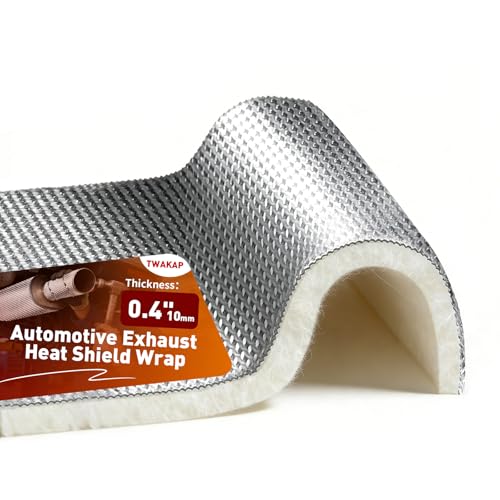
A reflective or thermal barrier sheet can work well where a flat or broad surface needs coverage, especially in engine bay or firewall spots. Based on the manufacturer’s specs and published product details, the larger sheet format helps coverage, but adhesive-backed material still depends on clean surfaces and careful prep. The drawback is that it is less suited to complex shapes and hot, moving exhaust parts.
Leave the shielding stock
If the factory shield is intact, aligned, and secured, leaving it alone is often the best choice. OEM parts tend to fit mounting points and clear nearby components better than universal add-ons. That keeps risk low and avoids spending money on a part that may not change temperatures enough to matter.
How much is a heat shield? For aftermarket parts, the price is usually modest compared with the cost of fixing heat damage later, but the total job can still climb once labor and hardware are included. The sensible question is not just part price. It is whether the new shield fits better than the original.
Should you buy it?
Buy an aftermarket heat shield when you need a replacement and the vehicle-specific part restores the original fit, or when a modified intake or exhaust setup has a real heat problem and the shield is shaped for that job. Skip it when the factory shield is repairable, the only issue is missing hardware, or the universal part creates clearance risk.
Best-buy scenarios
Choose aftermarket when the OEM shield is missing, unavailable, or too damaged to reuse, and the replacement uses the correct mounting points. Choose it again when a performance build needs targeted intake heat soak control or when a high-heat area needs a better material such as aluminum, steel, or ceramic composite.
Skip-it scenarios
Skip aftermarket when the original shield can be straightened, reattached, or refastened for less money. Also skip it if the part is universal and the install would rely on guesswork for retention. A shield that is hard to mount cleanly can be worse than no upgrade at all.
What to check before ordering
- Confirm whether the part is for intake or exhaust heat.
- Match the vehicle-specific mounting points when possible.
- Check clearance around the catalytic converter, manifold, floorpan, or intake tract.
- Inspect the mounting hardware and retention method.
- Decide whether aluminum, steel, or ceramic composite fits the heat and corrosion risk.
- Compare the installed total with OEM repair or replacement.
How much does a heat shield cost? Part-only pricing for aftermarket shields is commonly lower than the labor bill, which is why broken OEM hardware should be checked first. If the existing shield only needs bolts, clips, or a small repair, that route usually beats a full aftermarket swap on cost and fit.
Frequently asked questions
Are aftermarket heat shields worth it?
They are worth it when they solve a real problem: a missing OEM shield, a damaged factory part, or a modified setup with proven heat soak or clearance issues. They are less attractive when the original shield can be repaired cheaply, because fitment risk and extra labor can erase the benefit.
How much does a heat shield cost?
Part prices vary by material, shape, and whether the shield is universal or vehicle-specific. The bigger cost swing is often labor and hardware. A simple replacement can stay low, but a poor-fit part that needs trimming, extra fasteners, or repeated adjustment can push the total much higher.
Are heat shields necessary on cars?
Not every car needs an aftermarket one. Many vehicles already have factory shielding in the right spots, especially near the exhaust and catalytic converter. A heat shield becomes necessary when the OEM part is missing or when nearby parts are exposed to enough heat that damage, rattle, or soak becomes a real concern.
When is a heat shield needed?
You need one when heat reaches something that should stay cooler, such as wiring, plastic, rubber seals, fuel lines, or an intake filter. It is also useful when exhaust heat is close to the floorpan or body and the factory barrier is damaged. Fitment matters as much as the material.
Can you wrap an exhaust instead of using heat shields?
Sometimes, but not always. Exhaust wrap can reduce radiant heat on the pipe itself, yet it does not replace a shield that protects nearby parts over a wider area. It also does nothing for every underbody layout, so it is best treated as one tool, not a universal substitute.
Are weather shields worth it?
If this question refers to heat shields, the answer is the same: only when the part solves a real fitment or heat problem. If it refers to a different product category, check the exact application before buying. A good result depends on matching the shield to the heat source and the mounting points.