
Exhaust Manifold Leak Sound vs Lifter Tick Differences
An exhaust manifold leak is usually the faster, sharper tick and is loudest on cold start and near the manifold or wheel well; lifter tick is softer, higher on the engine, and often changes with oil pressure or rpm. Misdiagnosis can waste hours on the wrong repair and leave a leak or low-oil-pressure issue untreated. This guide shows how to separate the two with sound location, cold-start behavior, and a simple listen-and-inspect sequence.
| Decision factor | Exhaust manifold leak sound | lifter tick | Winner |
|---|---|---|---|
| Sound quality | Sharp puffing tick, often like a fast exhaust tap | Dry, rhythmic tap from the valvetrain area | Exhaust manifold leak sound |
| Best listening location | Wheel well, underside, and along the cylinder head where the manifold bolts on | Top of the engine, near the cylinder head and valve cover | Tie |
| Cold-start behavior | Often loudest cold, then fades as metal expands | Can be present cold too, but often tracks oil pressure and engine speed more than heat expansion | Exhaust manifold leak sound |
| RPM response | May speed up with engine rpm and load | Usually follows engine speed closely and can change with oil pressure | lifter tick |
| Visible clues | Soot, carbon tracing, cracked manifold, failed gasket, damaged studs or flange | Usually no exhaust soot; noise source is internal to the cylinder head area | Exhaust manifold leak sound |
What you’ll need



- Flashlight
- Mechanic’s stethoscope or a length of hose
- Safety gloves
- Basic hand tools for a quick visual check
- A helper to hold 1,500 rpm for a brief listening test
How can you tell by sound location?
An exhaust manifold leak is usually easier to hear low and outside the engine, while lifter tick is usually easier to hear at the top of the engine near the cylinder head. Use the cylinder head as your reference point: the manifold bolts to it, and the manifold is the first exhaust component after the engine.
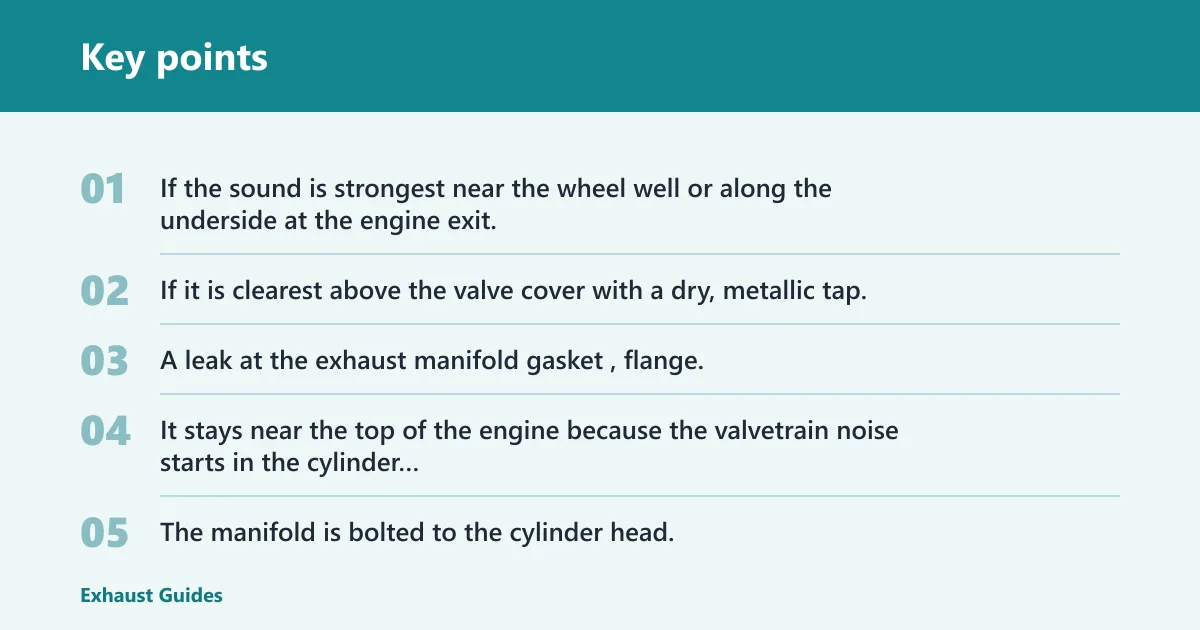
If the sound is strongest near the wheel well or along the underside at the engine exit, suspect the exhaust side first. If it is clearest above the valve cover with a dry, metallic tap, lifter tick moves up your list.
Top of engine versus wheel well
A leak at the exhaust manifold gasket, flange, or a cracked manifold can throw noise outward and downward, so it may sound like it comes from the wheel well. Lifter tick usually does the opposite. It stays near the top of the engine because the valvetrain noise starts in the cylinder head area.
Use the cylinder head as the reference
The manifold is bolted to the cylinder head, so that joint is the main split point for diagnosis. A sharp tick near the head-to-manifold interface, especially with soot nearby, can point toward an exhaust leak rather than a lifter problem.
What changes on cold start?
A cold start is often a useful clue. Exhaust leaks are often loudest when the metal is cold, then get quieter as parts warm up and move closer together. Lifter tick can also be more noticeable when cold, but it often tracks oil pressure and engine speed more than heat expansion alone.
Why a manifold leak often fades
As parts heat up, tiny gaps at the gasket, flange, or a cracked manifold can shrink enough to reduce the puffing cadence. That does not fix the fault. It only makes the noise harder to hear after warm-up.
Why lifter tick may follow rpm
A lifter tick is a valvetrain noise, so changes in oil pressure and engine speed matter. If the tap gets quicker as rpm rises and stays centered at the top of the engine, that leans toward lifter tick rather than an exhaust-side leak.
Manifold tick comparison table
| Check | Exhaust manifold leak sound | lifter tick | Winner |
|---|---|---|---|
| Sound quality | Sharp puffing or ticking cadence | Dry tap, usually more mechanical than puffing | Exhaust manifold leak sound |
| Engine temperature behavior | Often worst on cold start, then quieter warm | May remain present warm if oil pressure or wear is involved | Exhaust manifold leak sound |
| Listening location | Wheel well, underside, and manifold-to-head area | Top of engine near the valve cover and cylinder head | Tie |
| RPM response | Often gets quicker with rpm and load | Usually tracks engine speed closely | lifter tick |
| Visible clues | Soot marks, carbon tracing, cracked manifold, gasket leak, damaged studs or flange | No exhaust soot; problem is internal valvetrain noise | Exhaust manifold leak sound |
| Likely fault | Exhaust manifold, gasket, flange, studs, or crack | Lifter, oiling issue, or valvetrain wear | Tie |
Why the table favors the exhaust side in more rows
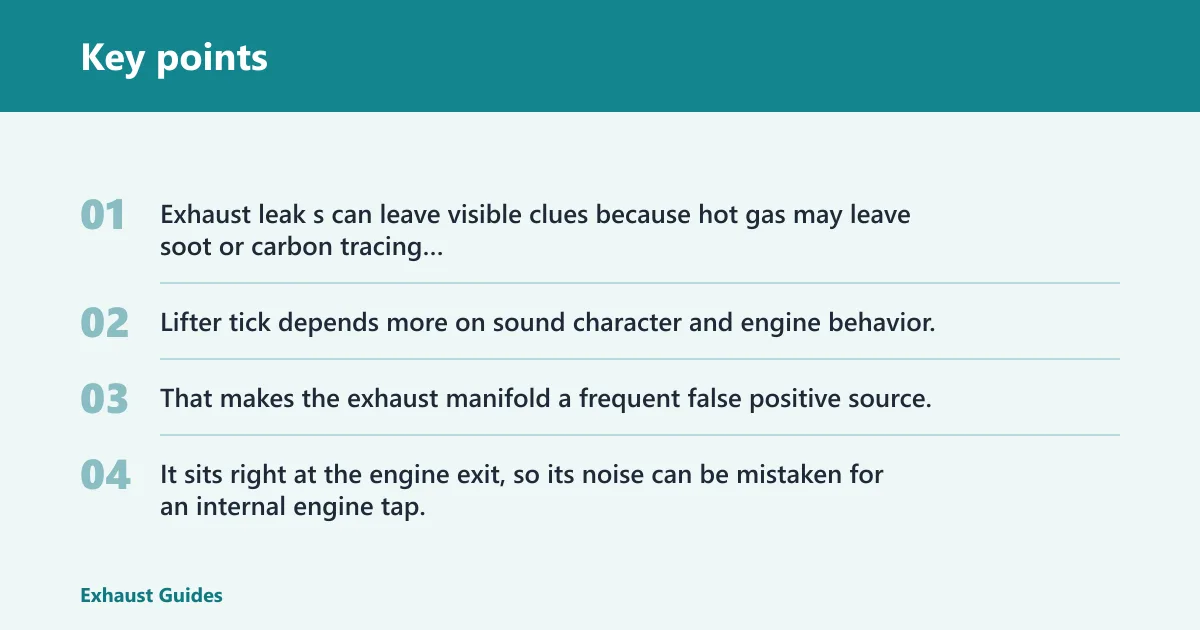
Exhaust leaks can leave visible clues because hot gas may leave soot or carbon tracing near the leak point. Lifter tick depends more on sound character and engine behavior, so it can be harder to prove without careful listening.
That makes the exhaust manifold a frequent false positive source. It sits right at the engine exit, so its noise can be mistaken for an internal engine tap.
Step-by-step decision tree
- Start the engine cold and listen for the first 30 seconds near the hood and wheel well.
- Move the listening point from the top of the engine to the manifold area, using a hose or mechanic’s stethoscope without touching hot exhaust parts.
- Raise engine speed briefly to about 1,500 rpm and note whether the sound speeds up, fades, or stays unchanged.
- Inspect the manifold, gasket area, studs, and flange with a flashlight for soot, carbon tracing, cracks, or missing hardware.
- Decide: soot plus an outside-the-engine tick points to an exhaust manifold leak; a top-of-engine dry tap that tracks rpm points to lifter tick.
Does RPM change the sound?
Yes, but in different ways. Exhaust leaks usually become faster and more obvious as engine speed rises, especially if the leak is at the gasket, flange, or a cracked manifold under load. Lifter tick often follows rpm even more directly because it comes from the valvetrain inside the cylinder head.
Say your truck has a sharp tick that is loudest for the first minute after startup and then nearly disappears. That pattern leans toward an exhaust leak. Suppose the tap stays up top by the valve cover and rises and falls exactly with throttle blips; lifter tick moves higher on the list.
What symptoms point to an exhaust leak instead of engine valvetrain noise?
Exhaust leaks often bring a hot gas smell, soot, or carbon tracing near the manifold or gasket. The sound may be more of a puffing tick than a dry tap, and it is often strongest from the wheel well or underside rather than the top of the engine.
A crack in the manifold, a leaking gasket, or damaged studs can all create a tick-like cadence. That is why a sound-only diagnosis can mislead you. You need the listening location and a visual check around the cylinder head interface.
How do I check for a manifold leak without taking the engine apart?
Use a flashlight, a cold start, and a careful listening sequence. Start with the hood open, then move from the top of the engine to the wheel well and along the manifold-to-head area. Look for soot, black carbon tracing, a cracked manifold, or a missing stud before you tear anything apart.
Use a mechanic’s stethoscope or a hose to narrow the source, but keep it off hot exhaust parts. If the sound is loudest near the manifold and the visual signs line up, you have enough evidence to plan the repair.
Visual check sequence
- Inspect the manifold face where it meets the cylinder head.
- Check the gasket seam for soot.
- Look around each stud and nut for burn marks or looseness.
- Scan the flange and visible casting for cracks.
- Check the nearby shield and wheel well liner for black tracing from escaping gas.
Common mistakes
People often assume every tick is a lifter. That leads to the wrong repair path, especially when an exhaust manifold gasket has failed and the sound only appears cold.
Another common mistake is listening from one spot only. A tick that sounds internal from above may become obvious from the wheel well. Skipping the soot check is also a miss, because exhaust leaks often leave visible evidence that lifter tick does not.
Two common false positives
Injector noise can sound like a light tick, and a manifold leak can imitate it. The difference is where the sound is loudest and whether soot or hot gas smell appears near the manifold.
Picture a compact car with a sharp tick that fades after five minutes. If the sound is strongest beside the front tire and a black trail is visible at the gasket line, the exhaust side is the better fit.
When should you stop driving if you suspect an exhaust manifold leak?
Stop driving if the leak is severe, the noise is suddenly much louder, or you smell exhaust inside the cabin. A large leak near the cylinder head can get worse quickly, and a cracked manifold or loose stud can turn a small tick into a bigger exhaust problem.
Inspect immediately if the sound changes with every cold start, the soot pattern grows, or the check-engine light appears with the noise. If the diagnosis is still unclear after the listening sequence, get the car checked before more driving adds heat damage.
Choose Exhaust manifold leak sound if…
Choose Exhaust manifold leak sound if the noise is sharp and puffing, loudest on cold start, strongest from the wheel well or underside, and backed up by soot, carbon tracing, a cracked manifold, or a bad gasket. That set of clues points to the manifold, not the valvetrain.
Choose lifter tick if…
Choose lifter tick if the sound is a dry, rhythmic tap from the top of the engine, near the cylinder head, and it changes with rpm more than with heat expansion. If the noise stays high in the engine bay and there is no soot around the manifold, the valvetrain deserves the next check.
Prevention
Tighten or replace manifold hardware only to the correct specification, and inspect the gasket area after a heat cycle if you have already been in there. Loose studs and a reused damaged gasket are common reasons an exhaust tick comes back.
Frequently asked questions
How can I tell if it’s an exhaust manifold leak or a lifter tick?
Start cold, then compare location, sound quality, and rpm response. A sharp puffing tick from the manifold or wheel well, plus soot or a hot gas smell, points to an exhaust leak. A dry tap from the top of the engine that follows rpm points to lifter tick.
Does an exhaust manifold leak sound different from a lifter tick at idle?
Yes. At idle, a manifold leak often sounds sharper and more puffing, while lifter tick sounds drier and more mechanical. Listen from above the engine and then from the wheel well; the louder location usually separates the two better than idle sound alone.
Where is the sound from if the noise gets louder on cold start?
That pattern often points to the exhaust side, especially the manifold gasket, flange, or a crack in the manifold. Cold metal contracts and can let exhaust gas escape more easily. If the sound is highest near the cylinder head joint, inspect the manifold first.
Can an exhaust manifold leak sound like a ticking engine?
Yes. A leak at the gasket, cracked manifold, or damaged stud can make a tick-like cadence that sounds internal at first. That is why you should check both the top of the engine and the manifold area instead of assuming the first tick you hear is a lifter.