
How to Add More: Essential Blacklist Servo Hacks
Improving your blacklist resonant servo performance involves applying specific, advanced tuning hacks to enhance responsiveness and efficiency. These essential hacks, when applied correctly, can unlock hidden potential in your vehicle’s exhaust system, leading to a more rewarding driving experience.
Dealing with your car’s exhaust system doesn’t have to be a mystery. Sometimes, you just want more from it – more power, better sound, or just a smoother feel. For those looking to fine-tune their vehicle’s performance, understanding how to “add more” to a blacklist resonant servo system is key. It sounds complicated, but it’s really about making smart adjustments to get the best out of your exhaust. We’ll break down what that means in simple terms, showing you exactly how to make your car sing. Ready to unlock that extra bit of awesome from your ride? Let’s dive in!
Understanding Your Blacklist Resonant Servo System
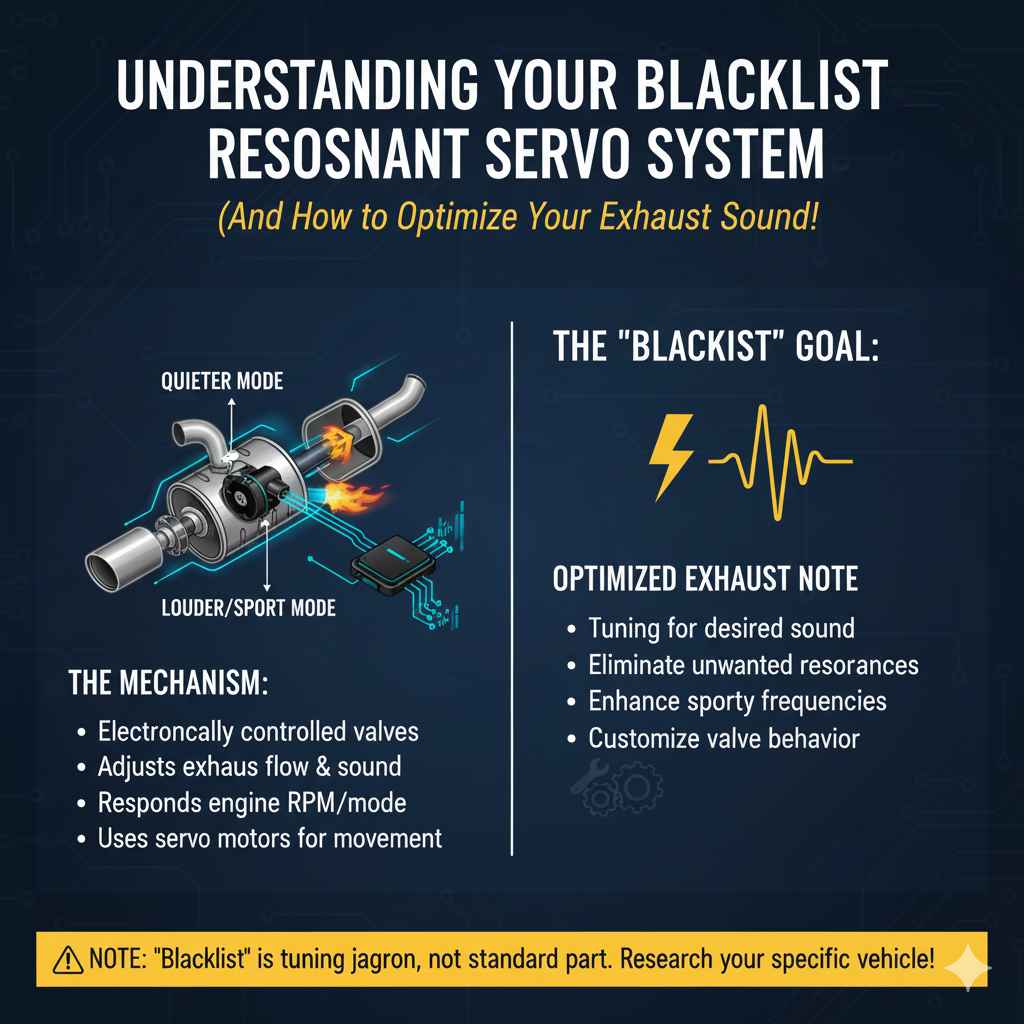
Before we start tweaking, let’s get a basic grasp of what a “blacklist resonant servo” system is, or more accurately, what people are referring to when they use these terms in a tuning context. In the automotive world, “servo” often relates to systems that control movement or feedback, common in variable exhaust flaps or exhaust valves that adjust backpressure and sound. “Blacklist” and “resonant” aren’t standard industry terms for specific exhaust parts but likely refer to a desired outcome or a set of tuning parameters that enthusiasts aim for—think of it as a tuning goal rather than a physical component. Enthusiasts might use phrases like this when discussing modifications that aim to eliminate unwanted resonances or “blacklist” certain undesirable sounds, while accentuating desirable resonant frequencies for a sportier exhaust note.Essentially, you’re looking to optimize your exhaust’s dynamic capabilities.
Variable exhaust systems use electronically controlled valves, often actuated by servos, to change the exhaust path. This allows for different sound profiles and performance characteristics at various engine speeds. When you want to “add more,” you’re typically aiming to influence how these valves operate, when they open or close, and how they affect the exhaust note and backpressure. This involves understanding the signals the servo receives and potentially modifying those signals or the system’s response.
Why Would You Want to “Add More”? The Benefits of Optimization
The desire to “add more” to your exhaust system usually stems from wanting a better driving experience. Here’s why folks look into these kinds of modifications:
- Enhanced Exhaust Sound: This is often the primary driver. You might want a louder, sportier growl during acceleration and a quieter hum during cruising. By adjusting how the exhaust valves operate, you can fine-tune the sound profile.
- Improved Performance: Optimizing exhaust flow can lead to small but noticeable gains in horsepower and torque. A less restrictive exhaust generally allows the engine to exhale more efficiently.
- Better Throttle Response: By managing backpressure more effectively through valve control, you can sometimes achieve a quicker, more responsive feeling when you press the accelerator.
- Customization: Modern cars offer a degree of exhaust customization through selectable drive modes (e.g., Sport, Comfort). “Hacking” or tuning these systems allows for even deeper personalization beyond factory settings.
- Addressing Undesirable Resonances: Sometimes, factory exhausts can produce annoying drone or vibration at specific RPMs. Tuning can help “blacklist” or eliminate these frequencies.
Essential Blacklist Servo Hacks: A Beginner’s Approach
When we talk about applying “hacks” to a blacklist resonant servo system, we’re generally referring to intelligent modifications or tuning strategies rather than physically damaging or altering components. For beginners, it’s crucial to approach this safely and incrementally. Let’s explore some common methods that enthusiasts use.
1. Understanding and Modifying Drive Mode Settings
Most modern performance vehicles come with selectable drive modes. These modes often alter the exhaust valve programming, among other vehicle parameters. The simplest way to “add more” is to explore how these modes impact your exhaust.
- Sport Mode: Usually opens valves for a louder sound and potentially better flow.
- Comfort/Eco Mode: Typically closes valves for a quieter operation.
- Custom Modes: Some cars allow you to program a custom profile, letting you choose exhaust settings independently.
Beginner Hack: Make it a habit to flip through your drive modes and notice the exhaust sound and feel changes. If you have a custom mode, try setting it to always have the exhaust in its most aggressive/loud setting. This is the least invasive way to experience a difference.
2. Accessing and Understanding Existing Exhaust Valve Control Wiring
Many aftermarket tuners and experienced DIYers access the wiring harness that controls the exhaust servo actuators. This is where things start to get a bit more technical, but the principles are straightforward.
The servo usually receives a control signal (often a PWM – Pulse Width Modulation signal) from the car’s ECU (Engine Control Unit) or a dedicated exhaust control module. This signal tells the servo how to position the valve (e.g., 0% open, 50% open, 100% open). By interfering with this signal, you can force the valve into a different position.
Basic Concept: If the ECU sends a signal for the valve to be closed in Comfort mode, and you want it open, you can physically block or reroute that signal, or supply a constant “open” signal.
3. The “Fuse Pull” Method (Simplified Valve Control)
For some vehicles, pulling a specific fuse related to the exhaust valve system can disable it, often leaving the valves in a permanently open position (which is usually the desired outcome for a louder, sportier sound). This is a very common and simple hack.
Caution: This method is not available for all cars and can sometimes trigger dashboard warning lights or put the car into a “limp mode.” Always research your specific vehicle model before attempting this. You can find reliable information on vehicle-specific forums or by searching for your car model and “exhaust fuse pull.” For example, many BMW models have had success with this. You might also find helpful guides on sites like Bimmerfest for BMW owners.
Steps:
- Locate the Fuse Box: Consult your owner’s manual to find the location of the interior or engine bay fuse boxes.
- Identify the Exhaust Valve Fuse: Look for a fuse specifically labeled for the “Exhaust Flap Control,” “Exhaust Valve,” or similar. This might require a bit of detective work or online research for your model.
- Pull the Fuse: Carefully remove the identified fuse using a fuse puller (often included in your tool kit or available at auto parts stores).
- Test: Start your car and rev the engine. Listen for a change indicating the valves are open.
4. Vacuum Line Disconnect/Plug Method
Some older or simpler variable exhaust systems might use vacuum lines to actuate the valves. Similar to the fuse pull, disconnecting and plugging these lines can sometimes result in the valves staying in a default position (often open).
Caution: Again, this is vehicle-specific. Introducing a vacuum leak can cause engine performance issues, including rough idling and error codes. Research is paramount here.
Steps:
- Locate Vacuum Lines: Trace the vacuum lines connected to the exhaust valve actuators (small cylinders usually mounted on the exhaust pipes near the rear muffler).
- Disconnect and Plug: Carefully disconnect the vacuum line going to the actuator. Then, use a small, dedicated vacuum plug or a small bolt to seal the open end of the line securely.
- Secure the Actuator (Optional but Recommended): Sometimes, you might want to secure the diaphragm actuator itself with zip ties to prevent it from moving after the vacuum is removed.
- Test: Start the engine and check for any unusual idling or warning lights.
5. Aftermarket Control Modules (The “Smart” Hack)
For a more sophisticated and reversible approach, consider aftermarket exhaust control modules. These devices typically plug into the existing wiring harness for the exhaust valves and provide a remote control or a smartphone app to adjust valve positions on the fly.
These modules bypass or override the factory ECU’s commands, giving you direct control. They are designed to be “plug-and-play,” meaning no cutting or splicing of wires is usually required. Brands like Valvetronic Designs, Active Exhaust, or similar offer solutions for many popular car models.
Benefits:
- Full Control: Open, close, or set valves to specific positions.
- Reversible: Easily remove the module to return to stock settings.
- No Warning Lights: Usually designed to not trigger check engine lights.
- Multiple Sound Profiles: Create your own custom settings for different driving situations.
Where to Find Them: Search for “[Your Car Make Model Year] exhaust valve controller” or “[Your Car Make Model Year] active exhaust module.” Reputable tuning shops and online automotive parts retailers are good places to start.
6. ECU Tuning / Performance Tuning Software
This is the most advanced method and involves reprogramming your car’s Engine Control Unit (ECU). A professional tuner can modify virtually any aspect of the engine’s operation, including the exhaust valve mapping.
Benefits:
- Deep Integration: Changes are baked into the ECU’s core programming.
- Holistic Performance: Can be combined with other engine tuning for maximum gains.
- Precise Control: Custom maps can be created for specific RPM, throttle position, and load conditions.
Considerations:
- Cost: ECU tuning is generally more expensive than simple module installs.
- Expertise Needed: This should only be done by a qualified and reputable tuner. Improper tuning can severely damage your engine. You can find reputable tuners through online communities and recommendations. For example, EcuTek is a popular platform for tuning many vehicle makes.
- Warranty Concerns: ECU remapping can potentially void your vehicle’s powertrain warranty.
Tools and Materials You Might Need
Depending on the method you choose, here are some common tools and materials:
| Tool/Material | Use | Notes |
|---|---|---|
| Owner’s Manual | Locating fuse boxes, identifying fuses. | Essential for fuse-related hacks. |
| Fuse Puller | Safely removing fuses. | Plastic tool, prevents shorts. |
| Basic Socket Set & Wrenches | Potentially removing underbody panels for access. | Common automotive tool. |
| Pliers (Needle-nose) | Grasping small clips or connectors. | Useful for delicate work. |
| Vacuum Caps/Plugs | Sealing vacuum lines. | Small rubber or silicone caps/plugs. |
| Zip Ties | Securing disconnected components or wires. | Heavy-duty ones are best. |
| Trim Removal Tools | Safely prying off plastic trim panels. | Plastic tools prevent scratching. |
| Screwdrivers (Flathead & Phillips) | Removing various fasteners. | Standard toolkit items. |
| Multimeter (Optional but Recommended) | Testing electrical signals for advanced diagnostics. | For those comfortable with electronics. |
| Aftermarket Exhaust Control Module | Direct, electronic control of exhaust valves. | Purchase specific to your vehicle. |
Safety First: Important Considerations
Your exhaust system handles hot gases and is located underneath your vehicle. Always prioritize safety:
- Let the Exhaust Cool Down: Never work on a hot exhaust system. Allow at least a few hours after driving for it to cool completely.
- Use Jack Stands: If you need to get under the car, always use sturdy jack stands on a level surface. Never rely solely on a jack.
- Wear Safety Gear: Gloves protect your hands from cuts and grime. Safety glasses protect your eyes from debris.
- Research Your Specific Vehicle: The “blacklist” and “resonant servo” jargon isn’t standard. Terms like “active exhaust,” “sport exhaust,” or “exhaust valve system” are more accurate. What works for one car may harm another. Refer to reputable forums and repair manuals for your exact make and model. For instance, sites like HMASS service (for Hyundai/Kia but principles apply to finding model-specific info) or official manufacturer sites often provide service manuals.
- Understand the Risks: Messing with your car’s systems can lead to warning lights, reduced performance, or even damage if done incorrectly. Be prepared to revert changes if issues arise.
- Emissions Systems: Be aware that modifications affecting exhaust flow can potentially impact emissions. In some regions, certain modifications may not be street legal.

Frequently Asked Questions (FAQ)
Q1: What exactly is a “blacklist resonant servo” system?
A1: While “blacklist resonant servo” isn’t a standard automotive term, it likely refers to advanced tuning strategies for variable exhaust systems (which use servos to control valves). Enthusiasts use it to mean optimizing the system to eliminate unwanted resonances (“blacklisting” bad sounds) and enhance desirable exhaust tones (“resonant” qualities) through servo control.
Q2: Can I permanently open the exhaust valves on my car?
A2: For many cars, yes, you can. Common methods include pulling a relevant fuse or using an aftermarket module. However, this is highly dependent on your vehicle’s specific exhaust system design. Always research your car model first.
Q3: Will disabling my exhaust valves affect fuel economy or performance?
A3: Disabling valves often means the exhaust is always in its “open,” less restrictive mode. This can lead to a slight increase in fuel consumption during aggressive driving and potentially minor improvements in high-RPM horsepower. At cruising speeds, the effect is usually minimal, but a louder exhaust drone might be more noticeable.
Q4: How do I know which fuse to pull for my exhaust valves?
A4: The best way is to consult your vehicle’s owner’s manual. If it’s not clearly labeled, search online forums dedicated to your car’s make and model for specific instructions. Many resources detail which fuse corresponds to the active exhaust system.
Q5: What’s the difference between pulling a fuse and using an aftermarket controller?
A5: Pulling a fuse is a permanent change that leaves the valves in one state (usually open) and can’t be easily reverted without reinserting the fuse. An aftermarket controller offers on-demand control through a remote or app, allowing you to switch settings anytime, and is easily reversible.
Q6: Can these “hacks” void my car’s warranty?
A6: Yes, any modification to the factory system, especially electrical tampering or ECU tuning, can potentially void your warranty. For simpler methods like fuse pulls or temporary module installs, there’s less risk of detection if you revert to stock before service, but it’s never guaranteed.
Q7: Is it legal to modify my exhaust system this way?
A7: Legality varies greatly by region and specific modification. Modifying exhaust valves to always be open can affect the vehicle’s emissions compliance and noise levels, potentially making it illegal for street use in some areas. Always check your local regulations.
Conclusion
Tuning your vehicle’s exhaust system to “add more” can be a rewarding experience, enhancing both sound and driving feel. While terms like “blacklist resonant servo” might sound daunting, they often refer to straightforward adjustments to your car’s active exhaust valves. Whether you choose the simple fuse-pull method, opt for the flexibility of an aftermarket control module, or consider professional ECU tuning, the key is to research your specific vehicle and proceed with safety and caution.
By understanding the basics of how these systems work and employing beginner-friendly hacks like exploring drive modes or carefully managing fuse configurations, you can start to unlock a more engaging auditory and performance experience from your car. Remember to always prioritize safety, use the right tools, and be aware of potential warranty or legal implications. With a bit of knowledge and careful execution, you can confidently take steps to fine-tune your ride and truly enjoy the enhanced feedback from your exhaust system.