Does White Tip On Exhaust Stack Indicate Running Too Lean: Essential Guide
Yes, a white tip on your exhaust stack often signals that your engine is running too lean. This means there’s too much air and not enough fuel. While not always an immediate disaster, it can lead to serious engine problems and reduced performance if ignored. This guide will help you understand what it means and what to do.
Seeing a white or very light gray color on the very end of your exhaust pipe can be a little puzzling. You might wonder, “Is this normal?” or “What does this white tip on my exhaust stack mean?” For many car owners, especially those new to understanding their vehicle’s inner workings, exhaust pipe colors are a bit of a mystery. But these colors are actually important clues from your engine! A white tip, specifically, is a sign that your engine isn’t getting the right mix of air and fuel. It’s like a warning light, but instead of a dashboard icon, it’s right there on your tailpipe.
Don’t worry if you’re not sure what to do. This guide is here to break it all down for you in a simple, easy-to-understand way. We’ll explore what causes that white tip, why it’s important to pay attention, and what steps you can take to fix it. By the end, you’ll feel much more confident in understanding your car’s exhaust signals and keeping your engine running smoothly and safely.
Understanding Exhaust Smoke Colors: A Quick Look
Before we dive deep into the white tip specifically, it’s helpful to know that different exhaust colors can mean different things. Think of your exhaust pipe as a report card for your engine’s combustion process. The color of the residue it leaves behind tells a story about how efficiently your fuel is being burned.
- Black Smoke: Usually means the engine is running too rich. This is when you have too much fuel and not enough air. It’s like trying to toast bread with too much heat – it burns.
- Blue Smoke: This often indicates that your engine is burning oil. This could be due to worn piston rings, bad valve seals, or other internal engine issues.
- White Smoke: This is the one we’re focusing on today. While sometimes it’s just condensation (especially on a cold start), persistent white smoke can mean your engine is running lean, or worse, that coolant is leaking into the combustion chamber.
Does White Tip On Exhaust Stack Indicate Running Too Lean? The Full Story
Let’s get straight to the point: Yes, a white or very light grayish-white residue on the very end of your exhaust pipe is a strong indicator that your engine is running too lean.
What exactly does “running too lean” mean? In simple terms, your engine needs a precise mixture of air and fuel to burn efficiently. This ideal ratio is often called the “stoichiometric ratio,” and for gasoline engines, it’s typically around 14.7 parts of air to 1 part of fuel by weight. When an engine runs lean, it means it’s getting more air than fuel. So, the ratio is higher – for example, 15:1, 16:1, or even more air.
Think of it like this: if you’re baking a cake and you accidentally put in too much flour and not enough water, the batter will be dry and crumbly. Similarly, when your engine’s air-fuel mixture is too lean, the combustion isn’t as complete or as hot as it should be, and it leaves behind a different kind of residue.
Why is Running Too Lean a Problem?
While a lean condition means you might get slightly better gas mileage in some very specific, controlled situations, it’s generally a detrimental state for your engine for several reasons:
- Increased Engine Temperature: Lean combustion burns hotter. This extreme heat can damage sensitive engine components, especially the exhaust valves, pistons, and cylinder heads. Over time, this can lead to expensive repairs
- Reduced Power and Performance: An engine running lean won’t produce optimal power. It might feel sluggish or hesitant, especially under acceleration.
- Potential for Misfires: If the mixture is too lean, the fuel might not ignite properly, leading to misfires. These are moments when a cylinder doesn’t fire when it should.
- Damage to Catalytic Converter: The extreme heat from a lean burn can overheat and damage your catalytic converter, an essential emissions control device. Replacing a catalytic converter can be very costly.
- Emissions Issues: A lean condition can also affect your vehicle’s emissions, potentially causing it to fail an emissions test.
What Causes an Engine to Run Lean?
Several factors can cause your engine to run lean. Understanding these potential causes is the first step in diagnosing and fixing the problem.
- Vacuum Leaks: This is one of the most common culprits. A vacuum leak is an unintended opening in the engine’s intake system, allowing extra air to enter after the mass airflow sensor (MAF). Common spots for vacuum leaks include cracked or disconnected vacuum hoses, loose intake manifold gaskets, or faulty PCV (Positive Crankcase Ventilation) valves.
- Dirty or Faulty Mass Airflow (MAF) Sensor: The MAF sensor measures the amount of air entering the engine. If it’s dirty or malfunctioning, it might report less air than is actually entering, causing the engine computer (ECU) to inject less fuel than needed. For more information on MAF sensors, you can check out AutoZone’s repair guide.
- Fuel System Issues:
- Clogged Fuel Filter: A dirty fuel filter restricts fuel flow, meaning the injectors don’t get enough fuel to spray.
- Weak Fuel Pump: If the fuel pump isn’t producing enough pressure, the injectors won’t be able to deliver the correct amount of fuel.
- Clogged Fuel Injectors: Injectors can get clogged with debris, leading to a reduced spray pattern and less fuel delivery.
- Oxygen (O2) Sensor Problems: O2 sensors (also called lambda sensors) measure the amount of oxygen in the exhaust gases. This data is crucial for the ECU to adjust the air-fuel mixture. If an O2 sensor is faulty or slow to respond, it can send incorrect readings, leading to a lean condition.
- Exhaust Leaks (Before the O2 Sensor): While less common for causing a lean condition that specifically results in a white tip, a small leak in the exhaust manifold or pipe before the upstream O2 sensor can sometimes draw in fresh air and trick the sensor into thinking there’s more oxygen than there should be, prompting the ECU to lean out the mixture. However, this usually causes a different exhaust color or smell. The white tip is more directly linked to the combustion chamber having too much air historically.
- Faulty Engine Control Unit (ECU): In rare cases, the engine computer itself might be malfunctioning and not properly calculating the air-fuel mixture.

Distinguishing White Tip from Condensation
It’s crucial to differentiate between condensation and a true lean condition indicated by a white exhaust tip. This is especially important in cooler weather.
When your engine is cold, especially during humid or cold weather, you’ll often see white “smoke” or vapor coming from your exhaust pipe. This is perfectly normal and is simply water vapor that is a byproduct of combustion. As the engine warms up, this condensation should evaporate and disappear. The exhaust tip might appear slightly damp or even have a slight powdery residue from this, but it shouldn’t have a distinct, crusty white build-up that persists even when the engine is thoroughly warmed up. If the white residue is persistent and looks like it’s been baked on, it’s a sign of a lean condition.
Checking Your Exhaust Tip: A Step-by-Step Visual Guide
Here’s how you can inspect your exhaust tip for signs of a lean condition:
Tools You Might Need:
- A flashlight
- Safety glasses
- Gloves (optional)
- A clean rag or paper towel
Steps:
- Ensure the Engine is Cool: Never touch a hot exhaust system. Park your car and let it cool down completely for at least an hour, preferably longer.
- Locate Your Exhaust Tip(s): These are the visible ends of your exhaust pipe(s) at the rear of your vehicle. Some vehicles have one, while others have two or even four.
- Inspect the Inside of the Tip: Shine your flashlight into the opening of the exhaust tip(s). Look for any build-up on the inner walls and at the very end of the pipe.
- Note the Color and Texture:
- Normal: A healthy exhaust tip might have a light gray or sooty black powdery residue, or it might look clean if your engine is running very efficiently. Some very minor condensation is also normal.
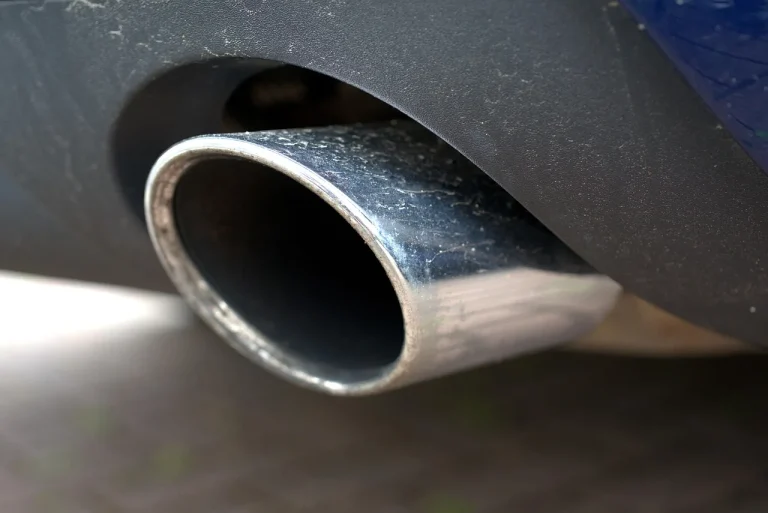
- Lean Condition (White Tip): You’ll see a dry, chalky white, light gray, or even brittle white build-up. It might look like fine ash or dried paint. This is what you’re looking for as an indicator of a lean condition.
- Clean and Re-evaluate (Optional): If you suspect a white tip, you can try cleaning it with a rag. Drive your car for a few days, focusing on normal driving conditions. Then, re-inspect the tip. If the white residue reappears quickly, it’s a strong signal of a lean issue.
Diagnosing the Lean Condition: When to Seek Professional Help
While you can visually inspect your exhaust tips, accurately diagnosing the cause of a lean condition often requires more sophisticated tools and knowledge. If you see a persistent white tip and are concerned, it’s best to consult a qualified mechanic.
Mechanics have tools like:
- OBD-II Scanner: This tool can read diagnostic trouble codes (DTCs) from your car’s computer. Codes like P0171 (System Too Lean – Bank 1) or P0174 (System Too Lean – Bank 2) are direct indicators of a lean condition.
- Fuel Pressure Gauge: This tool measures the pressure in your fuel system to check if the fuel pump and regulator are working correctly.
- Smoke Machine: Used to detect vacuum leaks by introducing smoke into the intake system.
- Exhaust Gas Analyzer: Measures the composition of exhaust gases to give a precise picture of the air-fuel mixture.
Here’s a simple table that summarizes potential causes and what they might look like:
| Symptom Characteristic | Possible Cause | Additional Signs to Look For |
|---|---|---|
| Persistent dry, chalky white residue at exhaust tip. | Engine running too lean (too much air, not enough fuel). | Hesitation on acceleration, reduced power, potential P0171/P0174 DTCs, especially when the engine is fully warmed up. |
| White vapor (steam) from exhaust, especially on cold start. | Normal condensation. | Disappears as the engine reaches operating temperature. No persistent dry residue. |
| Sooty black, oily residue at exhaust tip. | Engine running too rich (too much fuel, not enough air) or oil burning. | Poor fuel economy, rough idle, black smoke visible. |
| Blue smoke from exhaust. | Engine burning oil. | Often accompanied by a burning oil smell, potential oil consumption. |
Troubleshooting Steps for Common Lean Causes
If you’re comfortable with some basic DIY automotive work and have a diagnostic code indicating a lean condition, here are some common areas you can investigate yourself.
1. Checking for Vacuum Leaks
This is often the most accessible fix for DIYers.
- Visual Inspection: With the engine off and cool, carefully examine all rubber vacuum hoses connected to the intake manifold and other engine components. Look for cracks, splits, or loose connections.
- Listen for Hissing: Start the engine. Listen carefully for any hissing sounds around the intake manifold, throttle body, and vacuum lines. This sound often indicates escaping air.
- The Carburetor Cleaner/Propane Method (Use with Extreme Caution): Once the engine is running, very lightly spray carburetor cleaner or propane (with the fuel bottle disconnected, of course!) around suspected leak areas. DO THIS IN A WELL-VENTILATED AREA, AWAY FROM ANY OPEN FLAMES. If the engine RPMs change (usually they’ll increase slightly) when you spray a certain area, you’ve likely found a leak.
- Fixing Leaks: If you find a cracked or disconnected hose, simply replace it or reconnect it securely. If intake manifold gaskets are suspected, this usually requires more involved work and is best left to a mechanic if you’re not experienced.
For more detailed information and visual guides on finding vacuum leaks, resources like YouTube tutorials from reputable auto repair channels can be very helpful.
2. Cleaning the Mass Airflow (MAF) Sensor
A dirty MAF sensor is common and can often be cleaned for a quick fix.
- Locate the MAF Sensor: It’s usually found in the intake tube between the air filter box and the throttle body.
- Disconnect and Remove: With the engine off, unplug the electrical connector. Then, unbolt the sensor from the intake tube. Be gentle, as the sensing elements are delicate.
- Clean with MAF Cleaner: Purchase a specialized MAF sensor cleaner spray. DO NOT use any other type of cleaner, as it can damage the sensor. Spray the heated wires/elements directly according to the cleaner’s instructions. Allow it to air dry completely.
- Reinstall: Reinstall the sensor, reconnect the electrical connector, and ensure all intake connections are secure.
Important Note: Some newer vehicles have MAF sensors that are integrated into the air filter housing or are not designed for easy removal/cleaning. Always consult your vehicle’s manual or a trusted online resource for your specific model.
3. Checking Fuel System Components
These are often best left to professionals due to the high pressures and potential for fuel spills.
- Fuel Filter: This is a maintenance item that should be replaced at recommended intervals. If it’s overdue, it’s a prime suspect.
- Fuel Pump and Injectors: Diagnosing these requires specialized tools to check fuel pressure and injector spray patterns.

Frequently Asked Questions (FAQ)
What are the most common signs of a lean condition besides a white exhaust tip?
Besides a white exhaust tip, you might notice poor acceleration, hesitation during acceleration, an engine misfire, a rough idle, and potentially a Check Engine Light with codes like P0171 or P0174.
Can a lean condition damage my engine?
Yes, prolonged lean conditions can cause significant engine damage. The higher combustion temperatures can lead to overheating of exhaust valves, pistons, and cylinder heads, and can also damage the catalytic converter.
How often should I check my exhaust tip for color?
It’s a good habit to glance at your exhaust tip periodically, especially after a cold start and then again once the engine is fully warmed up. If you notice a persistent white residue when the engine is hot, investigate further.
What is the ideal air-fuel ratio for a gasoline engine?
The ideal or “stoichiometric” air-fuel ratio for most gasoline engines is approximately 14.7 parts air to 1 part fuel by weight. This is the ratio that allows for the most complete combustion and efficient operation.
If my car runs lean, will it definitely damage the catalytic converter?
Not necessarily immediately, but it significantly increases the risk. The excessive heat generated by lean combustion can cause the catalytic converter to overheat, often to the point of melting or collapsing its internal structure, rendering it ineffective.
Is it safe to drive my car if I suspect it’s running lean?
It’s generally not recommended to drive for extended periods with a confirmed lean condition. While your car might still run, the increased engine temperature and potential for misfires or component damage can lead to more serious and costly repairs down the line.