
Do X Pipes Replace Mufflers A Simple Guide
Many car owners wonder about exhaust systems. You might hear about “X pipes” and “mufflers” and feel confused. It’s common for beginners to ask if an X pipe can do the job of a muffler.
This question often comes up when people want to change their car’s sound or performance. Don’t worry, figuring this out is easier than you think. We will walk you through it step-by-step.
Let’s find out exactly what an X pipe does and how it relates to your muffler.
Understanding X Pipes and Mufflers
In your car’s exhaust system, several parts work together. They help get rid of engine gases. The muffler is a big one.
Its main job is to quiet down the loud noises from the engine. An X pipe is another part. It connects two exhaust pipes and creates an “X” shape.
This shape helps gases mix. People often consider changing these parts to get a different sound or more power from their car. This section breaks down what each part does.
What Is a Muffler?
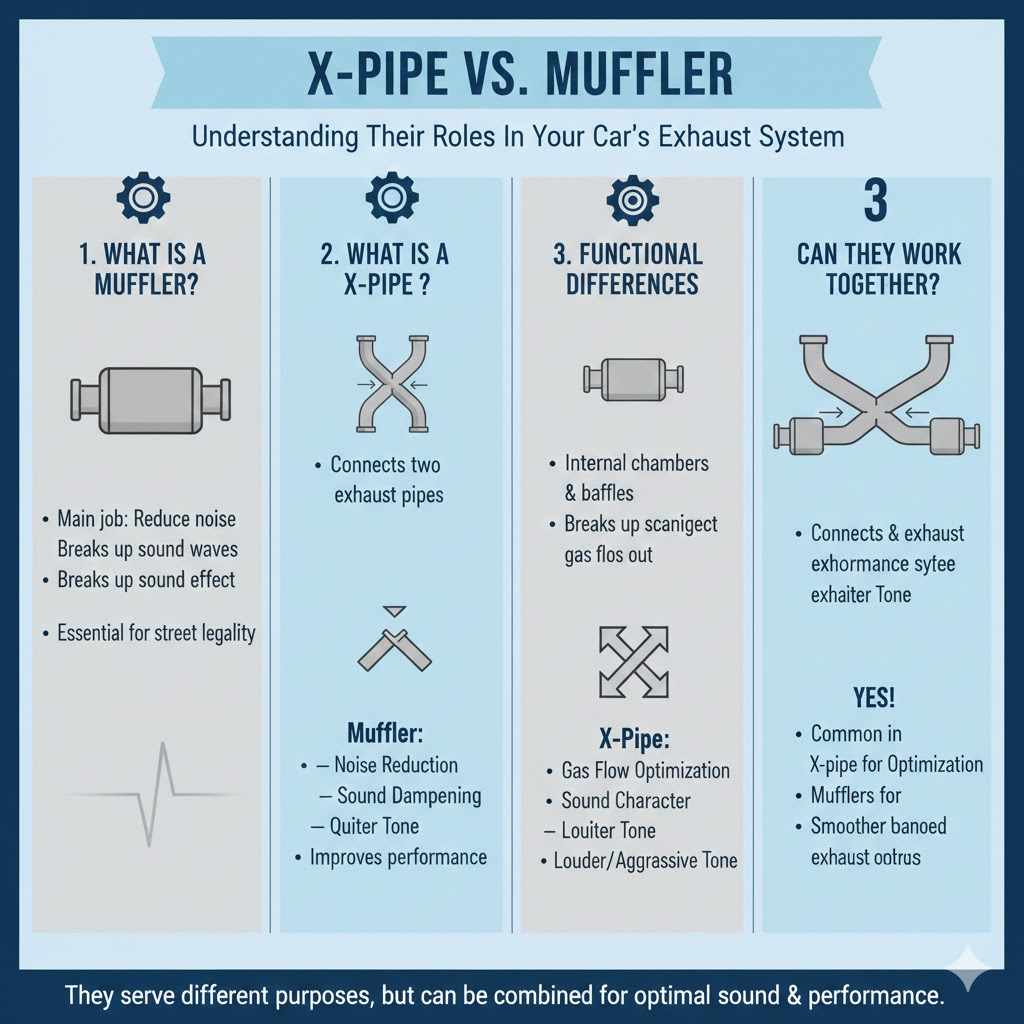
The muffler is a box-like device in your car’s exhaust system. It’s designed to reduce engine noise. Inside, it has chambers and baffles.
These help break up sound waves, making the exhaust much quieter. Think of it like a noise-canceling device for your car. Without it, your car would sound like a race car all the time, which is often too loud for daily driving.
Mufflers have been a standard part of cars for decades. Regulations often require them to keep noise levels down. They are crucial for comfortable driving and meeting legal sound limits.
Different muffler designs can change the sound slightly, but their primary purpose is always noise reduction.
What Is an X Pipe?
An X pipe is a component that connects two exhaust pipes. It’s called an X pipe because its shape looks like the letter ‘X’. This part is usually placed between the catalytic converter and the mufflers, or sometimes before the mufflers.
Its main function is to help exhaust gases from both sides of the engine combine and flow more smoothly.
When exhaust gases from each cylinder bank merge in an X pipe, they can create a scavenging effect. This means that the departing gases help pull out the next set of gases more efficiently. This can lead to small improvements in engine performance and a different exhaust note.
The sound created is often described as a higher-pitched, more aggressive tone compared to a traditional V8 rumble.
How They Differ in Function
The key difference is their primary purpose. A muffler’s main job is sound reduction. An X pipe’s main job is to manage exhaust gas flow and sound character.
An X pipe doesn’t have the internal baffles or sound-deadening materials that a muffler does. Therefore, it doesn’t reduce noise. Instead, it can actually make the exhaust sound louder and give it a different tone.
Many performance exhaust systems use an X pipe to achieve a specific sound and improve exhaust flow.
So, to answer the core question directly: no, an X pipe does not
Do X Pipes Replace the Muffler Complete Guide To Exhaust Systems
When people ask if an X pipe replaces a muffler, they are often thinking about modifying their car’s exhaust. They might want a sportier sound or a slight performance boost. Understanding the role of each component is vital for making the right choices.
This section will go deeper into how X pipes and mufflers interact and why an X pipe alone cannot silence your car’s exhaust. We will explore various exhaust setups and what happens when you change them.
The Role of the Muffler in Sound Reduction
The muffler is the primary component responsible for making your car’s exhaust system quiet. It works by using a series of chambers and perforated tubes. These features break down the high-pressure sound waves created by the engine’s combustion process.
When exhaust gases enter the muffler, they are forced to travel through these chambers. This process causes the sound waves to collide with each other and with the muffler’s walls, effectively cancelling out much of the noise.
Imagine a series of rooms with holes in the walls. As a loud noise enters the first room, it bounces around and is somewhat muffled. When it goes through the holes into the next room, it gets muffled even more.
By the time the sound waves exit the last chamber, they are significantly quieter. The type and design of the muffler, such as a chambered muffler or a straight-through muffler, will affect the level of sound reduction and the resulting tone.
Statistics show that a stock muffler can reduce engine noise by as much as 20-30 decibels. This significant reduction is what makes modern cars acceptable for everyday use. Without this level of noise control, driving would be a very unpleasant experience for both the driver and bystanders.
The Function of an X Pipe in Exhaust Flow
An X pipe is designed to improve exhaust gas flow and create a unique sound. It connects the two exhaust manifolds from each bank of cylinders into a single pipe. This connection point allows exhaust pulses from opposite cylinder banks to meet and merge.
This merging helps to smooth out the exhaust flow.
One of the key benefits of an X pipe is its ability to equalize exhaust pressure between the two banks. This equalization can help reduce backpressure, allowing the engine to “breathe” more freely. When the engine breathes better, it can sometimes lead to small gains in horsepower and torque.
The sound produced by an X pipe is often described as a “crossover” sound, with a higher-pitched, more exotic tone than a traditional V-shaped exhaust note.
For example, many high-performance vehicles, especially those with V-configurations like V6 and V8 engines, often use X pipes in their exhaust systems. This is because they benefit from the improved flow and distinct sound characteristics that an X pipe provides. The shape of the X pipe, particularly the angle and length of its crossover section, can influence the scavenging effect and the resulting sound.
Can An X Pipe Alone Silence A Car?
No, an X pipe by itself cannot silence a car. Its design is fundamentally different from a muffler. An X pipe’s purpose is to help exhaust gases merge and flow more efficiently, and in doing so, it can alter the sound character, often making it louder and higher pitched.
It does not contain the sound-deadening chambers or materials that are essential for reducing noise.
If you were to remove your car’s muffler and only install an X pipe, the resulting sound would be extremely loud, often to the point of being unbearable for daily driving and likely illegal in most areas. The X pipe will add a certain tone and volume, but it will not dampen the explosive noise of combustion. Think of it this way: an X pipe is like an amplifier for exhaust sound, while a muffler is like a volume knob that turns it down.
Many performance exhaust systems combine X pipes with smaller, less restrictive mufflers. This approach aims to balance a more aggressive sound and improved flow with a manageable noise level. Simply put, the X pipe contributes to the sound signature and flow, while the muffler is the component that controls the overall loudness.
Common Exhaust Configurations
Understanding how different exhaust components are arranged helps clarify their roles. Cars come with various factory setups, and aftermarket options offer even more choices. Each configuration affects sound, performance, and emissions differently.
Here are some common setups:
- Stock Exhaust System
This is what comes on your car from the factory. It typically includes exhaust manifolds, catalytic converters, resonators, and a large, restrictive muffler. The goal is quiet operation and meeting emission standards. It prioritizes comfort and compliance over aggressive sound or maximum performance. - Axle-Back Exhaust System
This upgrade usually replaces only the muffler and exhaust tips. It’s a simple way to change the car’s sound and appearance. It will generally be louder than stock but still use the factory pipes and potentially resonators. The muffler design in an axle-back system is what dictates the sound change. - Cat-Back Exhaust System
This - Header-Back Exhaust System
This is a full replacement from the exhaust headers. It offers the most significant potential for performance improvement by improving exhaust flow from the engine’s cylinders. It will definitely include an X pipe or H pipe and typically high-flow mufflers or can be configured for very loud operation.
Each of these configurations highlights the distinct purpose of each part. The X pipe, when used, is usually part of a system that also includes mufflers, even if they are less restrictive. It is rarely a standalone replacement for a muffler.
The Impact of Removing Mufflers
Removing mufflers entirely from a vehicle has significant consequences, primarily concerning noise levels. Without the sound-dampening capabilities of mufflers, the exhaust gases exiting the engine would be extremely loud. This loudness is due to the raw, unfiltered sound waves produced by combustion.
The sound can reach levels that are not only disruptive and unpleasant but also potentially harmful to hearing.
In addition to the noise, removing mufflers can also affect exhaust backpressure. While mufflers do create some backpressure, their removal might alter the engine’s performance characteristics in ways that are not always positive, depending on the engine and other exhaust components. Some argue that a complete removal of mufflers can lead to a loss of low-end torque, as the engine might not be tuned for such free-flowing exhaust at lower RPMs.
However, the most immediate and noticeable impact is the dramatic increase in sound.
It is important to note that operating a vehicle with removed mufflers is illegal in most jurisdictions. There are usually specific noise ordinances and vehicle codes that dictate maximum allowable sound levels for vehicles on public roads. Violating these laws can result in fines, citations, and even the impoundment of the vehicle.
Therefore, while the idea of a loud exhaust might appeal to some, the practical and legal implications of removing mufflers must be seriously considered.
X Pipe vs Muffler Performance and Sound
When car enthusiasts talk about modifying their exhaust systems, they often focus on two things: performance and sound. The X pipe and the muffler play different, yet sometimes complementary, roles in achieving these goals. Understanding their individual contributions helps in making informed decisions about exhaust upgrades.
How an X Pipe Affects Performance
An X pipe’s design helps in smoothing out exhaust gas flow. When exhaust gases from opposing cylinder banks meet in the X pipe, they create a mild scavenging effect. This means that the exiting exhaust pulse from one side can actually help pull exhaust gases from the other side.
This “pulling” action helps the engine expel gases more efficiently.
Improved exhaust flow can lead to a reduction in exhaust backpressure. Backpressure is the resistance that exhaust gases encounter as they exit the engine. High backpressure can hinder engine performance by making it harder for the engine to push out spent gases.
By reducing backpressure, an X pipe can allow the engine to breathe more freely. This can result in small but noticeable gains in horsepower and torque, particularly at higher engine speeds.
However, the performance gains from just an X pipe are typically modest. For significant improvements, it is usually part of a larger exhaust system modification, such as a cat-back or header-back system. The overall design of the exhaust, including the diameter of the pipes, the type of catalytic converter, and the mufflers used, will collectively influence the final performance outcome.
A study by performance tuning company MagnaFlow indicated that implementing an X pipe in a V8 engine setup could yield an average of 5-10 horsepower gain, primarily in the mid to upper RPM range. This gain is attributed to the improved exhaust scavenging and reduced restriction.
The Sound Characteristics of an X Pipe
The sound produced by an X pipe is quite distinct and is often sought after by enthusiasts. Unlike the deep, rumbling tone often associated with mufflers or H pipes, an X pipe tends to produce a higher-pitched, more aggressive, and sometimes raspier sound. This is often referred to as a “crossover” sound, and it can be quite exotic, especially on V8 engines.
The merging of exhaust pulses in the X pipe creates a different harmonic frequency. This leads to a sound that is often described as more refined or exotic, similar to the sound of some European sports cars. Some people love this sound, while others prefer the deeper rumble that can be achieved with other exhaust configurations, like an H pipe or certain types of mufflers.
The specific sound of an X pipe can also depend on the engine configuration. For example, an X pipe on a V6 engine will sound different from an X pipe on a V8. The length of the X pipe’s crossover section and the angle at which the pipes merge can also influence the final sound.
Experimentation with different X pipe designs is common among enthusiasts seeking a specific exhaust note.
Comparing X Pipes and Mufflers for Sound
When comparing the sound contributions of an X pipe and a muffler, their roles are fundamentally different. A muffler’s primary purpose is to reduce sound. It uses internal baffles and chambers to absorb and cancel out noise.
The type of muffler used will greatly influence the final sound. A stock muffler aims for near silence, while a performance muffler might offer a more aggressive tone but still significantly reduce volume.
An X pipe, on the other hand, does not reduce sound. Instead, it alters the sound signature. It can make the exhaust sound louder, higher pitched, and more exotic by allowing exhaust pulses to interact.
If you want a louder exhaust, an X pipe will contribute to that, but it won’t achieve it by silencing. It achieves its sound through the way gases merge.
Think of it this way: if you have a loud instrument, a muffler is like earmuffs – it turns down the volume. An X pipe is more like changing the instrument itself or how you play it, creating a different, often more intense, sound. Many high-performance exhaust systems use both an X pipe for its sound and flow characteristics, and a performance muffler to manage the overall loudness.
Can You Have Both An X Pipe and Mufflers?
Absolutely, yes! In fact, this is a very common and often desirable setup for many car enthusiasts. Having both an X pipe and mufflers allows for a balance between performance gains, a distinct exhaust note, and acceptable noise levels.
The X pipe manages the flow and contributes to the characteristic sound, while the mufflers ensure that the noise remains within reasonable limits.
For example, a popular setup for many performance vehicles is a cat-back exhaust system that includes an X pipe and two high-flow mufflers. The X pipe helps improve exhaust gas scavenging and creates that desirable crossover sound. The mufflers, which are less restrictive than stock ones, still reduce the overall noise significantly, preventing the car from being excessively loud.
This combination allows drivers to enjoy a sportier sound and potentially some performance benefits without the drawbacks of an overly loud exhaust.
This approach is a testament to the fact that an X pipe and a muffler are not mutually exclusive. They serve different purposes and can work together effectively to enhance a vehicle’s exhaust system. It is the interaction between these components, along with other parts of the exhaust, that creates the final driving experience.
Real-Life Example: Custom Exhaust Upgrade
Consider a scenario where a 2015 Ford Mustang GT owner wanted to upgrade their exhaust. The stock system was too quiet for their taste, and they desired a more aggressive sound and a slight performance edge. They decided on a cat-back exhaust system.
The chosen system included a new set of pipes that
After installation, the owner reported a noticeable change. The car now had a much more aggressive exhaust note, particularly when accelerating. The sound had a distinct crossover tone that they attributed to the X pipe.
While the sound was significantly louder and more pronounced, the aftermarket mufflers kept it from being obnoxious. They also felt a slight improvement in throttle response and a more eager engine sound during spirited driving. This is a prime example of how an X pipe and mufflers work together to achieve desired results.
Installation and Considerations
Deciding to modify your car’s exhaust system is exciting, but it’s important to consider the practical aspects. Installation and understanding potential challenges are key to a successful upgrade. This section covers what you need to know before and during the process.
Can You Install An X Pipe Yourself?
Installing an X pipe can be done as a DIY project, but it requires some mechanical skill and the right tools. The difficulty level often depends on your car’s existing exhaust system and how it’s constructed. Some cars have exhaust systems where components are bolted together, making removal and installation simpler.
Others might have exhaust sections that are welded, requiring cutting and welding for replacement.
If your car’s exhaust system uses clamps and bolts, you might be able to install an X pipe with basic tools like wrenches and sockets. However, if welding is involved, you would either need welding equipment and expertise or professional help. Safety is paramount during any exhaust work.
Always ensure the car is properly supported on jack stands and that the exhaust system has cooled down completely before touching it.
Many aftermarket X pipes are designed to be direct bolt-on replacements for stock components, making installation much easier. However, it’s always wise to check the specific product details and your car’s exhaust layout beforehand. If you’re unsure about your mechanical abilities or lack the necessary tools, seeking professional installation from an exhaust shop is a safe and reliable option.
Tools and Equipment Needed
For a typical X pipe installation, especially if it’s a bolt-on type, you’ll likely need a basic set of tools. These can include:
- Socket set and ratchet
- Wrenches (combination wrenches)
- Penetrating oil (for loosening stubborn bolts and nuts)
- Jack and jack stands (for safely lifting the vehicle)
- Safety glasses and gloves
- A torque wrench (for ensuring bolts are tightened to the correct specification)
If your installation requires cutting or welding, you will need more specialized equipment:
- Angle grinder or reciprocating saw (for cutting exhaust pipes)
- Welding machine (MIG, TIG, or Stick welder)
- Welding safety gear (helmet, gloves, apron)
- Metal brush or grinder disc (for cleaning surfaces before welding)
Always refer to the specific installation instructions provided with your X pipe. Some may have unique requirements or recommended procedures. Having the right tools makes the job smoother and safer.
Potential Challenges During Installation
Even with careful planning, exhaust work can present challenges. One common issue is seized or rusted bolts and nuts. Over time, exhaust components are exposed to moisture, heat, and road salt, which can cause them to corrode.
If bolts are seized, they can be difficult to remove and may even break, requiring further repair work. Using penetrating oil and allowing it to soak in can help loosen them.
Another challenge can be alignment. After removing the old exhaust section, fitting the new X pipe might require some maneuvering to get it perfectly aligned. This is especially true if it’s not a direct bolt-on replacement or if there are other aftermarket components in the exhaust system.
Slight adjustments to hangers or pipes might be necessary.
If welding is required and not done precisely, it can lead to exhaust leaks. Leaks can cause rattling noises, reduce performance, and affect emissions. It’s crucial that all connections are properly sealed, whether through clamping, gaskets, or secure welding.
A professional shop has the experience to handle these issues efficiently.
Legal and Emissions Considerations
Modifying your car’s exhaust system, including adding an X pipe, can have legal and emissions implications. Many regions have regulations regarding exhaust noise levels and emissions output. Removing or altering catalytic converters, for instance, is illegal in most places because they are essential for reducing harmful pollutants.
While an X pipe itself doesn’t typically affect emissions directly (unless it’s part of a system that removes or bypasses catalytic converters), it can alter the exhaust note significantly. Many areas have strict noise ordinances that limit how loud a vehicle’s exhaust can be. A loud exhaust system, even with functioning catalytic converters, could lead to citations or fines.
Before undertaking any exhaust modifications, it’s wise to research your local laws and regulations. Check your state’s Department of Motor Vehicles (DMV) or equivalent agency for information on vehicle emissions and noise standards. Many performance exhaust manufacturers also provide details on whether their products are street-legal in specific regions, especially concerning emissions compliance.
Choosing the Right X Pipe for Your Vehicle
When selecting an X pipe, consider your vehicle’s specific make, model, and year. Manufacturers often design X pipes to fit particular vehicles, ensuring proper alignment and integration with the existing exhaust system. Factors to consider include:
- Material Quality
X pipes are commonly made from stainless steel or aluminized steel. Stainless steel is more durable, corrosion-resistant, and generally lasts longer, though it is more expensive. Aluminized steel is a more budget-friendly option but may not withstand harsh conditions as well over time. - Type of X Pipe
There are two main types: a “merge collector” style where the pipes smoothly transition, and a “tube” style where the pipes simply cross over. The merge collector style is generally considered better for performance as it promotes smoother flow. - Pipe Diameter and Length
The diameter of the X pipe should ideally match the diameter of your existing exhaust system for optimal flow. The length of the crossover section can also subtly influence the sound. - Brand Reputation
Research different brands known for quality exhaust components. Reputable brands often offer better fitment, durability, and performance.
Reading reviews from other vehicle owners who have installed the same X pipe can also be very helpful in making your decision. They can offer insights into ease of installation, sound quality, and any unexpected issues.

Frequently Asked Questions
Question: Can an X pipe make my car louder without removing the muffler
Answer: Yes, an X pipe can make your car louder. It changes how exhaust gases merge, creating a different sound. It doesn’t reduce noise like a muffler does, so the overall sound volume can increase, even with mufflers in place.
Question: Do X pipes affect fuel economy
Answer: While an X pipe can slightly improve exhaust flow, leading to potential minor efficiency gains, the effect on fuel economy is usually negligible. Significant changes in fuel economy are more likely to come from other engine modifications or driving habits.
Question: What is the difference between an X pipe and an H pipe
Answer: Both connect two exhaust pipes. An X pipe has pipes crossing over each other to merge, often creating a higher-pitched, raspier sound. An H pipe connects the pipes with a straight section, usually resulting in a deeper, more traditional rumble sound.
Question: Will installing an X pipe void my car’s warranty
Answer: This depends on your car manufacturer and the specific warranty terms. Modifying the exhaust system might void the warranty for exhaust-related components or related engine issues if it can be proven that the modification caused the problem.
Question: What kind of sound does an X pipe make on a V6 engine
Answer: On a V6 engine, an X pipe typically produces a more aggressive, higher-pitched sound than stock. It can create a distinct crossover note, but it may not have the deep rumble often associated with larger V8 engines.
Final Thoughts
So, can an X pipe replace a muffler? No, it cannot. An X pipe helps exhaust flow and changes sound, but it doesn’t silence your car.
Mufflers are for noise reduction. You can use them together for a custom sound and better performance. Always check local laws before making exhaust changes.