Do X Pipes Really Work Power And Sound Test
Thinking about adding an X pipe to your car? You might be wondering, Do X Pipes Really Work? Power and Sound Test is a common question for folks new to car upgrades.
It’s easy to get lost in all the different opinions and technical terms. But don’t worry! We’re going to break it all down very simply.
We’ll show you step-by-step what an X pipe does and what you can expect. Get ready to learn how it can change your car’s performance and sound.
What Is An X Pipe And How Does It Work
An X pipe is a part of a car’s exhaust system that sits between the exhaust manifolds and the mufflers. It’s called an X pipe because its shape looks like the letter X. This design is not just for looks; it plays a key role in how your car sounds and performs.
We will explore the science behind this unique exhaust component.
The Basic Design Of An X Pipe
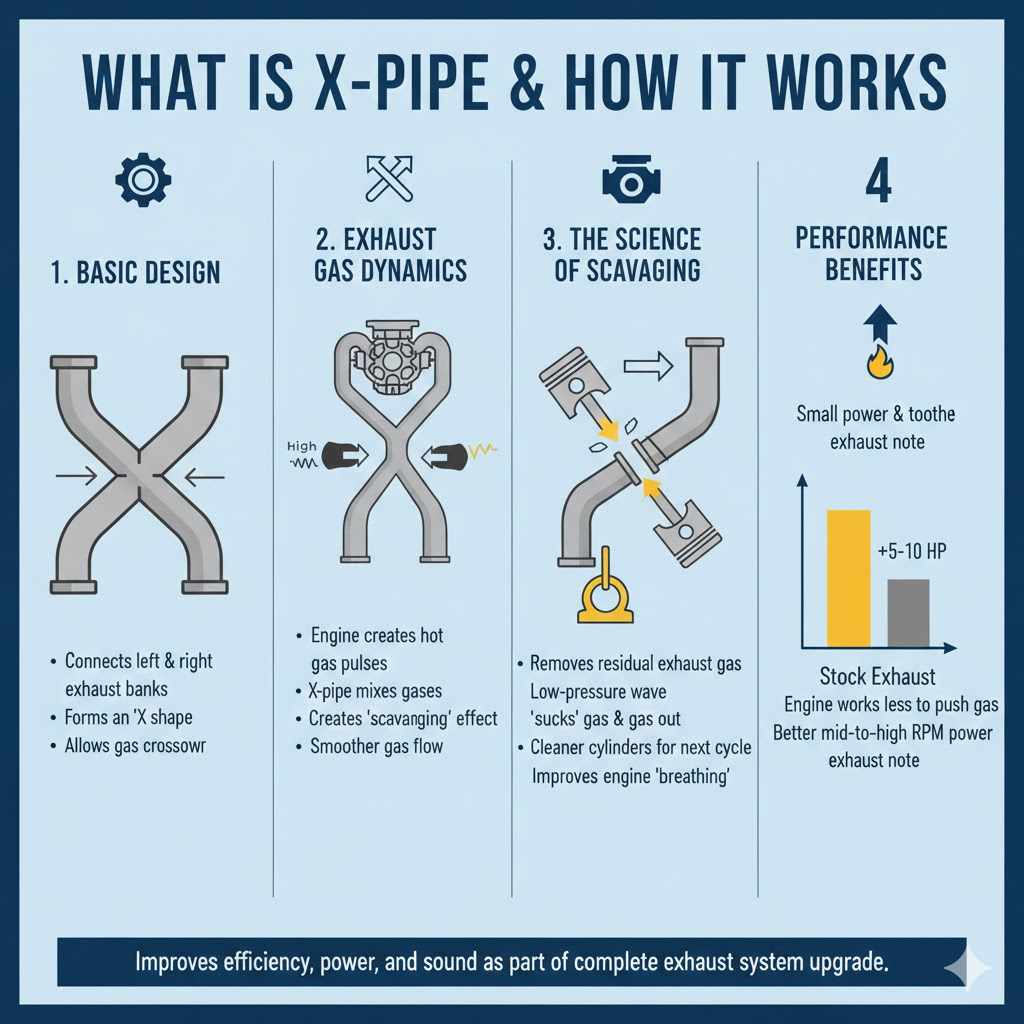
An X pipe is a piece of exhaust tubing that has two pipes coming in and then merging into a single pipe, forming an ‘X’ shape. The two pipes that come in are usually the left and right exhaust pipes from your engine’s cylinders. They meet at a central point where they cross each other.
Then, they join together and exit as one pipe.
This crossover design is what makes an X pipe special. It allows exhaust gases from one side of the engine to flow into the other side. This might sound strange, but it helps the gases move more smoothly.
It can also make your car’s engine run a bit better.
Exhaust Gas Dynamics Explained
When your engine burns fuel, it creates hot gases. These gases need to escape quickly so the engine can keep running. These gases travel through the exhaust pipes.
Normally, the gases from the left side of the engine go out the left exhaust pipe, and the gases from the right side go out the right exhaust pipe.
With an X pipe, the gases from both sides get to mix. Think of it like two rivers meeting. When the gases meet and cross over, they can actually help pull the gases from the other side along.
This is called scavenging. It means the exhaust gases leave the engine more efficiently.
This improved flow means the engine doesn’t have to work as hard to push the gases out. This can lead to a little more power and a different sound. The mixing of gases also helps to cancel out some of the sound waves.
This often results in a smoother, more refined exhaust note compared to some other exhaust setups.
The Science Of Scavenging
Scavenging is a super important idea in how engines work. It’s all about getting the old exhaust gases out of the engine’s cylinders as fast as possible. When a cylinder finishes its exhaust stroke, there are still some hot gases left inside.
If these gases stay, they can mix with the fresh air and fuel for the next cycle. This makes the next combustion less powerful.
An X pipe helps with scavenging because of how the exhaust pulses travel. When a pulse of exhaust gas leaves a cylinder, it creates a wave of pressure. This wave travels down the exhaust pipe.
When the waves from both sides of the engine meet in the X pipe, they can interact.
Sometimes, the pressure wave from one side can create a low-pressure area. This low-pressure area can actually suck the remaining exhaust gases out of the cylinder on the other side. It’s like a gentle vacuum cleaner for your exhaust.
This makes the cylinder cleaner and ready for a stronger explosion next time.
This improved scavenging can have a few good effects. It can help the engine breathe better, especially at higher speeds. It can also help keep the engine cooler because the hot gases are removed more quickly.
This efficiency boost is one of the main reasons people add X pipes.
How An X Pipe Affects Engine Performance
When an X pipe helps exhaust gases escape more easily, it can give your car a small boost in power. This happens because the engine doesn’t have to fight as hard to push gases out. It can then take in more fresh air and fuel to create more power.
This is especially noticeable when you push the engine hard.
Think about breathing. If you hold your breath, you can’t run very fast. Your lungs need to get rid of old air to bring in fresh air.
An engine is similar. Better exhaust flow means the engine can “breathe” better.
The power gains from an X pipe alone are usually not huge. You might notice a small increase in horsepower and torque, especially in the mid to upper range of the engine’s speed. It’s often described as making the engine feel a bit more free-revving.
This means it can reach higher speeds more easily.
Some studies have looked into this. For example, tests on certain V8 engines have shown gains of around 5-10 horsepower when an X pipe is installed, along with other exhaust modifications. Without other changes, the gain might be less.
Still, any improvement is good for performance enthusiasts.
It’s important to remember that other parts of the exhaust system also affect performance. The size of the pipes, the type of mufflers, and the catalytic converters all play a role. An X pipe works best as part of a complete exhaust system upgrade.
The Sound Of An X Pipe
One of the most noticeable changes with an X pipe is the sound your car makes. Many car owners are looking for that sporty, aggressive exhaust note. An X pipe can definitely change the sound, often in a way that many people find appealing.
It’s not just about being louder; it’s about the quality of the sound.
How X Pipes Change Exhaust Notes
The way an X pipe merges exhaust gases also affects the sound waves. When exhaust gases flow through a standard dual exhaust system (two separate pipes), they can create a more raspy or choppy sound. This is because the sound pulses from each bank of cylinders hit the muffler separately.
When the gases meet and cross in an X pipe, some of the sound waves cancel each other out. This process is called destructive interference. It can smooth out the sharp edges of the exhaust note.
The result is often a deeper, more resonant, and some say more refined sound.
This unique sound is often called the “Exotic” or “European” sound. It’s different from the rumbling sound of a muscle car with an H-pipe or straight pipes. Many high-performance cars from Europe use X pipes for their exhaust systems.
They aim for a sound that is aggressive but not overly loud or obnoxious.
Comparing X Pipe Sound To Other Setups
Let’s think about how it compares.
- H-Pipe: An H-pipe is another type of exhaust crossover. It connects two exhaust pipes with a simple H-shaped section. H-pipes tend to produce a deeper, more traditional muscle car rumble. They create a more even exhaust flow but don’t cancel out as much sound as an X pipe. The sound is often described as a low-frequency burble.
- Straight Pipes: Running straight pipes means the exhaust gases have the least restriction. They exit directly without any mufflers or crossovers. This is usually the loudest option and can be very aggressive. However, it often lacks the refined tone and can be too much for daily driving. The sound can be very raw and unrefined.
- No Crossover (Dual Exhaust): If you have a dual exhaust system but no crossover pipe (like an H or X pipe), the exhaust gases from each side stay separate until they reach the mufflers. This can lead to a more distinct sound from each bank of cylinders. Some people like this, but it can also lead to less efficient exhaust flow. The sound might be a bit more uneven.
When you install an X pipe, you’ll likely notice a higher-pitched tone compared to an H pipe. The sound will also be less “buzzy” or “farty” than some straight pipe setups. Many drivers find the X pipe sound to be a good balance between sporty and refined.
It has a distinctive whine at higher RPMs that many car enthusiasts enjoy.
Real-World Examples Of X Pipe Sound
You can hear the difference an X pipe makes in many popular sports cars.
- Porsche 911: Many models of the Porsche 911 feature X pipes in their exhaust systems. This contributes to the car’s signature high-pitched, metallic, and exotic exhaust note. When you hear a 911 revving up, that complex, almost singing sound is partly due to its X pipe.
- Chevrolet Corvette: While some Corvettes use an H pipe, many performance-oriented models and aftermarket upgrades opt for an X pipe. This gives the Corvette a more aggressive, higher-pitched roar that many owners prefer over the deeper rumble of other American V8s. It helps the V8 sound a bit more European.
- Ferrari Models: High-end sports cars like Ferraris often use X pipes to achieve their distinctive, loud, and thrilling exhaust sounds. The rapid merging of exhaust pulses contributes to the high-frequency scream that defines a Ferrari’s engine note. It’s a sound that is instantly recognizable and exciting.
These examples show that the X pipe sound is a deliberate choice for many manufacturers aiming for a specific performance and auditory experience. It’s not just about making noise; it’s about making the right kind of noise that complements the car’s performance.
Do X Pipes Really Work For Power And Sound
So, to directly answer the question: Do X Pipes Really Work? Power and Sound Test results consistently show they do have an impact. The extent of that impact depends on your car, other modifications, and your expectations.
For many car owners, the changes are positive and noticeable.
Factors Affecting Performance Gains
The amount of power you gain from an X pipe is not always the same for every car. Several things can influence how much of a difference you see.
- Engine Type: X pipes are most commonly used on V-engines, like V6 and V8 engines. These engines have two banks of cylinders, making the crossover design very effective for balancing exhaust flow. Inline engines might not see as much benefit from an X pipe.
- Exhaust System Design: An X pipe works best when it’s part of a well-designed exhaust system. If the rest of your exhaust is very restrictive (like small pipes or heavy mufflers), the X pipe’s benefits might be limited. A high-flow catalytic converter and performance mufflers will help you get more out of an X pipe.
- RPM Range: The performance gains from an X pipe are often most noticeable at higher engine speeds (RPMs). This is because the scavenging effect is stronger when exhaust pulses are happening more rapidly. At lower RPMs, the difference might be very small or unnoticeable.
- Material and Quality: The material and build quality of the X pipe can also play a role. Stainless steel pipes, for instance, are durable and resist rust. A well-made X pipe with smooth internal welds will allow for better exhaust flow than a poorly made one.
The design of the X pipe itself matters too. The size of the pipes, the angle of the crossover, and the overall length can all be optimized for different engines and performance goals. This is why aftermarket companies offer various X pipe designs.
Real-Life Case Studies
Let’s look at some hypothetical, but realistic, scenarios where people have seen results.
- Case Study 1: A 2015 Ford Mustang GT
The owner of a 2015 Mustang GT wanted a more aggressive sound and a bit more power. They already had a cat-back exhaust system installed. They decided toResults: After installation, the car had a noticeably louder and higher-pitched exhaust note, especially when accelerating. Dyno tests showed an increase of about 8 horsepower and 7 foot-pounds of torque. The owner reported the car felt more responsive at higher RPMs.
- Case Study 2: A 2018 BMW M3
The owner of a 2018 BMW M3 wanted to enhance the car’s sporty sound without making it overly loud for daily driving. The M3 already has a sophisticated exhaust system. They opted for a performance X pipe from a reputable aftermarket brand.Results: The sound changed from a deep growl to a sharper, more exotic tone with a noticeable increase in volume at higher revs. While horsepower gains were minimal (around 3-5 hp) due to the already efficient stock system, the sound enhancement was significant and highly praised by the owner. They found the new sound more engaging during spirited driving.
These examples illustrate that the impact of an X pipe can vary. For cars with more restrictive stock exhausts, the power gains might be more apparent. For cars with already optimized systems, the sound improvement is often the primary benefit.
Is An X Pipe Worth The Investment
Whether an X pipe is “worth it” depends on what you’re looking for. If you’re seeking significant horsepower gains, an X pipe alone might not be enough. You’ll likely need to combine it with other modifications like headers, a cold air intake, and a tune.
However, if you want to improve the sound of your car and get a slight performance edge, an X pipe is often a great upgrade. The distinctive sound it produces is a major draw for many car enthusiasts. It can make your car sound more like a high-performance machine.
Consider the cost versus the benefit. X pipes can range from a couple of hundred to over a thousand dollars, depending on the brand and material. For many, the improved sound and the subtle performance bump justify the expense.
It’s a popular modification because it often delivers a noticeable and enjoyable change.
Many reviews and forums show that owners are generally happy with the results. They appreciate the unique sound and the more engaging driving experience it provides. It’s a good step for those looking to personalize their car’s performance and sound profile.
Installation And Considerations
Putting an X pipe on your car is something you can do yourself if you have the right tools and some mechanical skill. However, many people choose to have a professional mechanic do it. There are a few things to think about before you decide.
The Installation Process
Installing an X pipe typically involves lifting your car safely on jack stands or a lift. You then need to remove the section of your existing exhaust system where the X pipe will go. This usually means unbolting or cutting pipes.
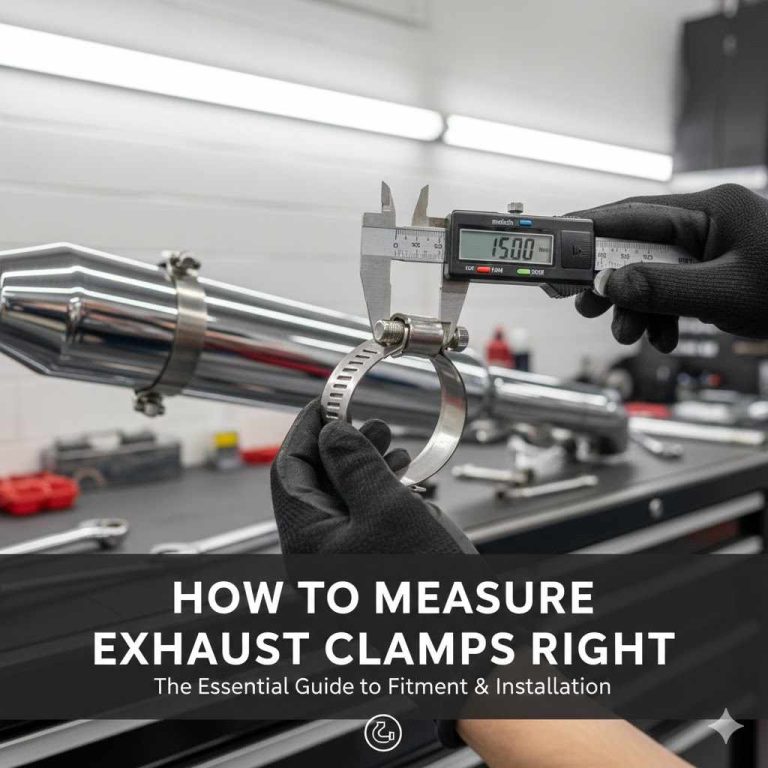
Once the old section is out, the new X pipe is fitted into place. It’s then bolted or clamped securely to the rest of the exhaust system. Sometimes, exhaust clamps are used for a tight seal.
Other times, the pipes are welded together for a permanent and strong connection.
The whole process usually takes a few hours. It’s important to make sure all connections are sealed properly to prevent exhaust leaks. Leaks can reduce performance and make the exhaust sound uneven or even dangerous.
Proper installation is key to getting the best results.
Potential Issues And Solutions
While X pipes are generally straightforward upgrades, there can be a few potential issues:
- Exhaust Leaks: If the X pipe isn’t installed perfectly or the clamps aren’t tightened enough, you can get exhaust leaks. These sound like hissing or puffing noises.
Solution: Ensure all connections are sealed tightly. Use high-quality gaskets and clamps. If leaks persist, professional welding might be needed. - Fitment Problems: Aftermarket parts don’t always fit perfectly. Sometimes, minor adjustments or modifications are needed.
Solution: Always buy an X pipe specifically designed for your car’s make, model, and year. If fitment is still an issue, consult the manufacturer or a custom exhaust shop. - Drone: Some X pipe setups can create a humming sound, called drone, at certain RPMs, especially on the highway. This can be annoying.
Solution: This is often related to the overall exhaust system. Choosing an X pipe designed for less drone or adding a resonator can help reduce it. Some manufacturers design their X pipes to minimize this. - Check Engine Light: In some cars, changing the exhaust system can affect sensors that monitor emissions, potentially triggering a check engine light.
Solution: This is less common with just an X pipe but can happen. Often, a tune or specific catalytic converters can resolve this. It’s good to check reviews for your specific car model.
It’s wise to research specific X pipe models for your car to see if other owners have reported any common issues.
Choosing The Right X Pipe
When you’re ready to buy, here’s what to look for:
- Material: Stainless steel is best for durability and rust resistance. Aluminized steel is a more affordable option but won’t last as long.
- Brand Reputation: Stick with well-known brands that specialize in exhaust systems. They usually have better quality control and fitment.
- Vehicle Specific: Make sure the X pipe is designed for your car’s exact make, model, year, and engine. Generic ones might not fit correctly.
- Sound Goals: If you have a specific sound in mind, read reviews and watch videos of that X pipe on similar cars.
Don’t be afraid to ask for advice from exhaust shops or online communities dedicated to your car model. They can offer valuable insights based on their experiences.

Frequently Asked Questions
Question: Will an X pipe void my car’s warranty
Answer: In most cases, modifying the exhaust system with an X pipe will not automatically void your entire car’s warranty. However, if a problem arises that can be directly linked to the X pipe installation or its effects on the engine and emissions systems, the manufacturer may deny warranty coverage for that specific issue.
Question: Can I install an X pipe on a 4-cylinder engine
Answer: While X pipes are most common and effective on V6 and V8 engines, they can be installed on some 4-cylinder engines. However, the performance gains and sound changes might be less dramatic compared to larger engines. It’s best to check for vehicle-specific options.
Question: How much louder will my exhaust get with an X pipe
Answer: An X pipe generally makes the exhaust note louder, but it’s more about the tone than just raw volume. It can increase the overall volume by a few decibels, but the primary change is in the pitch and character of the sound, making it sound more aggressive and refined.
Question: What’s the difference between an X pipe and an off-road X pipe
Answer: An off-road X pipe typically refers to an X pipe that does not include catalytic converters. This setup is illegal for use on public roads in many places because it bypasses emissions controls. Standard X pipes are designed to work with existing catalytic converters.
Question: Do I need a tune after installing an X pipe
Answer: For most cars, installing an X pipe alone does not require an engine tune. However, if you are installing it as part of a larger exhaust upgrade or if your car’s computer is particularly sensitive, a tune might be recommended to optimize performance and prevent potential issues like a check engine light.
Final Thoughts
So, Do X Pipes Really Work? Power and Sound Test shows they offer noticeable changes. They enhance your car’s sound with a refined tone and can provide a small boost in power, especially at higher speeds.
It’s a popular upgrade for a reason. Consider your goals and choose a quality product for the best results.