Do Exhaust Pipes Get Rusty: Proven Essential
Yes, exhaust pipes absolutely get rusty. It’s a common issue caused by moisture, heat, and chemicals from the road. Regular checks and simple maintenance are essential to prevent severe damage, maintain performance, and ensure your car stays safe on the road.
Ever noticed a reddish-brown flaky bit under your car, or heard an unhappy rattling sound coming from its rear? You’re not alone! Many car owners wonder if exhaust pipes, that vital part of your car’s engine that carries away exhaust gases, are prone to rust. The short answer is a definite yes. It’s a natural process, but one you can manage. Ignoring it can lead to bigger, more expensive problems down the line. But don’t worry, understanding why it happens and what to do is much simpler than you might think. We’ll walk through it step-by-step, so you can keep your exhaust system in great shape.
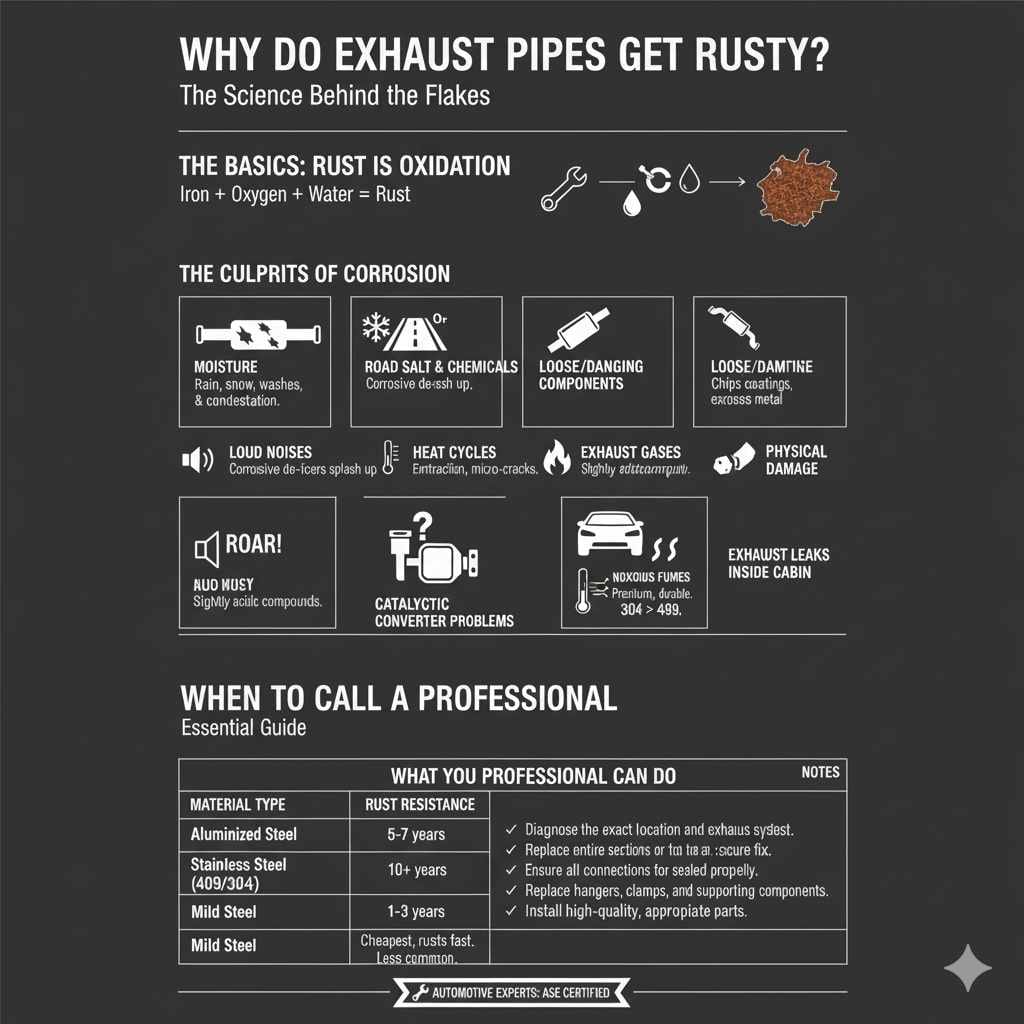
Why Do Exhaust Pipes Get Rusty? The Science Behind the Flakes
Rust, or oxidation, is a chemical reaction. It happens when iron (a key component in most exhaust systems) meets oxygen and water. Think of it like leaving a rusty old bike out in the rain – it’s bound to get rusty! Your car’s exhaust system is constantly exposed to harsh conditions that speed this process up. It’s a normal part of wear and tear for any car, especially those driven in certain climates or conditions.
The Culprits of Corrosion
- Moisture: This is rust’s best friend! Water, whether from rain, snow, car washes, or even condensation from your own exhaust, is the primary driver of rust. Exhaust systems operate within a wide temperature range, meaning they cool down and heat up repeatedly. This cycle creates condensation, which sits on the metal and starts the rusting process.
- Road Salt and Chemicals: In colder climates, roads are often treated with salt and other de-icing chemicals to prevent ice. These chemicals are highly corrosive. When your car drives over treated roads, these substances splash up onto the underside of your vehicle, including the exhaust system, eating away at the metal.
- Heat Cycles: The intense heat your exhaust system endures during normal operation, followed by rapid cooling, can create microscopic cracks. These tiny openings give moisture and air more access to the metal, accelerating rust formation.
- Exhaust Gases: While the primary job of the exhaust is to get rid of gases, these gases themselves can be slightly acidic, especially if the engine isn’t running optimally. Over time, this acidity can contribute to the degradation of the exhaust pipe material.
- Physical Damage: Though not directly causing rust, impacts from road debris (like rocks or speed bumps) can chip away at protective coatings or dent the pipes, exposing fresh metal that is more vulnerable to rust.
Understanding Exhaust System Materials
What your exhaust pipes are made of plays a big role in how quickly they rust. Most exhaust systems are built from steel, but the type of steel and any protective coatings make a difference.
| Material Type | Rust Resistance | Typical Lifespan (Example) | Notes |
|---|---|---|---|
| Aluminized Steel | Moderate | 5-7 years | Coated with aluminum, offering good corrosion resistance for its cost. A common choice for many vehicles. |
| Stainless Steel (e.g., 409 or 304 grade) | High | 10+ years | Significantly more rust-resistant. Often used in performance exhaust systems or higher-end vehicles for longevity. 304 is generally more rust-resistant than 409. |
| Mild Steel | Low | 1-3 years | Cheapest option, but rusts very quickly, especially in harsh environments. Less common for full exhaust systems nowadays. |
You might also find some parts treated with special coatings to further protect them. However, even the best materials will eventually succumb to rust if not properly cared for, especially under constant exposure to the elements.
Signs Your Exhaust Pipes Might Be Rusty
Catching rust early is key to preventing major problems. Your car will often give you clues that something is amiss with its exhaust system. Being aware of these signs can save you time and money in the long run.
What to Look and Listen For
- Visible Rust or Holes: The most obvious sign is, of course, seeing rust. Look for reddish-brown discoloration, flaky patches, or even small holes in the pipes, mufflers, or catalytic converter. Check the hangers and clamps too, as they are often thinner metal and rust faster.
- Exhaust Leaks (Hissing or Puffing Sounds): If you hear a hissing or puffing sound from your exhaust, especially when the engine is running, it could indicate a leak. Rust can eat through the pipes, creating gaps where exhaust gases can escape. This affects performance and can be dangerous.
- Rattling Noises: A loose piece of rust or a component that’s starting to fall apart due to corrosion can cause rattling sounds, particularly when you go over bumps or accelerate.
- Decreased Fuel Efficiency: A leaky or damaged exhaust system can disrupt the proper flow of exhaust gases. This can affect the engine’s performance, leading to your car using more fuel than usual.
- Unusual Smells: If exhaust fumes start entering the car’s cabin, it’s a serious sign of a leak. This is dangerous as exhaust fumes contain harmful gases like carbon monoxide.
- Sagging or Hanging Exhaust: If the exhaust system looks like it’s hanging lower than usual or a section is dangling, the rust might have weakened the hangers or the pipes themselves, causing them to fail.
The Dangers of Ignoring Rusty Exhaust Pipes
It might seem like just a bit of rust, but ignoring a corroded exhaust system can lead to some serious issues. Safety, performance, and your wallet are all at risk.
Why It’s Essential to Address Rust
- Safety Hazards: A rusted-through exhaust pipe can disconnect from the rest of the system. This can allow dangerous exhaust gases, including carbon monoxide, to leak into the passenger cabin. Carbon monoxide is odorless, colorless, and deadly.
- Reduced Performance and Fuel Economy: Leaks in the exhaust system disrupt the intended backpressure that newer engines rely on for optimal performance. This can lead to a noticeable loss of power and poor fuel efficiency. The engine control unit (ECU) might also struggle to get accurate readings from oxygen sensors, further impacting performance.
- Environmental Impact: A damaged exhaust system, especially the catalytic converter, might not function correctly to reduce harmful emissions. This means your car will pollute more, which is bad for the environment.
- Costly Repairs: Small rust spots are often manageable. However, if left untreated, the rust can spread and weaken entire sections of the exhaust. This can turn a simple pipe replacement into needing a whole new system, which is significantly more expensive.
- Failed Emissions Tests: If your exhaust system has significant rust or leaks, your car is unlikely to pass mandatory emissions tests in many regions. This will prevent you from registering your vehicle.
The U.S. Environmental Protection Agency (EPA) has strict regulations on vehicle emissions, and a properly functioning exhaust system is key to meeting these standards. You can learn more about vehicle emissions standards on the EPA’s website.
How to Prevent and Maintain Your Exhaust System
While you can’t stop rust completely, you can significantly slow it down and prolong the life of your exhaust system with a few simple practices. Think of it as proactive care for your car.
Regular Checks and Cleaning
The best defense against rust is vigilance and a little elbow grease. Make it a habit to inspect your exhaust system periodically.
- Visual Inspections: When you’re under your car for an oil change or just doing a general check, take a moment to look at your exhaust system. Check for any signs of rust, corrosion, or damage. Pay close attention to welds, bends, and areas where pipes connect.
- Washing Your Car: Regularly washing your car, especially the undercarriage, can help remove road salt and other corrosive substances before they have a chance to do serious damage. Make sure to rinse the exhaust system thoroughly.
- Driving Habits: Try to drive your car regularly and at highway speeds for at least 15-20 minutes once a week. This helps heat the exhaust system up thoroughly, burning off moisture and condensation that can contribute to rust. Short trips where the exhaust never fully heats up are particularly hard on the system.
Protective Measures
There are products and methods that can offer extra protection against rust.
- Exhaust System Cleaner/Protector Sprays: You can buy specialized sprays designed to coat exhaust components and provide a barrier against moisture and corrosion. These are usually applied to a clean, dry surface.
- Higher-Quality Materials: When it’s time for a replacement, consider opting for stainless steel or aluminized steel components instead of standard mild steel, especially if you live in an area with harsh winters or high humidity. While they cost more upfront, they last much longer.
For detailed information on automotive coatings that can help prevent corrosion, resources like those from the Corrosion Doctors website can provide in-depth insights into material science.
DIY Fixes for Minor Rust Issues
For very small rust spots or minor surface corrosion, you might be able to tackle it yourself. This can buy you time before a full replacement is needed. Always prioritize safety and know your limits!
Surface Rust Touch-Up
This method is best for surface rust that hasn’t eaten through the metal.
Tools and Materials You’ll Need:
- Safety glasses and gloves
- Wire brush (manual or a wire wheel attachment for a drill)
- Rust converter or rust encapsulator spray
- High-temperature exhaust paint (optional, for aesthetics and a bit more protection)
- Clean rags
Steps for a DIY Rust Fix:
- Safety First: Ensure the exhaust system is completely cool. Put on your safety glasses and gloves.
- Clean the Area: Use the wire brush to thoroughly scrub away all loose rust, dirt, and debris from the affected area. If using a drill with a wire wheel, be careful not to apply too much pressure, which could thin the metal. The goal is to reach clean, solid metal.
- Wipe It Down: Use a clean rag to wipe away any dust created by brushing. Ensure the surface is dry.
- Apply Rust Converter/Encapsulator: Follow the product instructions carefully. Most converters chemically change the rust into a stable, paintable surface. Encapsulators create a protective barrier over the rust. Apply a thin, even coat. Allow it to dry completely as per the product’s recommendations. You might need a second coat.
- Apply High-Temperature Paint (Optional): If you want to protect the area further and make it look better, apply several thin coats of high-temperature exhaust paint. This paint is designed to withstand the heat of the exhaust system. Let each coat dry before applying the next.
- Cure Time: Many of these products require heat to fully cure. You might need to run your car’s engine for a specific amount of time (e.g., 20-30 minutes) to allow the coatings to harden properly. Check the product’s instructions for cure times and methods.
Important Note: This DIY fix is a temporary solution for minor surface rust. If you see holes, significant thinning of the metal, or widespread rust, it’s best to consult a professional mechanic.
When to Call a Professional
While some minor rust issues can be addressed at home, there are definitely times when you should leave it to the experts. Trying to fix a major problem without the right tools or knowledge can be dangerous and lead to further damage.
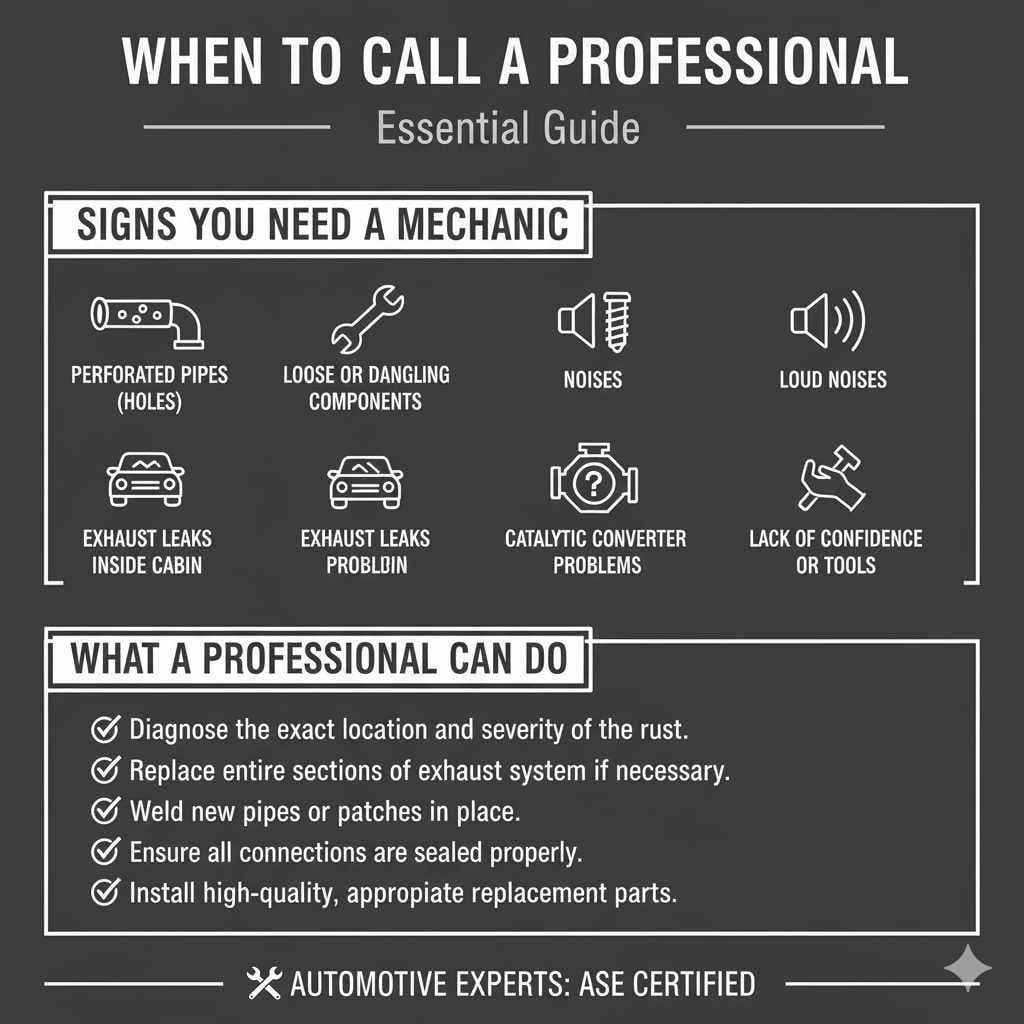
Signs You Need a Mechanic
- Perforated Pipes (Holes): If rust has eaten through the metal and created holes, the pipe section needs replacement.
- Loose or Dangling Components: If exhaust pipes, mufflers, or hangers are loose, rusted through, or falling off, it’s a serious issue requiring professional repair.
- Loud Noises: Persistent loud roaring or rattling sounds often indicate a significant exhaust leak or structural failure that requires expert attention.
- Exhaust Leaks Inside the Cabin: Any smell of exhaust fumes inside your car is a critical safety concern and needs immediate professional inspection.
- Catalytic Converter Problems: This is a complex and expensive part. If you suspect issues with it, always see a professional.
- Lack of Confidence or Tools: If you’re unsure about what you’re doing, don’t have the right tools, or aren’t comfortable working on your car, it’s always safer to let a mechanic handle it.
What a Professional Can Do
Mechanics have the diagnostic tools, expertise, and equipment to properly assess and repair your exhaust system. They can:
- Diagnose the exact location and severity of the rust.
- Replace entire sections of the exhaust system if necessary.
- Weld new pipes or patches in place for a secure, long-lasting fix.
- Ensure all connections are sealed properly to prevent leaks.
- Replace hangers, clamps, and other supporting components.
- Install high-quality, appropriate replacement parts for your vehicle.
For information on automotive repair shops and certifications, you can refer to resources like the National Institute for Automotive Service Excellence (ASE), which certifies technicians and standards.
Frequently Asked Questions (FAQs)
Q1: Can I drive my car if my exhaust pipe is rusty?
A1: It depends on the severity. If it’s just minor surface rust without holes, you can likely drive it cautiously for a short period while you plan a repair. However, if there are holes, loud noises, or exhaust fumes in the cabin, it’s unsafe to drive and should be addressed immediately.
Q2: How long does an exhaust pipe usually last?
A2: The lifespan varies greatly depending on the material (stainless steel lasts longest), the climate you drive in (salty roads shorten life), and how well it’s maintained. A typical aluminized steel exhaust might last 5-7 years, while stainless steel can last 10 years or much more.
Q3: Does a rusty exhaust pipe affect my car’s performance?
A3: Yes, if the rust has caused holes or leaks. Leaks can disrupt the engine’s backpressure, leading to a loss of power and reduced fuel efficiency.
Q4: Is rust on my exhaust pipe dangerous for passengers?
A4: Yes, it can be. Holes in the exhaust system can allow dangerous carbon monoxide gas to leak into the passenger cabin, which is odorless and very dangerous. You might notice an exhaust smell inside the car if this is happening.
Q5: What’s the difference between surface rust and rust holes?
A5: Surface rust is just on the very outer layer of the metal, like a reddish coating. Rust holes mean the rust has eaten all the way through the metal, creating an opening. Holes are a much more serious problem.
Q6: Can I clean off exhaust pipe rust with ordinary cleaners?
A6: Ordinary household cleaners won’t be effective against the type of rust found on exhaust pipes, and they won’t provide lasting protection. You need specialized tools like wire brushes and specific rust treatment products designed for automotive use and high temperatures.
Q7: Should I just replace the whole exhaust system if a section is rusty?
A7: Not necessarily. If only one section is significantly rusted or damaged, it might be possible to replace just that specific component (like a muffler or a pipe section). However, severe rust might indicate that other parts are also nearing the end of their life, and a mechanic can advise on the best course of action.
Conclusion
So, to circle back to our main question: do exhaust pipes get rusty? The answer is a resounding yes. It’s a natural process that happens because of moisture, road chemicals, and the constant heating and cooling cycles your exhaust endures. But understanding why and how it happens is the first step to managing it.
By performing regular visual checks, keeping your car clean, and considering protective measures, you can significantly slow down the rusting process and extend the life of your exhaust system. For minor surface rust, simple DIY fixes can provide a temporary solution. However, it’s crucial to know when a problem is beyond a quick touch-up. Safety should always be your top priority.