Are Muffler and Exhaust Pipe the Same Thing? Essential Facts
No, a muffler and an exhaust pipe are not the same thing, though they are both crucial parts of your car’s exhaust system. The exhaust pipe carries gases away, while the muffler reduces noise. Understanding their distinct roles is key to proper car maintenance.
Ever stared at the underside of your car and wondered about all those metal tubes? It’s easy to get confused about the different parts of the exhaust system. Two terms that often pop up are “muffler” and “exhaust pipe.” Are they just fancy names for the same component, or do they do different jobs? Many car owners feel this confusion, but don’t worry! It’s a common question, and thankfully, the answer is straightforward. Knowing the difference is the first step to understanding how your car runs smoothly and quietly. We’re here to break it down for you in simple terms, so by the end, you’ll be an expert on your car’s exhaust!
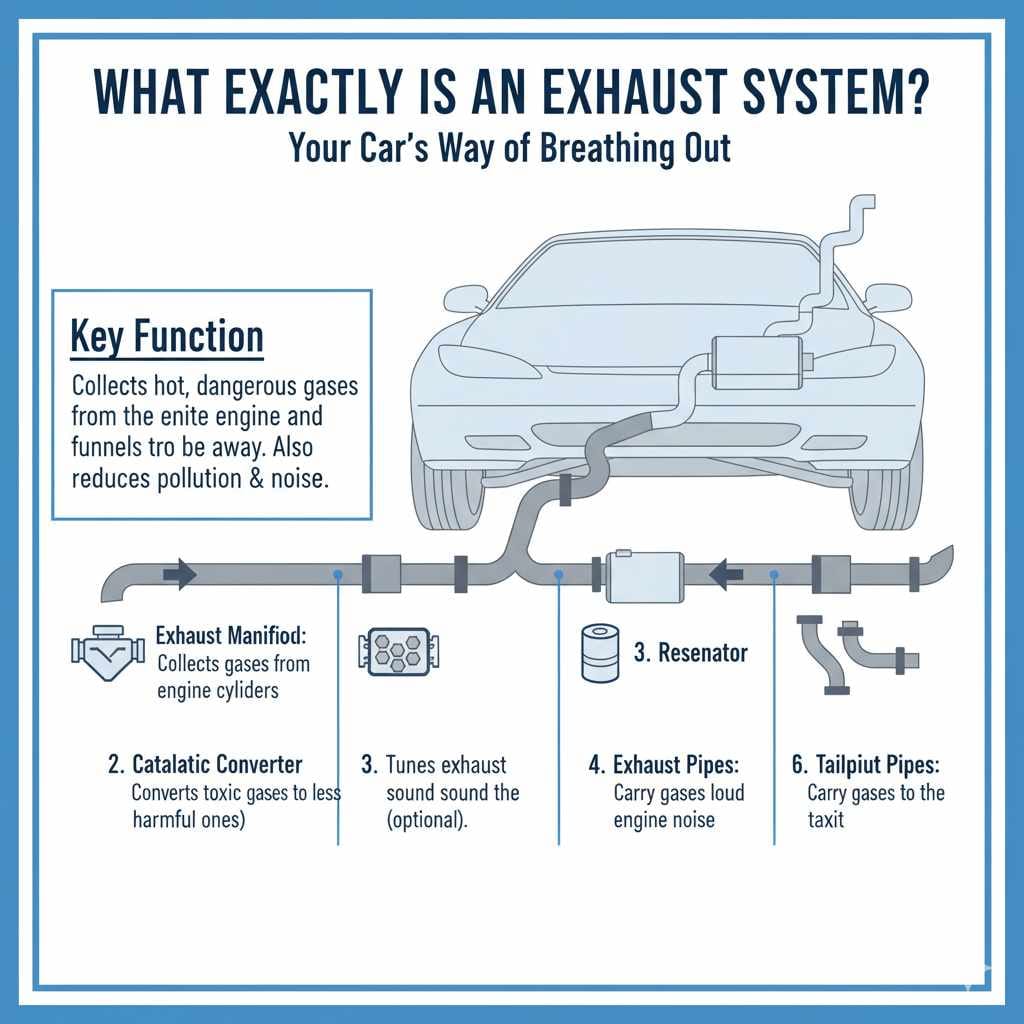
What Exactly is an Exhaust System?
Before we dive into the muffler versus the exhaust pipe, let’s quickly touch on the whole exhaust system. Think of it as your car’s way of breathing out. When your engine burns fuel, it creates harmful gases. The exhaust system’s main job is to collect these hot, dangerous gases from the engine’s cylinders and funnel them safely away from the vehicle and its occupants. It also plays a big role in reducing pollution and making your car quieter.
This system is made up of several key parts working together:
- Exhaust Manifold: Attached directly to the engine, it collects exhaust gases from each cylinder.
- Catalytic Converter: A crucial emissions control device that converts toxic gases into less harmful ones.
- Resonator: Some systems have a resonator to further tune the exhaust sound and eliminate specific frequencies.
- Muffler: Designed to silence the loud noise produced by the engine.
- Exhaust Pipe(s): The various pipes that connect these components and carry the gases all the way to the tailpipe.
- Tailpipe: The final section of the exhaust pipe, where the gases exit the vehicle.
The Exhaust Pipe: The Gas Carrier
Let’s start with the exhaust pipe. Imagine it as the highway for your car’s exhaust gases. Its primary role is simple: to transport the burnt gases from one part of the exhaust system to another, and ultimately, out of the vehicle.
Exhaust pipes are typically made of sturdy metal, like steel or stainless steel, to withstand the high temperatures and corrosive nature of the exhaust gases. They can vary in size and shape depending on the car’s make and model. Some cars have a single exhaust pipe, while others have dual exhaust systems, meaning two separate pipes running from the engine. Dual exhaust systems can sometimes improve engine performance by allowing gases to exit more freely, but they are also more complex and can cost more.
When people talk about a “hole in the exhaust,” they are often referring to a leak or damage in one of these pipes. A damaged exhaust pipe can lead to:
- Loud Noises: Unwanted sounds because the gases are escaping prematurely.
- Exhaust Fumes in the Cabin: Dangerously toxic gases can enter your car’s interior.
- Reduced Performance: The engine might not run as efficiently.
- Emissions Issues: Your car might fail an emissions test.
You can find more information about exhaust system components and their functions on resources like the U.S. Environmental Protection Agency (EPA), which offers insights into vehicle emissions technologies.
The Muffler: The Noise Reducer
Now, let’s talk about the muffler. If the exhaust pipe is the highway, the muffler is the soundproofing booth at the end of the road. Its sole purpose is to dramatically reduce the noise created by the engine’s combustion process. Without a muffler, your car would sound like a race car, or perhaps more accurately, a very loud truck!
So, how does it work? A muffler isn’t just an empty can. Inside, it contains a series of chambers, baffles, and perforated tubes. As the hot exhaust gases pass through these internal structures, the noise is broken down and absorbed. Think of it like waves in water – the baffles and chambers disrupt the energy of the sound waves, making them much quieter by the time they exit the muffler and head out through the tailpipe.
The design of a muffler can vary, influencing both the sound level and the type of sound your car makes. Performance mufflers, for instance, are designed to be less restrictive, allowing for better exhaust flow and a sportier sound, but they still reduce noise compared to no muffler at all.
A failing muffler can lead to:
- Excessive Noise: A very loud, often rumbling sound that gets worse when you accelerate.
- Reduced Power: If a muffler is clogged or damaged internally, it can restrict exhaust flow.
- Hissing or Popping Sounds: These can indicate internal damage or leaks.
Muffler vs. Exhaust Pipe: Key Differences Explained
The easiest way to remember the difference is to focus on their primary functions:
- Exhaust Pipe: Carries gases.
- Muffler: Quiets the noise.
They are connected and work together to form a functional exhaust system, but they are distinct parts with distinct jobs. The exhaust pipe is essentially a tube, while the muffler is a complex device designed for noise reduction.
Here’s a table to highlight their differences:
| Feature | Exhaust Pipe | Muffler |
|---|---|---|
| Primary Function | Transport exhaust gases | Reduce exhaust noise |
| Internal Structure | Typically hollow tube | Chambers, baffles, perforated tubes |
| Common Issues | Rust, holes, leaks | Internal damage, rust, leaks, clogging |
| Impact of Failure | Gas leaks, loud noises, performance loss | Very loud engine noise, potential performance loss |
| Material | Steel, stainless steel | Steel, stainless steel (with internal components) |
Understanding Exhaust System Components
Let’s break down a few more common components to paint a clearer picture of the entire system these two parts belong to:
The Exhaust Manifold
This is where it all begins. Bolted directly to the engine block, the exhaust manifold has individual pipes (runners) that connect to each cylinder’s exhaust port. Its job is to collect the hot, high-pressure exhaust gases from all cylinders and combine them into a single pipe, which then leads to the rest of the exhaust system, often towards the catalytic converter.
The Catalytic Converter
A vital piece in modern cars, the catalytic converter is a box-like device filled with chemical catalysts (like platinum, palladium, and rhodium). Its crucial role is to convert harmful pollutants in the exhaust gases—such as carbon monoxide, hydrocarbons, and nitrogen oxides—into less harmful substances like water vapor and carbon dioxide. It’s a key part of meeting emissions standards. You can learn more about how catalytic converters work by checking out resources from organizations like the U.S. Department of Energy.
The Resonator
Some vehicles have a resonator in addition to a muffler. While the muffler is the primary noise deadener, a resonator is designed to target specific, often higher-pitched, sound frequencies. It helps fine-tune the exhaust note, preventing an annoying drone or a raspy sound, contributing to a more pleasant overall tone when the engine is running.
The Tailpipe
This is the final section, the very end of the line. The tailpipe extends from the muffler (or sometimes the resonator) and directs the exhaust gases out of the rear or side of your vehicle. It’s usually the most visible part of the exhaust system.