When to Replace a Rusted Exhaust Pipe: Key Signs to Check
Replace a rusted exhaust pipe when rust has made holes, split seams, soft spots, or deep pitting that leaves the pipe flaking or thinning; surface rust alone is often repairable. Ignore it, and you can get exhaust leaks, cabin fumes, louder operation, failed inspections, and a repair that gets pricier fast. This guide shows how to judge cosmetic rust, repairable damage, and unsafe corrosion by symptoms, location, and inspection results.
How rust turns into exhaust failure
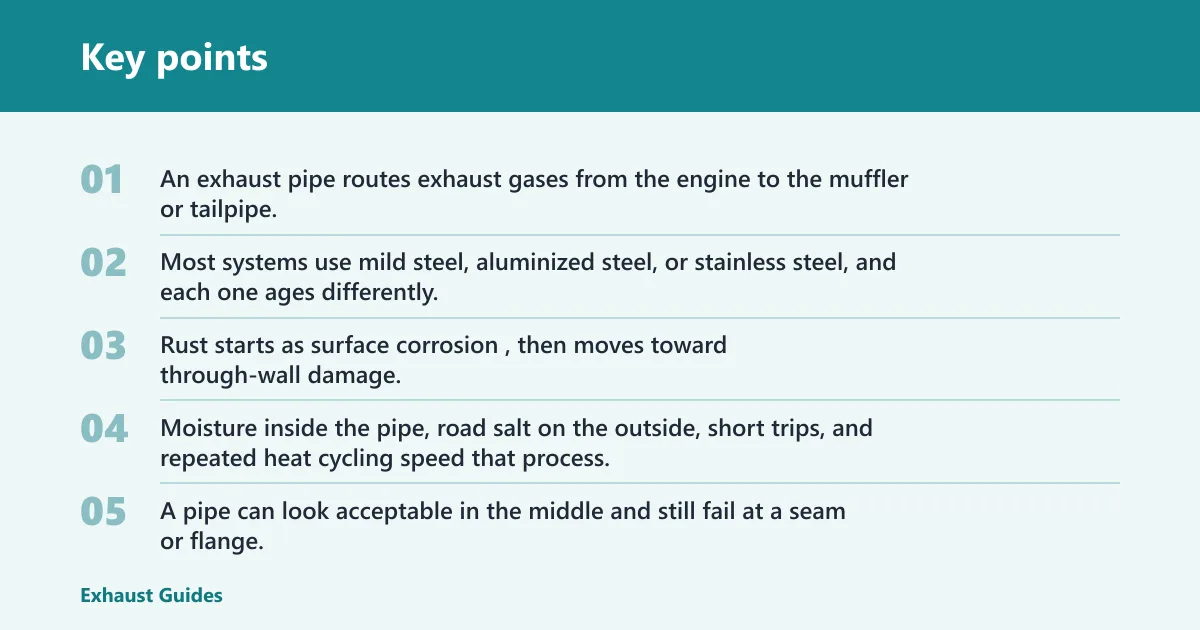


An exhaust pipe routes exhaust gases from the engine to the muffler or tailpipe. Most systems use mild steel, aluminized steel, or stainless steel, and each one ages differently. Mild steel rusts fastest. Aluminized steel usually lasts longer, while stainless resists corrosion better but can still fail at welds, clamps, and joints.
Rust starts as surface corrosion, then moves toward through-wall damage. Moisture inside the pipe, road salt on the outside, short trips, and repeated heat cycling speed that process. Water condenses inside the pipe when the exhaust never gets hot enough for long enough, and salt attacks seams and low spots.
Common failure points
Inspection matters most near welds, clamps, flex sections, hangers, bends, flanges, and the joints that meet the muffler or catalytic converter. Those spots trap moisture or move more than the rest of the pipe. A pipe can look acceptable in the middle and still fail at a seam or flange.
Rust spreading across connected sections also changes the repair. A bad pipe can be only one part of a larger problem if the muffler shell, converter shell, or a welded joint is also thinning.
What a bad exhaust pipe sounds and smells like
A leaking exhaust pipe often makes a ticking, hissing, or sharper-than-normal exhaust note. The noise usually grows under load or acceleration because exhaust pressure rises and forces more gas through the weak spot. A smell of exhaust, soot marks near a joint, or a vibration in the floor can point to the same leak.
Signs the leak is worsening
Through-wall rust usually leaves visible holes, cracks, flaking seams, or black soot around the opening. If exhaust gases can enter the cabin, the safety concern moves from noise and emissions to air quality. Carbon monoxide risk is the reason a cabin leak should be treated as a stop-driving problem until inspected.
Say your sedan has about a 1-inch rust spot on the pipe near a weld and the engine sounds only slightly louder. If a gloved finger finds rough scale but no hole and no soot, that is closer to cosmetic rust. If the same spot leaves a ticking noise and a dark stain, the pipe is no longer just cosmetic damage.
When is a rusted exhaust pipe unsafe?
A rusted exhaust pipe is unsafe when corrosion has gone through the wall, when the leak lets fumes into the cabin, or when the pipe is cracked enough that the opening grows under load. At that point, tape or putty is a temporary fix only, and the leak can worsen quickly.
Signs the pipe is through-wall rusted
Look for a hole you can probe, a seam that separates when touched, a section that flakes apart in layers, or rust that leaves the metal soft and thin. Soot marks at a joint often mean exhaust has already escaped there. A pinhole can be the first visible sign of a larger weak area nearby.
When nearby corrosion means replace it
If the rust has spread into a bend, hanger, flange, or flex section, the section may not be worth patching. Flex pipe damage is especially common because that part moves with engine motion and heat. Once the mesh and inner tube rust through, section replacement is usually the practical path.
Suppose the pipe is rusted near the muffler inlet and the muffler shell also has holes. That is no longer a single-pipe job. The repair scope may shift to a larger exhaust assembly because the new pipe would still connect to weak metal.
Exhaust pipe decision matrix
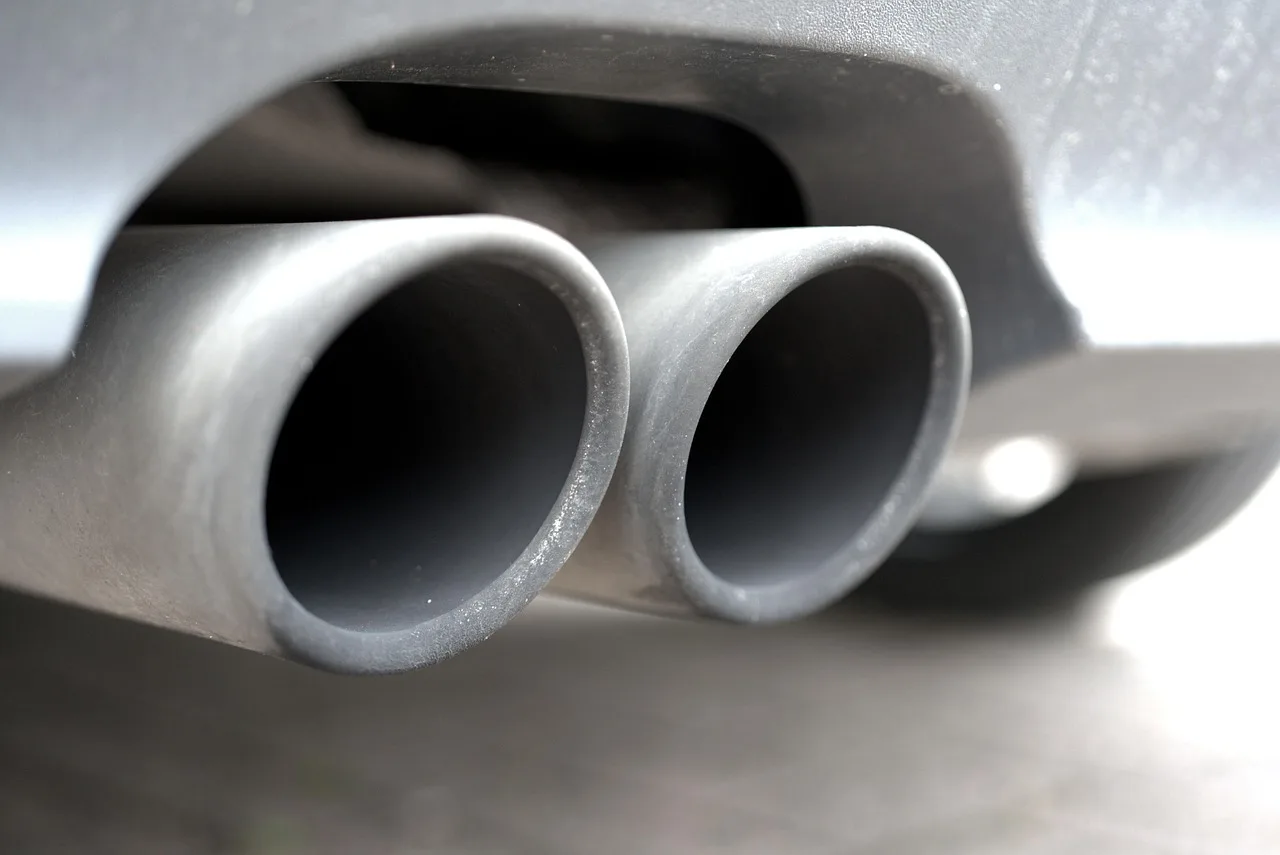
This table gives a practical replacement threshold. Use it after the exhaust has cooled fully, with the vehicle supported on jack stands and the wheels chocked. If you cannot see the entire damaged area, do not guess; hidden rust near a clamp or flange can change the decision.
| Rust location | Visible damage | Recommended action | Safety reason |
|---|---|---|---|
| Surface rust near a weld | Orange-brown scale, no hole, no soot | Monitor | Cosmetic rust alone is not a leak. |
| Straight section | Pinhole with light ticking | Repair a section | Small through-wall damage can be cut out before it spreads. |
| Straight section | Multiple pinholes or a soft patch | Replace the full pipe | Widespread thinning makes a patch unreliable. |
| Flange | Rust at the sealing face or bolt holes | Repair a section | A bad flange can leak even if the pipe body looks fair. |
| Flex pipe | Frayed mesh, split inner tube, soot around the braid | Replace the full pipe | Flex pipe failure is usually not durable with a simple patch. |
| Hanger area | Hole forming where the pipe hangs or rubs | Repair a section | Movement and stress can reopen a patched spot. |
| Bend | Flaking metal through the curve | Replace the full pipe | Bends are hard to seal and often rust deeper than they look. |
| Near muffler inlet | Rust on pipe and muffler shell | Replace the full exhaust section | Nearby corrosion can leave one repair attached to another failure. |
| Near catalytic converter connection | Hole or crack plus soot at the joint | Repair a section only if fit is sound; otherwise replace the section | The joint must seal correctly and keep emissions hardware intact. |
| Multiple locations | Two or more perforations on one pipe | Replace the full pipe | Several weak spots mean the rest of the pipe is near failure. |
| Pipe with severe flaking seams | Layers peeling off along a seam | Replace the full pipe | Seam failure often spreads faster than a single spot leak. |
| Rusted section near emissions equipment | Corrosion reaching the connection to converter or muffler | Replace the full section | Inspection legality and fitment matter as much as the rust itself. |
Can you repair a rusted exhaust pipe?
Yes, but only when the damage is limited and the surrounding metal is still sound. A small hole in a straight section may be repaired with a section replacement or a welded patch, while widespread corrosion, flex pipe damage, or failed flanges usually point to replacement instead. Tape and sealant are temporary at best.
Temporary patch options and their limits
Exhaust tape, putty, and clamp-on sleeves can quiet a leak for a short time, but they do not stop corrosion under the repair. They are best treated as emergency measures to get the vehicle to a shop. If the leak is near the cabin, the flex pipe, or a joint that keeps opening, skip the patch and replace the damaged section.
Section repair with a replacement pipe
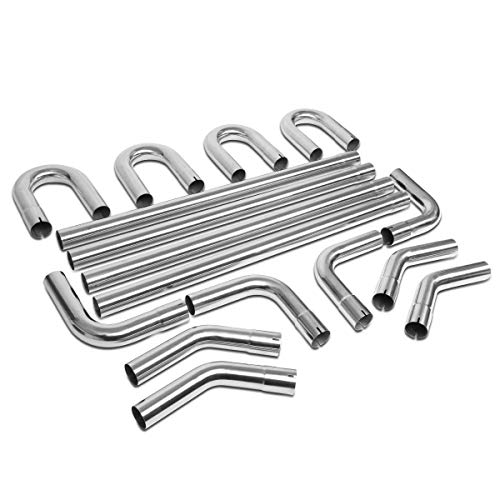
A replacement pipe section may be direct-fit, universal, or custom-fabricated. The new piece must match diameter, bends, hanger locations, and the emissions layout. A direct-fit section is usually the cleanest choice when the old pipe can be unbolted or cut out without disturbing other weak parts.
When welding makes sense
Welding makes sense when the pipe is otherwise solid, the corrosion is local, and the repair will not sit on paper-thin metal. It does not make sense if rust has traveled several inches past the visible hole, if the flex pipe is failing, or if the flange area is already warped.
How to remove a rusted exhaust pipe
Removal usually means supporting the vehicle safely, finding seized fasteners, and deciding where to cut. A rusted exhaust pipe may come out as one piece, but many jobs split into sections because clamps, hangers, and flanges are frozen by corrosion. If a pipe is welded into multiple connected components, removal takes more time and more cutting.
- Secure the vehicle. Park on level ground, let the exhaust cool fully, set the parking brake, and use wheel chocks. Support the car with jack stands before crawling underneath; never rely on a jack alone.
- Wear safety gear. Use heat-resistant gloves and eye protection. Rust flakes, cutting debris, and sharp edges are common around old exhaust parts.
- Inspect all joints. Check welds, clamps, hangers, bends, flanges, and the area near the muffler or catalytic converter. Mark the cut points before loosening anything so you know whether the damage stays in one section.
- Soak seized fasteners. Apply penetrating oil to bolts, clamps, and flange hardware, then allow time for it to work. Rusted fasteners often snap, so expect that some hardware will need replacement.
- Cut where needed. If bolts will not move or the pipe is welded through, cut in a straight, accessible section. Keep the cut far enough from thin rust that the new joint lands on solid metal.
- Remove hangers and slide out. Free the rubber hangers and lower the section carefully. If the pipe resists, recheck for hidden brackets or rusted-over joints before forcing it.
What tools do you need? A basic exhaust job usually calls for jack stands, wheel chocks, penetrating oil, sockets or wrenches, pliers for hangers, a reciprocating saw or cut-off tool, and replacement clamps or gaskets if the system uses them. Welded systems may also need cutting and welding equipment or a shop to finish the repair.
Repair or replace the full exhaust section?
Choose repair when the damage is local, the surrounding metal is strong, and the exhaust still seals at nearby joints. Choose full section replacement when rust reaches the flex pipe, flange, hanger, or more than one spot on the same pipe. If the catalytic converter or muffler is also corroded, the scope often grows beyond a single pipe section.
Direct-fit, universal, and custom options
Direct-fit parts usually cost more up front, but they match the pipe diameter, bends, and hanger positions more closely. Universal pipe can be cheaper, but it often needs cutting, clamping, or welding. Custom fabrication fits unusual layouts or older vehicles, though labor can exceed the cost of a ready-made section.
How emissions rules affect the choice
Local inspection rules can limit which repair method is legal. Any replacement must preserve required emissions equipment where applicable, and visible holes or leaks may fail inspection. Aftermarket changes should not remove a catalytic converter, resonator, or other required component just to save a few dollars.
Basic cost framing
Cost depends on section length, rust spread, and whether the job is clamped, welded, or custom-made. A small clamp-on or welded section repair is usually the lowest-cost path. Direct-fit replacement sits in the middle. Custom fabrication or replacement of a larger exhaust assembly costs more because labor, fitment time, and extra parts add up quickly.
For a budget check, compare three questions: does the pipe have one isolated hole, does the surrounding metal still feel firm, and is the rest of the exhaust system sound? If the answer to any of those is no, a larger repair is usually cheaper than paying for two separate fixes later.
How do I know when to replace a rusted exhaust pipe?

Replace it when rust has gone through the wall, when the pipe has multiple holes or cracks, or when the metal flakes and flexes under light pressure. Surface corrosion alone does not always mean replacement. The decision changes if the leak creates fumes, noise under load, or a failed inspection risk.
How much does it cost to replace a rusted exhaust pipe?
There is no single price. A section repair with clamps or welding is usually cheaper than a full replacement, while direct-fit parts and custom fabrication cost more as labor and fitment complexity rise. If rust has spread into the muffler or catalytic converter area, the bill can jump because the scope is no longer pipe-only.
How to fix a rusted exhaust pipe
Fix it only after you confirm whether the damage is cosmetic or through-wall. Surface rust can be cleaned and monitored, but holes, splits, and flaking seams need a repair section or replacement. Use a temporary patch only to move the vehicle briefly; it is not a durable answer for perforation.
Frequently asked questions
Can a rusted exhaust pipe be repaired instead of replaced?
Yes, if the rust is limited to one small area and the surrounding metal is still solid. A short straight section can often be repaired with a cut-and-replace job or a welded insert. If the pipe is thin around a bend, flange, or flex section, replacement is usually the safer choice.
Is a small rust hole in the exhaust pipe dangerous?
It can be. A small hole may start as a noise and emissions problem, but it becomes more serious if exhaust fumes can reach the cabin or if the hole grows under acceleration. A pinhole near the passenger compartment deserves faster attention than one far from the cabin floor.
Can I drive with a rusted exhaust pipe?
You may be able to drive short distances if the rust is only cosmetic and there is no leak, smell, or loud ticking. Do not keep driving if the pipe has holes, the noise worsens under load, or fumes enter the cabin. A growing exhaust leak is not something to ignore.
What tools do I need to replace an exhaust pipe?
Common tools include jack stands, wheel chocks, a floor jack for lifting, penetrating oil, sockets or wrenches, pliers for hangers, and a saw or cut-off tool for rusted sections. Heat-resistant gloves and eye protection are smart basics. Some jobs also need clamps, gaskets, or welding gear.
How much does it cost to replace a rusted exhaust pipe: costs vary by vehicle, pipe?
Costs vary by vehicle, pipe location, and repair style. A clamp-on repair is usually the cheapest, a direct-fit replacement lands in the middle, and custom fabrication costs more. If the rust has spread into the muffler or converter area, the repair can move from a single pipe to a larger assembly.