Do Exhaust Valves Improve Performance on Street Cars?
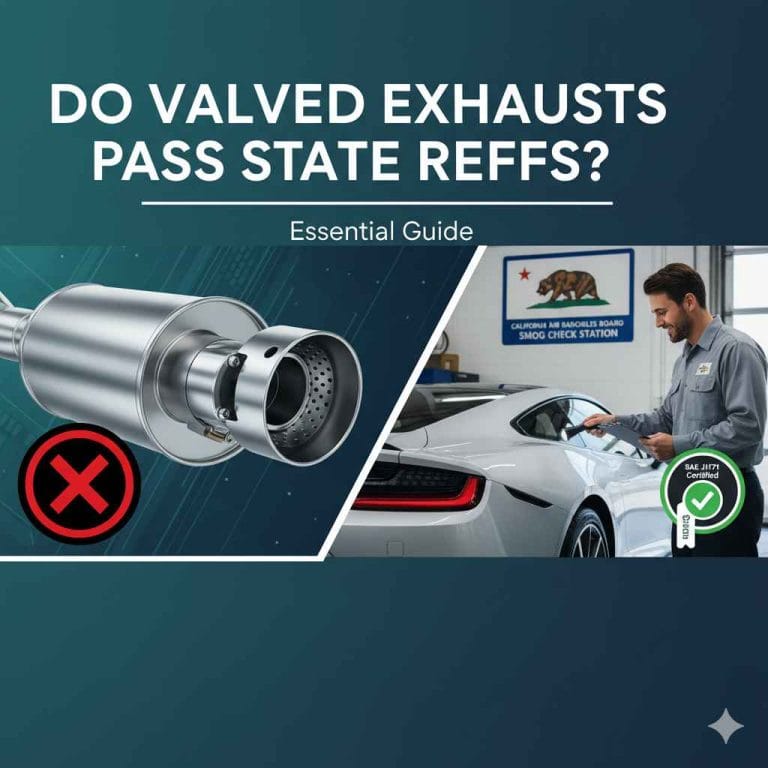
Exhaust valves can help a street car, but the main benefit is usually quieter cruising and louder exhaust on demand. Measurable power gains are often small unless the factory system is restrictive. Choose poorly and you may pay for noise, drone, fitment, or reliability problems without a clear performance gain. This guide explains when they are worth it, what they change, and what to buy.
When valves are not worth paying extra: if the stock system already flows well, if the catalytic converter is the real choke point, if the piping is oversized for the engine, if the car is mostly a commuter, or if you only want a mild permanent tone change, a simpler exhaust upgrade is usually the better value.
How exhaust valves balance sound control and flow

- 3-button remote for full open/close/partial modes
- Quieter cruise mode vs. aggressive open flow
- Corrosion-resistant 304 stainless TIG-welded build
Exhaust valves are electronically controlled actuators that open or close part of the exhaust path. On a street car, that can let the system switch between quiet mode and sport mode, often using drive mode, rpm, or gear logic. The main day-to-day gain is sound control, with flow changes that depend on the rest of the exhaust.
How valve-controlled exhaust flow works
Exhaust systems can include exhaust valves as a component, and the valves are located at the end of the exhaust system in many valved setups. A sound kit can control exhaust valves from the cockpit. One setup can switch between quiet and sportier sound modes, and one Akrapovič program manages valves by rpm, gear, and car mode.
That control matters because the valve changes the path gases take. Open, it can reduce restriction in the active branch. Closed, it routes flow through the quieter path, usually through more muffling. In practical terms, the valve is a flow-control tool first and a performance tool second.
Quiet mode, sport mode, and drive-mode control
Quiet mode is useful for commuting, early starts, and places with strict noise enforcement. Sport mode gives a louder exhaust note and, in some cases, a slightly freer path for exhaust gases. The important point is that the driver gets choice; the horsepower change is often secondary.
| Engine type | Driving priority | Expected exhaust-valve benefit |
|---|---|---|
| NA | Quiet commute | Sound-only |
| NA | Mixed use | Modest flow help |
| NA | Track days | Modest flow help |
| Turbo | Quiet commute | Sound-only |
| Turbo | Mixed use | Modest flow help |
| Turbo | Track days | Modest flow help |
Valued scenarios where the extra cost often makes sense
-
Check your real driving pattern.
If you spend most of the week in quiet traffic, the valve’s best value may be low-noise cruising with an aggressive mode ready for weekend use. That is useful even when power gains are small. -
Match the system to the engine.
Naturally aspirated and turbocharged street cars do not respond the same way. A valve can help a restrictive setup breathe better, but the effect depends on pipe diameter, muffler design, and where the valve sits in the exhaust path. -
Decide how much sound control matters.
If you want one car to stay civil near home and still sound sharp at higher load, a valved exhaust system does that better than a fixed loud setup. The value is often convenience, not peak numbers.
Do exhaust valves add horsepower?
They may add horsepower, though often by less than buyers expect. An exhaust valve can help if it reduces a real restriction in the system, yet many street cars see only small gains because backpressure, pipe diameter, exhaust gas velocity, and the engine operating range all interact. On many cars, the bigger change is sound, not peak horsepower.
When flow changes can help
Backpressure is a flow restriction concept, but it is not the only determinant of power. Less backpressure is not automatically better. If the system is sized well for the engine’s operating range, a valve may mainly give you mode control. If the system is too restrictive, a valve can help flow efficiency in some cases.
Pipe diameter matters here. Pipe diameter that is too large can underperform at street rpm because exhaust gas velocity tends to drop. Too small can choke flow at higher load. A valve cannot fix a poor full-system layout, and it cannot undo a restriction that sits upstream of the rear section.
Why sound changes are usually more obvious than power gains
A driver hears the difference right away. A small horsepower change can be hard to feel in daily use, especially if the car already has a decent cat-back or a factory performance exhaust. That is why many valved setups feel more dramatic than the numbers suggest.
Throttle response can feel different too, but that change is often smaller than the sound change. If the system opens and the engine breathes a bit better in a certain rpm band, the car may feel cleaner at part throttle or on a pull. That is not the same as a large power jump.
Failure cases to watch
A common first-timer mistake is buying a valved exhaust for a car that already has the main restriction upstream. If the catalytic converter, manifold, or header is the bottleneck, the valve at the rear may change tone more than output. The owner still pays for the mechanism.
Another bad fit is an oversized system on a low- and mid-range street car. If pipe diameter is too large for the engine operating range, low-end torque can feel soft and the car may sound louder without feeling stronger.
When a valved exhaust is worth it
For daily-driven cars with mixed use, the best case is usually a driver who wants a quiet commute and a louder weekend mode. Turbocharged setups can also benefit when the rest of the exhaust is close to ideal and the valve supports the flow path instead of fighting it. Track-day use adds value if the driver wants quick sound control without a full swap.
Say your turbo sedan uses a rear valve near the muffler, runs a 2.5-inch system, and spends weekdays in quiet mode. Open the valve for a track day, and the car may feel a little freer above the midrange while staying civil the rest of the week. That is a practical use case.
When exhaust valves are not worth the extra cost
If you want a quiet commuter with no performance goal, a valve is often low-value. If the car never leaves street use, the extra hardware may buy noise control you rarely use. In that case, a simpler cat-back or muffler change can cover the main need at lower complexity.
They are also a weak buy when the exhaust is already poorly matched. Oversized piping, a bad muffler choice, or a restrictive catalytic converter can limit the system enough that the valve has little to do. Paying extra for movable flaps in a bad layout does not fix the layout.
-
Check the factory bottleneck first.
Look at where the system is likely most restricted: catalytic converter, muffler, resonator, or pipe size. If the valve sits after the main choke point, expect sound control first and power gains second. -
Match diameter to use.
Choose pipe diameter for the engine operating range you actually use, not for peak dyno bragging. Street cars spend much of their time in low- and mid-range rpm, so that part of the curve matters most. -
Pick the simplest fix that meets the goal.
If you only want less cabin noise, a different muffler or resonator may be enough. If you want two personalities in one system, a valved exhaust is the stronger choice.
Valved exhaust vs cat-back
A cat-back exhaust replaces components downstream of the catalytic converters, so the catalytic converters stay in place. That makes it a common street-car upgrade baseline. A valved system adds dual-mode operation, usually with the valve near the rear of the exhaust, so you get sound control from the cockpit along with the possibility of modest flow help.
What a cat-back changes
A cat-back can change tone, reduce restriction, and alter throttle feel if the stock rear section was a bottleneck. It is also simpler. There is less actuator hardware, fewer moving parts, and usually less cost than a valved setup.
Mufflers and silencers reduce sound output, but they can disturb smooth gas flow. Catalytic converters also sit in the exhaust path and influence both emissions and restriction. A cat-back keeps the emissions hardware in place, which is why it is often the cleaner street choice.
When a simpler exhaust upgrade makes more sense
If your main goal is a bit more sound and a modest change in flow, a cat-back is often enough. If your goal is mostly quieter cruising, a better muffler or resonator may do more for the money. If you want on-demand noise control, the valve earns its place.
For many street cars, the decision comes down to whether you care about the second personality. If you do not need quiet mode and sport mode in the same car, the extra cost of valves is harder to justify.
Decision guide for common street-car cases
- Choose a valved exhaust when you want quiet commuting and loud weekend use from one system.
- Choose a cat-back when you want a straightforward street upgrade with fewer moving parts.
- Choose muffler or resonator changes when sound control matters more than peak flow.
- Skip the valve system when the car already has a restrictive catalytic converter or a badly matched pipe size.
Frequently asked questions
Do exhaust valves improve performance on street cars?
Sometimes, but usually only modestly. On a street car, the strongest benefit is often controllable sound rather than clear power. If the rest of the exhaust is already well matched, gains may be small. If the stock system is restrictive, a valve can help flow in certain operating ranges.
Do active exhaust valves add horsepower?
They can, but not in a guaranteed way. Horsepower gains depend on the full exhaust path, the engine operating range, and whether the valve removes a real restriction. Many street cars may see little or no measurable gain, especially if the catalytic converter or muffler remains the main bottleneck.
Are valved exhaust systems worth it for a daily driver?
They are worth it when you want quiet city use and louder weekend driving from the same car. If your commute is long, your neighborhood is noise-sensitive, or you drive early and late, the cockpit control can matter. If you only want a mild tone change, a simpler exhaust upgrade may be enough.
Do exhaust valves reduce backpressure?
They can reduce restriction when open, but less backpressure is not always the same as more power. Pipe diameter, exhaust gas velocity, and where the valve sits matter just as much. A valve near the rear of the system may mainly change sound if the front half is already the limiting section.
Will a valved exhaust hurt low-end torque?
It can if the system is oversized or poorly matched to the engine operating range. Large pipes can slow exhaust gas velocity at low rpm, which may soften response. A well-sized valved system should not be chosen to chase loudness alone; layout and diameter still decide how the car feels.
Can exhaust valves improve throttle response?
They may, but the change is often smaller than the sound change. If the open path helps the engine breathe better in a certain range, the car can feel a little more eager. That sensation is most likely when the factory exhaust is restrictive and the rest of the system is properly sized.