
How to Clean a Diesel Exhaust System Safely
Clean a diesel exhaust system by fault: use a drive-cycle regeneration for soot, warm water for DEF crystals, and a shop for ash or hardware faults. Bad cleaning can ruin the DPF, sensors, or catalyst. This guide covers safe DIY steps and the stop points for service.
Do not clean if…
- the DPF housing is cracked, melted, or rattling internally
- the truck is burning oil or losing coolant
- a sensor, heater, pump, doser, or wiring fault keeps returning
- DEF residue is inside connectors, injectors, or sensor openings
- the scan tool shows a fault that points to a blocked hose or failed part rather than soot
What counts as diesel exhaust buildup?

- Performs supported DPF regeneration
- Reads codes and live data
- Works with compatible 12V/24V trucks
Diesel exhaust buildup is not one thing. Soot, ash, and dried DEF need different fixes, and only one of them may respond to a regeneration. If the truck shows diesel exhaust problems such as a check engine light, worse fuel economy, or more exhaust odor, start by identifying which part of the system is restricted and whether the fault is internal or external.
Soot, ash, and DEF crystals
Soot is carbon from combustion and can often be burned off during passive or active regeneration. Ash is the noncombustible residue left from oil additives and engine wear, so it can stay in the DPF and gradually reduce capacity. DEF residue dries into hard crystals after a spill or leak and is a chemical contamination problem, not simple dirt.
Picture a truck that keeps tripping a DPF warning after short trips. Short, low-temperature driving loads soot faster because the filter does not stay hot long enough to burn it off. If live data shows rising soot load and the filter has not reached regeneration temperature, the problem may be soot accumulation. If the pressure reading stays high after a regen and the truck has oil-use history, ash loading or damage is more likely.
Which symptoms point to flow restriction versus a sensor fault?
Flow restriction usually shows up as high backpressure, repeated regeneration attempts, poor response under load, and warning lights that return after clearing. A sensor fault can mimic restriction, but the scan tool may show implausible readings, no change in differential pressure, or a code for a blocked hose, open circuit, or failed temperature sensor.
Why external grime is not the same as internal blockage
Grime on pipes, clamps, or the outside of the canisters can be cleaned. Internal restriction is different. A shiny tailpipe or a wiped-down housing does not remove ash from a DPF, heat damage from a DOC, or a cracked substrate. External cleaning helps inspection, but it does not fix flow inside the exhaust.
Scan the system before you clean
Before any cleaning, confirm the fault with a scan tool. Read stored and pending codes, check live data, and compare pre- and post-DPF differential pressure. Also inspect the sensor hoses and wiring. If the sensors lie or the hoses are blocked, cleaning the filter first can waste time and can hide the real failure.
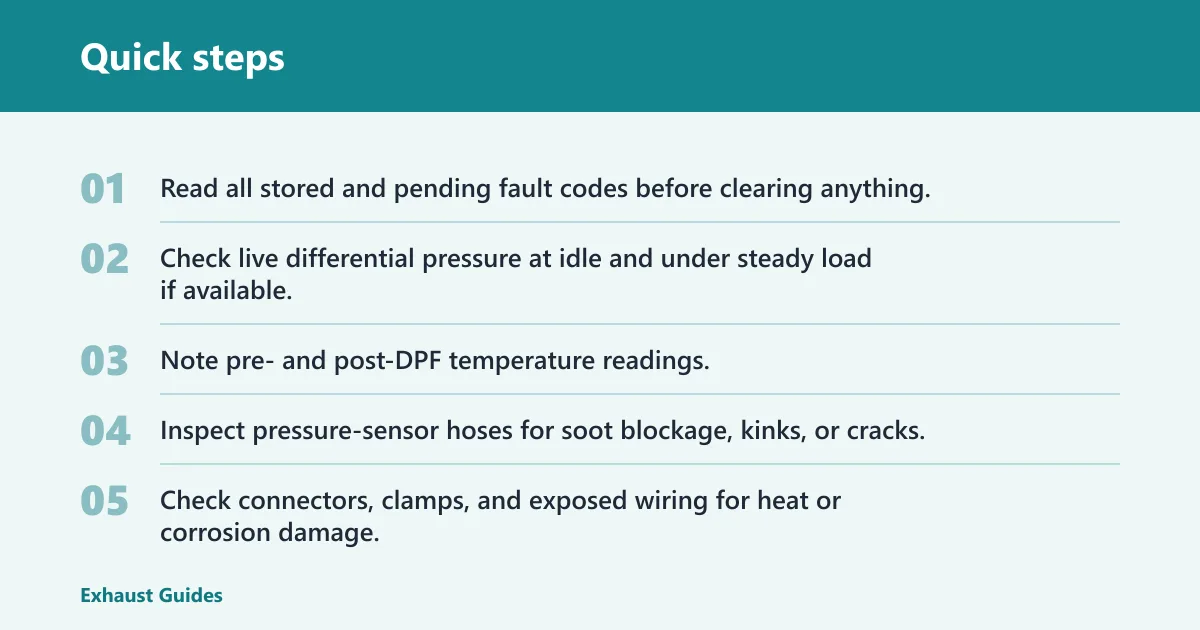
Pre-clean scan checklist
- Read all stored and pending fault codes before clearing anything.
- Check live differential pressure at idle and under steady load if available.
- Note pre- and post-DPF temperature readings.
- Inspect pressure-sensor hoses for soot blockage, kinks, or cracks.
- Check connectors, clamps, and exposed wiring for heat or corrosion damage.
- Only then decide whether cleaning is safe.
Check fault codes and live data
Look for codes tied to DPF loading, pressure sensors, exhaust temperature sensors, SCR dosing, or DEF quality. Then view live data with the engine at idle and, if the scan tool allows, during a steady raised idle or road test. A DPF that is truly restricted should show a pattern that matches the warning, not random numbers.
Read pre- and post-DPF differential pressure
A healthy system usually shows a small pressure difference at idle and a larger one under load. If the pre- and post-DPF readings do not track with engine speed, the sensor tubes may be plugged, kinked, or cracked. That check matters before any cleaning because a blocked hose can look like a blocked filter.
Check sensor hose blockage and wiring damage
Inspect the pressure-sensor hoses for soot plugs, melted sections, and loose fittings. Then inspect the exhaust temperature sensor wiring and connectors for heat damage, chafing, or corrosion. Do not pull on the wires, and do not spray cleaner into connectors. If the wiring is damaged, fix that fault first.
- Read all fault codes before clearing anything.
- Record live differential pressure at idle.
- Note pre- and post-DPF temperature readings.
- Inspect pressure-sensor hoses for soot blockage.
- Check connectors, clamps, and exposed wiring.
- Only then decide whether cleaning is safe.
DPF cleaning: what is safe at home?
DPF cleaning is safe at home only when the problem is soot loading and the filter is still physically intact. Start with the least risky option: confirm the truck can complete a passive or active regeneration. If ash loading, melted substrate, or cracked housing is present, home cleaning will not restore flow and may make the problem worse.
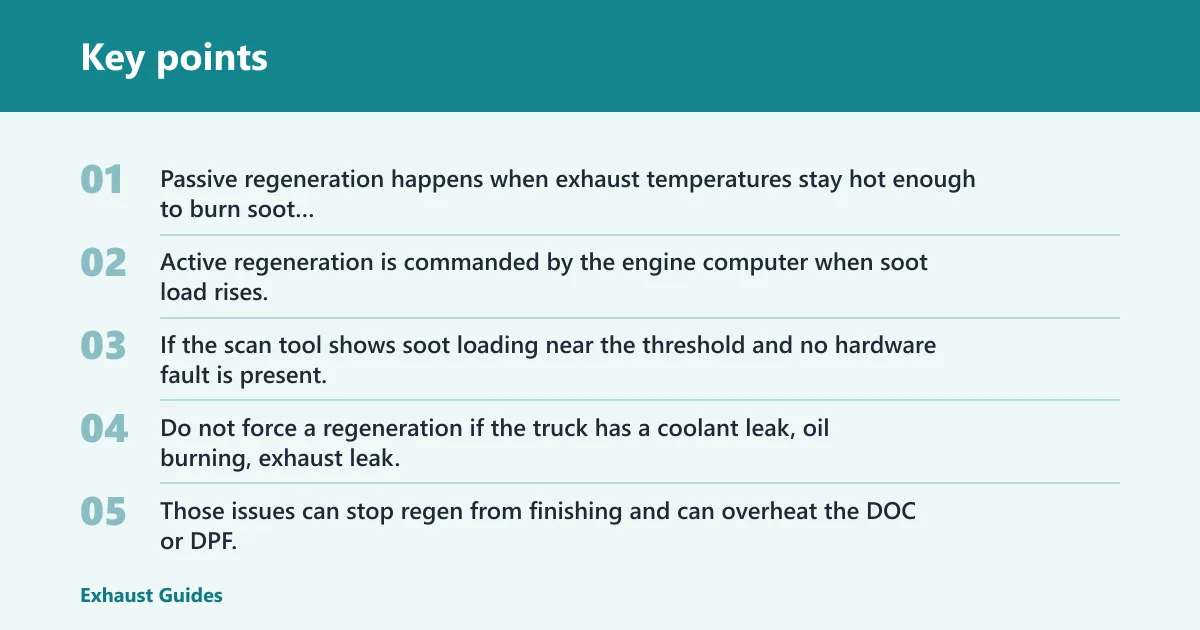
When passive or active regeneration may be enough
Passive regeneration happens when exhaust temperatures stay hot enough to burn soot during normal driving. Active regeneration is commanded by the engine computer when soot load rises. If the scan tool shows soot loading near the threshold and no hardware fault is present, a proper drive cycle or commanded regen may clear the issue.
Do not force a regeneration if the truck has a coolant leak, oil burning, exhaust leak, damaged sensor, or blocked sensor tube. Those issues can stop regen from finishing and can overheat the DOC or DPF. A regen should solve soot, not hide a cause that keeps reloading the system.
When soot loading is too high for DIY cleaning
If the filter is heavily loaded, repeated regen attempts fail, or the pressure reading stays high after the drive cycle, the problem may be too severe for home cleaning. That is especially true if the engine has been running rich, consuming oil, or pulling in unmetered air. At that point, the next step is shop diagnostics, not more driving.
When ash loading means cleaning will not restore flow
Ash does not burn out in a regeneration. It builds over time from oil additives, engine wear, and contamination. If the DPF is ash-loaded, the filter may need professional off-vehicle cleaning or replacement, depending on the model and the measured restriction. No spray cleaner can turn ash back into soot.
Say your scan tool shows a clean-looking soot load after a regen, but the differential pressure stays high at idle and climbs too fast on a short road test. That pattern points away from soot and toward ash, a blocked pressure tube, or a damaged filter. External washing will not correct that.
When the filter must be removed for shop service
Removal belongs to shop service when the DPF is cracked, melted, or contaminated with coolant or oil. Internal damage can also show up as a rattling substrate, a warped canister, or pressure readings that do not make sense after the hoses and sensors check out. A shop can test flow, clean off-vehicle, or replace the unit.
DOC, exhaust manifold, and piping checks
The diesel oxidation catalyst sits upstream of the DPF, so damage there can create heat, soot, or plug-up problems that look like a DPF fault. The exhaust manifold and piping can do the same when they leak, crack, or blow soot ahead of the aftertreatment hardware. Check the DOC, manifold, pipes, muffler, clamps, and gaskets for soot streaks, rust, and cracks. Outside cleaning helps inspection, but it cannot undo internal melting or blockage.
Inspect for melting, plugging, soot streaks, and heat cracks
Look for discolored housings, warped seams, rattles inside the canister, and soot trails at joints. Those signs can point to a cracked pipe, a leaking gasket, or a damaged catalyst. A DOC can also plug from oil ash or coolant contamination, and external cleaning will not fix that internal restriction.
Check clamps, gaskets, and joints for leaks
Loose clamps and failed gaskets can leak exhaust before the gases reach the sensors or aftertreatment devices. That leak changes temperature and pressure readings and can trigger regen problems. Tighten or replace failed hardware only if the part is sound. Do not clamp down on rust that has already thinned the metal.
Why outside cleaning does not solve inside restriction
Exterior cleaning can remove road grime, soot streaks, and dried residue from the shell. It cannot restore a clogged substrate, repair a melted DOC, or fix a sensor that reads wrong. If the restriction is internal, the cure is diagnosis and service, not a stronger cleaner.
DEF system cleanup and crystal removal
DEF cleanup is generally for dried residue on safe external surfaces, not for soaking sensors or flushing the doser. DEF is a 32.5% urea and 67.5% deionized water solution. It crystallizes when spilled and dried, can freeze near 12°F / -11°C, and should be cleaned before it reaches connectors, injectors, or painted parts. (Wikipedia)
What to do when dried DEF is on external parts
Use warm water on external metal or plastic parts only, then wipe with a soft cloth or a plastic trim-safe brush. A small amount of non-chlorinated degreaser can help on the surrounding grime, but rinse it off and keep it away from electrical parts. Avoid harsh solvents and do not scrape crystals into sensors or openings.
Where to clean carefully around sensors and injectors
Clean around the DEF injector, dosing lines, and nearby sensors with care, using only enough moisture to lift residue from the outside. Do not spray into the injector, electrical plugs, or exposed sensor ports. If a sensor connector has visible white crust, inspect for seepage or leak paths before cleaning again.
Freeze behavior, spill cleanup, and surface compatibility
DEF can freeze and thaw without being ruined, but spill residue still needs cleanup after it dries. It can leave white crust on painted surfaces, aluminum, and steel if left in place. Wipe spills soon, then rinse the area with warm water. If a stain sits long enough to attack the finish, check the surface for corrosion or discoloration.
Reset or relearn steps after service
After DEF system service, some trucks need a reset, relearn, or dosing confirmation through the scan tool. Follow the service menu for the specific vehicle. If the system still reports quality, dosing, or pressure faults after cleaning, stop and diagnose the injector, heater, pump, or tank components rather than forcing more cleaner through them.
Diesel exhaust-safe cleaning tools and what to avoid
Use tools that remove residue without scratching sensors, housing surfaces, or exhaust joints. Keep the job controlled and dry enough to avoid pushing contamination into electrical or flow-sensitive parts.
Safe tools and supplies
Safe items include nitrile gloves, eye protection, a soft nylon brush, low-lint cloths, warm water, plastic picks, and a scan tool. These tools help lift residue, protect skin and eyes, and confirm whether the issue is soot, ash, DEF crystals, or a hardware fault before more cleaning is attempted.
Unsafe tools and chemicals to avoid
Avoid wire brushes, metal scrapers, pressure washers pointed at sensors or connectors, brake cleaner, chlorinated solvents, strong acids, and abrasive pads. Also avoid compressed air aimed into sensor ports, open dosing hardware, or cracked hoses. Those methods can drive contamination deeper, damage seals, or short electrical parts.
Diesel exhaust cleaning decision table
This table matches the symptom to the safest next step. Use it as a stop-or-continue guide, not as a shortcut around diagnosis. If the symptom fits more than one row, choose the more cautious path and confirm with a scan tool before cleaning anything.
| Symptom | Likely cause | Safe DIY action | Shop-only action | Stop-now red flags |
|---|---|---|---|---|
| DPF warning after short trips | Soot loading from low exhaust temperature | Check codes, confirm live pressure data, complete a proper regen if allowed | Forced regen with shop equipment if the vehicle will not complete one on its own | Coolant loss, oil burning, failed regen, high pressure that does not drop |
| Pressure stays high after regen | Ash loading, blocked hose, or damaged DPF | Inspect sensor hoses and fittings for blockage | Off-vehicle cleaning, flow test, or replacement | Cracked housing, rattling substrate, melted canister |
| White crust near DEF components | DEF crystals from spill or seepage | Warm water on external parts only; wipe and inspect | Injector, pump, heater, or tank service if the residue returns | Wet connector, damaged wiring, repeated dosing fault |
| Strong exhaust smell and soot streaks at a joint | Clamp, gasket, or pipe leak | Inspect joints and clean the outside for visibility | Leak repair, cracked pipe replacement, or re-sealing | Heat crack, severe rust, loose mounting, soot blowout |
| Temperature or pressure code with no clear restriction | Sensor failure or blocked hose | Check connectors and hose routing | Sensor testing and replacement, then relearn if required | Melted wiring, broken connector, multiple related codes |
| DOC runs hot, plugs again, or shows melt signs | Oil ash, coolant contamination, or heat damage | Stop cleaning attempts and inspect the upstream cause | DOC replacement and root-cause diagnosis | Melted catalyst, internal collapse, repeated overheating |
Frequently asked questions
How to clean exhaust tips
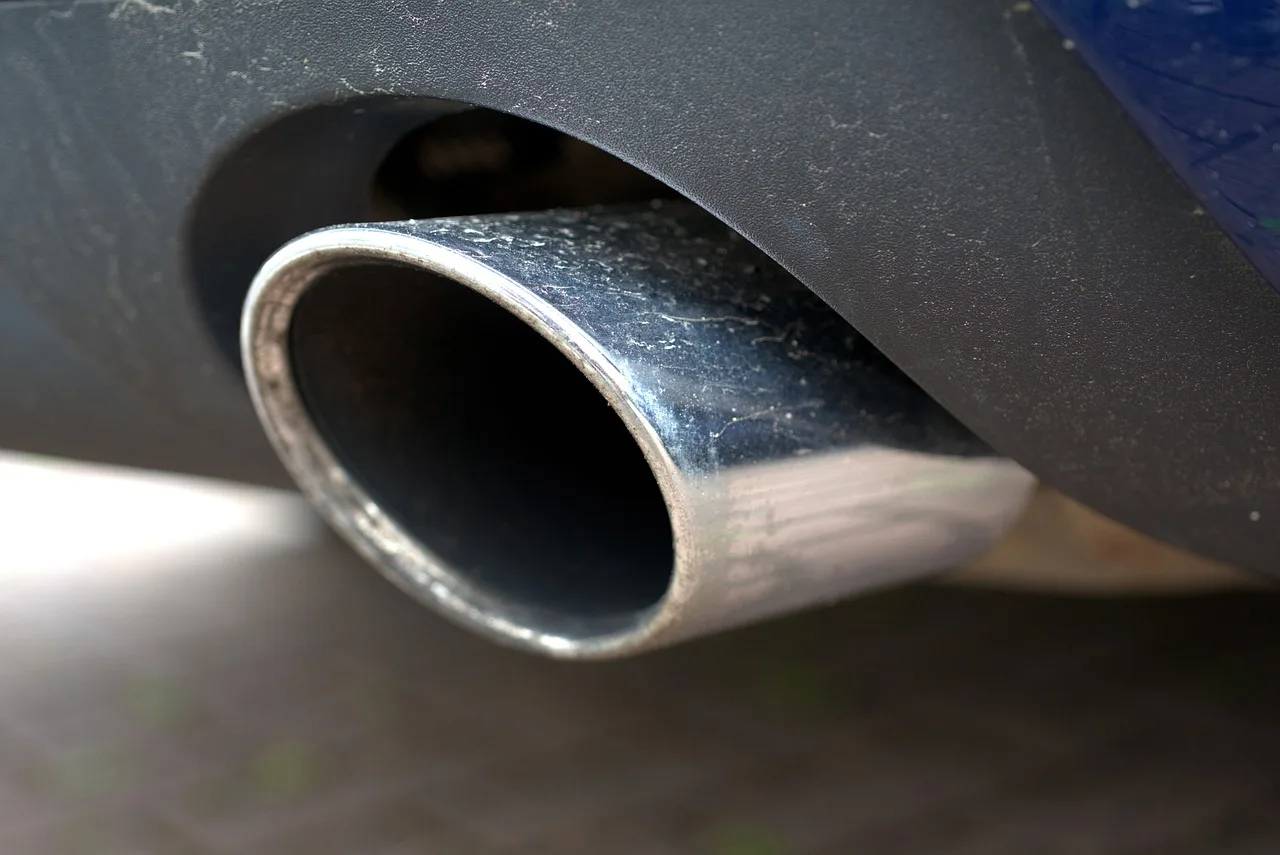
Exhaust tips can be cleaned with a mild exterior cleaner and a soft brush, then wiped dry. That only improves the visible finish. It does not treat DPF loading, catalyst damage, or DEF residue deeper in the system. If the tips are black again quickly, check for soot leaks upstream.
How to clean a diesel engine
Keep water and cleaner away from sensors, connectors, and intake openings. For the exhaust side, focus on leaks, soot trails, and contamination around the DOC, DPF, and SCR hardware. If the engine is burning oil or leaking coolant, fix that first because those faults can reload the aftertreatment system.
How to clean up diesel fuel
Diesel fuel spill cleanup is separate from exhaust cleaning. Contain the spill, ventilate the area, and use absorbent material approved for fuel. Keep fuel off exhaust parts, since hot surfaces can create a fire risk. If fuel reached wiring or sensors, inspect for swelling, softening, or damaged insulation.