Do Exhaust Gaskets Need Sealant?
Use exhaust-gasket sealant only if the gasket maker or service manual specifies it, or if the joint design calls for it. Wrong sealant use can cause leaks, blown gaskets, stuck hardware, and a tailpipe smell that sends you back under the car. This guide explains which exhaust joints may call for sealant, which should stay dry, and how to decide before you tighten the fasteners.
Do exhaust gaskets need sealant?
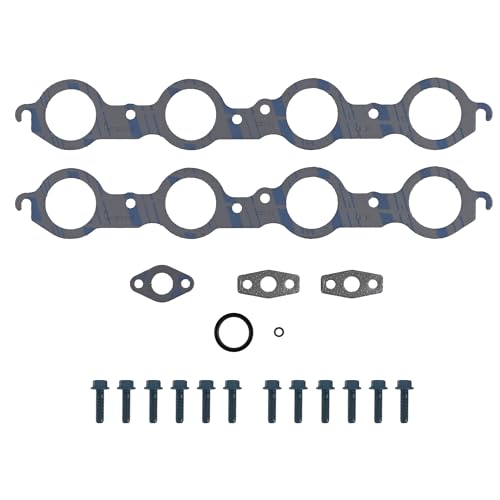


Usually no. The default rule is a dry install unless the gasket maker or service instructions call for sealant, or the joint design has a specific exception. Exhaust gaskets see high heat, so the seal choice has to match the gasket material, the joint shape, and the condition of the mating surfaces.
That matters most at the exhaust manifold and at flange joints. Ford-specific sealing advice recommends a high-temp exhaust sealant and a torque wrench, but that is not a universal rule for every vehicle. The Ford guide also says to remove old gaskets carefully before installing new ones and to clean mounting surfaces with a wire brush and degreaser.
Exhaust gasket decision matrix
| Exhaust joint type | Gasket material | Surface condition | Sealant recommendation |
|---|---|---|---|
| Flat flange | Metal | Clean, flat, and undamaged | Dry install, no sealant; the joint should clamp evenly and stay within spec. |
| Flat flange | Graphite | Clean, flat, minor machining marks | Usually dry; sealant only if the OEM instructions call for it, since graphite compresses to fill small irregularities. |
| Flat flange | Composite | Clean, flat, normal wear | Usually dry; do not add sealant just out of habit because the gasket is meant to do the sealing work. |
| Donut gasket joint | Donut / ring style | Mating cones or seats are clean and aligned | Dry install in most cases; sealant can interfere with crush and alignment. |
| Tapered joint | Conical metal gasket | Matched taper, no pits or burrs | Dry install; the taper must seat metal-to-metal as designed. |
| Exhaust manifold | Metal | Clean but heat-stressed surface | Maybe, but only if OEM instructions allow it; exhaust manifolds are picky about sealer. |
| Old or worn flange | Any gasket type | Minor pitting, light unevenness | Sealant may be allowed as a thin aid only if the product and manual approve it; it will not fix a warped flange. |
| Old or worn flange | Any gasket type | Warped, cracked, or badly corroded | If the flange is warped, cracked, or heavily corroded, repair, machine, or replace it first; sealant cannot correct a bad mating surface. |
Which exhaust joints call for sealant?
Joint shape and load path decide most of it. An exhaust manifold sees much more heat than a rear flange, so the seal choice depends on the engine, the gasket, and the joint design. Flat flanges, donut joints, and tapered joints each seal in a different way, and each one reacts differently to added sealant.
Exhaust manifold joints
Can you use sealant on an exhaust manifold gasket? Sometimes, but only when the OEM service instructions or the gasket maker says to do it. High heat changes the rules fast. Import Auto Supply notes that exhaust manifolds are picky about sealer, and that is a good reason to treat generic advice with caution.
Metal, graphite, and composite gaskets behave differently at exhaust temperatures. Metal gaskets usually want a clean, flat mating surface and even clamp load. Graphite can compress to fill small imperfections, while composite gaskets depend on correct torque and surface prep to avoid blowout or seepage.
Exhaust flange joints
Flat flanges are the most common place for a dry install. If the flange is clean, flat, and within tolerance, sealant is usually unnecessary. Some exhaust flanges can be machined flat and assembled without a gasket, and some exhaust headpipes use clamps with no gaskets at all.
Donut and tapered joints are different. They depend on shape and crush, so sealant can get in the way rather than help. Import Auto Supply also notes that some seals are directional, which is another reason to match the part and orientation before tightening anything down.
Older applications and factory exceptions
Older vehicles are often the ones that make people reach for sealant out of habit. That habit causes trouble. Some cork and paper gaskets can dry out and shrink, but that fact alone does not mean an exhaust joint wants sealant. It means the joint needs the correct part, the correct surface condition, and the correct clamp load.
Suppose a 1998 truck has a corroded front pipe flange that has been resurfaced but still shows light pitting. A thin, approved exhaust sealant might be part of the repair if the manual allows it. If the flange is warped or cracked, sealant is only a bandage, and a bandage will not hold an exhaust joint under heat and vibration.
Can you install an exhaust gasket dry?
Yes, and that is the normal choice for many exhaust gaskets. A dry install works best on clean, flat mating surfaces where the gasket is designed to do the sealing. Dry installation is common for metal exhaust gaskets because they rely on controlled clamping, not a bead of product, to seal the joint.
Why dry is common for metal gaskets
Metal gaskets tolerate heat well, but they are sensitive to flange condition and torque. If the surface is flat and the fasteners clamp evenly, dry assembly reduces the chance of squeeze-out and keeps the gasket seated as intended. That is one reason OEM service instructions often specify torque values and assembly order rather than extra sealant.
Dry install still depends on torque and alignment
A dry gasket is not a free pass. Tighten the fasteners to the specified torque with a torque wrench. Under-tightening leaves a path for soot and noise; over-tightening can distort the flange or crush the gasket unevenly. That sensitivity is why exhaust sealing problems often come back even after a new gasket goes in.
What sealant is safe for exhaust heat?
Use a high-temperature exhaust sealant only when the product and the service instructions allow it. The sealant must survive exhaust heat and should be applied in a thin layer only where the design calls for it. This is a narrow use case, not a universal fix for exhaust leaks.
Why generic RTV is a poor default
Generic RTV is not the first choice for most exhaust gaskets. Auto Passionate says RTV should only be applied to corners or stepped casting areas, which is a limited use case. On exhaust joints, too much product can squeeze into the stream, complicate assembly, and still leave a leak if the mating surfaces are damaged.
Thin application only
If sealant is approved, use the thinnest practical layer. More is not better. Excess can squeeze outward, gather around the port, and create cleanup work later. It can also mask a bad fit long enough to pass a quick startup check, then fail once the joint reaches full heat.
Prep the mating surfaces first
Should exhaust gasket surfaces be cleaned before installation? Yes. Clean mating surfaces are nonnegotiable. They must be clean, flat, and free of debris, because damage or irregularity can cause leaks even with a new gasket in place.
- Let the exhaust cool fully before touching the joint.
- Remove the old gasket carefully.
- Use a gasket scraper to lift residue without gouging the metal.
- Finish with a wire brush and degreaser where the service instructions call for it.
- Check the flange for pitting, warping, cracks, and burrs.
- Align the new gasket exactly as specified.
- Tighten the fasteners with a torque wrench to specification.
A common first-timer mistake is assuming a fresh gasket can make up for a rough flange. It cannot. A scraper helps remove old gasket material, but it should be used carefully so the mating surface stays flat. If the surface is scratched or uneven, sealant will not erase that damage.
Why does my exhaust gasket keep leaking after replacement?
Repeated leaks usually point to the joint, not the gasket alone. Common causes include warped flanges, pitted mating surfaces, wrong gasket style, missing torque, and reusing hardware that no longer holds clamp load. Sealant often gets blamed because it is visible, but the real issue is usually fit or surface condition.
Check the joint design first. A flat flange wants even compression. A donut or tapered joint wants the correct shape and seating depth. If the gasket is the wrong material for the temperature or the flange is damaged, the leak will return no matter how much sealant you add.
Picture a small four-cylinder exhaust manifold with a fresh graphite gasket and a flange that looks clean at a glance but has a shallow ridge near one bolt hole. The joint may seal briefly, then leak again after a heat cycle because the clamp load is uneven. In that case, the fix is surface repair or part replacement, not more sealant.
Frequently asked questions
Can you use sealant on an exhaust manifold gasket?
Sometimes, but only with clear approval from the gasket maker or OEM service instructions. Exhaust manifolds run hot and are picky about sealer. If the surface is warped, pitted, or cracked, sealant will not cure the problem. Repair the mating surface first or replace the part.
What happens if you put too much sealant on an exhaust gasket?
Excess sealant can squeeze into the exhaust stream, make assembly messy, and interfere with how the gasket seats. It can also hide a fit problem until the joint heats up and fails again. Thin application is the rule, and only where the product is approved for that joint.
Should exhaust gasket surfaces be cleaned before installation?
Yes. The mating surfaces must be clean, flat, and free of debris. Ford guidance says to remove old gaskets carefully and clean mounting surfaces with a wire brush and degreaser. A gasket scraper helps remove residue, but it should not scratch the flange or manifold.
What kind of sealant is safe for exhaust heat?
Use a high-temperature exhaust sealant only if the product is meant for that joint and the instructions allow it. Do not treat generic RTV as a default. The same source notes RTV should only be applied to corners or stepped casting areas, which is far narrower than most exhaust joints.
Can an exhaust gasket be installed dry?
Yes. A dry install is normal for many exhaust gaskets, especially metal ones on clean, flat mating surfaces. Dry assembly still depends on correct alignment, even torque, and the right gasket for the vehicle. If the flange is damaged, dry or sealed, the joint still needs repair.
Do metal exhaust gaskets need sealant?
Usually no. Metal exhaust gaskets are commonly installed dry because they rely on flat surfaces and correct clamp load. Sealant is not a substitute for proper torque or good surface condition. If the OEM manual calls for sealant on a specific engine or flange, follow that instruction.
Do head gaskets need sealant?
Do not carry exhaust advice over to head gaskets. Head gasket sealing rules are different, and many head gaskets are designed to go in dry unless the OEM specifies otherwise. This article is about exhaust joints only, where heat, flange style, and gasket material drive the decision.
Gasket maker vs sealant: which should you choose?
Choose the product the manual or gasket maker specifies for the exact joint. For exhaust work, that often means a high-temperature exhaust sealant in a thin layer, or no sealant at all. The label matters less than the approved use case, because the wrong chemistry can create more problems than it solves.