
How to Find a Leaking Exhaust Manifold
A common way to find a leaking exhaust manifold is to listen for a cold-start tick, then inspect the gasket line, casting, and studs with the engine idling; a smoke test can help pinpoint the leak when used with proper equipment, and soapy water works only on cool, accessible joints. If a leak is missed, it can crack the manifold, damage nearby wiring, trigger oxygen-sensor codes, and pull exhaust into the cabin. This guide walks you through a step-by-step diagnosis that separates gasket leaks, cracked castings, and broken hardware before you replace parts.
Exhaust manifold leak symptoms


A leaking manifold often makes a ticking, hissing, popping, or rumbling sound. Exhaust odor inside the vehicle, a check engine warning light, reduced fuel mileage, and stuttering or lagging point in the same direction. The key is to match the symptom to the manifold area, then confirm it with an inspection instead of guessing.
What ticking, hissing, popping, and rumbling usually mean
Sharp, rhythmic ticking or tapping near the engine bay usually points to manifold or gasket trouble. Hissing often means gas is escaping through a small opening, while popping can happen when pulses move through a leak and hit nearby metal. Rumbling is less specific, but it still belongs on the manifold short list.
Exhaust manifold leaks are easy to confuse with other noises. A loose heat shield can rattle. An intake vacuum leak can hiss. An accessory belt or pulley can make a light tick that changes with engine speed. That is why the sound alone is a clue, not a verdict.
How burning smell, exhaust odor, fuel economy loss, and a check engine light fit
Exhaust odor inside the vehicle is a warning sign, especially if it shows up at idle or with the windows up. Fuel economy loss and stuttering or lagging can happen when exhaust flow or oxygen-sensor readings are disturbed. A check engine light may come on with a manifold or gasket leak.
If the smell enters the cabin, treat the leak as more than a noise issue. Exhaust gas near the cowl or firewall can move into the interior through fresh-air intakes, body seams, or worn grommets. That is a reason to stop and inspect, not to keep driving and hope it fades.
Why is it louder on cold start?
Exhaust manifold leaks are usually loudest when the engine is cold because the metal has not expanded yet and the gap is wider. As the manifold and gasket heat up, the leak may shrink or quiet down. The noise often gets faster or louder with RPM, which helps separate it from random engine sounds.
Why a cold manifold ticks before expansion closes the gap
The exhaust manifold bolts to the cylinder head, and the joint must stay flat across many heat cycles. If the gasket has failed, the casting has cracked near a runner or flange, or a stud has broken, the opening can be widest at startup. That is why the first minute after start can be the noisiest.
If the tick fades after a short drive, do not assume the problem is gone. Heat can hide a small leak. It may return under load, during long idles, or after shutdown and restart. A leak that “goes away” warm is still a leak.
Why the sound often changes with RPM
Exhaust pulses move faster as engine speed rises, so a manifold leak can sound quicker or sharper with RPM. That can help you tell it from a lifter tick or a loose bracket. If the sound follows engine speed closely and comes from one side of the engine, the manifold area deserves a close look.
Suppose a 4-cylinder engine ticks only for 20 seconds after a cold start, then the sound becomes a faint hiss during a brief throttle blip. That pattern fits a small leak near the manifold or gasket far better than a continuous accessory noise.
How do you inspect the manifold?
Begin with a cool engine and exhaust, then support the vehicle safely on jack stands if you need to go underneath. Wear safety glasses and gloves. Look for soot, rust trails, cracks, missing fasteners, and heat shield contact around the manifold, gasket line, flange, and studs. Do not skip nearby parts that can mimic manifold ticking.
Check the manifold, gasket line, flange, studs, and fasteners first
Exhaust manifold leaks usually leave a visible trail. Look for black soot around the head-to-manifold seam, flange joints, and bolt holes. Rust around a fastener can point to a seep that has been active for a while. A broken stud can leave the manifold clamped unevenly, which may distort the gasket and open a leak.
The exhaust manifold gasket seals the manifold-to-head joint. Heat cycling and warping can let it fail, and the first sign is often a sooty line where the gasket should be clean. If the soot is centered at one runner near the head, a gasket leak becomes more likely. If it follows a crack line, suspect the casting.
Look for heat shield contact and nearby sources that can mimic manifold ticking
Heat shields can touch the manifold or pipe and make a metallic tick. Intake vacuum leaks can sound similar from above the engine bay. A loose accessory bracket, belt tensioner, or pulley can also create a rhythmic noise that seems to come from the exhaust side when it does not.
A common first-timer mistake is to hear one tick and stop looking. Check the shield edges, nearby hoses, the intake tract, and any bracket within a hand’s width of the manifold. A false lead here costs time and parts.
Exhaust manifold decision table
Use this table to separate a gasket leak from a cracked casting, warped flange, or broken stud. Read across each row. If the symptom and soot pattern agree, move to the next test listed in the last column instead of replacing parts at random.
| Symptom | Cold-start behavior | Sound type | Soot location | Likely failure point | Next test |
|---|---|---|---|---|---|
| Ticking near one side of engine | Loudest cold, may soften warm | Sharp, rhythmic tick or tap | Along head-to-manifold seam | Exhaust manifold gasket | Check seam with stethoscope or hose |
| Hissing at idle or light throttle | Often louder before expansion | Thin hiss, sometimes with pulses | At flange or runner crack | Cracked casting or warped flange | Smoke test around suspect area |
| Tick plus uneven clamping | May improve as metal heats | Tick that changes with RPM | Near one bolt hole or stud | Broken manifold stud | Inspect fastener with light and mirror |
| Rumble with exhaust smell | May be worst on cold start | Low rumble, possible pop | Across multiple joints | Large leak or heavy corrosion | Stop driving if fumes enter cabin |
Use the table as a filter, not a final answer. A gasket leak usually leaves soot at the joint. A cracked manifold often shows a line or dark mark near a runner or flange. Broken studs usually show uneven clamping, missing hardware, or a gap that opens on one side only.
How do you confirm the leak?
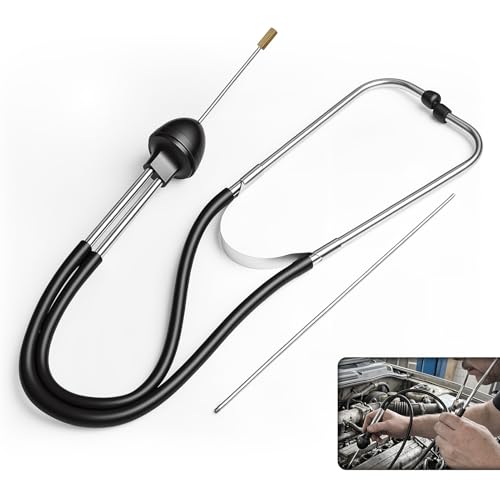
Confirm the leak with a mechanic’s stethoscope or a hose, then use a smoke test for small or hard-to-see openings, and soapy water on accessible joints and flanges. These tests help separate manifold noise from downstream exhaust leaks. They are most useful after the visual check points you to one area.
Use a mechanic’s stethoscope or hose to localize the sound
A mechanic’s stethoscope or a length of hose can help you hear where the tick is strongest. Move the tip or hose end from one runner area to the next, then compare sound intensity. Use caution near moving belts and hot metal, and keep clothing, hair, and hands clear of rotating parts.
If the noise is strongest at the manifold and fades as you move toward the pipe, the leak is likely upstream. If the loudest point is lower in the exhaust, the manifold may not be the problem at all.
Use a smoke test for small or hard-to-see leaks
A smoke test can locate exhaust leaks by using proper smoke equipment to fill the exhaust system and reveal escape points. It is best for small leaks around the gasket, flange, and crack locations. Watch for smoke escaping from a seam, runner, stud hole, or cast line. A faint plume can reveal a fault that never leaves obvious soot.
Smoke tests can miss intermittent leaks or openings that only appear under load. A crack that opens more with heat and engine torque may look sealed at idle. If the first smoke test is clean but the symptom is strong, repeat the inspection after the engine has warmed or under a controlled load pattern.
Use soapy water on accessible joints and flanges
Soapy water can also reveal a leak when bubbles appear. Spray it only on accessible joints, flanges, and visible seam areas where exhaust gas can escape and create bubbles. This works best on cool or lukewarm parts that you can reach safely without leaning over moving parts.
Soapy water is a useful confirmation, but it is not magic. It will not help much on a hidden crack behind a heat shield or on a leak that opens only while driving. If the leak is deep in the runner area, smoke is usually the better test.
When should you stop driving?
Stop driving if exhaust fumes enter the cabin, the leak is loud, the engine stumbles badly, or the manifold or surrounding parts are severely rusted or crumbling. If the sound is mild and outside the cabin, you may be able to monitor it briefly, but broken hardware and heavy corrosion call for repair now.
Yes/no checklist for driving, monitoring, or stopping
| Check | Yes | No |
|---|---|---|
| Do you smell exhaust inside the vehicle? | Stop driving and inspect | Proceed to the next check |
| Is the leak loud enough to hear over normal engine sound? | Repair soon; avoid long trips | Continue inspection |
| Is the check engine light on with stuttering or lagging? | Plan repair soon | Keep diagnosing |
| Is there visible cracking, broken studs, or crumbling rust? | Stop and repair now | DIY inspection may continue |
| Can you safely inspect on a cool engine with jack stands and PPE? | Proceed carefully | Wait until safe |
Broken manifold studs that are flush with the cylinder head require professional tools. Severely rusted or crumbling exhaust parts are not a minor leak. A small leak can sometimes be monitored briefly if it stays outside the cabin, but a ticking sound, soot at the seam, or a check engine light means the problem needs attention soon.
Picture a truck that smells faintly of exhaust at stoplights, shows a light tick on cold start, and has a soot streak at one end of the manifold. That is a repair-soon case, not a wait-and-see case. If the same truck also has a snapped stud and crumbling flange metal, the repair moves out of DIY territory.
Frequently asked questions
What does an exhaust manifold leak sound like?
It often sounds like ticking, tapping, hissing, or popping. Sharp, rhythmic ticking near the engine bay usually points to manifold or header gasket trouble, and it is often loudest during a cold start. If the sound speeds up with RPM, the manifold area moves higher on the list.
What can a leaking exhaust manifold cause?
A leaking manifold can hurt fuel mileage, cause stuttering or lagging, trigger a check engine warning light, and let exhaust odor into the cabin. It can also damage nearby wiring or heat-sensitive parts if the leak is left alone. Severe corrosion or broken hardware raises the risk further.