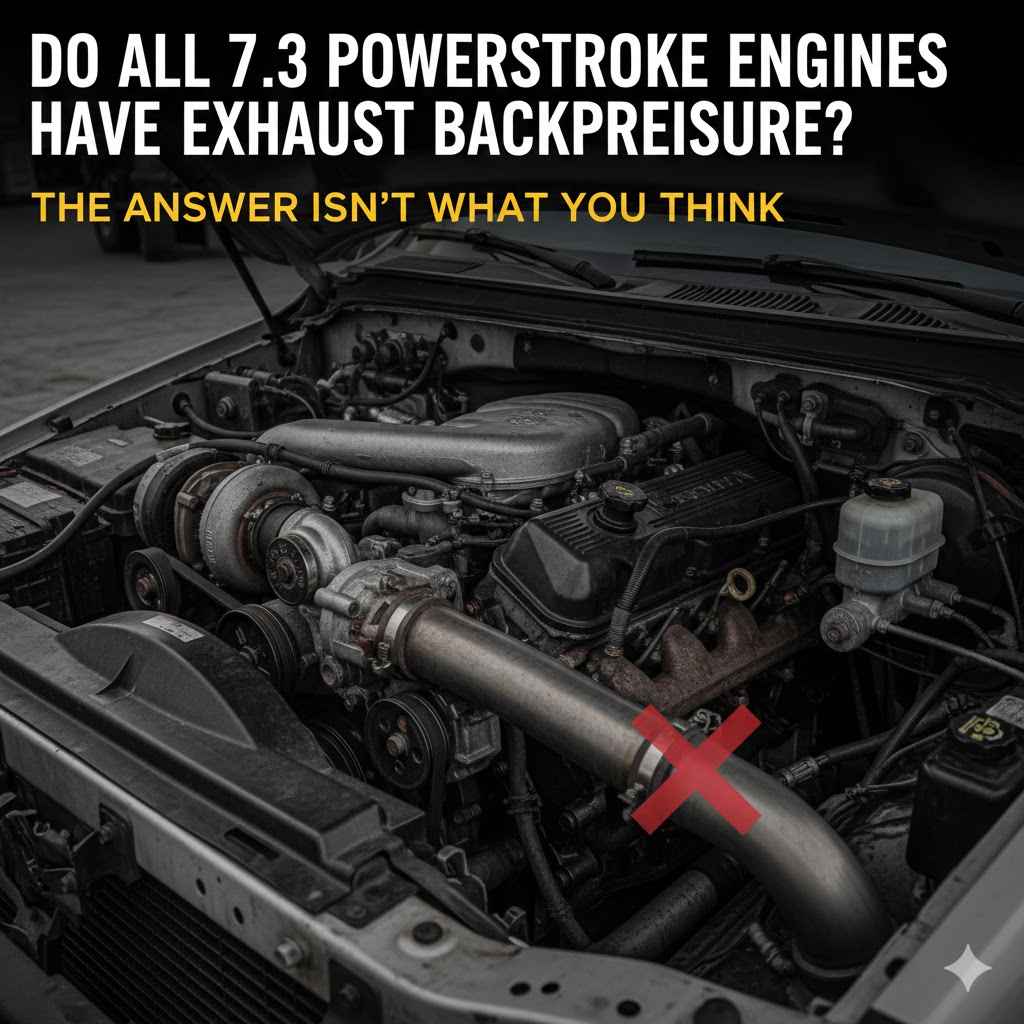
Do All 7.3 Powerstroke Engines Have Exhaust Backpressure?
Are you wondering if your 7.3 Powerstroke engine has exhaust backpressure? This is a common question for folks new to these tough trucks. Sometimes, things can seem a bit tricky when you first start looking into engine details.

As an Amazon Associate I earn from qualifying purchases.
But don’t worry, we’re here to make it simple. We will walk through exactly what you need to know, step by step. Let’s get your questions answered so you can feel confident about your 7.3 Powerstroke.
We’ll cover what exhaust backpressure means for your engine and how to identify it.
Understanding Exhaust Backpressure In 7.3 Powerstroke Engines
Exhaust backpressure is a term you might hear when talking about diesel engines, especially the 7.3 Powerstroke. It basically means the resistance the engine’s exhaust gases face as they try to get out of the engine and through the exhaust system. Think of it like trying to blow through a straw that’s partly blocked; it’s harder to push the air through.
For many drivers and mechanics, especially those new to the 7.3 Powerstroke, the idea of exhaust backpressure can seem a bit confusing. Is it always there? Does it affect performance? These are good questions. This article aims to clear up any confusion. We want you to have a clear picture of Do All 7.3 Powerstroke Engines Have Exhaust Backpressure? and why it matters.
What Is Exhaust Backpressure?
Exhaust backpressure is the pressure that builds up in an engine’s exhaust system. This pressure is created by the exhaust gases as they are pushed out of the cylinders and travel through the exhaust manifold, exhaust pipes, catalytic converter (if equipped), and muffler. The more restricted the path for these gases, the higher the backpressure.
Every internal combustion engine creates some amount of exhaust backpressure. It’s a natural part of how the engine expels burnt fuel. The goal for engine designers is to keep this backpressure within a certain range. Too little backpressure might mean the engine isn’t breathing efficiently in other ways, while too much can hinder performance and even cause damage.

How Does Exhaust Backpressure Affect A 7.3 Powerstroke?
In a 7.3 Powerstroke, like other diesel engines, exhaust backpressure plays a role in how efficiently the engine can “breathe.” When exhaust gases are pushed out effectively, it makes room for a fresh charge of air and fuel to enter the cylinder. If exhaust gases are trapped due to high backpressure, it reduces the amount of fresh air that can enter, leading to a less powerful combustion.
High exhaust backpressure can cause a few problems:
Reduced engine power and torque.
Increased exhaust gas temperatures (EGTs), which can lead to turbocharger and engine damage over time.
Poor fuel economy.
Potential for exhaust leaks or component failure due to increased stress on the system.
Low exhaust backpressure is generally good for performance, but excessively low backpressure can sometimes indicate an exhaust leak or a system that’s too free-flowing, which might have its own set of issues depending on the engine’s design and tuning.
Do All 7.3 Powerstroke Engines Have Exhaust Backpressure?
The short answer is yes, all 7.3 Powerstroke engines, and indeed all internal combustion engines, have some level of exhaust backpressure. It’s a fundamental aspect of how engines operate. The real question is not if they have backpressure, but how much backpressure they have and whether it’s within acceptable limits.
The amount of backpressure can vary significantly based on several factors, including:
The design of the exhaust system (stock vs. aftermarket, pipe diameter, muffler type).
The presence and condition of a catalytic converter or diesel particulate filter (DPF).
Any blockages in the exhaust system, such as carbon buildup or damage.
The engine’s operating condition.
For the 7.3 Powerstroke, which was produced for many years and came in different configurations, the stock exhaust systems were designed to manage backpressure effectively. However, modifications, wear and tear, or specific operating conditions can alter the backpressure levels.
Factors Influencing Exhaust Backpressure On The 7.3 Powerstroke
Let’s break down what specifically can influence the exhaust backpressure in your 7.3 Powerstroke:
Exhaust System Design
The factory exhaust system on a 7.3 Powerstroke is engineered to balance performance, noise reduction, and emissions control. Stock mufflers, while effective at quieting the engine, can contribute to a certain amount of backpressure. Aftermarket exhaust systems, often designed for increased performance, might use larger diameter pipes and less restrictive mufflers or no muffler at all (straight pipe) to reduce backpressure.
Catalytic Converters And Diesel Particulate Filters (DPFs)
While the earlier versions of the 7.3 Powerstroke did not typically have Diesel Particulate Filters (DPFs), they might have had catalytic converters. Catalytic converters, designed to reduce emissions, contain a honeycomb-like structure that exhaust gases must flow through. This structure creates resistance and thus contributes to backpressure. Later diesel engines, and some specific emissions-controlled versions of the 7.3, might have had more advanced emissions equipment that would also add to backpressure. If a catalytic converter becomes clogged or damaged, it can significantly increase backpressure.
Carbon Buildup And Other Blockages
Over time, carbon deposits can build up within the exhaust manifold, exhaust pipes, and muffler. This buildup narrows the passage for exhaust gases, increasing resistance and therefore backpressure. A damaged exhaust component, like a crushed pipe or a loose baffle inside a muffler, can also act as a significant restriction.
Turbocharger Operation
The turbocharger on a 7.3 Powerstroke also interacts with exhaust backpressure. The turbocharger uses the energy of the exhaust gases to spin a turbine, which in turn spins a compressor to force more air into the engine. The turbine housing of the turbocharger is part of the exhaust system. The design of the turbine housing and the efficiency of the turbo itself can influence the pressure within the exhaust system before it reaches the rest of the exhaust components.
How To Measure Exhaust Backpressure
Measuring exhaust backpressure requires specific tools and knowledge. It’s not something most people can do without the right equipment. The most common method involves using a backpressure gauge.
Here’s a simplified idea of how it’s done:
1. A special fitting is installed into the exhaust system, usually before the turbocharger or in the exhaust manifold.
2. A pressure gauge is connected to this fitting.
3. The engine is then run, and the gauge displays the pressure in the exhaust system at different RPMs.
This process allows mechanics to see if the backpressure is within the manufacturer’s specified range for the 7.3 Powerstroke. If it’s too high, it indicates a problem that needs to be addressed, such as a clogged exhaust or a malfunctioning catalytic converter.
Identifying Potential Exhaust Backpressure Issues
While direct measurement requires tools, you can sometimes notice signs of high exhaust backpressure in your 7.3 Powerstroke. These symptoms can overlap with other engine issues, so a proper diagnosis is always best.
Signs of potential high exhaust backpressure might include:
A noticeable loss of engine power, especially under load or at higher RPMs.
The engine running hotter than usual, indicated by the temperature gauge.
Increased exhaust smoke, particularly black smoke, which suggests incomplete combustion.
A “chugging” or labored sound from the engine.
The turbocharger not building boost as it should, or making unusual noises.
Common Scenarios For 7.3 Powerstroke Backpressure
Let’s consider some common situations where backpressure might become a concern for 7.3 Powerstroke owners:
Stock vs. Modified Exhausts
A truck with a stock exhaust system is generally designed for a specific backpressure level. If you’ve installed an aftermarket exhaust, especially one advertised for performance, you might see reduced backpressure. This is often a desired outcome for increased power. However, if a poorly designed aftermarket system is installed, it could inadvertently create more restrictions.
High Mileage And Wear
Older 7.3 Powerstroke engines, especially those with high mileage, might develop carbon buildup in the exhaust system. This gradual buildup can increase backpressure over time. It’s a common maintenance issue to consider for engines that have seen a lot of work.
Troubleshooting Performance Issues
If you’re experiencing a sudden or gradual loss of power in your 7.3 Powerstroke, exhaust backpressure should be on the list of things to check. It’s a critical part of the engine’s breathing system, and a restriction here can significantly impact how the engine performs.
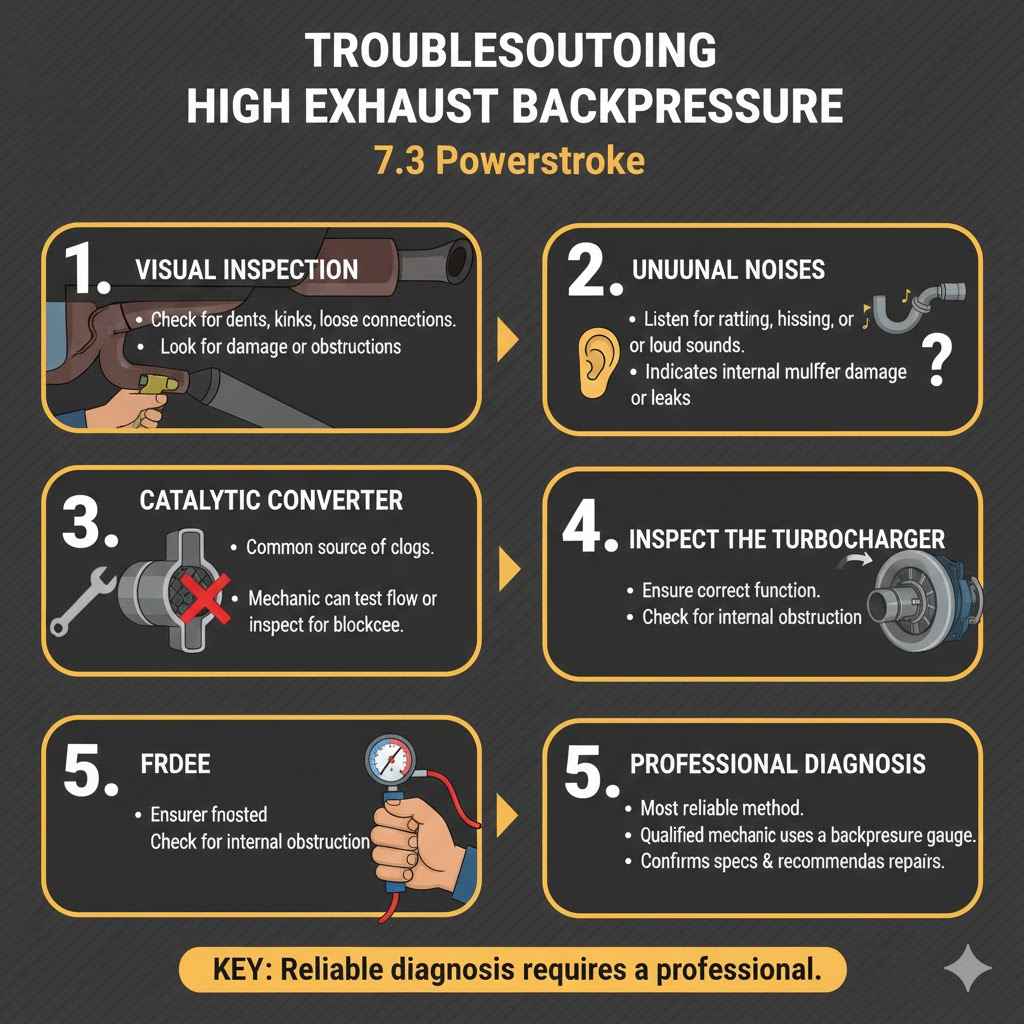
Troubleshooting High Exhaust Backpressure
If you suspect high exhaust backpressure in your 7.3 Powerstroke, here’s a general troubleshooting approach:
1. Visual Inspection: Start by looking over the entire exhaust system. Check for any obvious signs of damage, such as dents, kinks, or loose connections that could be causing leaks or internal obstructions.
2. Listen For Unusual Noises: Pay attention to any rattling, hissing, or excessively loud exhaust sounds, which could indicate internal muffler damage or leaks.
3. Check the Catalytic Converter (If Applicable): If your 7.3 has a catalytic converter, it’s a common source of clogs. A mechanic can test its flow or visually inspect it for signs of blockage or damage.
4. Inspect the Turbocharger: While not directly part of the exhaust pipe, the turbocharger’s exhaust housing is a key component. Ensure it’s functioning correctly and not obstructed internally.
5. Professional Diagnosis: The most reliable way to confirm high exhaust backpressure is to have a qualified mechanic use a backpressure gauge to measure it directly. They can then determine if it’s within specifications and recommend the necessary repairs.
Is Exhaust Backpressure Always Bad?
No, exhaust backpressure is not always bad. As mentioned earlier, some level of backpressure is necessary for proper engine operation. It can help with turbocharger spool-up and exhaust scavenging. The key is to maintain backpressure within the engine manufacturer’s specified operating range. Excessive backpressure is what causes problems.
FAQ
Question: Do all 7.3 Powerstroke engines come with exhaust backpressure sensors?
Answer: No, not all 7.3 Powerstroke engines come equipped with dedicated exhaust backpressure sensors from the factory. While later model diesels and newer emissions standards often mandate such sensors, older 7.3 Powerstrokes typically rely on indirect monitoring or diagnostics performed by mechanics.
Question: Can a clogged muffler cause high exhaust backpressure?
Answer: Yes, a clogged or damaged muffler is a very common cause of high exhaust backpressure. The baffles and packing inside a muffler are designed to reduce noise but can become restricted by carbon buildup or physical damage, significantly impeding exhaust gas flow.
Question: How does exhaust backpressure affect the turbocharger on a 7.3 Powerstroke?
Answer: High exhaust backpressure can hinder the turbocharger’s efficiency. The turbo’s turbine needs the exhaust gases to flow freely to spin effectively. When there’s too much resistance, the turbine doesn’t spin as fast, leading to less boost pressure being sent to the engine.
Question: Is a straight pipe exhaust system good for reducing backpressure on a 7.3 Powerstroke?
Answer: A straight pipe exhaust system, which eliminates the muffler and often uses larger diameter piping, will significantly reduce exhaust backpressure. This is a common modification for performance gains, but it also increases noise and may have emissions implications.
Question: What is considered a normal exhaust backpressure reading for a 7.3 Powerstroke?
Answer: Normal backpressure readings can vary based on the specific 7.3 Powerstroke model and engine condition. However, generally, readings should be below 2-3 PSI at idle and ideally stay below 20-25 PSI at full engine load and RPM. Always consult a service manual for precise specifications.
Final Thoughts
You’ve learned that Do All 7.3 Powerstroke Engines Have Exhaust Backpressure? The answer is a definite yes. Every engine creates it. The important part is managing it. Your 7.3 Powerstroke needs exhaust gases to escape efficiently. Too much resistance causes power loss and heat. Too little can mean other issues. By checking for restrictions like clogged mufflers or converters, you keep your engine running its best. Keep an eye on your truck’s performance, and you’ll help it last.
Wrap Up
Every 7.3 Powerstroke engine has exhaust backpressure. It’s normal, but too much can hurt your truck. Look for signs like lost power. Check your exhaust system for blockages. Knowing this helps you keep your 7.3 Powerstroke strong and reliable.
Related pick: Check today's price on Amazon