What White Exhaust Smoke Means on Startup
White exhaust smoke on startup is often harmless steam if it clears in about 1–2 minutes and fades as the engine warms; thick white smoke that lingers, smells sweet, or returns after warmup can point to coolant, fuel, or a head-gasket fault. Ignore that split, and a small leak can become overheating, rough running, or costly engine damage. This guide gives a two-minute startup decision tree for cold and warm starts, plus the warning signs that mean stop driving.
What white exhaust smoke on startup usually means


On startup, white exhaust can mean ordinary water vapor, or it can mean something is entering the cylinders and leaving through the tailpipe. The first split is simple: brief, thin vapor that fades as heat builds is usually condensation; dense smoke that hangs around after the engine warms is a fault until proven otherwise.
Duration matters more than color alone. A cold engine can make the exhaust look white for a short time even when nothing is wrong, especially on damp mornings. If the cloud stays thick after the coolant and exhaust parts have warmed, look for coolant intrusion, fuel flooding, or another mechanical issue.
Cold start versus warm start
A cold start often makes the exhaust system cough out moisture that collected overnight. A warm start should not produce a long white plume. If the smoke appears after a restart once the engine is already warm, that pattern pushes you away from simple condensation and toward coolant, fuel, or oil entering the exhaust stream.
That is why the same white cloud means different things at different times. Startup-only smoke that vanishes quickly is usually less serious than smoke that stays visible once the engine smooths out and the temperature begins to rise.
Why duration matters first
A brief wisp lasting less than a couple of minutes often points to moisture, so duration is a useful first check. A brief wisp for less than a couple of minutes points to moisture; persistent smoke after warmup points to a fault. If the smoke thickens when you rev the engine lightly, or if it returns every time you restart, the odds move toward a leak or mechanical failure.
When is white smoke on startup normal?
White smoke can be normal when it is really condensation vapor. Cold weather, high humidity, and short trips all leave water in the exhaust system, and that moisture turns into visible vapor when the engine starts. It should fade as the engine reaches operating temperature and the exhaust dries out.
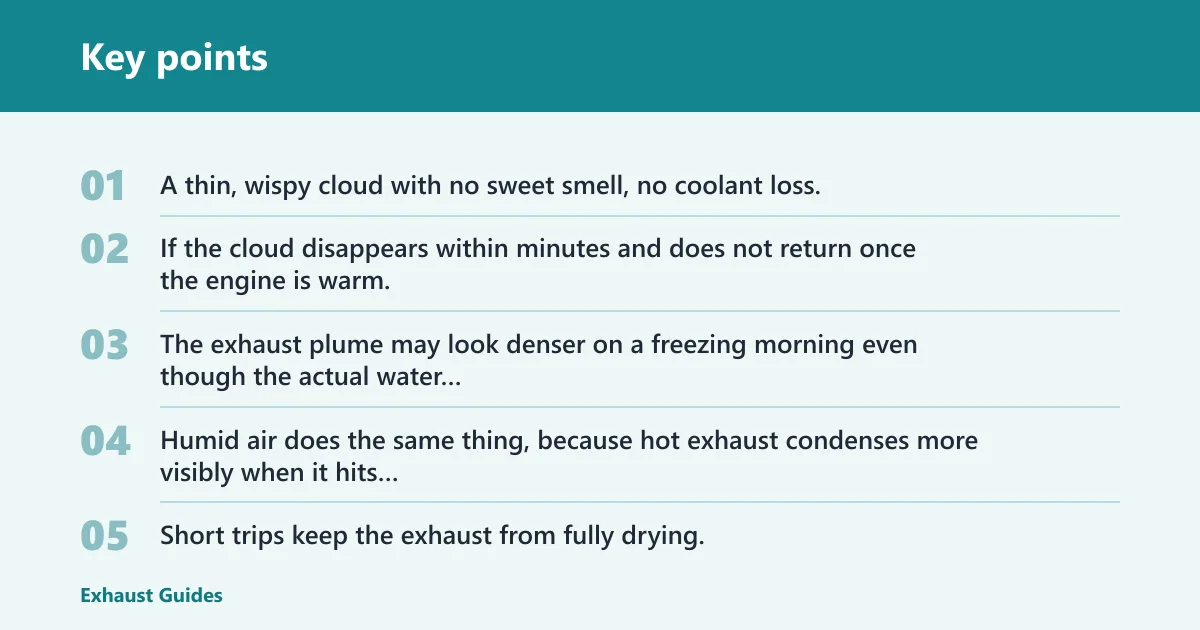
A thin, wispy cloud with no sweet smell, no coolant loss, and no rough idle is commonly associated with normal condensation. If the cloud disappears within minutes and does not return once the engine is warm, that is usually a benign startup condition.
Condensation from cold weather
Cold air makes steam easier to see. The exhaust plume may look denser on a freezing morning even though the actual water content is normal. Humid air does the same thing, because hot exhaust condenses more visibly when it hits colder, wetter air outside the tailpipe.
Short trips and humid conditions
Short trips keep the exhaust from fully drying. Water collects in the muffler and pipes, then leaves as visible vapor at the next startup. If your vehicle only sees brief drives and the white plume disappears quickly, condensation is the most likely explanation.
Say your car sits overnight in 35-degree weather and puts out a thin white cloud for about a minute, then idles smoothly with no sweet odor. That pattern fits condensation. Now change only one variable: the smoke stays thick after a five-minute drive and the coolant reservoir is lower the next morning. That is no longer normal.
What odor and idle clues tell you
Smell and idle behavior narrow the cause fast. Sweet odor points toward coolant, fuel smell points toward a rich start or flooding, and an oily smell can point toward turbo seal problems or oil entering the exhaust. Rough idle, shaking, or a misfire on startup makes a fault more likely than condensation.
Sweet smell and coolant loss
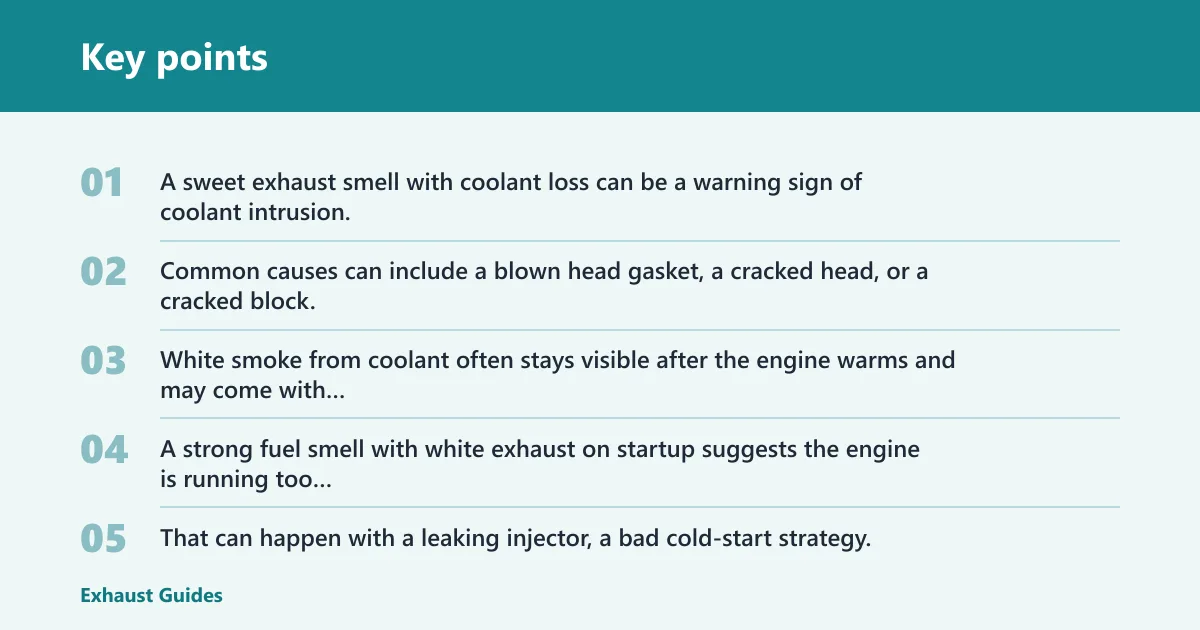
A sweet exhaust smell with coolant loss can be a warning sign of coolant intrusion. Common causes can include a blown head gasket, a cracked head, or a cracked block. White smoke from coolant often stays visible after the engine warms and may come with overheating, bubbles in the coolant reservoir, or a gradual drop in the coolant level.
Fuel smell and rough idle
A strong fuel smell with white exhaust on startup suggests the engine is running too rich or flooding a cylinder. That can happen with a leaking injector, a bad cold-start strategy, or another fuel control problem. Gasoline engines are more likely to show this pattern than diesels.
The smoke from a rich start can clear as the engine stabilizes. Rough idle, a stumble, or a temporary misfire make that diagnosis more likely. The smoke may look white at a glance, but the odor and the idle quality separate fuel from coolant.
Oil smell and turbo seal clues
An oily smell or blue-gray tint points away from pure condensation. On turbocharged engines, a failed turbocharger seal can let oil or coolant enter the exhaust side, and the smoke may appear after idling or right at startup. Oil use and intermittent smoke are common clues.
White smoke triage table
| Smoke duration | Odor | Coolant level change | Idle behavior | Ambient conditions | Most likely cause |
|---|---|---|---|---|---|
| Less than 2 minutes, thin and wispy | No strong odor | No change | Normal | Cold, humid, or after short trips | Condensation vapor |
| Persistent after warmup, dense plume | Sweet smell | Level drops | May run rough or overheat | Any temperature | Coolant intrusion, such as head gasket, cracked head, or cracked block |
| Startup smoke that clears as idle smooths out | Strong fuel smell | No change | Rough idle, may misfire briefly | More common on gasoline engines | Fuel-rich startup, leaking injector, or flooding |
| Intermittent startup or after-idle smoke | Oil or burnt odor | May drop over time | Usually normal or slightly uneven | Turbo engine, hot soak, or after idling | Turbocharger seal failure |
Next-step path: If the smoke lasts about 2 minutes or less and there is no odor or coolant loss, monitor it. If it smells sweet or the coolant level drops, stop and test for coolant intrusion. If it smells strongly of fuel and the idle is rough, scan for misfire or fuel-control issues. If the smoke is oily on a turbo engine, inspect the turbo and intake path next.
Which faults cause persistent white smoke?
Persistent white smoke after startup usually means the engine is burning coolant, fuel, or oil in a way that should not happen. The most common fault patterns are a blown head gasket, a cracked cylinder head or block, a leaking injector or flood condition, and, on turbo engines, a failed turbocharger seal.
Hot Shot’s Secret groups smoke diagnosis by fuel type and problem type, and its smoke-reading material treats white smoke as one of the main diagnostic smoke colors. That approach is useful because diesel and gasoline engines do not fail in exactly the same way, even when the exhaust looks similar. The page is a general smoke-reading resource for exhaust diagnosis, not a model-specific repair guide. The brand also references trust recognition for 2025, offers a guarantee on its products, and sells products named Gasoline Extreme, Everyday Diesel Treatment, and Premium DEFender.
Blown head gasket
A blown head gasket can let coolant enter one or more cylinders. The result is white smoke that continues after startup, especially once the engine is warm. Other clues include bubbles in the coolant reservoir, a coolant level that keeps falling, overheating, and sometimes milkiness in the oil.
Cracked head or block
A cracked cylinder head or block can mimic a head-gasket failure. The smoke pattern can be intermittent or constant, and coolant loss is common. These faults usually need compression testing or a leak-down test to confirm, because the visible smoke alone cannot separate them from a gasket leak.
Injector leak or flooding
A leaking injector or flooding can make a gasoline engine puff white-looking exhaust with a heavy fuel smell. The idle is often rough at first, then improves as the excess fuel clears. If the smoke stops as the engine stabilizes and coolant level stays steady, fuel delivery deserves more attention than the cooling system.
Turbocharger seal failure
Turbocharger seal failure can allow oil or coolant into the exhaust side. The smoke may show up after idling, after a hot restart, or right at startup. Oil consumption often appears alongside the smoke, which helps separate this fault from ordinary condensation.
Picture a turbo gasoline SUV that idles for several minutes, then releases a thick white cloud after the next start. If the coolant level is steady but the oil drops between services and the smoke has an oily smell, the turbocharger seal moves higher on the suspect list than the head gasket.
What symptoms mean you should stop driving?
Stop driving if the smoke stays heavy after warmup, the coolant level drops quickly, the temperature gauge rises, or the engine shakes hard on startup. Those signs point to a problem that can worsen fast, especially if coolant is entering a cylinder or the engine is misfiring badly.
Rapid coolant loss
If the reservoir or radiator level drops from one drive to the next, do not treat the smoke as harmless. Coolant loss with white exhaust strongly suggests a leak into the combustion chamber, and continued driving can overheat the engine or cause internal damage.
Overheating or temperature rise
An overheating engine changes the risk level immediately. White smoke plus a climbing temperature gauge can mean combustion gas is entering the cooling system, or coolant is leaving the system too quickly to control heat. Shut the engine down and have it towed if the temperature keeps rising.
Heavy smoke that does not clear
If the plume stays thick after several minutes, it is not the normal startup vapor pattern. That holds whether the smoke is white, the odor is sweet, or the engine keeps producing it after warmup. Persistent smoke needs a diagnostic check before more driving.
Misfire or shaking on startup
A rough, shaking start with white smoke means one cylinder may not be burning correctly. A scan tool can show misfire codes, and the cause may be coolant intrusion, flooding, or a failing injector. When the engine runs unevenly and the smoke is dense, limit driving until the fault is confirmed.
How do mechanics confirm the cause?
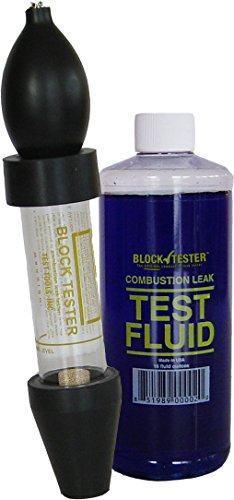
The best test sequence starts with the cooling system, then moves to combustion and cylinder sealing. A coolant pressure test checks for leaks under pressure. A block test, also called a combustion gas test, looks for exhaust gases in the coolant. After that, a scan tool, compression test, and leak-down test help separate gasket, head, block, and fuel faults.
- Check coolant level and look for fresh loss. Compare the level cold, then again after shutdown. A repeated drop supports coolant intrusion.
- Run a coolant pressure test. This can expose an external leak or a leak into a cylinder without waiting for the engine to overheat.
- Perform a block or combustion gas test. If exhaust gases are in the cooling system, a head gasket, cracked head, or cracked block becomes much more likely.
- Scan for misfire codes. A scan tool can point to a cylinder that is misfiring during startup or under load.
- Do a compression test and leak-down test. These confirm whether a cylinder is sealing normally and help separate gasket failure from a cracked head or block.
These tests matter because the smoke alone can mislead you. A warm white plume with sweet odor points one way, but a fuel smell with a rough idle points another. The right test order keeps you from replacing the wrong part first.
Frequently asked questions
What does white smoke exhaust smoke indicate?
White exhaust smoke usually points to water vapor, coolant, or fuel that is not burning normally. On startup, a short, thin cloud in cold weather is often condensation. Persistent smoke, especially with a sweet smell, coolant loss, or rough idle, suggests a fault that needs diagnosis.
What does white exhaust smoke mean?
White exhaust smoke means the exhaust stream contains moisture or another fluid that should not be there in that amount. The important question is whether it clears quickly. If it lingers after warmup or returns with a sweet or fuel smell, treat it as a likely engine problem.
Why is there white smoke from the exhaust when starting?
Startup white smoke usually comes from condensation in the exhaust system, especially after cold, humid weather or short trips. It can also come from coolant intrusion or a fuel-rich start. The fastest way to separate them is by duration, smell, coolant level, and idle quality.
Is white smoke from exhaust on startup normal?
Yes, if it is brief and fades within 1–2 minutes as the engine warms. That pattern usually means condensation vapor. It is not normal if the smoke stays thick, smells sweet, coincides with coolant loss, or continues after the engine reaches operating temperature.
When is thick white smoke from exhaust on startup a head gasket issue?
Thick white smoke points toward a head gasket when it persists after warmup and comes with a sweet smell, coolant loss, overheating, or bubbling in the coolant reservoir. Milkiness in the oil can add support, but a pressure test and block test are what confirm the diagnosis.
How do I tell if white exhaust smoke is just condensation?
Condensation is usually thin, wispy, and short-lived. It is most visible in cold or humid weather and after short trips. If the smoke disappears quickly, the coolant level stays steady, and the engine idles normally, it is usually harmless water vapor rather than coolant burning.
Can white smoke from exhaust mean coolant is burning?
Yes. Persistent white smoke with a sweet smell, falling coolant level, overheating, or rough running can mean coolant is entering the combustion chamber and burning. Common causes include a blown head gasket, a cracked head, or a cracked block. Do not keep driving if those signs are present.