5 Best Exhaust Gasket Options for Diesel Trucks: Research Shows
The best exhaust gasket for a diesel truck depends on the joint: use a multi-layer steel or graphite gasket for turbo-to-manifold and manifold-to-head joints, a donut or ball-socket seal for slip-fit connections, and replace crush gaskets any time you separate the joint. For diesel-specific repairs, the right material matches the sealing location first: multi-layer steel for high-heat rigid joints, graphite for certain flange joints with slight irregularity, and OE-spec seals for engine- and aftertreatment-specific fitment.
Best exhaust gaskets for diesel trucks: how to choose the right seal by joint type
The wrong gasket can leave exhaust leaks, boost loss, soot trails, warped flanges, and repeated labor. This guide compares diesel exhaust gasket options by sealing location, failure risk, and fit so you can match the right part to the exact joint.
Quick comparison
| Rank | Product | Pick | Best For | Price | Action |
|---|---|---|---|---|---|
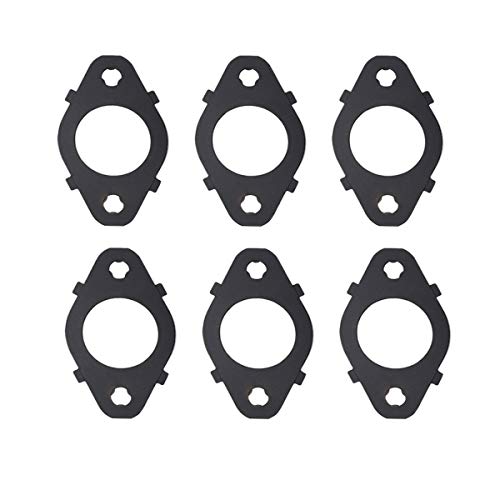 | Diesel Exhaust Manifold Gasket Set 3946275 5266422AIB2C | Our pick | Cummins manifold set · 6 pcs · direct replacement | $15.58 Price as of 8 Nov 2026 | View |
 | FEL-PRO MS 92467 Exhaust Manifold Gasket Set for ChevroletFel-Pro | Also great | OE-grade manifold set · application-specific fit | $17.49 Price as of 8 Nov 2026 | View |
 | Turbocharger Exhaust Outlet Gasket 1823459B004 for HondaCHEGUANJIA | Pair with it | Turbo outlet gasket · direct replacement | $16.99 Price as of 8 Nov 2026 | View |
 | YGQ 3 Inch Exhaust Gasket 3-Bolt 76.2mm Flange HighYGQ | Budget pick | 3-inch 3-bolt gasket · graphite fire ring | $8.99 Price as of 8 Nov 2026 | View |
 | Moybtso Exhaust Manifold Gasket Stud Kit for Cummins 5.9LMoybtso | Upgrade pick | Cummins repair kit · gaskets studs nuts | $22.99 Price as of 8 Nov 2026 | View |
Start with the joint location, then match the seal style to heat load and clamp design. Check the exact part number, engine family, and mating-surface condition before you order.
How we chose
We compared options by sealing location, material type, and the kind of failure they are meant to stop. We also weighed fitment specificity, serviceability during DOC and DPF work, and the risk of repeat failure when clamp load or surface prep is wrong.
For best exhaust gaskets for trucks, brand name matters less than the exact joint. A gasket that fits the wrong flange or clamp style can fail even if the material itself is sound.
Diesel manifold gasket set: best for head-to-manifold joints
- Direct replacement for Cummins engines
- Manufactured to OEM specifications
- Durable material helps reduce leak risk
This AIB2C Cummins manifold set is made for Cummins 5.9L and 6.7L ISB B-series applications, where a direct replacement is needed. Based on the published details, it is the right choice when the head-to-manifold seal needs a layered metal-style repair and you want a set built to OEM specifications.
The main strength here is fitment discipline. Manifold joints see high heat cycling and clamp load changes, so a gasket matched to the exact port layout matters more than a generic exhaust seal.
The drawback is application scope. This set is aimed at Cummins B-series fitment, so it is not a universal answer for other heavy-duty engines or for flange-style aftertreatment joints.
OE-grade exhaust manifold gasket set: best for application-specific fit
- Meets or exceeds original equipment specs
- Application-specific design for fit
- Made for exhaust sealing repairs
This Fel-Pro manifold set suits drivers who want OE-grade replacement quality for an application-specific exhaust repair. It is a strong pick when the job calls for a precise manifold seal and the goal is to cut the chance of repeat leaks after the manifold comes off.
Its appeal is the fit-first design. In exhaust work, that matters because warped flanges, carbon buildup, and uneven clamp load can make a loose-fitting gasket fail even if the part itself is made well.
The drawback is that it is not built for every diesel joint. It is a manifold gasket set, so it does not answer DPF, DOC, EGR, or donut-style flange needs.
Turbocharger outlet gasket: best for high-heat turbo joints
- Direct replacement for the listed part number
- Multi-layer metal construction
- Precision-stamped for correct installation
This CHEGUANJIA turbo outlet gasket fits a direct-replacement need at a turbocharger exhaust outlet. Its multi-layer metal construction makes sense for a joint that sees fast heat rise, pressure pulses, and the kind of movement that can loosen a weak seal.
That joint is different from a manifold or DPF flange. If the outlet uses a flat gasket and not a clamp-only slip fit, the exact part number matters because the sealing face, bolt pattern, and thickness all affect fit.
The drawback is obvious: this listing is for a specific passenger-vehicle application, not heavy-duty diesel. It is useful as a material example, but not a universal truck solution.
3-inch graphite flange gasket: best for clamp joints
- Designed for 3-inch three-bolt flanges
- Graphite core for heat resistance
- Includes two gaskets for replacement
This YGQ 3-inch 3-bolt gasket fits clamp-style flange joints where a graphite core and fire ring help the seal survive heat and minor movement. It is the right type of option when the pipe connection is three-bolt and the surfaces need a compressible seal rather than a rigid metal-only insert.
Graphite works well in certain flange repairs because it can conform to slight irregularities. That makes it useful when the mating faces are not perfect, though it is still no substitute for correct flange geometry and good clamp load.
The drawback is fitment specificity. A 3-inch 3-bolt gasket only works where the pipe size and bolt pattern match exactly.
Cummins manifold repair kit: best for bundled service
- Complete manifold repair kit
- Includes manifold, turbo, and drain gaskets
- Layered metal gaskets for heat cycles
This Moybtso kit is aimed at Cummins 5.9L and 6.7L repairs, with gaskets, studs, and flange nuts included together. It fits well for downtime-sensitive work because the kit approach reduces the chance of stopping halfway through a repair to source missing hardware.
The layered metal gasket design is a practical match for heat cycling, and the included drain and turbo-related pieces can make a manifold job more complete. For a truck that is already apart, that can save time and a second teardown.
The drawback is that bundled kits can include more than one needed part, so you still have to verify which pieces match your exact engine family and the flange condition before ordering.
Which one should you buy?
If you already have the OEM part number, start there. That is the cleanest route because it ties the gasket to the exact joint instead of to a broad year, make, and model guess.
If the old gasket is missing or unreadable, match by engine family first, then confirm the VIN or engine serial number. For mixed fleets, that matters even more because Caterpillar C7, C9, C13, and C15; Cummins ISB, ISC, and ISL; Detroit DD13, DD15, and DD16; Volvo D13 and D16; Mack MP8 and MP10; and Paccar PX6 and PX8 can all need different sealing details even when the truck class looks similar.
For a truck that needs a manifold repair, choose the manifold set that matches port layout and flange condition. For turbo outlet work, use the turbo gasket only when the joint design calls for one. For clamp joints with slight misalignment, a donut or graphite flange seal is often the better fit.
Say your Class 6 truck needs a DOC and DPF service and the technician finds soot streaks around the outlet joint. A DPF gasket or DOC-DFP interface seal may be the right call, but only after checking the assembly tag, clamp style, and the mating faces for warping or soot buildup.
Suppose a garage replaces an EGR gasket on a Detroit DD15 but keeps the old clamp and dirty mating face. The new seal can still leak if the surface is not clean or the clamp load is uneven, which is why part choice and installation prep need to line up.
Diesel exhaust gasket decision matrix
This matrix helps you match the gasket to the joint before you order. It focuses on sealing location, failure risk, and the checks that prevent the wrong part from landing on the bench.
| Joint type | Recommended gasket style | Common failure signs | Required measurements | What to verify before ordering |
|---|---|---|---|---|
| Manifold | Multi-layer steel or OE-spec manifold gasket | Ticking sound, soot at the head, repeat blowouts, warped flange | Port layout, bolt spacing, flange flatness | Engine family, VIN, OEM part number, mating-surface condition |
| Turbo outlet | Multi-layer steel or turbo-specific flat gasket | Soot at outlet, whistle, boost loss, loosened fasteners | Outlet diameter, bolt pattern, flange thickness | Turbo tag, engine serial number, clamp style, pipe geometry |
| EGR | Engine-specific EGR gasket, often OE-grade | Exhaust odor, leak marks, unstable connection, debris intrusion | Valve, cooler, or tube face shape and port count | Year, make, model, VIN, engine serial number, screen requirement |
| DOC/DPF flange | OEM-grade DPF gasket or DOC/DPF interface seal | Leak at aftertreatment joint, bad pressure readings, soot around canister | Canister flange size, joint style, clamp design | Assembly tag, OEM part number, engine family, surface condition |
| Donut or flange | Donut seal or graphite flange gasket | Rattling, exhaust smell, slight misalignment, repeat clamp loosening | Pipe diameter, cone angle, clamp style | Pipe geometry, flange type, clamp shape, part number |
What is an exhaust gasket?
An heavy-duty diesel exhaust gasket guide is the seal between two exhaust components, such as a manifold and head, a turbo outlet and pipe, or a DOC and DPF flange. In diesel service, the right gasket matters because heat, soot, and clamp load all work against the seal, and the wrong type can leak even if it looks close enough.
The important point is location. A manifold gasket, an EGR gasket, and a DPF gasket do different jobs and are not interchangeable.
Why fitment matters more than brand familiarity
A gasket can be from a good brand and still be wrong for the joint. Fitment has to match the engine family, port layout, flange style, and clamp design, or the repair may fail again after a few heat cycles.
For diesel trucks, that is especially true on aftertreatment and EGR work, where a small leak can change pressure readings and trigger a bad service result.
Which exhaust gasket material is best for diesel trucks?
The best material depends on where the joint sits and how much heat, vibration, and movement it sees. Multi-layer steel is a strong choice for manifold and turbo joints, graphite works well on certain flange and donut-style seals, and composite or OE-spec designs are often used where the OEM made fitment and compliance the priority.
There is no single material that wins every job. The better question is which material matches the sealing surface, clamp load, and thermal load at that exact connection.
Material choice by use case
- Multi-layer steel: good for high-heat manifold and turbo joints that need shape retention.
- Graphite: useful for flange joints with slight unevenness or movement.
- Composite: can work in lower-stress exhaust joints where the manufacturer designed for it.
- OEM-grade or OE-spec: best when fitment tolerance is tight, especially on EGR and aftertreatment seals.
Should I use a DPF gasket, manifold gasket, or EGR gasket?
Use the gasket that matches the joint, not the symptom. A manifold gasket belongs at the head-to-manifold joint, an EGR gasket belongs at the recirculation connection, and a DPF gasket belongs at DOC, DPF, or canister joints where aftertreatment sealing is the issue.
Mixing them up is a common cause of repeat work. A leak at the EGR cooler is not solved by a DPF gasket, and a soot trail at the manifold is not fixed by an aftertreatment seal.
How the failure mode points to the joint
Soot at the cylinder head usually points toward a manifold seal or flange issue. Leak marks on the canister, odd backpressure readings, or exhaust gas bypass after service point more toward a DOC or DPF joint.
If the connection is an EGR valve, cooler, or tube, the gasket usually needs to be engine-specific and tight enough to keep debris out of the passage.
How do I choose the right exhaust gasket by engine family?
Start with the engine family, then use the OEM part number or engine serial number to narrow the match. That approach works better than relying on a broad truck description because many heavy-duty diesel platforms share similar-looking exhaust hardware with different flange and port details.
Common examples include Caterpillar C7, C9, C13, and C15; Cummins ISB, ISC, and ISL; Detroit DD13, DD15, and DD16; Volvo D13 and D16; Mack MP8 and MP10; and Paccar PX6 and PX8.
What to check on mixed fleets
- Read the OEM part number from the old gasket or assembly tag.
- Check the engine family and engine serial number.
- Confirm the VIN when the old part is missing or unreadable.
- Inspect the mating surfaces for warp, soot, oil, or debris.
- Match the clamp style and pipe geometry before placing the order.
Do exhaust gaskets need sealant on diesel applications?
Usually no. Most diesel exhaust gaskets are meant to seal by compression and surface contact, not by added sealant. Use sealant only if the manufacturer specifically calls for it, because the wrong compound can interfere with clamp load, burn off, or contaminate the sealing face.
For critical seals, the safer default is an OEM-spec replacement and clean surfaces rather than gasket tape or general-purpose sealant.
When sealant becomes a mistake
Sealant can hide a warped flange for a short time, but it does not fix the root cause. If the joint is misaligned or the flange is bent, the leak will often return after heat cycles and vibration.
What causes diesel exhaust gaskets to keep blowing out?
Repeat blowouts usually come from more than one problem. Common causes include warped flanges, poor clamp load, dirty mating surfaces, the wrong gasket style for the joint, and engine movement that keeps loading the seal unevenly.
A failed seal allows exhaust gas bypass, and a compromised seal affects pressure readings. That is why repeated gasket failure should trigger a check of the flange, clamp, and alignment, not just another parts swap.
Failure signs that point to the real cause
Ticking noise can point to a manifold leak. Soot trails show where exhaust is escaping. Loose hardware after a short drive often points to clamp load or surface movement rather than a bad gasket alone.
If the same joint fails again, look at the flange flatness and the surface prep first.
When should I replace the gasket during DPF or DOC service?
Replace the gasket any time you separate DOC, DPF, or canister connections during service. Those joints are part of the aftertreatment path, and a reused seal can leave exhaust gas bypass or skew pressure readings after reassembly.
The need is especially strong on Class 4 through Class 8 diesel trucks, where OEM-grade or OEM-spec fitment is important and the exhaust temperatures can be extreme.
DOC and DPF service points that use seals
Gasket replacements are used between DOC outlet, DPF inlet, and canister connections. Those seals are common in heavy-duty and medium-duty diesel aftertreatment systems, and the part may need to withstand very high exhaust heat.
When a seal is compromised, the repair result can look normal while the pressure reading is wrong. That makes the problem harder to spot without a proper fit check.
How do I confirm the right gasket fitment from OEM or part number?
Use the OEM part number first when you have it. If the number is missing or unreadable, cross-check the VIN or engine serial number against the engine family and the specific joint location before ordering.
That is the most reliable way to avoid buying a gasket that fits the wrong flange, port shape, or clamp style.
What to verify before clicking order
- Engine family.
- VIN or engine serial number.
- OEM part number from the old gasket or tag.
- Mating-surface condition.
- Clamp style and pipe geometry.
Are aftermarket diesel exhaust gaskets as good as OEM-grade parts?
Sometimes, but only when the fit and material quality match the application. An OE-equivalent gasket can work well if it is built for the exact joint, while a generic aftermarket part can create repeat-failure risk if the port shape or clamp load is off.
For diesel exhaust work, the safer comparison is not brand versus brand. It is exact fitment, material choice, and how well the part matches the heat load and sealing surface.
How to judge aftermarket parts fairly
Look for the same joint type, the same port or flange geometry, and material that suits the temperature and clamp load. If a listing cannot tie the part to an OEM number or a specific engine family, treat it cautiously.
That matters most on EGR and aftertreatment seals, where a small mismatch can turn into downtime.
What should I check before installing a diesel exhaust gasket?
Check the joint, the hardware, and the surfaces before installation. Clean mating surfaces free of oil, soot, and debris are important for seal longevity, and the clamp style must match the gasket type or the seal can fail early.
A proper install starts with the right part and ends with a clean, flat, correctly clamped joint.
Installation checklist
- Confirm the engine family and part number.
- Inspect the flange or head for warp, cracking, or corrosion.
- Clean both mating surfaces until they are free of oil, soot, and debris.
- Replace damaged studs, nuts, clamps, or springs.
- Match the gasket style to the joint: manifold, turbo, EGR, DOC/DPF, or donut/flange.