How to Diagnose a Bad Flex Pipe: Leak Checks and Clues
A bad flex pipe is likely when the noise changes with engine load, soot appears at the braided section, or a smoke test shows exhaust leaking there. If the sound stays fixed over bumps, it is probably not the flex pipe. Leaving it alone can turn a small leak into louder noise, cabin fumes, failed emissions, or a broken exhaust joint. This guide helps you separate a failed flex pipe from heat shields, manifold leaks, motor mounts, and downstream exhaust damage.
What a flex pipe does


A flex pipe is a flexible metal connector in the exhaust system. It keeps exhaust flowing while allowing limited movement, and the flex section helps absorb engine vibration and thermal movement. It is often installed close to the engine, so heat and motion both act on it.
The part itself is usually a braided stainless steel outer shell over a corrugated inner hose or bellows. That inner section provides the flex, so damage can start inside even when the outside braid still looks mostly intact.
Why it fails after repeated movement and heat cycles
Common failure causes are corrosion, vibration, and impact from road debris. Repeated heat cycling also matters because the exhaust expands and contracts every drive. Over time, that motion can crack the inner bellows, loosen weld joints, or break the braid.
Worn engine mounts can speed up flex pipe fatigue. If the engine moves too far on acceleration or at idle, the exhaust has to follow that motion, and the flex pipe takes the load. In that case, the flex pipe may be the victim, not the root cause.
How do I know if my flex pipe is bad?
A bad flex pipe is often suggested when the symptom changes with engine load, starts at cold start, or comes with soot, smell, or vibration near the flex section. If the noise stays the same over bumps or with road speed alone, look harder at hangers, shields, or other exhaust parts before buying a replacement.
Cold-start hissing or ticking
A hissing sound on startup can point to a hairline crack. A damaged flex pipe can also make a ticking noise, especially before the exhaust fully warms and expands. If the sound fades as the engine heats up, that pattern fits an exhaust leak better than a loose body panel.
Acceleration rattle or roar
Metallic rattling under acceleration can point to a broken inner bellows. A deep rumble or ticking noise can also come from a damaged flex pipe. If the rattle appears only when you load the engine, that points toward a flex section, a loose heat shield, or a hanger that lets the exhaust swing.
Idle vibration and cabin smell
Abnormal cabin vibration at idle can point to a failed flex section. A damaged flex pipe may also increase exhaust smell inside the cabin, which is a safety issue, especially if the leak is near the engine and fumes can enter through vents or body openings.
Suppose the engine idles smoothly in park, but the cabin smells like exhaust after a cold start and the smell fades when you raise the rpm. That pattern deserves a close look at the flex pipe, manifold flange, and gasket area before you assume the smell comes from the tailpipe end.
Check-engine-light cases
A check engine light can appear with exhaust leaks, and it may accompany lean or efficiency-related codes. A bad flex pipe may also cause a noticeable drop in engine performance if the leak is close enough to affect exhaust flow or sensor readings. Do not assume the light means the flex pipe by itself; nearby leaks can trigger the same result.
Flex pipe diagnostic matrix
This table helps you sort the symptom, the most likely flex-pipe fault, and the more common lookalikes before you replace parts. Use it with a flashlight inspection and a cold-start check, not as a guess from one noise alone.
| Symptom | Likely flex-pipe fault | Likely alternate cause | Test to confirm | Urgency level |
|---|---|---|---|---|
| Cold-start hissing | Hairline crack or leak at the braid or weld | Exhaust manifold leak or gasket leak | Listen cold, then inspect for soot and use a smoke or pressure test if available | High if fumes are present |
| Acceleration rattle | Broken inner bellows | Loose heat shield or hanger | Rev lightly in park and compare the sound with the engine stationary under the hood | Medium to high |
| Idle vibration | Failed flex section or split bellows | Worn engine mounts | Watch engine movement at idle and check whether the exhaust moves excessively with it | Medium |
| Cabin smell | Exhaust leak at the flex pipe | Manifold leak, gasket leak, or another front exhaust leak | Inspect the front exhaust path and look for soot trails, then confirm with smoke testing | High |
| Visible braid damage | Burst strands, rust scale, or separation at weld joints | Surface wear only, with the inner bellows still intact | Compare both ends of the flex section and check whether the damage opens under movement | Medium unless leaking |
| Check-engine-light with exhaust noise | Leak affecting sensor readings or exhaust flow | Upstream leak, sensor fault, or unrelated engine issue | Read the codes and inspect the whole front exhaust path before replacing the flex pipe | Medium to high |
What else can sound the same?
Exhaust manifold leaks and gasket leaks can sound very much like a bad flex pipe. Loose heat shields and broken hangers can rattle or buzz, and worn engine mounts can make the whole exhaust system move enough to imitate a flex-pipe problem. The sound matters, but so does where it shows up and when it happens.
Exhaust manifold and gasket leaks
A manifold leak often sounds louder near the engine bay and may be easiest to hear on cold start. It can create hissing, ticking, rumbling, or burning smells, and it can also send fumes into the cabin. If the leak source is fixed at the manifold area, replacing the flex pipe will not cure it.
Loose heat shields and hangers
A loose heat shield can rattle at idle or during certain rpm bands, while a hanger issue can let the exhaust tap the chassis. These faults often change with road vibration or body movement more than with engine load. If the sound changes when you push on the exhaust by hand, the flex pipe may be innocent.
Misalignment from worn engine mounts
Worn engine mounts increase exhaust movement, and extra movement speeds up flex pipe fatigue. They can also make a new flex pipe fail early if the alignment problem is not corrected. If the engine rocks too far when shifting or blipping the throttle, inspect the mounts before closing the repair.
Can you fix a flex pipe?
You can sometimes quiet a leak for a short time, but a temporary patch is not a permanent repair. High-temperature exhaust tape and clamp-style fixes are short-term only. If the pipe is rusted through, split at the bellows, or separated at a weld, replacement is usually the better long-term choice.
Temporary fixes with high-temperature exhaust tape
High-temperature exhaust tape may slow a minor leak long enough to confirm the diagnosis or get the vehicle to a repair shop. It does not restore the metal strength of the flex section, and it will not solve a failed inner bellows. Use it only as a short-term measure, not as the final fix.
Clamp or wrap repairs versus replacement
Clamp or wrap repairs can help when the leak is small and access is easy, but they are still temporary. If the flex section has visible separation at weld joints, heavy rust scale, or burst braid strands, replacement is the safer answer. The exhaust has to move every drive, so a weak patch is likely to fail again.
When should you replace it?
Replace the flex pipe when the leak is confirmed, when the inner bellows is broken, or when the outer damage is paired with soot, smell, or vibration. The replacement should match inner diameter, overall length, and connection type. Material matters too, and the part may be weld-on or clamp-on depending on the vehicle.
Matching diameter, length, and connection type
Do not buy by appearance alone. A replacement flex pipe must match inner diameter and overall length, and the connection type has to fit the existing exhaust path. Check the manufacturer’s listing for your model when the exact part style is not obvious from the vehicle alone.
Weld-on versus clamp-on replacement
Weld-on repairs are common when the old section is cut out and a new flex pipe is installed in place. Clamp-on parts are used in some applications, but fitment varies by model. Confirm the installation style before buying so the repair matches the exhaust layout instead of forcing it.
When leak symptoms make the job urgent
If exhaust smell is entering the cabin, treat the repair as urgent. If the leak is loud enough to change with acceleration or idle, or if the check engine light appears with obvious exhaust noise, do not keep driving it casually. Exhaust leaks can be unsafe and should be addressed quickly.
Frequently asked questions
How do I know if my flex pipe is bad: look for a noise?
Look for a noise that changes with engine load, soot at the braided section, or exhaust smell near the front of the car. A smoke or pressure test can confirm a leak. If the noise stays fixed over bumps, the flex pipe is less likely than a shield, hanger, or other exhaust part.
What does a bad flex pipe sound like?
A bad flex pipe can sound like hissing, ticking, deep rumbling, or metallic rattle. Hissing often shows up on startup, while rattling can appear under acceleration. The exact sound matters less than the context, so note whether it changes with throttle, idle, or engine warm-up.
Can you fix a flex pipe: a flex pipe can sometimes?
A flex pipe can sometimes be patched long enough to confirm the diagnosis or move the vehicle, but tape or clamp fixes are short-term only. If the inner bellows is broken, the braid is burst, or the weld joint is separating, replacement is usually the proper fix.
Can a flex pipe cause exhaust fumes in the cabin?
Yes. A damaged flex pipe may increase exhaust smell inside the cabin, especially if the leak sits near the engine and fumes enter through vents or body openings. That is a safety concern, not just a noise issue, and it should move the repair to the front of the queue.
Is a rattling exhaust always a bad flex pipe?
No. Rattling can come from a loose heat shield, hanger, bracket, or misaligned exhaust section. A bad flex pipe is more likely when the rattle changes with acceleration or engine load, not when it happens only over bumps or rough pavement.
What should I look for on a visually damaged flex pipe?
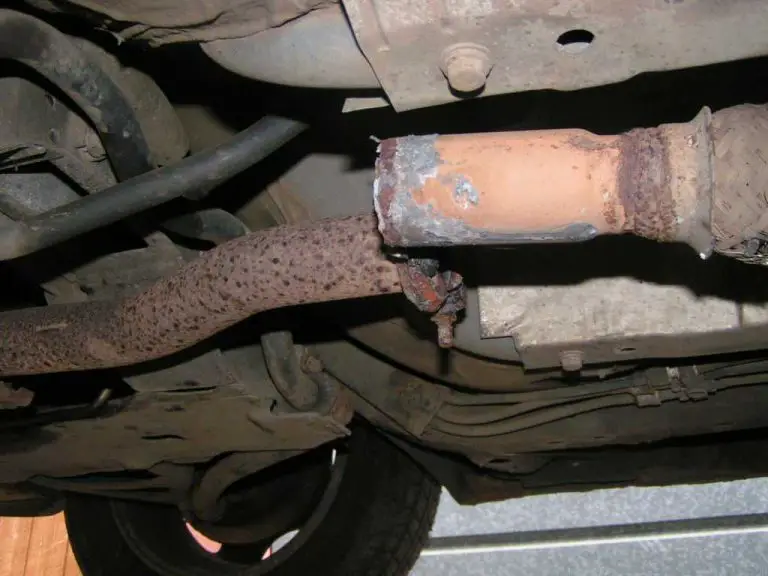
Look for burst braid strands, rust scale, soot, and separation at weld joints. Check both ends of the flex section, because a leak can start where the pipe meets the fixed exhaust, not only in the middle. Surface wear alone is less convincing than wear plus a noise or smell.