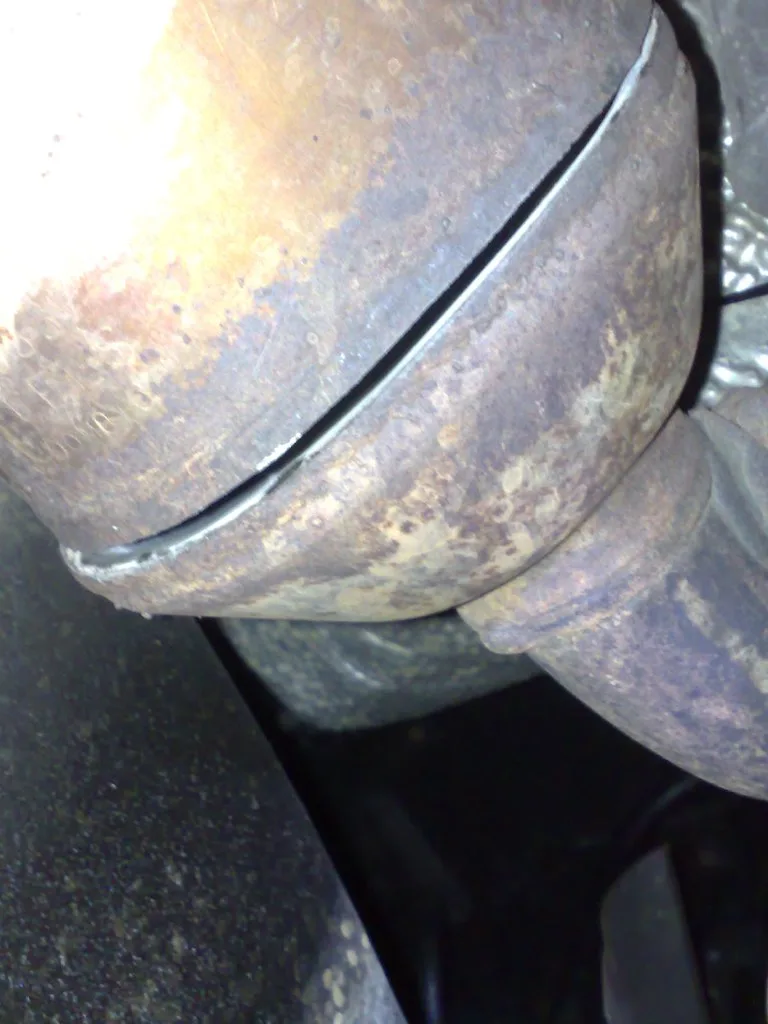
Exhaust Manifold vs Catalytic Converter
No, an exhaust manifold and catalytic converter are different parts, but some vehicles bolt the converter to the manifold in one assembly. Mixing them up can lead you to replace the wrong part, ignore a cracked manifold, or miss a failing converter that triggers codes and power loss. This guide shows how each part fails, how the noise, smell, and OBD-II codes differ, and how to tell when the converter is built into the manifold.
| Decision factor | exhaust manifold | catalytic converter | Winner |
|---|---|---|---|
| Main job | Collects exhaust from individual cylinders and routes it out of the head | Treats exhaust in the exhaust stream and helps reduce hydrocarbons, carbon monoxide, and NOx. | tie |
| Common failure signs | Ticking, soot at a flange or gasket, exhaust smell, slow warm-up | Loss of power, sulfur smell on some vehicles, efficiency codes, overheating damage | exhaust manifold |
| Best diagnostic clue | Local leak noise, soot trail, and unstable upstream O2 readings from extra oxygen entering the exhaust | P0420-style efficiency complaint with upstream and downstream O2 signals that stay too similar | tie |
| Replacement complexity | Often involves gasket, studs, and torque sequencing at the cylinder head | Often a direct exhaust replacement, but can be difficult if the substrate is close-coupled or rusted in place | tie |
| Packaging | May be separate cast iron or stainless part, or part of an integrated assembly | May be underfloor or close-coupled, and sometimes built into the manifold side of the engine bay | tie |
How the manifold and converter differ
The exhaust manifold bolts to the cylinder head and gathers exhaust from each cylinder. The catalytic converter sits in the exhaust stream and uses a catalyst-coated substrate to clean that exhaust before it leaves the vehicle.
They are easy to confuse because both live near the engine on many cars, and both can cause smell, noise, reduced performance, or a check-engine light. The repair path is different, though. A manifold leak can imitate a converter fault, and a converter code can come from bad sensor data rather than a damaged substrate.
What each part does
The exhaust manifold’s job is flow collection. It takes pulses from the exhaust ports and sends them into one outlet, so a crack, warped flange, or failed gasket can change how the engine breathes and how the sensors read. Cast iron and stainless steel are common materials.
The catalytic converter’s job is emissions control. It reduces hydrocarbons, carbon monoxide, and NOx after combustion, so a plugged or degraded converter can restrict flow or fail efficiency monitoring even when the engine itself runs normally.
Where each part sits in the exhaust path
The manifold sits at the cylinder head. The converter sits downstream in the exhaust stream, often close-coupled on transverse engines or farther under the floor on other layouts. That packaging matters, because a close-coupled converter may be built into the same housing as the manifold.
A transverse engine can place the manifold and converter on the firewall side or radiator side of the engine bay, depending on the platform. A rear-wheel-drive layout often leaves more room and uses more separate sections.
Why they are sometimes confused
Both parts can create a hot exhaust smell, both can trigger a check-engine light, and both can affect power. A manifold leak can also upset oxygen sensor readings, which can lead to a P0420 catalyst efficiency code even when the converter substrate is still intact.
That is why the scan tool matters. Read the code, check live data, then inspect the exhaust path before ordering parts.
Is the catalytic converter part of the exhaust manifold?
On many vehicles, The exhaust manifold and catalytic converter are separate parts in series. On some engines, especially compact transverse designs, the converter is integrated into the manifold or bolted so closely that the assembly is often treated as one unit.
That packaging change affects diagnosis and replacement. If the converter is built into the manifold, a cracked manifold, failed gasket, or damaged substrate can all point to the same housing.
Separate parts on most vehicles
In a separate layout, the manifold ends where the exhaust outlet leaves the cylinder head area, and the converter starts downstream. This makes inspection simpler because you can isolate soot, leaks, and sensor placement more easily.
Integrated manifold-converter assemblies
Some OEM designs combine the manifold and converter into one one-piece or closely coupled assembly. These are common where space is tight and warm-up targets matter. Replacement often costs more than replacing only a separate converter or manifold, because the whole assembly may need new gaskets, studs, and careful oxygen sensor handling.
Why packaging changes the answer
With a separate layout, you can often replace only the failed side. With an integrated assembly, a cracked manifold section or failed converter substrate may mean replacing the whole unit. That is why the parts diagram matters before you buy anything.
Exhaust manifold comparison table
This table sorts the problem by symptom, not by guesswork. Start with the sound, smell, and scan data, then move to the first physical check that matches the clue.
| Symptom | Likely manifold issue | Likely catalytic converter issue | Scan-tool clue | First check |
|---|---|---|---|---|
| Ticking on cold start | Cracked manifold or leaking gasket, especially near the head | Less common unless the converter housing is cracked or loose | May show lean or unstable upstream O2 behavior from extra air entering the exhaust | Listen at the flange and gasket area |
| Exhaust smell in the engine bay | Leak at the manifold, gasket, flange, or studs | Possible if exhaust is escaping at the converter shell or joints | Codes may be absent, or P0420 may appear if the leak affects catalyst monitoring | Look for soot streaks and hot-gas traces |
| Check-engine light with P0420 | Can be caused by a leak upstream of the converter or by sensor error | Commonly points to low catalyst efficiency | Upstream and downstream O2 signals may look too similar | Inspect for exhaust leaks before condemning the converter |
| Slow warm-up or sluggish throttle response | Leak can hurt exhaust pulse behavior and sensor accuracy | Restricted or damaged converter can increase backpressure | Live data may show abnormal O2 switching or delayed catalyst response | Check both sensor streams and the outlet temperature pattern |
| Soot around a joint | Very likely a manifold gasket, flange, or cracked casting | Possible only if there is a shell crack or leaking joint near the converter | Fuel trim may drift from false air entering the system | Inspect studs, nuts, and sealing surfaces |
How to read the table
A manifold leak usually announces itself with ticking, soot, and a smell near the engine. A converter fault usually shows up as an emissions-efficiency problem, sometimes with power loss if the substrate is restricted.
Use the scan-tool clue as the separator. If upstream and downstream oxygen sensors look too similar after warm-up, the converter is under suspicion. If the leak is upstream of the converter, the sensors may be lying to the ECU long before the converter itself is bad.
How to tell a leak from a bad converter
A leak usually makes noise first. A bad converter usually makes the code first. The tricky part is that a leak can also create the code, so you need sound, smell, and live data together.
Ticking, soot, smell, and slow warm-up
A cracked manifold or failed exhaust manifold gasket often ticks most loudly on cold start, then quiets as metal expands. Soot around a flange or bolt pattern points to escaping exhaust, and a hot smell near the engine bay is a common clue. Slow warm-up can happen because the leak distorts exhaust flow before the catalyst reaches operating temperature.
Suppose a 4-cylinder transverse engine starts ticking for 20 seconds each morning and leaves a black trail at the rear manifold flange. That pattern points first to a gasket or crack, not the converter substrate.
P0420 and related catalyst codes
P0420 means catalyst efficiency is below the expected threshold for the monitored bank. It does not prove the converter is bad by itself. Exhaust leaks, failing oxygen sensors, wiring faults, and contamination can all create the same complaint.
If the engine has a P0420 and the downstream sensor mirrors the upstream sensor too closely after warm-up, that supports a converter problem. If the upstream sensor is erratic because a leak is pulling in outside air, fix the leak before replacing the converter.
Upstream versus downstream oxygen sensor behavior
The upstream oxygen sensor helps the ECU manage fuel trim. The downstream oxygen sensor helps the ECU judge catalyst efficiency. When the converter is healthy, the downstream signal is typically steadier than the upstream signal after the system is hot.
When a manifold leak is present, extra oxygen can distort the upstream reading and confuse catalyst monitoring. When the converter is failing, the downstream signal often starts to mimic the upstream one instead of staying smoothed out.
- Read all stored and pending OBD2 codes.
- Check live upstream and downstream O2 data at operating temperature.
- Inspect the manifold, gasket, flange, and studs for soot or cracks.
- Inspect the converter shell and nearby joints for leaks or heat damage.
- Only then decide whether the fault is the manifold, the converter, or the assembly.
Can you drive with either problem?
You may be able to move the vehicle short term with either issue, but neither one should be ignored. A cracked manifold or leaking gasket can get louder, contaminate sensors, and let hot exhaust escape near wiring or plastics. A bad converter can cause power loss, overheat internally, or fail emissions testing.
Cracked manifold or leaking gasket
If the leak is small and the engine still runs normally, the vehicle may be drivable for a short distance. Even then, the escaping gas can damage nearby parts and can make the ECU chase a problem that is really mechanical.
A common first-timer mistake is replacing the converter because of a P0420, then discovering the manifold gasket was leaking the whole time. That is why the leak check comes first.
Bad catalytic converter
If the converter is restricted, the engine may feel flat, struggle at higher load, or run hotter than normal. If the converter is only inefficient, drivability may stay acceptable while the check-engine light remains on.
Stop driving and inspect now if the converter glows, the exhaust smells sharply overheated, or the vehicle loses power enough to feel unsafe. Those signs point to a problem that can worsen quickly.
Does the manifold converter come as one assembly or separate parts?
It can be either. Many vehicles use separate parts, but some OEM designs combine the manifold and converter into one integrated assembly. The correct answer depends on engine layout, emissions calibration, and packaging space.
That difference changes what you replace first, what seals you need, and how much labor is involved. It also changes how you inspect oxygen sensors and studs.
| Layout | Replacement implication | Parts to inspect first |
|---|---|---|
| Integrated manifold-converter assembly | Often replaced as one unit; cost and labor can be higher than separate parts | Gasket, studs, upstream and downstream oxygen sensors, housing cracks |
| Separate manifold and catalytic converter | Can often replace only the failed part if the other side is sound | Manifold gasket, flange, converter shell, sensor bungs, joints |
One-piece OEM design versus separate parts
On an integrated design, the converter may sit so close to the head that the assembly warms quickly and takes less room. The tradeoff is service cost. If the housing cracks or the substrate fails, the whole unit may have to come off.
On a separate design, a gasket or flange problem can be repaired without touching the converter. That is usually cheaper and simpler when the converter substrate is still healthy.
Gaskets, studs, and oxygen sensor handling
Whenever the manifold comes off, inspect the gasket, studs, and flange face. Heat cycling can crush the gasket, stretch studs, and warp contact surfaces. Replacement usually requires correct torque sequencing so the sealing face pulls down evenly.
Oxygen sensors need careful handling too. A sensor damaged by heat, impact, or contamination can create the same efficiency complaint that a bad converter would. Inspect the connectors and electrical lead before condemning the exhaust hardware.
What to inspect first
Start near the cylinder head and move outward. That order catches the most common false converter complaints before you spend money on a downstream part.
Gasket, flange, and studs
Look for black soot, a broken stud, a lifted flange, or a hiss at the head joint. Any of those can create a leak that sounds like a bad converter and can distort sensor readings enough to set a code.
Upstream and downstream oxygen sensors
Check whether the upstream sensor switches normally and whether the downstream sensor stays more stable after warm-up. If the downstream signal mirrors the upstream signal too closely, either the converter is weak or something upstream is interfering with the reading.
Converter housing and substrate clues
Inspect the outer shell for dents, cracks, and heat discoloration. If the vehicle has rattling from the converter, the substrate may be broken up inside. Backpressure clues and a loss of power under load make that more likely than a simple manifold leak.
Picture a crossover SUV with a P0420, no noise at idle, and a downstream O2 trace that copies the upstream trace on a steady cruise. That points more toward converter inefficiency than a manifold gasket leak, especially if there is no soot around the head joint.
Choose exhaust manifold if…
Choose the exhaust manifold if the symptom is ticking, soot at the head joint, an exhaust smell in the engine bay, or a leak that shows up before the converter. Choose it first when the scan data suggests extra oxygen from an upstream leak, because that leak can create a false catalyst complaint.
Choose catalytic converter if…
Choose the catalytic converter if the code pattern and live O2 data point to poor catalyst efficiency, especially when the downstream sensor mirrors the upstream sensor after warm-up and the manifold area is dry and quiet. Choose it first when restriction, rattling substrate noise, or sustained efficiency failure points downstream.
Frequently asked questions
Is exhaust manifold and catalytic converter the same?
No. The exhaust manifold collects exhaust from the cylinders and routes it out of the head, while the catalytic converter treats exhaust in the stream to reduce emissions. They can be packaged close together, but they are different parts and they fail in different ways.
Is the catalytic converter part of the exhaust manifold: usually no, but some vehicles?
Usually no, but some vehicles use an integrated manifold-converter assembly. On those engines, the converter is built into or tightly coupled with the manifold housing. That packaging is common where space is tight and warm-up control matters.
What is a manifold catalytic converter?
It is an integrated or closely coupled assembly where the converter sits with the exhaust manifold instead of being a separate underfloor unit. If the substrate, housing, or manifold section fails, the repair may require replacing the whole assembly rather than one part alone.
What does an exhaust manifold do compared with a catalytic converter?
The manifold gathers exhaust from each cylinder and moves it into one outlet. The converter then cleans that exhaust by reducing hydrocarbons, carbon monoxide, and NOx. One is a collection and routing part; the other is an emissions-control part.
Can you drive with a cracked exhaust manifold or bad catalytic converter?
Sometimes for a short distance, but neither should be ignored. A cracked manifold can leak hot gas, damage sensors, and make the engine bay smell. A bad converter can trigger power loss, restriction, or repeated emissions faults that get worse.
How do you tell an exhaust manifold leak from a catalytic converter problem?
Use sound, smell, and scan data together. A manifold leak often ticks, leaves soot, and affects upstream O2 readings. A converter problem more often shows P0420-style efficiency trouble, downstream O2 behavior that copies the upstream signal, or signs of restriction.
Does the manifold converter come as one assembly or separate parts: both layouts exist?
Both layouts exist. Many vehicles use separate pieces, but some compact transverse engines use an integrated manifold-converter assembly. The parts diagram and the engine layout tell you which one you have, and that choice affects cost, labor, and the order of inspection.
What is the difference between manifold and catalytic converter?
The manifold is the collection point bolted to the cylinder head; the converter is the emissions device downstream in the exhaust stream. The manifold is more likely to leak, crack, or need a gasket and stud repair. The converter is more likely to be judged by O2 sensor behavior and efficiency codes.