
How Much Does Exhaust Manifold Replacement Cost on Cars?
Exhaust manifold replacement usually costs $400 to $1,500 on most cars, but rusty studs, tight engine bays, and O2 sensor or gasket replacement can push it higher. Skip a cracked manifold and you can end up with exhaust leaks, loud ticking, failed emissions tests, and bigger labor bills later. This guide breaks down the price by part type, engine layout, rusted fasteners, and add-on hardware so you can spot inflated quotes.
What drives exhaust manifold cost


Parts and labor make up the bill. The split changes a lot by vehicle. On easier jobs, parts can be 70-90% of total cost. On harder jobs, labor climbs fast because access, corrosion, and broken hardware slow removal and reassembly.
An exhaust manifold routes exhaust from the cylinders into the rest of the exhaust system, which includes the catalytic converter, resonator, muffler, and exhaust pipes. That location matters. A cramped engine bay can turn a straightforward swap into a long bolt-removal job.
Parts versus labor
The manifold itself may be cast iron or tubular. Cast iron is common and durable, while tubular designs can cost more and may fit differently by engine family. OEM parts usually cost more than aftermarket parts, and emissions-compliant replacements can cost more still when the vehicle needs CARB-compliant hardware.
Labor depends on what has to come apart. If the manifold comes off cleanly, the job is mostly removal, cleaning, gasket replacement, and reinstalling hardware. If studs snap or bolts seize, labor time rises quickly.
Vehicle make, model, and year
Replacement cost changes with the vehicle make, model, and year because engine bay packaging changes access. Luxury or imported vehicles often need costly OEM parts and more complex installation. That pushes both parts and labor higher.
A common first-timer mistake is comparing quotes across different models as if the work were identical. A 4-cylinder sedan with open access and a V6 crossover with tight heat shielding are not the same job.
Engine layout and access
Front-wheel-drive transverse engines often cost more in labor than some longitudinal rear-drive layouts because access can be tighter. The rear bank on a V6, for example, may sit close to the firewall. That can turn fastener removal into a time-consuming task.
Suppose a transverse 2.4L engine needs a manifold on the firewall side. The part may be ordinary, but the quote rises because the technician has to work around heat shields, wiring, and limited tool swing.
What is included in the quote?
A complete quote should break out the manifold, gasket, hardware, and sensor handling separately. If the estimate bundles everything into one vague line, you cannot tell whether the price is fair. Ask for each item on its own line when possible.
Exhaust manifold type
Cast iron manifolds are often cheaper than tubular assemblies, but the exact price still depends on the engine and emission equipment around it. If the manifold has warped or cracked, the replacement choice may also be limited by the original flange and port shape.
Gasket and hardware
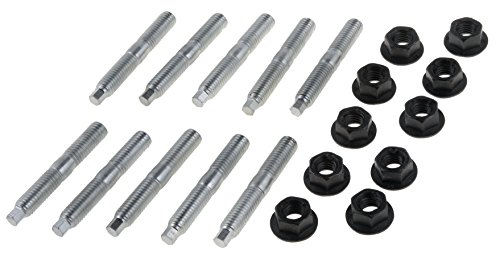
The gasket should usually be replaced when the manifold comes off. New gaskets should always be used for a tight seal, and the fitment must match the head port layout. Manifold bolts and studs are rust-prone, so broken fasteners can add parts and labor to the quote.
Cleaning the mounting area is recommended before installation to improve sealing. If the quote includes a gasket charge twice, or lists hardware without naming what it is, that is worth questioning.
O2 sensor handling
Some exhaust systems use oxygen sensors that must be disconnected carefully. The sensor wiring can be damaged during removal, and seized threads can turn a simple disconnect into a replacement. That means the quote may need labor for removal and reinstallation, plus a sensor if the old one fails or breaks.
Do not assume the sensor is automatically included. If the estimate adds a sensor, ask whether it is being replaced because of age, heat damage, or thread damage rather than as a blanket upsell.
Exhaust manifold cost worksheet
Use this worksheet to compare quotes side by side. The point is not to guess a single universal price. The point is to see which line items match the vehicle and which ones look padded.
| Vehicle layout | Manifold type | Gasket, stud, sensor add-ons | Estimated labor hours | Quote comparison notes |
|---|---|---|---|---|
| 2016 FWD 4-cylinder, transverse | Cast iron manifold | Gasket, 2 studs, 1 O2 sensor reconnect | 3.0 to 4.5 | Check firewall-side access and heat shield removal |
| 2014 RWD V6, longitudinal | OEM cast manifold | Gasket, stud kit, no sensor replacement | 2.0 to 3.5 | Lower labor if top-side access is open |
| 2012 import sedan, tight bay | Aftermarket tubular assembly | Gasket, studs, O2 sensor replacement | 4.0 to 6.0 | Verify emissions compliance and flange fitment |
| Older rust-belt SUV | Cast iron manifold | Gasket, broken studs, penetrating oil prep | 5.0 to 7.0 | Rusted fasteners may justify extra labor |
Why some quotes run higher
Quotes run higher when the job stops being a simple swap and becomes a fastener recovery job. Rusted bolts are common during exhaust removal and can slow the job down. Labor cost rises when access is difficult, rusted, or welded.
That is why two quotes for the same manifold can differ by a lot. One shop may be pricing a clean removal. Another may be pricing broken studs, heat shields, and sensor work.
Rusted or broken studs
Manifold bolts and studs live in heat and corrosion. When they snap, the repair may need extra extraction time and replacement hardware. Correct thread pitch and torque matter during reassembly, so the shop cannot just reuse any spare bolt.
Seized bolts and penetrating oil
The guide recommends spraying penetrating oil before removing exhaust bolts. That step does not guarantee an easy removal, but it can reduce the odds of snapping a fastener. If the estimate mentions seized hardware, the labor number should reflect that reality.
Tight transverse-engine packaging
Transverse layouts often crowd the manifold against the radiator support, firewall, or steering gear. That changes the labor profile. A quote that ignores access difficulty on a cramped engine bay may be missing the actual work required.
Picture a compact sedan with a firewall-side manifold and a rusty heat shield. The part itself may be ordinary, but the technician may spend most of the time just reaching the fasteners.
OEM or aftermarket manifold?
OEM and aftermarket manifolds can both work, but they do not always cost the same or fit the same way. OEM parts typically cost more than aftermarket parts. Aftermarket choices may reduce the parts total, but fitment and emissions compliance can differ.
Price differences
Aftermarket manifolds are often cheaper up front. OEM parts usually cost more because they are built to the vehicle maker’s specification. On some vehicles, especially luxury or imported models, the OEM price gap can be large enough to change the repair strategy.
Fitment and emissions compliance
Fitment matters more than sticker price. The flange shape, port layout, sensor bungs, and heat-shield mounts must match the engine. The page also notes emissions rules can force more expensive CARB-compliant parts, which can eliminate some lower-cost options.
When OEM is the safer pick
OEM is often the safer pick when the engine uses a complex manifold assembly, when emission rules are strict, or when the aftermarket part has uncertain fitment. If the quote uses a cheaper part but adds labor to make it fit, the total may not actually be lower.
Can a cracked manifold be repaired?
Sometimes, but not always. A small crack on a cast iron manifold may be repairable in limited cases, but warping, flange damage, or an exhaust leak at the mating surface often makes replacement the better choice. If the manifold has failed at more than one point, replacement is usually the sensible call.
Cracks, warping, and leaks
A cracked manifold can leak exhaust before it reaches the rest of the system. That can create ticking noise, fumes, and a failed emissions test. If the flange is warped, a patch may not restore the sealing surface well enough to hold.
When repair makes sense
Repair makes more sense when the crack is small, the manifold is otherwise sound, and the mounting surface still lines up correctly. Even then, the quote should state whether the repair is a temporary fix or a durable correction.
When replacement is the better call
Replacement is the better call when there are multiple cracks, broken studs that have damaged the flange, or corrosion around the port openings. If the labor to rescue the old part comes close to the labor for replacement, the new part is usually the cleaner option.
How to compare quotes without overpaying
Start by checking whether the labor hours match the vehicle’s access difficulty. Then compare the parts list line by line. A quote that combines gasket, studs, sensor work, and manifold labor into one number is harder to verify and easier to pad.
Get multiple quotes from independent shops and dealers. That lets you compare the same repair on different labor rates and parts choices. If one quote is far above the others, ask which specific step explains the difference.
- Match the labor hours to the engine layout and access.
- Confirm whether the gasket is included once, not twice.
- Ask whether studs, bolts, and heat shields are separate charges.
- Check whether the O2 sensor is being removed, reused, or replaced.
- Compare OEM and aftermarket part numbers for the same engine.
- Ask whether the quote assumes rusted or welded hardware.
- Review independent shop and dealer estimates side by side.
Red flags are easy to spot once you know what should be itemized. If a quote says “labor” without hours, ask for the time estimate. If it lists a gasket charge after already pricing a manifold assembly that includes sealing hardware, ask for clarification.
- Vague labor line with no hours listed
- Duplicate gasket charge in separate lines
- Sensor replacement with no damage or fault reason
- Hardware charge with no count or description
- No mention of rusted fasteners on an older vehicle
- Aftermarket part listed without fitment details
- OEM or CARB-compliant part required but not explained
Frequently asked questions
How much does exhaust manifold replacement cost on a car?
On many cars, exhaust manifold replacement often costs roughly $400 to $1,500. The spread comes from parts price, labor hours, and access. A simple job with a common cast-iron manifold can stay near the low end, while a tight engine bay, rusted studs, or sensor replacement can push the total higher.
Why is exhaust manifold replacement so expensive on some vehicles?
It gets expensive when access is poor, hardware is rusted, or the vehicle needs costly OEM parts. Luxury or imported vehicles often need more complex installation and pricier parts. If the manifold sits near the firewall or under multiple heat shields, labor time rises fast.
Does replacing an exhaust manifold include a new gasket?
It usually should. New gaskets should always be used for a tight seal, and the fitment must match the head port layout. If a quote does not include a gasket, ask whether it is being reused. Reusing an old gasket is a common cause of leaks after the job.
How much labor does an exhaust manifold replacement usually take?
Labor depends on access, rust, and whether the fasteners come out cleanly. Some jobs are straightforward, while others need extra time for broken studs, heat shields, and sensor removal. A labor estimate should reflect the vehicle layout, not just the part being replaced.
What makes exhaust manifold labor cost more on rusted or broken bolts?
Rusted bolts are common during exhaust removal and can slow the job down. Broken studs may need extraction, extra cleaning, and replacement hardware. Penetrating oil can help before removal, but seized fasteners still add time when the manifold or surrounding parts have welded themselves in place with corrosion.
Should I replace O2 sensors when the exhaust manifold is replaced?
Only if the sensor is damaged, seized, contaminated, or due for replacement. Some exhaust systems use oxygen sensors that must be disconnected carefully, and the wiring can be damaged during removal. If the sensor threads are bad or the sensor has heat damage, replacing it during the manifold job can save labor later.
Is it cheaper to repair a cracked exhaust manifold or replace it?
Repair can be cheaper only when the crack is small and the manifold still seals properly after correction. If the part is warped, heavily rusted, or cracked near the flange, replacement is usually the better value. Paying for a weak repair often leads to another leak and another labor bill.
How do OEM and aftermarket exhaust manifold prices compare?
OEM manifolds usually cost more than aftermarket parts. Aftermarket options can lower the parts total, but fitment and emissions compliance may differ, especially on vehicles that need CARB-compliant parts. If the quote saves money on the part but adds labor or fitment risk, the lower price may not hold.