Are Clamp-On Exhaust Tips Legal in Your State?
Clamp-on exhaust tips are legal in many states if they stay within noise limits, do not protrude dangerously, and do not interfere with inspection rules; state vehicle codes, local ordinances, and inspection standards determine the final answer. Ignore those limits, and you can face a failed inspection, a fix-it ticket, or a roadside citation. This guide covers the state-law check, local inspection and noise rules, and the safety and clearance points to verify before you buy or install one.
Factors that make clamp-On Tips legal or illegal
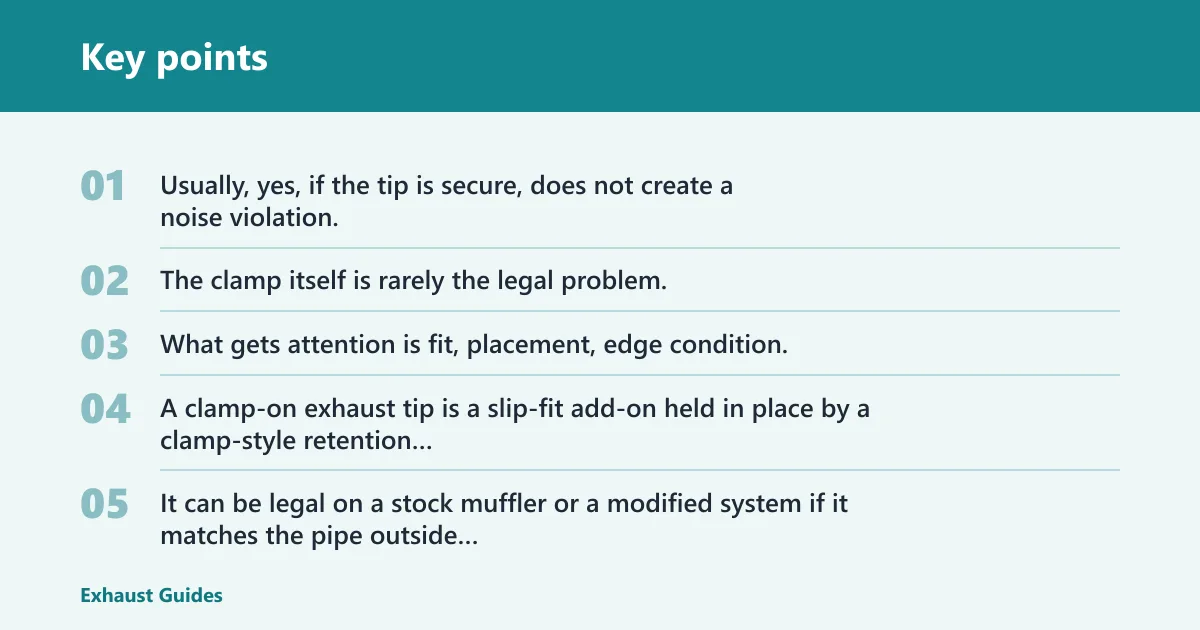


Usually, yes, if the tip is secure, does not create a noise violation, does not protrude dangerously, and does not trigger an inspection failure. The clamp itself is rarely the legal problem. What gets attention is fit, placement, edge condition, and whether the tip changes how far the exhaust sticks out.
What usually makes a tip legal or illegal
A clamp-on exhaust tip is a slip-fit add-on held in place by a clamp-style retention method. It can be legal on a stock muffler or a modified system if it matches the pipe outside diameter, stays clear of bodywork, and does not create sharp edges or unsafe projection. Stainless steel or chrome construction does not decide legality; it mainly affects corrosion resistance, heat tolerance, and appearance retention.
A tip can become a problem if it is loose, aimed at the bumper, extends too far past the rear of the vehicle, or ends with a sharp lip. Those are the practical enforcement triggers. They are more likely to matter than the words “clamp-on” on the packaging.
Exhaust tip legality checklist
Use this checklist before you buy or install a clamp-on tip. It is built around the checks inspectors, officers, and local code enforcement usually care about: noise, projection, bumper clearance, sharp edges, and inspection compliance.
| law source to check | common red-flag issue | what to measure or inspect | pass/fail notes |
|---|---|---|---|
| State vehicle equipment law | Unsafe protrusion or illegal exhaust modification | How far the tip extends past the body, whether it points into traffic, and whether it can strike a person or object | Pass if the tip stays secure, does not create an unsafe projection, and meets the state’s equipment language |
| State and local noise rule | Added exhaust note that exceeds the limit | Whether the tip changes the exhaust note, amplifies sound, or violates a local decibel rule | Pass if the exhaust remains within the noise rule that applies in your area |
| Inspection station standard | Loose fit, visible damage, or noncompliant outlet position | Clamp security, tip movement, rust, cracks, and whether the outlet is mounted in a way the station accepts | Pass if the tip is secure, intact, and accepted under that state’s inspection criteria |
| Body clearance and safety rules | Bumper melt risk or contact with trim | Clearance to the bumper, valance, fascia, and rear bodywork when the exhaust is hot | Pass if the tip does not contact or overheat nearby parts |
| Edge and projection rules | Sharp or jagged tip edge | Tip rim, cut edge, and any decorative outlet that could catch skin or clothing | Pass if the outer edge is smooth and does not create a hazard |
Which rules matter most?
All three matter, but they do not work the same way. State vehicle equipment law sets the baseline, local noise or ordinance rules can be stricter, and inspection stations decide whether the vehicle passes on the day it is checked. A tip can be fine under one layer and fail under another.
State vehicle equipment law
State law is often where unsafe protrusion, exhaust outlet position, and general equipment compliance are addressed. Some states write broad language about safe condition; others are more specific about tailpipe termination, edge safety, or emissions-related equipment. The clamp-on design usually is not named as the violation. The placement and safety of the finished tip are.
Local noise or ordinance rules
Noise rules can come from local ordinances even when state equipment law is silent on a decorative or slip-fit tip. If the tip changes the sound enough to violate a local exhaust-noise rule, the installation can still be illegal. That is why a quiet fit on a stock muffler can matter more than the clamp style.
Inspection station pass/fail rules
Vehicle inspection is a visual safety check in many states, and the pass/fail standard can be narrower than the wording of the law. A station may fail a loose tip, a tip with a sharp edge, or a tip that sits too close to body panels. Emissions-related exclusions usually focus on catalysts, sensors, and other emissions equipment, not the tip alone.
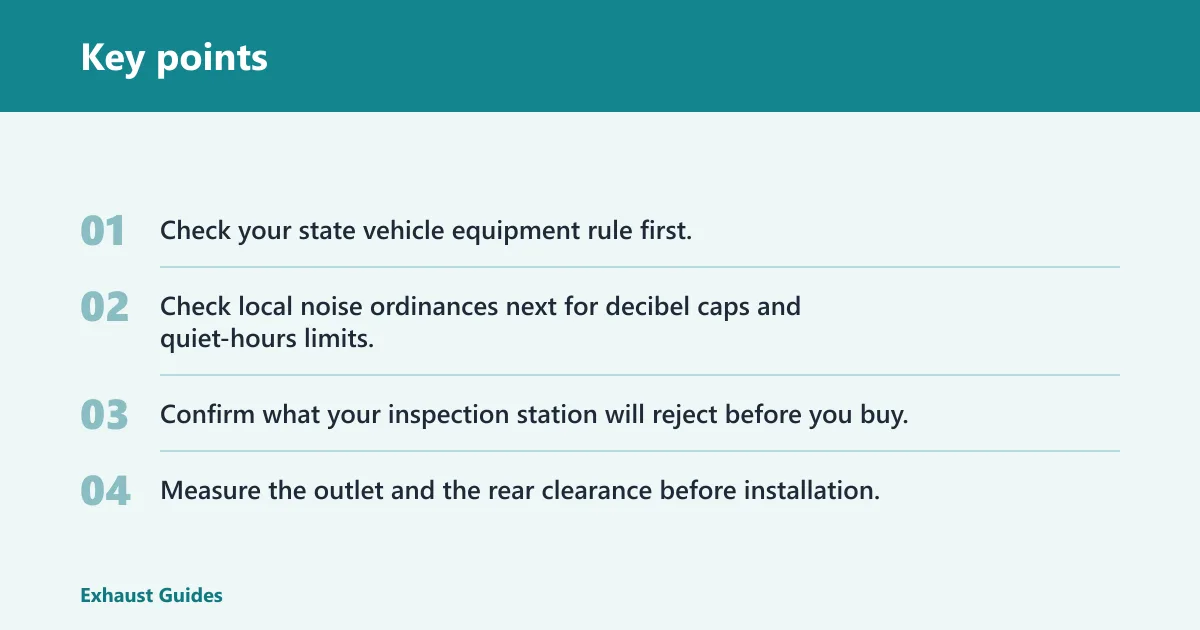
- Check your state vehicle equipment rule first.
- Check local noise ordinances next for decibel caps and quiet-hours limits.
- Confirm what your inspection station will reject before you buy.
- Measure the outlet and the rear clearance before installation.
Do exhaust tips have to be welded to be legal?
No. Welding is not automatically required for legality. A clamp-on tip can be legal if it is secure, properly sized, and compliant with the applicable noise, projection, and inspection rules. What matters is whether the finished installation stays put and does not create a safety or equipment violation.
Clamp-on vs welded retention
Clamp-style retention is common on exhaust parts, and exhaust clamps are used to secure components and help seal pipe connections. U-bolt clamps are a basic repair option and are common on mufflers and tailpipes. Band clamps reduce pipe deformation. Lap joint clamps fit overlapped joints, butt joint clamps fit same-size pipe butt joints, and V-band clamps are used for flanged connections that need easy removal.
That hardware description helps with fit, not legality by itself. Clamp selection starts with joint type before size, and a 2.5 inch size can refer to different joint structures. The legal question remains whether the installed tip is secure and compliant.
Secure fit on a stock muffler
On a stock muffler, a clamp-on tip is often the simplest path if the tailpipe outside diameter matches the tip’s inlet and the outlet point stays clear of the bumper. A stock exhaust setup usually leaves less room for guesswork. If the tip shifts after tightening, the fit is wrong.
When a loose tip becomes a problem
A loose tip can fail inspection, rattle, scratch paint, or move enough to change where the exhaust ends. That can turn a cosmetic part into a compliance problem. A loose clamp can also let the outlet angle into the bodywork, which raises heat and projection concerns.
Fitment and safety checks before you buy
Measure first. Then buy. Clamp-on tips are only as good as the pipe they fit and the space around the tailpipe termination point. A quick check now avoids a tip that sits crooked, bottoms out on a bumper, or hangs too far past the rear of the vehicle.
Measure pipe outside diameter
Confirm the pipe outside diameter before shopping. Tip fit depends on the outside diameter of the muffler outlet or tailpipe, not the pipe’s nickname or the vehicle model alone. If the inlet size does not match, the clamp can tighten but still leave a poor seal or a shaky fit.
Say your sedan has a straight rear tailpipe with a 60mm outside diameter. A clamp-on tip listed for a different diameter may slide on, but that does not mean it will seat correctly or stay centered. A correct-size tip should fit the outlet without forcing the clamp to do all the work.
Check tailpipe termination point and rear bumper clearance
Look at where the exhaust ends relative to the rear bumper. The outlet should not project to a point that creates a strike hazard or touches nearby trim. If the tip extends too far, it can become an unsafe protrusion even if the clamp is tight.
Picture a truck with a short rear overhang and a tip that ends just under the bumper lip. The truck may pass a basic visual check if the outlet is secure and clear. If the same tip sits an inch lower and points toward a plastic valance, heat damage becomes the likely failure point.
Inspect for sharp edges and body contact
Run a visual check for burrs, jagged cut edges, and contact points. A chromed steel or stainless steel tip can still fail if the edge is sharp or the outlet touches the body. Heat changes matter too; the tip should not sit close enough to melt or discolor nearby plastic.
- Measure the tailpipe outside diameter.
- Match the tip inlet to that measurement.
- Check how far the outlet projects past the bumper.
- Look for sharp edges, rattle points, and body contact.
- Confirm the installed tip stays centered after tightening.
Stock muffler or modified exhaust?
A clamp-on tip is usually easier to defend on a stock muffler because the outlet path is more predictable and the factory tailpipe location is usually stable. On a modified exhaust, the burden is higher: you need to confirm the final outlet position, the joint type, and whether the altered system still meets noise and inspection rules.
Stock exhaust setups
Stock setups are the simpler case. If the tip is a clean slip-fit installation on the factory tailpipe, stays inside the body outline, and does not change the sound enough to violate local noise rules, it is often the least risky option. The clamp is there to retain the tip, not to make the installation legal on its own.
Aftermarket exhaust setups
Modified exhaust systems can change outlet length, angle, and sound. That increases the chance of a projection or noise issue. If the system already uses a different joint style, the tip may need a different clamp type or a different approach entirely. Band clamps are common where deformation matters; V-band clamps suit flanged connections that need easy removal.
Truck, sedan, and motorcycle tip layouts
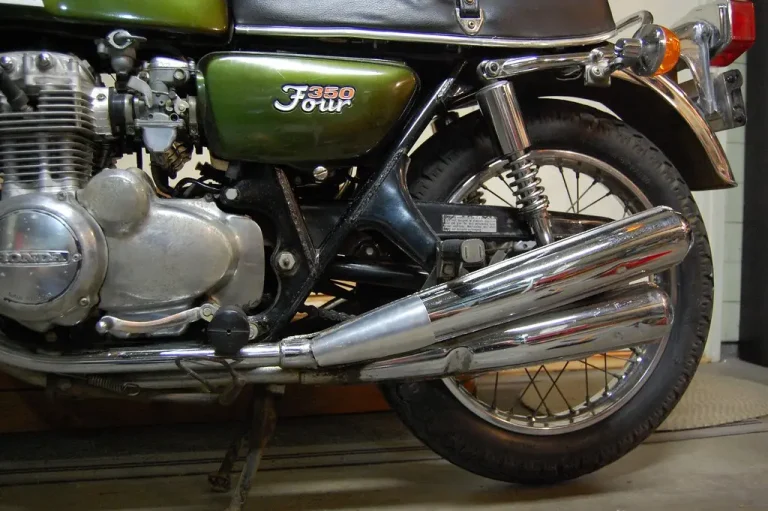
Truck tips often have more room for protrusion issues because the outlet may sit closer to the rear edge of the body. Sedan tips more often run into bumper-clearance and trim-contact problems. Motorcycle exhaust outlets are usually judged on different fit and safety concerns, so you need to check the applicable vehicle class rules before adding a clamp-on tip.
Materials and corrosion resistance
Tip material does not decide legality, but it does affect how the part holds up. Chromed steel is common for appearance. Stainless steel is favored for corrosion resistance and heat tolerance. Both can keep a cleaner finish longer than bare steel, especially where road salt, moisture, and exhaust heat meet.
Chromed steel
Chromed steel is chosen when appearance matters and the tip needs a bright finish. The tradeoff is that plating damage or corrosion at the cut edge can show up sooner if the fit is poor. For a clamp-on tip, finish quality matters less than smooth edges and a stable clamp seat.
Stainless steel
Stainless steel is a strong choice for heat tolerance and corrosion resistance. It is often preferred when the tip sits close to road spray or sees frequent winter use. It still needs correct sizing and safe placement; stainless construction does not excuse a tip that sticks out too far.
Heat and finish considerations
Hot exhaust gas and a close rear bumper can discolor paint, soften trim, or stain chrome. If the tip is decorative, make sure the outlet point does not aim at plastic or painted surfaces. A secure clamp with poor clearance still fails the safety check.
Frequently asked questions
Are clamp-on exhaust tips legal in my state?
They can be, but state law is only one part of the answer. You also need to check local noise rules and any inspection standard that applies to your vehicle. If the tip is secure, nonhazardous, and within the legal outlet and noise limits, it is more likely to pass.
Can a clamp-on tip fail inspection or cause a ticket?
Yes. A loose, noisy, sharply edged, or overly long tip can fail a visual safety check or draw a citation if it violates equipment or noise rules. The clamp style does not protect you from those issues. It only holds the part in place.
What exhaust-tip length or outlet position is illegal?
That depends on state and local law. Some rules focus on unsafe protrusion, while others care more about where the outlet ends relative to the body and whether the tip creates a hazard. Measure from the bumper, check the edge condition, and compare the setup with local equipment language.
Do noise, projection, or bumper-clearance rules matter more than the clamp itself?
Yes. Those are the practical triggers for legal trouble. A well-made clamp is still a problem if the tip is loud, sticks out too far, or sits close enough to damage the bumper. The law usually cares about the finished installation, not the fastening method alone.
Will a clamp-on tip damage the pipe or change emissions compliance?
A clamp-on tip can damage a pipe if it is overtightened or mismatched to the outlet diameter. It usually does not change emissions compliance by itself, because emissions rules usually target catalytic converters, sensors, and other control parts. Still, confirm that your state does not treat the installation as part of a broader exhaust modification.