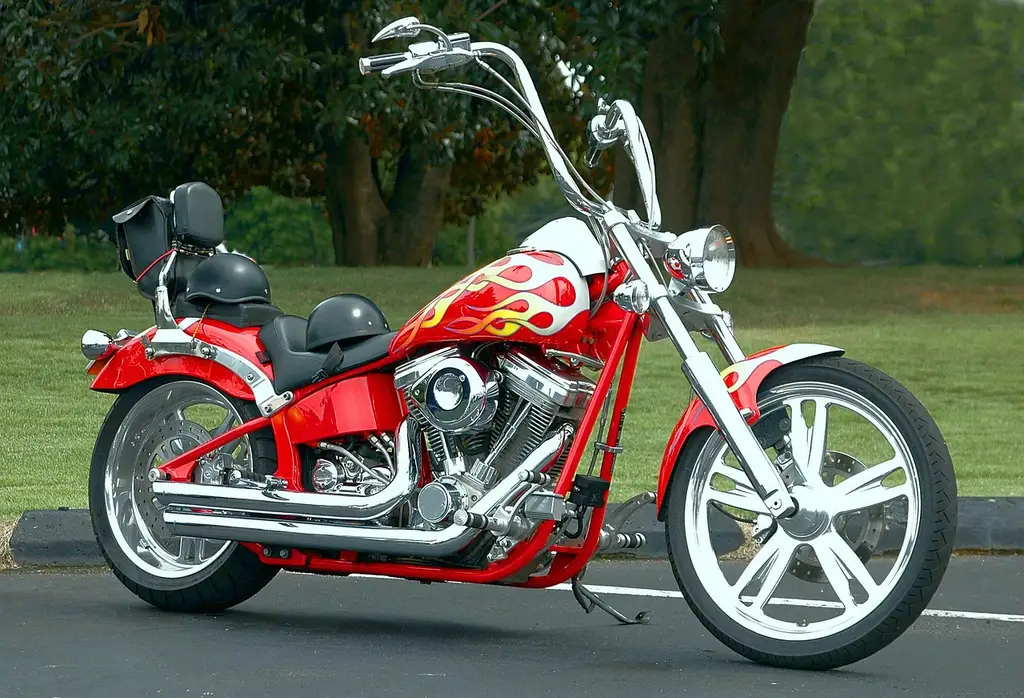
Best Harley Exhaust Tips (2026): Based on Specs and Reviews
Slash-cut Harley end caps are a common starting point for Touring and Softail buyers because they usually give the stock-plus look people want while keeping fitment simpler than more decorative shapes. The right choice still comes down to outlet diameter, mounting method, and clearance to bags or heat shields.
Quick picks
Start with the style that matches the muffler outlet and mounting method, then check whether the kit is sold each or as a pair. Finish, hardware, and clamp position matter too.

- Best overall: slash cut end caps for most Harley Touring setups.
- Best for a custom look: revolver end caps with a matched finish.
- Best classic look: fishtail tips for older-style builds.
- Best value check: 4.5-inch tips sold each or in pairs, but only after matching outlet size and mounting depth.
What are the best exhaust tips for Harley motorcycles?
The best exhaust tips for Harley motorcycles are the ones that match your muffler outlet diameter, mounting style, and available clearance, then fit the look you want. Slash cut is a common default for many Touring and Softail builds. Revolver suits a more custom look, while fishtail works best when the bike already leans classic.
Harley-Davidson says exhaust end caps are designed for a specific exhaust type, and its tip lineup includes multiple styles and finishes. Treat the tip as a fitment part first. Style comes after the numbers. A good-looking end cap that does not match the outlet or clamp location is the wrong buy.
Quick picks by style
- Slash cut: good for a stronger visual stance without getting too far from stock.
- Revolver: better when you want the tip to read as a design feature.
- Fishtail: best when the rest of the build already points to vintage styling.
- 4.5-inch aftermarket tips: useful on some Harley systems, but only when the inlet, outlet, and mounting depth match.
Say your Touring bike has saddlebags close to the outlet. A long fishtail that angles outward can look right on paper and still touch the bag edge or sit too close to the shield. The style is fine; the clearance is not.
Quick comparison
| Product | Badge | Best for | Price | ||
|---|---|---|---|---|---|
 | Hammered Aluminum Skull Exhaust Tips – 4", 3", 2.5", 2.25"Skull Exhaust Tips | Our pick | 2.25" · hammered aluminum · skull end cap | $135.00 Price as of 25 Oct 2026 | View |
 | Upower Exhaust Tips 2.25" Inlet 5.5"x3" Outlet 9" LongUpower | Budget pick | 2.25" · stainless steel · weld-on tip | $25.99 Price as of 25 Oct 2026 | View |
 | YAWUROU Car Dual Exhaust Tip, 2.5" Inlet Straight StainlessYAWUROU | Pair with it | 2.5" · polished silver · bolt-on tip | $15.99 Price as of 25 Oct 2026 | View |
This comparison should help you sort style from fitment before you buy. Use it with the fitment matrix below, because size alone does not tell you whether a tip will clear the bike or install cleanly.
How we chose
The comparisons below focus on four things: fitment language that names the exhaust type, the style choices most often listed for Harley riders, whether the part is sold each or in pairs, and whether installation hardware is included. For model examples, the guide also separates Harley-specific end caps from more universal weld-on or bolt-on tips.
- Specific exhaust type or size listing
- Style clarity: slash cut, revolver, fishtail, or similar
- Sold each versus sold as a pair
- Hardware included or required separately
- Clear limitations where fitment can fail
Slash cut tips: best for a stock-plus look
Slash cut tips are a straightforward Harley styling choice. Harley-Davidson highlights slash cut styles as a popular option, and they work well when you want a stronger rear profile without moving far from the factory shape.
Where slash cut tips fit best
They fit best on Touring and Softail setups where the outlet is already aimed to accept an end cap or slip-on tip with a clean exit path. A slash cut style also suits riders who want a brighter chrome finish or a darker black finish that still reads as a factory-style upgrade.
On some aftermarket systems, a 4.5-inch tip size is common, but 4.5-inch by itself is not a fitment answer. You still need the inlet diameter, the outlet shape, and the mounting depth to line up with the muffler or end cap you own.
When the angle can clash with heat shields or saddlebags
The slash angle can cause trouble when the tip sits too far outboard, when the clamp lands near a heat shield seam, or when the bike uses large saddlebags with tight rear clearance. Those problems show up after install as rattles, marks, or a tip that points too close to bodywork.
A common first-timer mistake is choosing a chrome tip only because it looks flashy, even though the outlet size and mounting style don’t match the bike. A chrome slash cut tip can match the bike visually and still fail if the inlet is wrong by even a small amount or if the clamp needs room that the shield already occupies.
Revolver tips: best for a distinct custom look
Revolver style exhaust tips give the bike a more unusual end-cap look. The same source lists revolver style end caps, so this is not just a generic aftermarket shape. It is a defined Harley styling choice for riders who want something less ordinary than a plain slash cut.
What makes a revolver tip different
A revolver tip usually stands out because the end cap profile is more sculpted and less conventional. The visual effect matters more than any performance change, since end caps mainly alter appearance, outlet shape, and how the rear of the bike reads from behind.
If you want the bike to look custom without going full open-pipe, revolver styling is a good middle ground. It is especially useful when the rest of the exhaust remains close to stock and you only want the visible end changed.
Fitment checks before you buy one
Check the outlet diameter separately from the tip body diameter. Also confirm whether the part mounts with a clamp, a bolt-on flange, or a weld-on end, because those are not interchangeable. Some kits include installation hardware, while others expect you to reuse existing fasteners or buy them separately.
The same source says some tip kits include required installation hardware. That matters because the right hardware can be the difference between a clean fit and a return. It also matters if the new tip changes the fastener length or clamp position.
Fishtail tips: best for a classic profile
Fishtail tips are the classic choice when you want an older motorcycle profile and a more period-correct rear view. The same source lists fishtail end caps as another option, and they work best when the rest of the build already points toward vintage styling.
When fishtails work on Harley and other motorcycle exhausts
They work best on bikes with enough rear clearance to handle the longer visual sweep. On Harley Touring models, that means checking saddlebag distance and outlet aim. On other motorcycles, they can work as long as the exhaust system accepts the same mounting method and outlet size.
They also pair well with chrome when you want the exhaust to stand out, or with black when you want the shape to matter more than the shine. The finish changes the visual weight of the tip more than the bike’s sound or output.
Where fishtails are more style than fitment
Fishtails are often chosen for appearance first, especially when the buyer wants a classic silhouette. That does not make them universal. If the inlet is wrong, the clamp lands in the wrong place, or the tip contacts the heat shield, the style choice becomes irrelevant.
Picture a Softail with a tight muffler exit and a shield that already runs close to the pipe. A fishtail tip may look perfect in a catalog image, but a longer body can force the outlet into a bad angle or leave too little room for the clamp.
Exhaust tip fitment matrix
| Bike family / setup | Muffler type | Style that usually fits the goal | Quick-check fitment fields | Common incompatibility risk |
|---|---|---|---|---|
| Harley Touring | Harley-specific end cap or slip-on tip | Slash cut | Inlet/outlet match; sold each or pair; hardware may be included | Heat-shield contact or saddlebag interference |
| Harley Touring | Aftermarket 4.5-inch tip setup | Slash cut or revolver | Verify 4.5-inch body size against the actual inlet; confirm clamp location | Wrong diameter, even when the outside size looks right |
| Harley Softail | Harley-specific tip-compatible muffler | Revolver or slash cut | Check outlet depth, clamp style, and whether the kit includes hardware | Clamp lands where the shield or bracket blocks access |
| Harley Dyna | Universal or model-specific aftermarket muffler | Slash cut or fishtail | Match inlet diameter first; confirm sold each versus pair | Mismatch between tip outlet and muffler exit diameter |
| Indian Scout | 3-inch slip-on muffler and tip setup | Slash cut | Match the 3-inch slip-on spec; confirm the tip is meant for that system | Brand-specific fitment mismatch |
| Universal aftermarket | Weld-on or bolt-on tip | Rectangle, slash cut, or custom shape | Check exact inlet size, outlet size, and mounting method; hardware may not be included | Weld-on requirement or bolt pattern mismatch |
This matrix shows the main failure point: the outside shape can look right while the internal fit is wrong. A 4.5-inch label or a polished finish does not guarantee that the tip will mount to your muffler.
Harley touring, softail, and dyna scenarios
Touring bikes usually give the clearest case for slash cut or fishtail tips, but bag clearance becomes the deciding factor. Softail setups often need a closer look at clamp access and shield spacing. Dyna-style aftermarket setups tend to vary more, so diameter and mount style become the priority.
Indian Scout and 3-inch slip-on examples
West End Motorsports lists a 3-inch slash cut slip-on muffler option for Indian Scout models. That is useful as a fitment example because it shows how model-specific the numbers can be. A 3-inch slip-on is not interchangeable with a Harley end cap just because both are motorcycle exhaust parts.
That brand/model split is the same reason Harley riders should not buy by style alone. A slash cut shape can appear in many product families, but the inlet and outlet numbers decide whether it belongs on your bike.
Quick-check fields before checkout
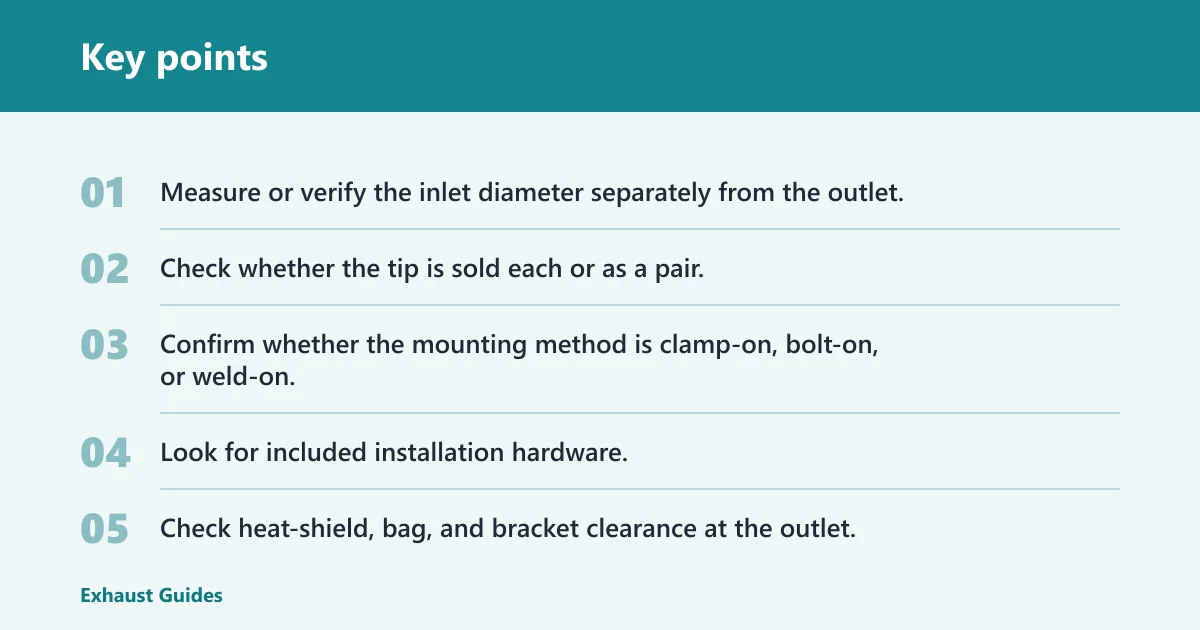
- Measure or verify the inlet diameter separately from the outlet.
- Check whether the tip is sold each or as a pair.
- Confirm whether the mounting method is clamp-on, bolt-on, or weld-on.
- Look for included installation hardware.
- Check heat-shield, bag, and bracket clearance at the outlet.
- Confirm that local noise and street-use rules still allow the exhaust setup.
How do you check fitment?
Check fitment by matching inlet diameter, outlet diameter, mounting method, and clearance, in that order. Do not start with finish or style. Those are the last choices, not the first. If the part is sold each and you need a pair, or if the hardware is missing, the kit is incomplete for your job.
Measure inlet and outlet diameters separately
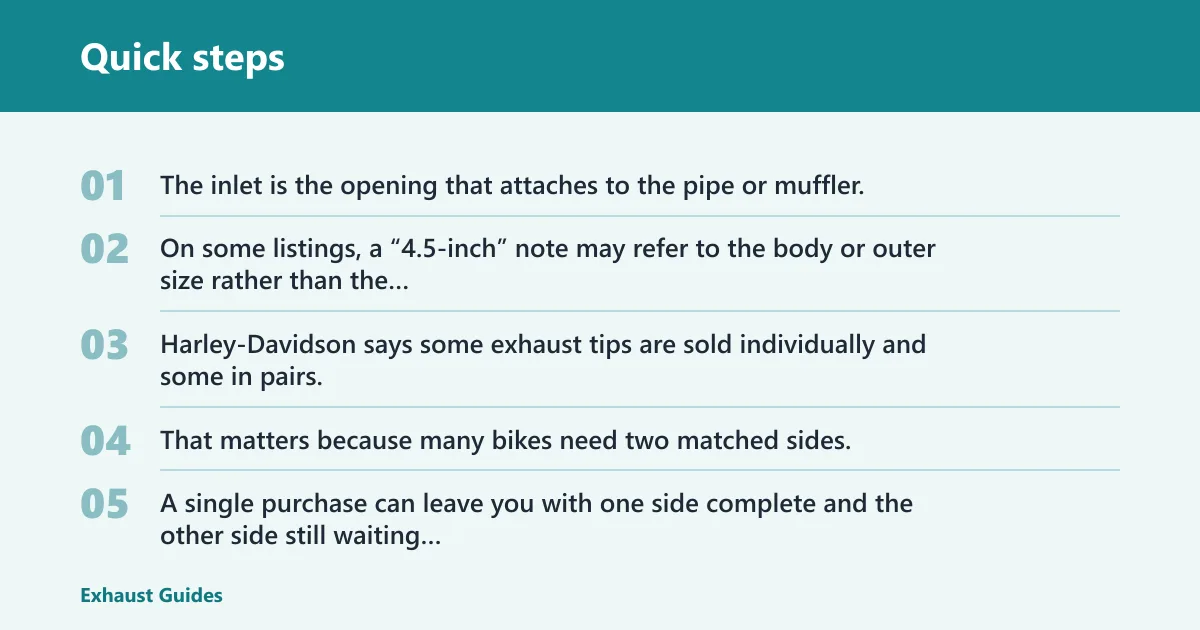
The inlet is the opening that attaches to the pipe or muffler. The outlet is the visible end. On some listings, a “4.5-inch” note may refer to the body or outer size rather than the exact pipe opening, so you still need the actual inlet and outlet numbers.
Check whether the tip is sold each or as a pair
The same source says some exhaust tips are sold individually and some in pairs. That matters because many bikes need two matched sides. A single purchase can leave you with one side complete and the other side still waiting for a matching part.
Confirm clamp style, mounting depth, and hardware
Clamp position is one of the easiest things to overlook. If the clamp lands under a shield edge or too close to a bend, installation becomes awkward and sometimes impossible. Some kits include installation hardware, while others do not, so verify the box contents before you order.
Look for heat-shield and saddlebag clearance issues
Clearance failures usually show up after the part is on the bike. The tip may sit too close to the bag, touch a shield seam, or point at a bracket. Any of those can cause rattles, finish damage, or a return you cannot install again cleanly.
Suppose your Harley Touring bike accepts a slash cut tip at the outlet but the new part extends 1 inch farther rearward than the stock cap. That extra length can be enough to move the exhaust closer to the bag lid or make the clamp harder to reach. The style still fits the bike family, but the specific piece may not fit your setup.
What finish should you buy?
Chrome is the safest choice when you want the tip to look bright and closer to a factory-style finish. Black is the better choice when you want less contrast against dark pipes or a stealthier rear end. Bronze works when the rest of the exhaust already uses that color family, but it is less common.
Chrome for a brighter factory-style match
Harley-Davidson commonly lists chrome among its finish choices. Chrome stands out more on Touring bikes and works well when the rest of the exhaust, heat shields, or trim already has a bright finish. It is the easiest option to match visually.
Black for a darker, low-contrast look
Harley-Davidson also commonly lists black finishes. Black suits bikes with black pipes, black shields, or a low-gloss overall build. It can hide the tip more than chrome does, which helps the exhaust look integrated rather than added on.
Bronze and specialty finishes when the rest of the system matches
The same source notes bronze options on some tips. Specialty finishes only work well when they echo another visible part of the bike. If they do not, the tip can look out of place even when the fitment is correct.
Which one should you buy?
Choose by bike family first. Touring and Softail riders should start with Harley-specific slash cut or revolver end caps, then check whether the kit is sold each or in pairs. Scout owners should use the model-specific 3-inch fitment language on the product page. Universal setups can use weld-on or bolt-on tips only if the mounting method matches the pipe.
Choose by muffler type
If you have a slip-on muffler, verify that the tip is meant for that outlet and not for a full muffler body. If you have an end cap only, do not buy a full muffler description by mistake. The label has to match the part you are replacing.
Choose by goal
If style is the main goal, slash cut is the common appearance upgrade. If you want something less common, revolver is the better visual statement. If you want a classic look, fishtail is the clearest match. If hardware inclusion matters, use that as a deciding filter before you buy.
Street-use check
Street legality and noise rules vary by state, city, and inspection area. Some aftermarket tips are cosmetic only, but others can change sound or outlet behavior enough to affect compliance. If your local rules are strict, keep the stock muffler body and choose only an end cap that preserves the required setup.
Skull Exhaust Tips hammered aluminum skull end cap: best for custom visual style
This option is for riders who want a strong custom look and a hammered aluminum finish. The product listing shows multiple inlet sizes, which helps if you are matching an unusual outlet or building around a nonstandard setup.
The drawback is simple: this is a skull-style end cap, not a Harley-specific answer for every Touring or Softail muffler. You still have to verify whether the 2.25-inch inlet or another listed size matches your pipe and whether the style clears nearby shields or bags.
Upower stainless steel weld-on rectangle tip: best for weld-on universal builds
This is a weld-on rectangle tip with a 2.25-inch inlet, so it suits custom or fabrication-minded setups more than stock Harley end caps. Stainless steel construction is the main strength here, and the weld-on design gives you a permanent, fixed installation path.
The drawback is fitment rigidity. A weld-on tip is not a quick bolt-on match for many Harley riders, and the rectangle shape may not suit a bike that needs a slash cut or fishtail profile. Measure carefully before you commit.
YAWUROU dual exhaust tip polished silver: best for universal bolt-on value
This bolt-on tip is the most budget-friendly of the three product examples, and the polished finish may appeal if you want a bright silver look. The 2.5-inch inlet makes it easy to compare against small-diameter outlet setups.
The drawback is that it is listed as a car dual exhaust tip, so Harley fitment is not guaranteed. The universal language also means you need to double-check clamp style, outlet shape, and heat-shield clearance before treating it as a motorcycle solution.
How to choose
Start with the muffler family, not the finish. If you ride a Harley Touring model, look for a Harley-specific end cap or tip-compatible muffler first. If you ride a Softail, check the clamp location and hardware next. If you ride a Scout, use the listed 3-inch fitment language instead of a Harley size assumption. For non-Harley motorcycles, use the same process: match inlet size, mounting method, and clearance before you worry about styling.
Then decide whether you want a slash cut, revolver, or fishtail profile. Slash cut is a common appearance upgrade. Revolver is the custom choice. Fishtail is the classic choice. After that, pick chrome for brightness or black for a darker match.
Finally, confirm the details that cause returns: inlet and outlet diameters, sold-each versus pair, installation hardware, clamp position, and heat-shield clearance. Those are the parts of the listing that matter when the box arrives.
Frequently asked questions
Which exhaust tip styles fit Harley exhaust systems?
The same source lists slash cut, revolver, and fishtail end caps, and those are the main styles buyers compare first. The style has to fit the exhaust type, though. A great-looking tip still fails if the inlet diameter, clamp location, or mounting depth does not match your muffler.
Are Harley exhaust tips sold individually or in pairs?
They can be sold either way. The same source says some exhaust tips are sold individually and some in pairs. Check the listing closely before you buy, especially if your bike needs matched left and right pieces or if you are replacing only one damaged side.
Do motorcycle exhaust tips come with installation hardware?
Sometimes they do, and sometimes they do not. The same source notes that some tip kits include required installation hardware. That detail matters because missing clamps, bolts, or brackets can stop the install even when the tip itself is the right size and style.
How do I know if an exhaust tip fits my Harley muffler?
Match the inlet diameter, the outlet diameter, and the mounting method first. Then check whether the tip is sold each or as a pair, and whether the kit includes hardware. After that, verify heat-shield and saddlebag clearance so the tip does not rub, rattle, or point into bodywork.
What finish is best for motorcycle exhaust tips, chrome or black?
Chrome is best if you want a brighter, factory-style look and easy visual matching. Black is best if you want lower contrast and a darker rear end. Harley-Davidson commonly lists both, and some tips also come in bronze, which works only when the rest of the exhaust matches it.
Can I use aftermarket exhaust tips on a Harley touring model?
Yes, but only if the tip is made for the right exhaust type and clears the bike. Touring models often need extra attention for saddlebag and heat-shield clearance. A 4.5-inch label or a nice finish is not enough on its own; the inlet, outlet, and mounting depth still have to line up.