Do 2001 Cars Have Tailpipe Test In CA? The Essential Facts
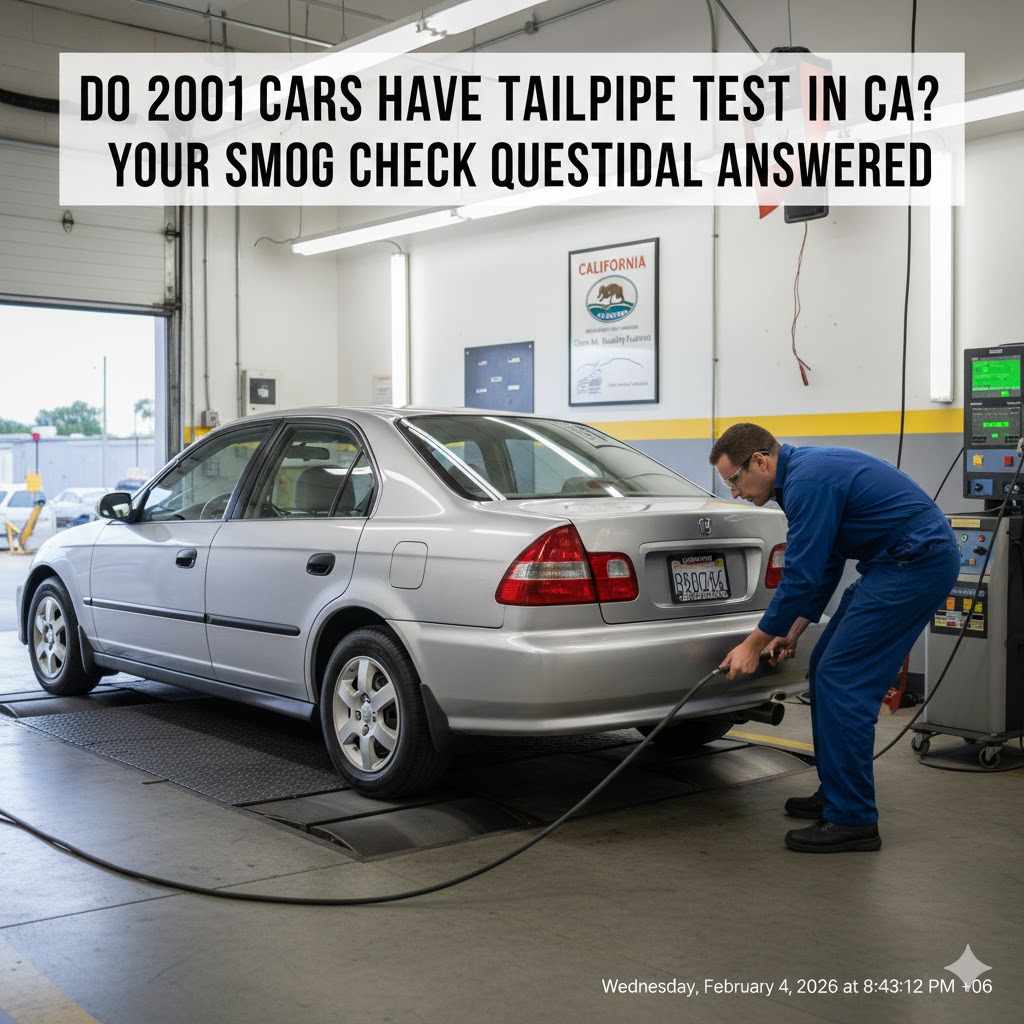
Yes, a 2001 car in California might have a tailpipe test, but only as a backup. The main smog test for vehicles model year 2000 and newer is the On-Board Diagnostics (OBD-II) computer scan. The tailpipe probe is only used if the OBD-II system cannot communicate with the testing equipment.
Navigating California’s smog check rules can feel like trying to read a map in the dark. You know you need to pass, but the details, especially for a car like a 2001 model, can be confusing. Many drivers wonder, “Will they stick a probe in my exhaust pipe, or just plug into the computer?” It’s a common question, and the uncertainty can be frustrating.
Don’t worry, I’m here to clear up the confusion. The system changed right around the time your car was made, which is why it’s so puzzling. In this guide, I’ll walk you through exactly what to expect for your 2001 vehicle’s smog check. We’ll cover the primary test, why the tailpipe test still exists, and how you can prepare to pass with flying colors.
The Big Shift: Why Your 2001 Car Gets a Computer-First Smog Check
Back in the day, the only way to measure a car’s emissions was by analyzing the gasses coming out of the tailpipe. But starting in 1996, all cars were required to have something called an On-Board Diagnostics system, or OBD-II. Think of it as your car’s brain. It constantly monitors the engine, transmission, and especially the emissions control system.
In 2015, California’s Bureau of Automotive Repair (BAR) updated the Smog Check program to take advantage of this technology for newer cars. For all gasoline-powered vehicles from model year 2000 and onward, the primary inspection became the OBD-II test. Why the change?
- It’s Faster: A computer scan is much quicker than setting up a tailpipe probe and running the car on a dynamometer (those rollers it drives on).
- It’s More Accurate: The OBD-II system can detect tiny problems long before they cause a major increase in pollution. It provides a more complete picture of the emissions system’s health.
- It’s More Comprehensive: The test checks the status of many different emissions components, not just the final output from the exhaust.
So, when you take your 2001 Honda Civic or Ford F-150 in for a smog check, the first thing the technician will do is plug their computer into your car’s OBD-II port, which is usually located under the dashboard on the driver’s side.

So, Does My 2001 Car Get a Tailpipe Test at All?
This is the most important question, and the answer is: probably not, but it’s possible. The tailpipe test, officially called the Acceleration Simulation Mode (ASM) test, serves as a backup for 2000 and newer vehicles. Your car will only be given a tailpipe test if it cannot complete the primary OBD-II scan.
Here are the specific situations where a technician would need to use the tailpipe probe on your 2001 car:
- Communication Errors: If the smog station’s computer cannot establish a stable connection with your car’s OBD-II system, it can’t get the necessary data. This could be due to a blown fuse, a damaged port, or an issue with the vehicle’s computer.
- Incomplete “Readiness Monitors”: We’ll cover this in more detail below, but if your car’s computer hasn’t completed its self-checks, the OBD-II test can’t be performed, and it may require a tailpipe test instead to verify emissions.
- Vehicle Profile Issues: In very rare cases, the state’s database might not have the correct OBD-II profile for a specific, less common vehicle model, forcing a tailpipe test.
Think of it like this: the state trusts your car’s computer to report on its own health. But if the computer can’t talk, the technician has to go back to the old-fashioned way of checking the exhaust directly.
OBD-II Test vs. Tailpipe Test: A Quick Comparison
To make it even clearer, let’s break down the two types of tests your 2001 car might encounter.
| Feature | OBD-II Test (Primary Test) | Tailpipe (ASM) Test (Backup Test) |
|---|---|---|
| How It Works | A scanner is plugged into the car’s computer port to read data. | A probe is inserted into the tailpipe to measure exhaust gases while the car is driven on a dynamometer. |
| What It Checks | Check Engine Light status, Diagnostic Trouble Codes (DTCs), and Readiness Monitors. | Levels of Hydrocarbons (HC), Carbon Monoxide (CO), and Nitrogen Oxides (NOx). |
| When It’s Used | This is the standard, primary test for all model year 2000+ gasoline cars. | Only used if the OBD-II test cannot be completed for technical reasons. |
| Key to Passing | No Check Engine light, no relevant trouble codes, and completed readiness monitors. | Emissions levels must be below the state-mandated limits for your car’s year and model. |
What Is the OBD-II Test Actually Looking For?
The computer scan isn’t magic. It’s looking for very specific information stored in your car’s computer. Understanding what it’s checking for is the key to passing.
1. The Check Engine Light
This is the first and most obvious check. If your “Check Engine” or “Service Engine Soon” light is on, your car will fail the smog check instantly. No exceptions. That light, officially called the Malfunction Indicator Lamp (MIL), is your car’s way of telling you that the OBD-II system has detected a problem in the engine or emissions system.
2. Diagnostic Trouble Codes (DTCs)
When the Check Engine Light comes on, the computer also stores a specific error code, called a DTC. These codes tell a mechanic what system is reporting a fault (e.g., P0420 often means a problem with the catalytic converter). The smog test will scan for these codes. Even if your light was on and you turned it off without fixing the problem, the code may still be stored in the computer’s memory and could cause a failure.
3. Readiness Monitors
This is the part that trips up many car owners. Readiness monitors are a series of self-tests that your car’s computer runs to make sure all the emissions components are working correctly. There are monitors for the catalytic converter, the oxygen sensors, the EGR system, and more.
For your 2001 gasoline-powered car to pass the smog check, all of its readiness monitors must be “complete” or “ready,” with the exception of the evaporative system (EVAP) monitor. You are allowed to have the EVAP monitor be “incomplete” and still pass.
Why would they be incomplete? The most common reason is that the car’s battery was recently disconnected or replaced, or a mechanic cleared the trouble codes with a scan tool. This action erases the computer’s memory and resets all the monitors to “incomplete.” You have to drive the car for a while to allow the computer to run its self-tests again.
A Simple Guide to Getting Your Readiness Monitors Set
If you’ve recently had your battery disconnected or codes cleared, you’ll need to perform a “drive cycle” to get the monitors ready for the smog test. While every car is a little different, this general procedure works for most vehicles.
- Start the car cold. Let it sit overnight for the best results. Start the engine and let it idle for about 2-3 minutes. This allows the computer to check the oxygen sensor heaters.
- Begin driving in the city. Drive normally with smooth acceleration and braking for about 5-10 minutes. Try to keep the speed between 20 and 40 mph.
- Get on the highway. Safely merge onto a highway and hold a steady speed between 50 and 60 mph for about 5-10 minutes. This is crucial for testing the catalytic converter monitor.
- Coast and exit. Let your foot off the gas and coast for 15-20 seconds before exiting the highway (do this only when it’s safe). This can help run the EVAP monitor test.
- Drive in the city again. Do a little more stop-and-go driving before heading home or to the smog station.
For more detailed information, the California Bureau of Automotive Repair (BAR) provides excellent resources for consumers.
Common Reasons a 2001 Car Fails the Smog Check in California
Knowing the pitfalls can help you avoid them. Here are the most frequent reasons a car of this age might not pass:
- Check Engine Light is On: This is an automatic failure. You must have the underlying problem diagnosed and repaired first.
- Incomplete Readiness Monitors: As discussed, this happens after a battery disconnect or clearing codes. Perform a drive cycle to resolve it.
- Modified or Defective Emissions Equipment: A missing, tampered, or non-approved aftermarket catalytic converter will cause a failure during the visual inspection. The same goes for any other disconnected or modified emissions parts.
- Dirty or Worn Components: Aging oxygen sensors, a dirty fuel system, or old spark plugs can degrade performance enough to trigger a fault code.
- Leaky Gas Cap: The functional test includes a check of the gas cap’s seal. A cracked or loose cap will cause a failure because it allows fuel vapors to escape.
- High Emissions (Tailpipe Test): If your car does end up needing the tailpipe test, high levels of pollutants from a poorly running engine or a failing catalytic converter will cause it to fail.
How to Prepare Your 2001 Car for a Smog Check: A Simple Checklist
Set yourself up for success by following these simple steps before you head to the test center.
Step 1: Look at Your Dashboard
Is the Check Engine light on? If it is, stop. Do not go to the smog station. Take your car to a trusted mechanic to find out what’s wrong and get it fixed. Getting a test with the light on is a waste of time and money.
Step 2: Don’t Clear Codes Right Before the Test
It’s tempting to have a friend with a code reader clear the Check Engine light to try and sneak by. This is a bad idea. Clearing the codes also resets all the readiness monitors, which will result in an automatic “Not Ready” failure.
Step 3: Just Drive It
In the week or two leading up to your smog check, simply drive your car normally. This includes a mix of city and highway driving. This is the most natural way to ensure all the readiness monitors have had a chance to complete their self-tests.
Step 4: Perform Basic Maintenance
A well-maintained car is a happy car. Make sure your oil has been changed recently and your tires are properly inflated. While these things aren’t tested directly, a car that runs smoothly is less likely to have emissions problems.
Step 5: Tighten Your Gas Cap
Make sure your gas cap is on tight—at least three clicks. If the rubber seal on your cap looks cracked or worn, it’s a good idea to buy a new, OEM-quality one. It’s an inexpensive part that can save you from a big headache.
Step 6: Warm Up the Engine
On the day of the test, try to drive your car for at least 15-20 minutes before arriving at the smog station. A fully warmed-up engine and catalytic converter operate most efficiently and produce the lowest emissions.
Smog Check Rules for Other Vehicles
It helps to see where your 2001 car fits in the bigger picture of California’s rules.
| Vehicle Model Year / Type | Primary Smog Check Requirement | Key Notes |
|---|---|---|
| 1975 & Older | Exempt from Smog Check | These classic vehicles do not need to be tested. |
| 1976 – 1999 (Gasoline) | Tailpipe (ASM) Test | These vehicles get the tailpipe probe test, plus visual and functional inspections. |
| 2000 & Newer (Gasoline) | OBD-II Computer Test | This is your 2001 car. Tailpipe test is only used as a backup. |
| 1998 & Newer (Diesel) | OBD-II Test (most) | Diesel vehicles have slightly different rules but also rely on the OBD-II test. |
| Hybrid Vehicles | OBD-II Test | Hybrids are tested using the same computer-based method. |
What Happens if My 2001 Car Fails?
First, don’t panic. A smog check failure is a hurdle, not a dead end. Here’s what to do:
- Review the Vehicle Inspection Report (VIR): The technician will give you a report that details exactly why your car failed. It will show any trouble codes found or which monitors were incomplete.
- Go to a Licensed Repair Shop: You must take your car to a state-licensed Smog Check Repair Station to get the necessary repairs. Not every auto shop is certified to perform official smog repairs. You can find one using the BAR’s Auto Shop Locator tool.
- Look into the Consumer Assistance Program (CAP): If you meet certain income requirements, the State of California may be able to help you pay for emissions-related repairs. The Consumer Assistance Program can provide up to $1,200 for repairs, or allow you to retire a vehicle that would be too expensive to fix.
- Get the Repairs and Retest: Once the certified technician has fixed the problem, you can take your car back for a retest. Many stations offer a free or discounted retest if you have the repairs done with them.

Frequently Asked Questions (FAQ)
Do all 2000 and newer cars skip the tailpipe test in California?
Most of them do, yes. The primary test is the OBD-II computer scan. The tailpipe test is only performed if the OBD-II scan cannot be completed for some technical reason, making it a backup procedure rather than the standard test.
What is an OBD-II port and where is it in my 2001 car?
The OBD-II port is a small, 16-pin connector that provides access to your car’s main computer. By law, it must be located within three feet of the driver and easily accessible. In almost all 2001 vehicles, you can find it under the dashboard, just to the left or right of the steering column.
My check engine light is on. Will I automatically fail?
Yes, absolutely. A lit Check Engine light (Malfunction Indicator Lamp) is an automatic failure for the California smog check. You must have the problem diagnosed and repaired before your car can be tested.
I just replaced my battery. Should I go for a smog check right away?
No, you should wait. Disconnecting the battery erases the computer’s memory, including the readiness monitors. You will need to drive the car for a week or so (a mix of city and highway) to allow the computer to run its self-tests again before it will be ready for the test.
How often do I need to get a smog check for my 2001 car in California?
Most vehicles in California require a smog check every two years. You will receive a notice from the DMV in the mail when your registration renewal is due, and it will state whether a smog certification is required.
Can I use an aftermarket catalytic converter on my 2001 car in California?
You can, but it must be a California Air Resources Board (CARB) approved replacement part. Using a “federal” or “49-state” catalytic converter is illegal in California and will cause your car to fail the visual inspection part of the smog check. Make sure any replacement parts are CARB-compliant.
What is the “visual inspection” part of the smog check?
During the visual inspection, the technician physically checks to make sure all of your car’s required emissions control equipment is present and properly connected. They will look for the catalytic converter, EGR valve, oxygen sensors, and check for any cracked hoses or disconnected wires. Any tampered or missing equipment is an automatic failure.
Your Smog Check Game Plan
Navigating the smog check for your 2001 car doesn’t have to be a source of stress. The key takeaway is simple: your vehicle relies on a modern, computer-based test. The old-school tailpipe probe is just a fallback. By focusing on your car’s computer health—keeping that Check Engine light off and ensuring the system is ready—you put yourself in the best position to pass.
Remember to perform basic maintenance, drive your car regularly before the test, and never ignore that little orange engine light on your dash. By following these simple steps, you can approach your next smog check with confidence, knowing you’ve done everything right to keep your car running clean and stay on the right side of California law.