Does a 2001 Camaro Have an Exhaust Resonator
Figuring out your car’s parts can sometimes feel like a puzzle, especially if you’re new to working on vehicles. You might be wondering, Does a 2001 Camaro Have an Exhaust Resonator? This is a common question because exhaust systems can be a bit confusing with all their different components. Don’t worry, we’re here to make it simple.

SPEC-D TUNING
Spec-D Tuning Stainless Steel Dual Catback Exhaust…
- ✔️ FITMENT: Compatible with Chevy Camaro 3.6L V6 engine 2010-2015 models only.
- ✔️ Items are Exactly the Same as Shown in the Images! You Will Receive the Exact Item You Purchased!
- ✔️ Installation Made Easy on All of Our Items! Little to No Modifications needed at Best!
As an Amazon Associate I earn from qualifying purchases.
We’ll walk through it step-by-step so you know exactly what’s going on with your Camaro’s exhaust. Let’s find out what’s under your car.
Understanding The Camaro Exhaust System
The exhaust system on your 2001 Chevrolet Camaro is a complex network of pipes and components designed to safely channel harmful gases away from the engine and your car’s cabin. It plays a crucial role in your vehicle’s performance, fuel efficiency, and noise reduction. For many car owners, especially those new to auto maintenance, understanding the different parts and their functions can seem challenging.
This section will break down the basic structure of a typical exhaust system and explain why certain components are there.
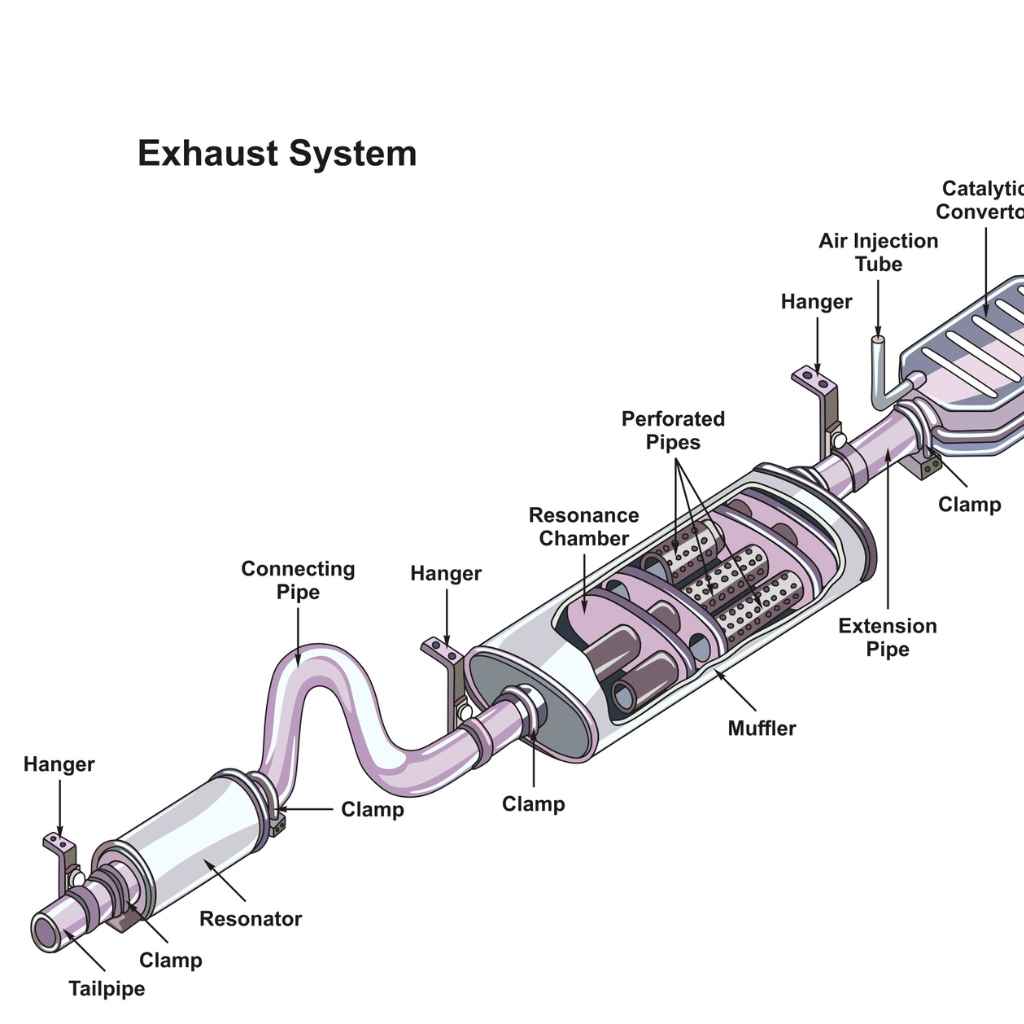
Components of a Standard Exhaust System
An exhaust system is made up of several key parts that work together. Each piece has a specific job to do. Knowing these parts helps you understand how the system operates as a whole.
We’ll go through each one so you can identify them on your own vehicle.
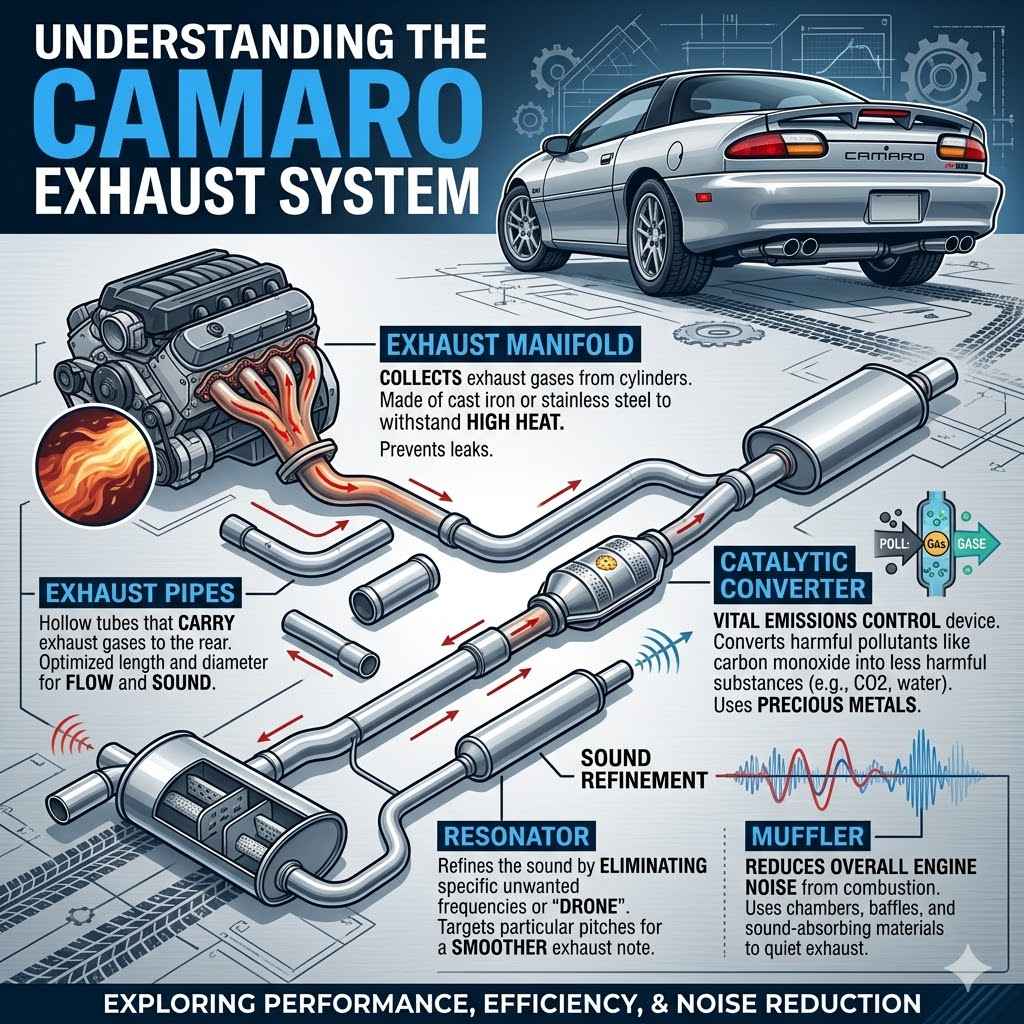
The Exhaust Manifold is attached directly to the engine’s cylinder head. Its main job is to collect hot exhaust gases from each cylinder and direct them into a single pipe. It’s usually made of cast iron or stainless steel because it has to withstand very high temperatures.
A damaged exhaust manifold can lead to exhaust leaks, which can affect performance and safety.
These are the hollow tubes that carry the exhaust gases from the manifold towards the rear of the car. They are typically made of steel, often coated to prevent rust. The length and diameter of these pipes are carefully designed to optimize exhaust flow and sound.
Different pipe sizes can affect the engine’s performance and the overall sound level of the exhaust.
Catalytic Converter
This is a vital emissions control device. It uses precious metals like platinum, palladium, and rhodium to convert harmful pollutants in the exhaust gases into less harmful substances. For example, it changes carbon monoxide into carbon dioxide and water.
It’s located in the exhaust stream, usually after the manifold and before the muffler. A clogged or failing catalytic converter can cause significant engine problems and poor performance.
Muffler
The muffler is designed to reduce the noise produced by the engine’s combustion process. It uses a series of chambers, baffles, and sound-absorbing materials to quiet the loud popping sounds of exhaust gases. Without a muffler, your car would be extremely loud.
The design of a muffler can influence the car’s sound profile, from a deep rumble to a quieter hum.
The Role of Resonators in Exhaust Systems
Resonators are an important, though sometimes overlooked, part of many exhaust systems. Their primary function is to further refine the sound of the exhaust, particularly by eliminating specific unwanted frequencies or “drone.” While mufflers reduce overall noise, resonators target and cancel out particular pitches. This helps create a smoother, more pleasant exhaust note.
Some vehicles have them, and some don’t. It depends on the manufacturer’s design goals for sound and performance.
Think of a resonator like a finely tuned instrument for sound. It’s not just about making things quiet; it’s about making the sound “right.” For sports cars like the Camaro, engineers often tune the exhaust note to be more aggressive but still refined. This means a resonator can be a key part of achieving that specific sound.
Let’s see if the 2001 Camaro benefits from one.
Does a 2001 Camaro Have an Exhaust Resonator?
Now, let’s get to the main question: Does a 2001 Camaro Have an Exhaust Resonator? This is a common point of confusion because exhaust system configurations can vary even within the same model year, depending on the specific trim level or performance package. For the 2001 model year, the answer is generally yes, but with a slight clarification on how they are implemented. Many performance-oriented vehicles, including versions of the Camaro, utilize resonators to achieve a specific exhaust sound profile.
This helps distinguish the car’s tone and can contribute to a sportier feel without being overly loud.
Many owners might look under their car and see a component that looks similar to a small muffler or a straight pipe section and wonder about its purpose. Understanding this specific component is key. If you’re aiming to modify your exhaust or simply understand what’s factory-installed, knowing if a resonator is present is a great starting point.
Let’s examine the typical setup for the 2001 Camaro.
Factory Configuration for the 2001 Camaro
For the 2001 Chevrolet Camaro, the factory exhaust system is generally designed to provide a balanced sound – sporty but not excessively loud for daily driving. This often involves a combination of a muffler and at least one resonator. The presence and type of resonator can depend on the specific engine and trim level.
For example, V6 models might have a slightly different setup than V8 models like the SS or Z28.
Generally, the V8 models are more likely to feature resonators as part of their performance-tuned exhaust. These resonators help to eliminate the low-frequency drone that can become noticeable at highway speeds, while still allowing the engine to produce a powerful, desirable exhaust note. The V6 models might still have a resonator, or they might rely more heavily on the muffler design to control sound.
V8 Models (Z28, SS)
The performance-oriented V8 models of the 2001 Camaro, such as the Z28 and the SS, typically include resonators. These vehicles are engineered for a more aggressive sound, but manufacturers aim to prevent uncomfortable cabin noise. Resonators help achieve this by canceling out specific sound frequencies, especially at cruising speeds.
You’ll often find a resonator located before the muffler or as part of a dual-exhaust setup, contributing to the car’s distinctive roar.
These performance models often have a dual-tip exhaust system. In such setups, each side of the exhaust may have its own resonator, or there might be a single larger resonator before the exhaust splits. The goal is to create a refined but potent sound that appeals to enthusiasts.
The strategic placement ensures that the V8’s power is heard without being overwhelming inside the car.
V6 Models
While V8 models are more commonly equipped with resonators for a refined performance sound, V6 models of the 2001 Camaro may or may not include them as standard. Some V6 configurations might rely solely on the muffler for sound suppression. However, it’s not uncommon for some V6 versions to also feature a resonator, especially if they aim for a slightly sportier exhaust note compared to more basic vehicles.
It’s best to visually inspect the exhaust system to confirm.
If a V6 model does have a resonator, it’s typically a smaller, less complex unit than those found on V8 models. Its presence would still contribute to a smoother exhaust tone. For someone looking to understand their specific car, a quick look underneath is the most reliable method.
This avoids assumptions based on general model information.
Identifying a Resonator on Your Camaro
Locating a resonator on your 2001 Camaro is usually straightforward once you know what to look for. You’ll typically find it under the vehicle, along the exhaust path. It’s generally a straight-through component, meaning gases flow directly through it, but it contains internal baffling or chambers designed to manipulate sound waves.
It’s usually smaller than the main muffler.
When you’re looking, try to differentiate it from the catalytic converter, which is usually closer to the engine and has a more bulbous shape with heat shields. The muffler is typically the largest component in the exhaust system, located near the rear of the car. The resonator will often be situated between the catalytic converter and the muffler.
Visual Inspection Tips
To confirm if your 2001 Camaro has a resonator, get under the car (safely, using jack stands if necessary) or look from the side at the exhaust piping. Follow the exhaust pipes from the front of the car towards the back. After the catalytic converter (which is usually a metal box with heat shielding), you should look for another, smaller chamber that is not the main muffler.
This is likely your resonator.
If you see a section of pipe that appears to have an internal structure for sound deadening, but it’s not the primary noise-reducing component (the muffler), you’ve likely found your resonator. Some systems might have two, especially on V8 models with dual exhausts. Each side could have its own resonator before the mufflers.
Sound Characteristics
Another way to get a clue is by listening to your car. If your Camaro has a relatively quiet hum at highway speeds, with no noticeable “droning” sound, it’s a good indicator that a resonator is present and doing its job. A resonator’s purpose is to cancel out these specific, annoying frequencies.
If you hear a noticeable, deep, resonating hum that gets louder as you accelerate, especially on the highway, it might suggest the resonator is missing, damaged, or not present in your specific configuration.
The ideal exhaust sound for many drivers is a strong, sporty note under acceleration but a much quieter, more refined tone during steady cruising. A resonator is key to achieving this balance. It doesn’t make the car silent, but it removes the unpleasant, monotonous sounds that can wear you down on longer drives.
Why Resonators Are Important for Camaro Owners
For owners of a 2001 Camaro, understanding the role of the resonator goes beyond just knowing if it’s there. It relates directly to the driving experience, the car’s performance, and potential customization options. These components are not just passive parts; they actively contribute to how your car sounds and feels.
Whether you’re a daily driver or an enthusiast, the resonator plays a part.
Having a resonator can significantly improve the comfort of your ride by reducing cabin noise. For those looking to modify their exhaust, knowing about the resonator allows for more informed decisions. You can choose to keep it, remove it, or
Impact on Exhaust Sound and Drone
The primary role of a resonator is to eliminate unwanted sound frequencies. For a V8 engine like those found in many 2001 Camaros, certain exhaust notes can create a deep, bothersome hum, often referred to as “drone,” especially at highway speeds (around 2000-3000 RPM). A resonator is specifically designed to cancel out these specific wavelengths of sound.
It acts like a finely tuned filter for noise pollution.
By strategically placed chambers or ports within the resonator, exhaust pulses are reflected and interfere with each other, canceling out the problematic frequencies. This results in a cleaner, more refined exhaust note that is less fatiguing for occupants. Without a resonator, the exhaust sound can be much harsher and more intrusive during daily driving, even if it sounds powerful during acceleration.
Here’s how it typically works:
- Exhaust gases flow from the engine.
- They enter the resonator.
- Inside, the gases encounter baffles or chambers.
- These features cause sound waves to bounce back and interact.
- This interaction cancels out specific unwanted pitches, reducing drone.
- The modified sound then exits the resonator towards the muffler.
Performance Considerations
While resonators are primarily for sound, they can also have a minor impact on exhaust flow and, consequently, performance. A well-designed resonator will minimize any restriction to exhaust gas flow. However, a poorly designed or overly restrictive resonator could potentially hinder performance by creating back pressure.
Manufacturers carefully engineer these components to balance sound quality with optimal engine breathing.
For most factory 2001 Camaro configurations, the resonators are designed to be highly efficient. They contribute to the car’s overall performance by ensuring that exhaust gases can exit the engine smoothly without excessive restriction. If you choose to remove the resonator for a louder sound, you might notice a slight change in the exhaust note, and potentially a very subtle shift in performance characteristics, though this is often more noticeable with other modifications.
Aftermarket Exhaust Systems
When considering aftermarket exhaust systems for your 2001 Camaro, you’ll often find options that either include resonators, omit them, or offer different types of resonators for sound tuning. Some systems are designed to be louder and more aggressive by removing factory resonators, while others aim for a deeper, more refined tone with upgraded resonators.
If you’re looking for a specific sound, such as a loud, race-car-like exhaust note, you might choose a “cat-back” system that deletes the resonator. This often results in a more raw, aggressive sound. Conversely, if you prefer a sporty sound that is still comfortable for daily driving, an aftermarket system with high-flow resonators is a great option.
It allows you to enhance the exhaust note without the unwanted drone. Many enthusiasts use sound clips and reviews to help decide which aftermarket system best suits their preferences.
Here’s a quick look at common aftermarket exhaust system types:
- Axle-back: Replaces only the muffler and tips. Usually a simpler modification.
- Cat-back: Replaces everything from the catalytic converter back, including the muffler and potentially the resonator. Offers more sound and performance potential.
- Header-back: Replaces the entire exhaust system from the engine’s exhaust manifolds back. This is the most extensive modification.
The choice often depends on budget, desired sound, and performance goals. For instance, a cat-back system that replaces the resonator might offer a significant change in sound, while an axle-back system will have a less dramatic effect.
Modifying Your Exhaust System
If you’re thinking about changing your 2001 Camaro’s exhaust, there are a few common paths owners take. The most popular modification is often a cat-back exhaust system. This replaces the piping, muffler, and sometimes the resonator, from the catalytic converter backward.
It’s a great way to alter the sound and can sometimes offer a small performance boost.
Another option is removing the resonator. This is a relatively simple modification that will make your exhaust noticeably louder and more aggressive. However, it can also introduce that droning sound at highway speeds that many people find undesirable for daily driving.
It’s a trade-off between loudness and comfort.
A Resonator Delete is exactly what it sounds like: removing the resonator from the exhaust system. This is typically done by cutting out the existing resonator and replacing it with a straight section of pipe. The main effect of this modification is an increase in exhaust volume and a more aggressive tone.
While this modification can make your Camaro sound more powerful, it’s important to be aware of the potential downsides. The most common issue is the introduction or increase of exhaust drone at cruising speeds. This can make long drives tiring or unpleasant.
Some people like this raw sound, while others find it unbearable. It’s a good idea to listen to sound clips of resonator deletes on 2001 Camaros before deciding.
Here are some things to consider if you’re thinking about a resonator delete:
- Increased loudness: Your car will be significantly louder.
- More aggressive tone: The exhaust sound will be deeper and raspier.
- Potential for drone: Unwanted humming at highway speeds is common.
- Emissions: In most areas, removing a resonator does not affect emissions testing if the catalytic converter remains.
- Legality: Check local regulations, as some areas have strict noise ordinances.
- Custom Exhaust Setups
For those who want a truly unique sound or performance characteristic, custom exhaust setups offer the ultimate flexibility. This involves working with an exhaust shop to design and fabricate a system tailored to your specific needs. You can choose the diameter of the pipes, the type of muffler, and whether to include or delete resonators, or even use specialized performance resonators.
A custom setup allows you to achieve a very specific exhaust note, from a deep, throaty rumble to a high-pitched, aggressive scream. It’s also an opportunity to optimize exhaust flow for maximum performance. This route is generally more expensive than off-the-shelf parts but offers unparalleled customization.
It’s a great option for serious enthusiasts who know exactly what they want.
Here’s a sample of what a custom setup might involve:
- Consultation with an exhaust specialist.
- Discussing desired sound profile and performance goals.
- Choosing materials (e.g., stainless steel for durability).
- Fabricating custom pipe bends and mounts.
- Selecting specific muffler and resonator types (or deleting them).
- Welding and fitting the complete system to your vehicle.
2001 Camaro Resonator Specifics and Statistics
Understanding the precise specifications for your 2001 Camaro’s exhaust system can be helpful, especially when comparing it to other models or considering upgrades. While exact factory part numbers can be hard to track down for older vehicles, general design principles and common configurations provide a clear picture. The integration of resonators in Camaros is a key factor in their overall appeal, balancing power with daily usability.
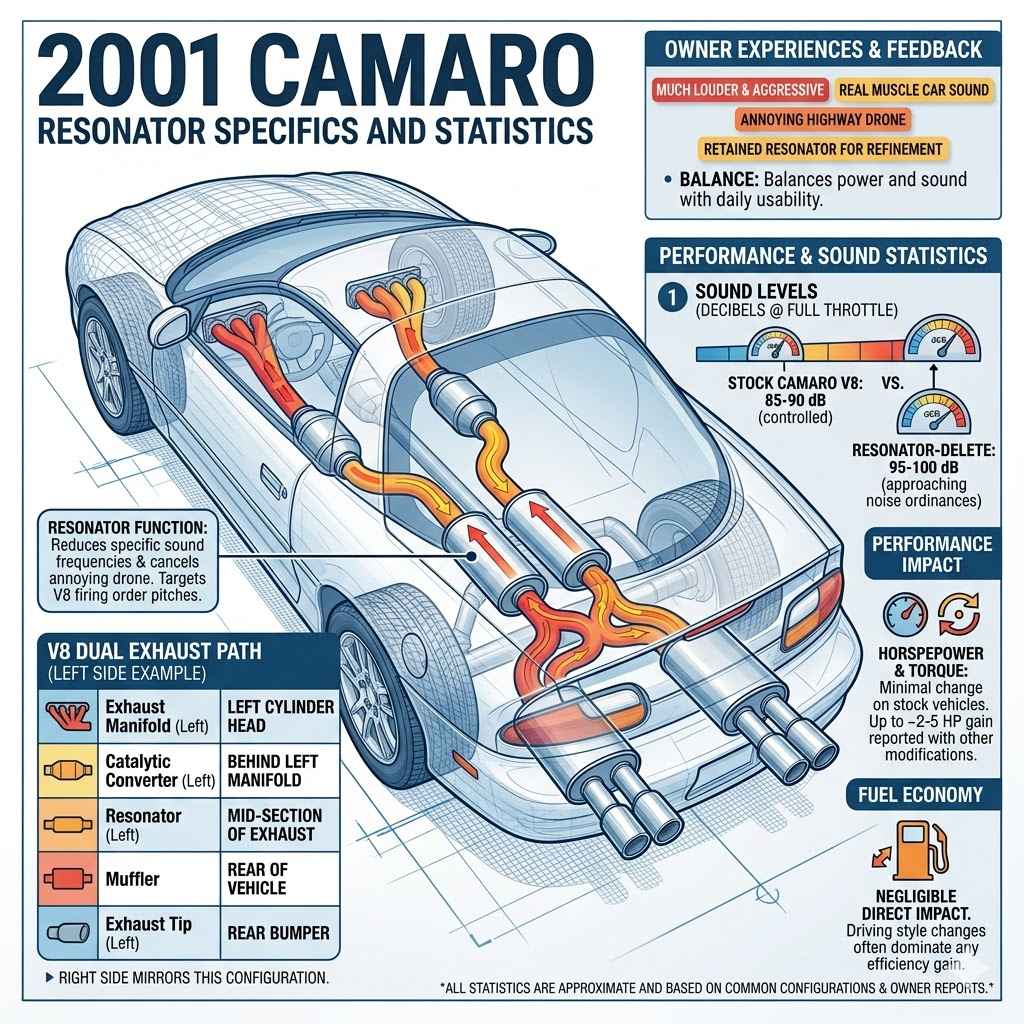
Performance data and owner surveys can offer insights into how exhaust modifications impact the car’s characteristics. Many owners report that removing the resonator leads to a noticeable increase in decibel levels. For instance, a stock Camaro V8 might register around 85-90 decibels at full throttle, while a resonator-deleted version could push closer to 95-100 decibels, which is approaching the threshold for many noise ordinances.
Common Exhaust Configurations
The 2001 Camaro was offered with a few different engine options, and each could have slightly varied exhaust configurations. The standard setup for the V8 models generally included a catalytic converter, followed by a resonator, and then the muffler(s). V6 models might have had a simpler setup, possibly without a resonator or with a single muffler.
For the popular 5.7L LS1 V8 engine found in the Z28 and SS models, the dual exhaust system is a defining feature. This dual setup often means each bank of cylinders has its own exhaust path. This path typically includes a catalytic converter for emissions, a resonator for sound tuning, and then a muffler before exiting.
The dual resonators help manage the sound of the V8 engine effectively.
V8 Dual Exhaust Path
The dual exhaust system on the 2001 Camaro V8 models is a significant aspect of its performance and sound. Each side of the V8 engine has its own exhaust manifold, which leads to its own catalytic converter. From there, the exhaust gas on each side usually flows through its own resonator.
These resonators are designed to reduce specific frequencies generated by the V8’s firing order.
After passing through the resonators, the gases from each side then merge into a single muffler system or continue through separate mufflers before exiting the vehicle, often through dual exhaust tips. This carefully engineered path ensures that the powerful sound of the V8 is present but controlled, preventing excessive noise and drone. The dual resonators are critical for this balance.
A common setup for a 2001 Camaro Z28 LS1 might look like this:
| Component | Location | Primary Function |
|---|---|---|
| Exhaust Manifold (Left) | Left Cylinder Head | Collects exhaust gases from left cylinders |
| Catalytic Converter (Left) | Behind Left Manifold | Reduces emissions |
| Resonator (Left) | Mid-section of exhaust | Reduces specific sound frequencies, cancels drone |
| Muffler (or part of dual muffler system) | Rear of vehicle | Reduces overall exhaust noise |
| Exhaust Tip (Left) | Rear bumper | Exits exhaust gases |
The right side of the exhaust system mirrors this configuration.
Performance Statistics and Owner Experiences
While there isn’t a wealth of official performance statistics directly tied to the presence or absence of a resonator for the 2001 Camaro, owner experiences offer practical insights. Many enthusiasts report minimal to negligible performance gains from removing the resonator, especially on otherwise stock vehicles. The primary change is almost always auditory.
However, in combination with other modifications like performance exhaust headers or a high-flow catalytic converter, the resonator can become a more significant factor in overall exhaust flow. For example, some performance enthusiasts find that their custom exhaust systems benefit from a high-flow resonator, which offers some sound dampening without creating excessive back pressure. This allows for a balance between a powerful sound and optimal engine efficiency.
Owner Feedback on Sound Changes
Feedback from 2001 Camaro owners who have modified their exhaust systems consistently highlights the impact of the resonator. Removing it is frequently described as making the exhaust “much louder” and “more aggressive.” This is often the desired outcome for those seeking a more visceral driving experience and a distinctive V8 roar.
However, a common counter-point from owners is the emergence of exhaust drone. This is particularly noticeable during steady cruising on the highway. Phrases like “annoying hum at 70 mph” are frequent.
This feedback underscores the resonator’s role in making the car more comfortable for everyday use. Owners who prioritize a refined sound often choose to retain or upgrade their resonators.
Here are some typical owner comments regarding resonator removal:
- “My Z28 sounds amazing now, real muscle car sound, but that highway drone is a bit much sometimes.”
- “Went with a cat-back that kept the resonator. It’s louder than stock, sounds great on acceleration, but still quiet enough for the commute.”
- “Removed the resonator on my SS for more bark. It definitely got louder, but I might add a smaller one back for comfort.”
Impact on Fuel Economy
The direct impact of a resonator on fuel economy for the 2001 Camaro is generally minimal, especially with factory-installed components. The exhaust system is designed to work efficiently with the engine. Removing a resonator typically leads to a slight increase in exhaust flow, which, in theory, could improve fuel economy if the engine can breathe more freely.
However, in practice, this effect is usually overshadowed by other factors. If removing the resonator makes the car sound so appealing that the driver is tempted to accelerate more aggressively or listen to the exhaust more often, fuel economy is likely to decrease. The primary benefit of a resonator is not fuel savings, but rather a more pleasant and refined driving experience.
Frequently Asked Questions
Question: Does a 2001 Camaro have an exhaust resonator?
Answer: Yes, most 2001 Chevrolet Camaro V8 models (Z28, SS) are factory-equipped with at least one exhaust resonator to help tune the sound and reduce cabin drone. V6 models may or may not have them, depending on the specific trim and configuration.
Question: Where is the resonator located on a 2001 Camaro?
Answer: The resonator is typically found under the vehicle, along the exhaust pipe, situated between the catalytic converter (which is closer to the engine) and the muffler (which is usually at the rear).
Question: What is the purpose of a resonator in a car’s exhaust system?
Answer: The main purpose of a resonator is to reduce or eliminate specific, unwanted sound frequencies, particularly the low-frequency drone that can occur at steady cruising speeds. It helps create a smoother, more refined exhaust note.
Question: Will removing the resonator make my 2001 Camaro louder?
Answer: Yes, removing the resonator will generally make your 2001 Camaro’s exhaust system noticeably louder and more aggressive. It allows more exhaust noise to pass through directly to the muffler and exit the vehicle.
Question: Should I remove the resonator on my 2001 Camaro for better performance?
Answer: While removing the resonator might offer a very minor increase in exhaust flow, the performance gains are usually negligible for most drivers. The primary impact is on sound. For significant performance gains, other modifications are usually more effective.
Summary
Your 2001 Camaro likely has an exhaust resonator, especially if it’s a V8 model. This part helps quiet down unwanted drone at highway speeds. It’s usually found between the catalytic converter and the muffler.
Knowing this helps you understand your car’s exhaust system better. You can now identify it and consider its role in your driving experience.
Related pick: Check today's price on Amazon