
How Much Does a Diesel Muffler Replacement Cost?
A diesel muffler replacement usually costs $250 to $900 at a muffler shop, but rusted piping, clamps, and hangers can push a quote to $1,200 or more. If the estimate skips those parts, the new muffler can leak, rattle, or fail early. This guide breaks down what should be included and when the quote is really for more than the muffler.
Typical cost range
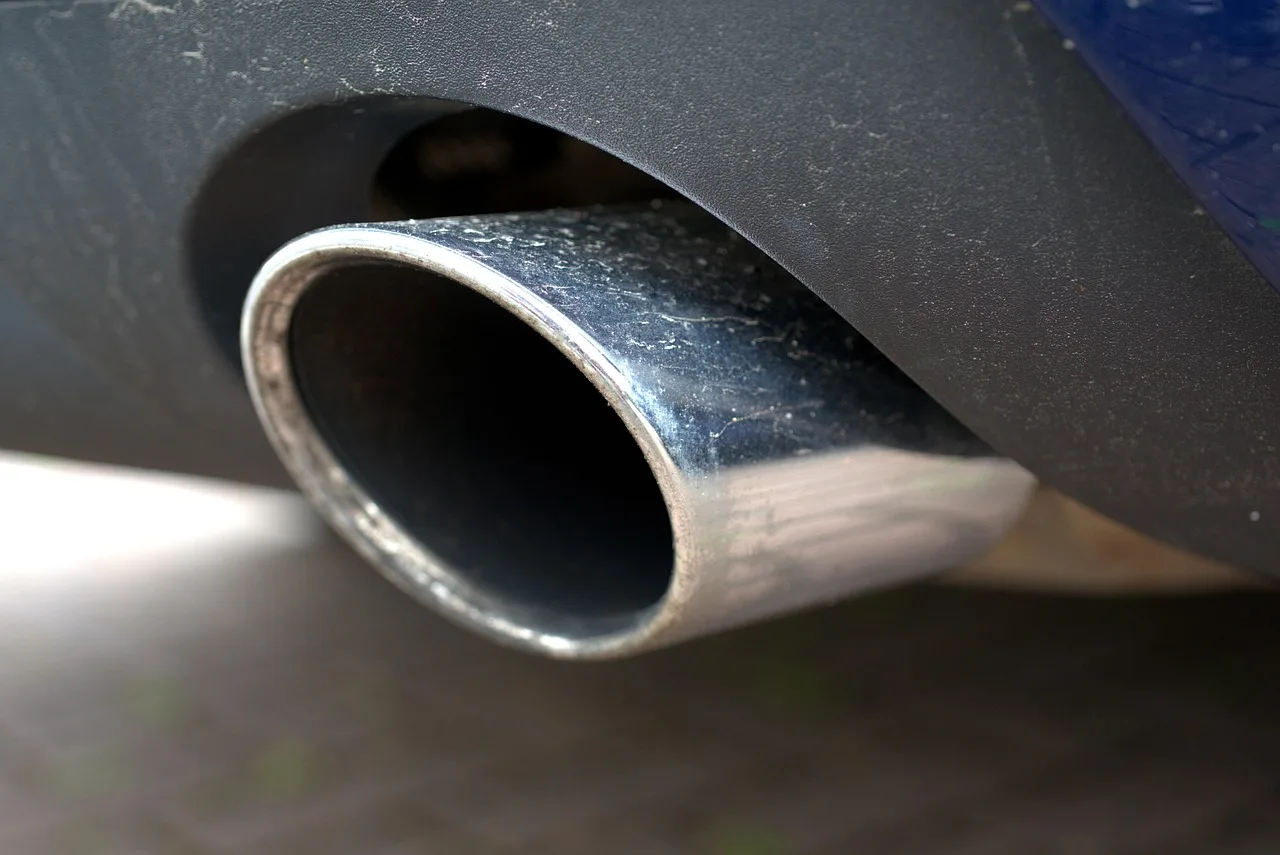


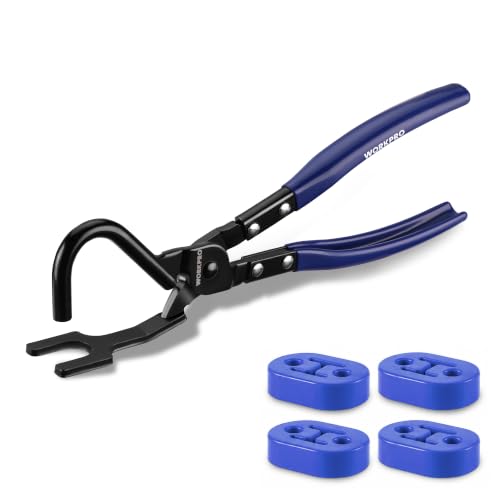
For a straightforward diesel muffler job, a fair installed quote often falls in the $250 to $900 band, with simpler jobs landing lower and rust-heavy work climbing higher. The broad muffler-only range is $50-$350+, and the average muffler replacement cost is $100-$200, but diesel trucks, larger exhaust sections, and corroded hardware can move the total fast.
That spread comes from parts and labor. A standard muffler job often takes 1-2 hours, while cut-out and weld-in work takes longer. Common vehicles are usually cheaper to service, while rare or premium diesel models often cost more because fitment is tighter, packaging is harder, and labor access is less forgiving.
Diesel exhaust pricing also differs from gas-car pricing because the rear system is often larger, heavier, and more exposed to rust. On a diesel, the quote may quietly include rear piping, hangers, clamps, and a tailpipe section, not just the canister itself.
What is included in a diesel muffler quote?
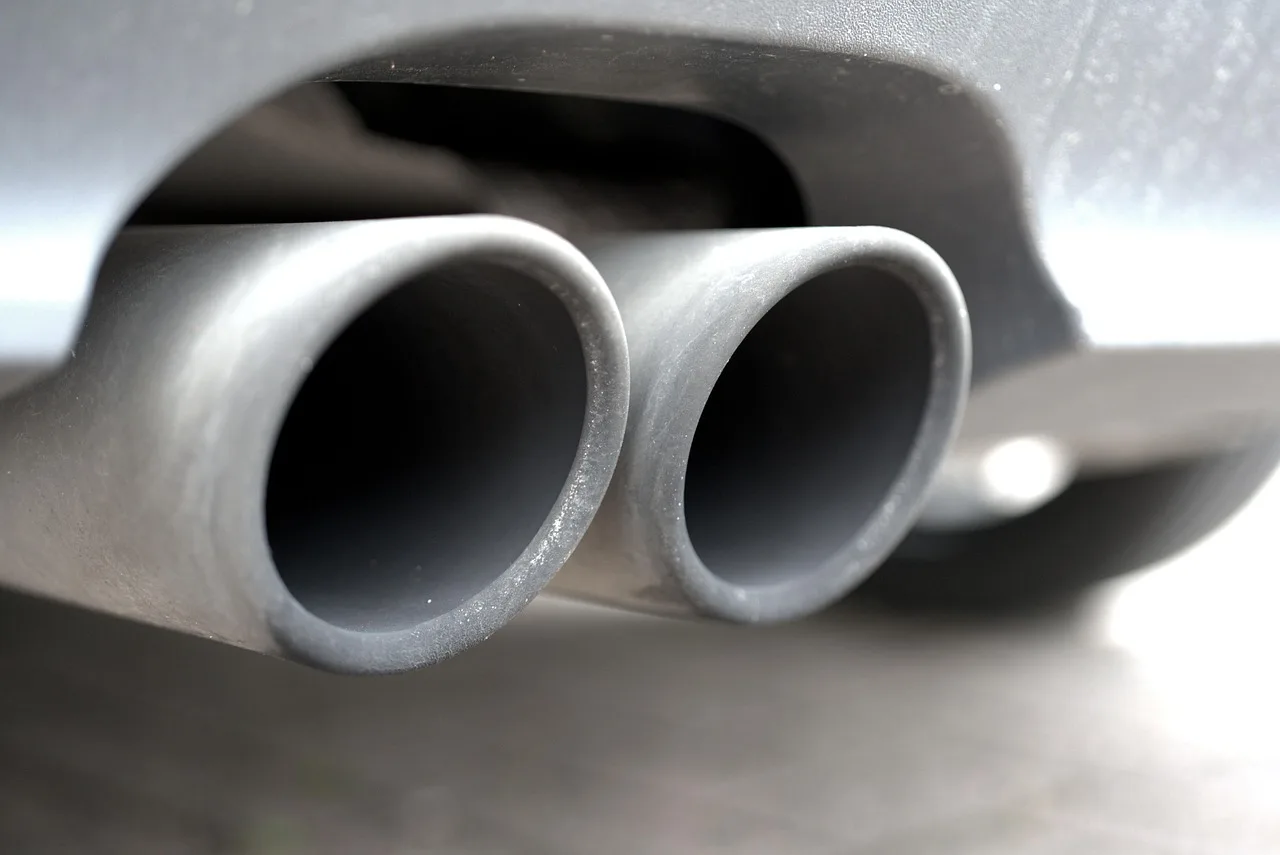
A true muffler quote should state whether the shop is replacing only the muffler or a larger rear exhaust section. At minimum, it should list the muffler, any gaskets or clamps needed for the joint, and any hangers or hardware that must be reused or replaced. Labor may be quoted separately, especially if the job is bolt-on rather than cut and weld.
When the estimate uses terms like axle-back, cat-back, manifold-back, or full system, the scope is bigger than muffler-only work. A rear-section quote may include the muffler plus a short tailpipe section, and that can change the total materially.
Diesel muffler quote audit table
| Scope | Parts included | Labor hours | Rust surcharge | Material choice | Red-flag add-ons |
|---|---|---|---|---|---|
| Muffler only | Muffler, basic clamps, small hardware | 1-2 | None or low if hardware is clean | Aluminized steel or stainless | Unlisted pipe repairs, no mention of hangers |
| Muffler plus tailpipe section | Muffler, tailpipe piece, clamps, hangers, gaskets | 2-3 | Moderate if joints are seized or crusted | Usually aluminized; stainless on request | “Miscellaneous exhaust labor” with no detail |
| Axle-back repair | Rear exhaust from axle area back, often with hardware | 2-4 | Higher if cut-out and weld work is needed | Aluminized or stainless | Broken studs, flange repair, surprise tailpipe replacement |
| Cat-back replacement | Section from catalytic area back, more pipe and hangers | 3-5 | Higher on rust-belt trucks and SUVs | Often stainless on premium kits | Full-system language without itemized parts |
| Full exhaust repair | Multiple pipes, muffler, hangers, clamps, possible flex pipe | Varies widely | Often significant | Depends on package | “Complete exhaust” with no scope line |
Why do diesel muffler quotes run high?
Diesel muffler quotes run high when rust, seized hardware, welded joints, or larger vehicle packaging turn a quick swap into a repair job. Shop rate matters too. Labor nationally can be anywhere from $15-$215+, and labor rates typically range from $100-$150/hour at independent shops, so the same work can price very differently by region and shop type.
Rust is the main quote inflator on older diesel trucks and salt-belt vehicles. Broken studs, flanges that will not separate cleanly, and corroded hangers can add time and parts. If the tech must cut pipe rather than unbolt it, the bill moves beyond a simple muffler change.
Vehicle type matters as well. A common diesel pickup or SUV usually costs less than a rare luxury diesel because common parts are easier to source and the labor setup is simpler. Larger exhaust assemblies also take more time to remove and align.
Say your diesel pickup has a rotten rear flange and one snapped hanger. The muffler itself may be ordinary, but the quote can jump because the shop has to repair the connection points that keep the new part sealed and supported.
Should you replace the muffler only or the whole section?
Replace only the muffler when the surrounding pipe, hangers, and joints are still sound and the rest of the rear exhaust is solid. If the tailpipe section is thin, the flange is rusted, or the hangers are torn, a larger rear-section repair is often the better quote. That can cost more up front, but it avoids paying twice for the same labor.
Axle-back replacement runs $250-$900 parts plus $120-$300 labor. Cat-back replacement runs $400-$1,200 parts plus $180-$500 labor. A muffler and short tailpipe repair may cost $500-$800 total, which helps show why a quote that sounds high may actually be covering more than the muffler shell.
A full exhaust can cost well over $1,000. That is not a muffler quote anymore. It is a larger exhaust job with more pipe, more joints, and more failure points.
Common scope terms
- Axle-back: the rear section after the axle area, often including the muffler and tailpipe pieces.
- Cat-back: the exhaust section from the catalytic area back, with more pipe and more hardware.
- Manifold-back: a much larger system that starts near the engine side and reaches the rear.
- Full system: multiple sections, not just the rear muffler.
Does stainless steel cost more?
Yes. Stainless steel usually costs more upfront than aluminized steel, and that is normal on diesel exhaust quotes. Muffler parts can cost $80-$400, while OEM mufflers are likely $250-$380 and universal mufflers typically start around $30. Stainless can be a smarter buy in salt-belt regions because it generally holds up longer against corrosion.
Aluminized steel is common on budget repairs and many standard replacements. Stainless is the pricier choice when long service life matters more than the lowest quote. That tradeoff matters most on trucks that see winter roads, road salt, or repeated short trips that keep exhaust parts wet for longer.
OEM-style parts may fit better and last longer than some universal pieces, but the parts bill can rise. If the quote uses a universal muffler to save money, make sure the shop accounts for fitment time and does not leave you with a noisy or misaligned system.
Suppose a 2012 diesel SUV needs a rear muffler and the shop offers aluminized steel for less or stainless steel for more. If the vehicle lives in a dry climate, the cheaper part may make sense. If it sees winter salt every year, the higher upfront price can be easier to justify.
When is the quote actually for more than the muffler?
If the quote mentions an exhaust pipe, flex pipe, tailpipe, hanger, flange, or stud repair, the shop is pricing more than the muffler. That is common on rusted diesel vehicles because the muffler may come out only after the adjoining pipe is cut or replaced. In those cases, the new muffler is part of a larger repair, not the whole job.
Warning signs include a line item for welded pipe sections, extra clamps, or “repair as needed” labor. A quote may also shift from bolt-on to weld-in if the old hardware will not separate cleanly. That alone can add labor time and parts cost.
If the muffler is fine but the tailpipe has pinholes or the rear hanger is torn away, the shop may recommend the rear section instead of only the muffler. That is often the right call. It is also where owners get surprised if the estimate was vague.
What a fair quote should say line by line
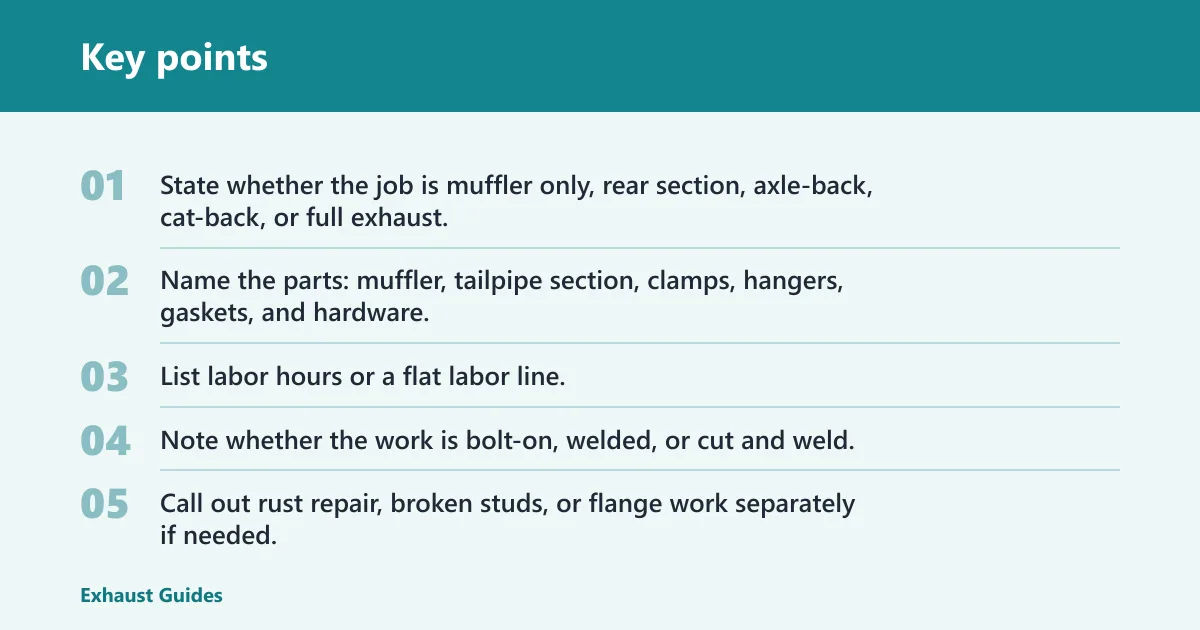
- State whether the job is muffler only, rear section, axle-back, cat-back, or full exhaust.
- Name the parts: muffler, tailpipe section, clamps, hangers, gaskets, and hardware.
- List labor hours or a flat labor line.
- Note whether the work is bolt-on, welded, or cut and weld.
- Call out rust repair, broken studs, or flange work separately if needed.
- Identify the material: aluminized steel, stainless steel, or OEM-style part.
- Watch for vague extras such as “shop supplies” or “miscellaneous exhaust work” without detail.
Can a diesel straight-pipe or deleted setup change the cost?
Yes. A straight-pipe or deleted setup changes the scope, the parts needed, and often the labor. That is not the same as a standard muffler replacement, so the quote should not be compared directly with a normal rear-section repair. The bill can go up or down depending on how much custom pipework is needed and whether the truck already has modified exhaust routing.
A deleted or straight-pipe configuration may remove the muffler entirely, but that does not guarantee a cheap job. Custom fabrication, fitment, and weld time can still make the repair expensive. Any quote like this should be itemized carefully before work starts.
Frequently asked questions
How much does a diesel muffler replacement cost?
The basic muffler-only range is $50-$350+, but the final number depends on the truck, the part choice, and whether the job is simple or corroded.
Why is a diesel muffler replacement quote so high?
High quotes usually reflect rust, welded joints, seized hardware, or a rear section that is larger than the muffler alone. Diesel systems are often heavier and more exposed to corrosion, so the shop may need more labor hours and more replacement hardware than a straightforward bolt-on swap.
Is it cheaper to replace just the muffler or the whole exhaust section?
Replacing just the muffler is usually cheaper up front, but only if the surrounding pipe, hangers, and joints are still usable. If the tailpipe section or flange is weak, the larger repair can be better value because it avoids paying labor twice when the old hardware fails soon after.
Does a welded-in muffler cost more than a bolt-on replacement?
Usually yes, because welded-in work takes more time and often includes cutting, fitting, and sealing pipe. A bolt-on replacement is faster when the hardware comes apart cleanly. On rusty diesels, though, a bolt-on quote can rise quickly if the bolts and flanges are seized.
How much labor should a muffler replacement take on a diesel truck?
Most mechanics spend 1-2 hours on the job for a simple muffler swap. Add more time if the exhaust must be cut out, welded in, or freed from rusted hardware. A rear-section repair or a rust-belt truck can take longer than that basic window.
What is included in a diesel muffler replacement quote?
A fair quote should spell out the muffler, any needed clamps, hangers, gaskets, and hardware, plus labor and the work method. If the estimate also includes a tailpipe section, flange repair, or flex pipe replacement, it is no longer just a muffler quote and should be priced as a larger exhaust repair.