How to Port and Polish WRX Exhaust Manifolds
Many Subaru WRX owners want to get the most power from their cars. Porting and polishing exhaust manifolds is a popular way to do this. It helps exhaust gases flow out faster.
For beginners, how to port and polish 2002 WRX exhaust manifolds can seem tricky. There are many details to consider. But, it’s actually a process you can learn.
This guide will break it all down for you. We will show you each step simply. After this, you will know how to make your WRX exhaust work better.
Understanding WRX Exhaust Manifold Porting
Porting and Polishing 2002 WRX Exhaust Manifolds Explained
This section covers the basic ideas behind porting and polishing exhaust manifolds for your 2002 Subaru WRX. We will talk about why you would want to do this and what it means for your car’s performance. It is about making the path for exhaust gases as smooth and wide as possible.
This allows the engine to breathe easier and make more power. We will also explain what tools you might need for this job. This will give you a good start on what to expect before you begin.
What is Porting and Polishing
Porting is like widening and smoothing out the passages inside the exhaust manifold. Think of it like making a highway wider and smoother for cars. The exhaust gases are like the cars.
When they have a smoother, bigger path, they can move faster. This means the engine does not have to work as hard to push them out.
Polishing is about making the surface of these passages very smooth. It is like taking out all the little bumps and rough spots. When the surface is smooth, the exhaust gases do not catch on anything.
They can slide through easily. This helps even more with faster flow.
Why Improve Exhaust Manifold Flow
Improving the exhaust manifold flow directly impacts how well your engine can expel exhaust gases. When gases can leave quickly, the engine cylinder can fill with fresh air and fuel more efficiently for the next combustion cycle. This is called scavenging.
Good scavenging means a better combustion process.
A faster exhaust flow can lead to increased horsepower and torque. It also helps reduce exhaust gas temperatures. Cooler exhaust gases mean less stress on engine components.
This can improve overall engine longevity. Many enthusiasts find this modification rewarding.
For a 2002 Subaru WRX, porting and polishing can unlock some hidden potential. These cars are known for performance, and improving the exhaust is a classic tuning step. It is a great way to learn more about your car’s engine.
Tools and Materials Needed
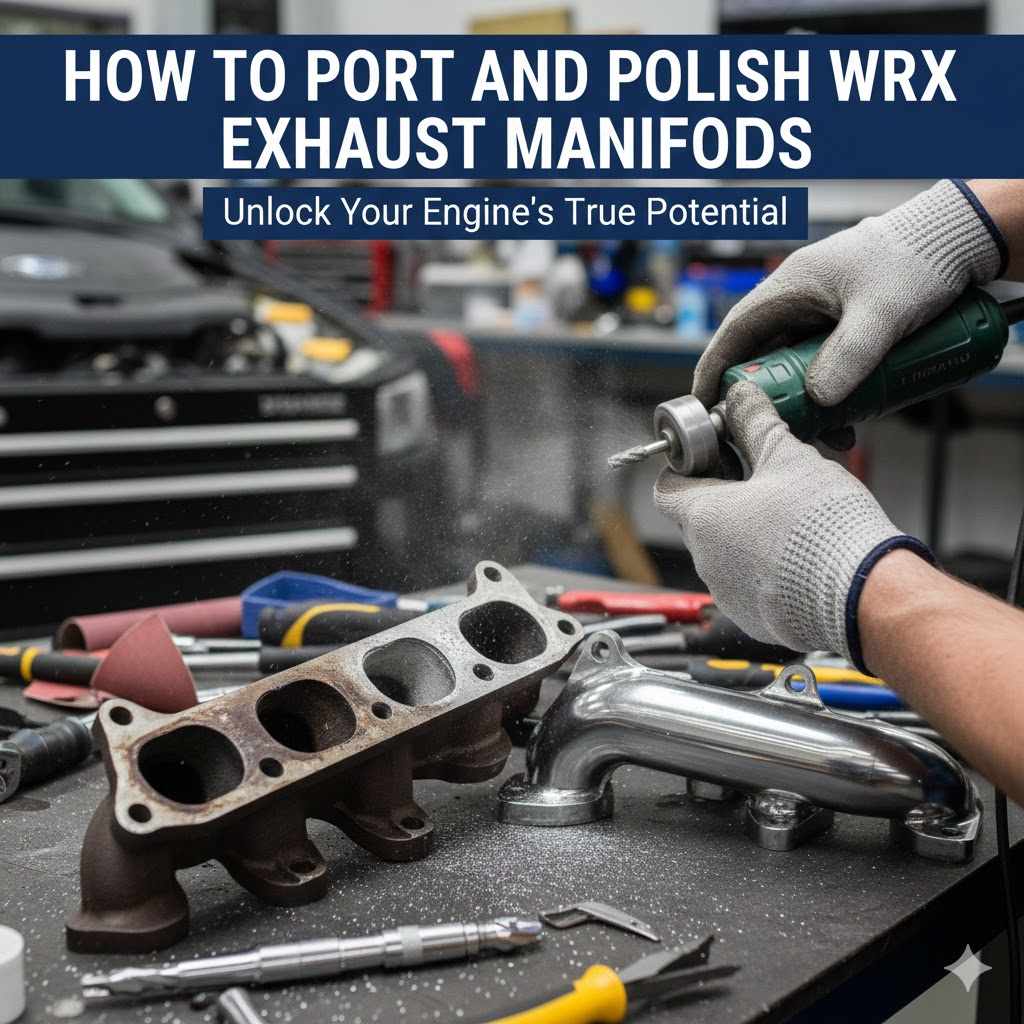
To port and polish your exhaust manifolds, you will need a few key items. A Dremel rotary tool or a similar die grinder is essential. You will also need various grinding bits, burrs, and sanding drums.
Different shapes and sizes are important for getting into all the nooks and crannies.
Safety gear is a must. This includes safety glasses, gloves, and a dust mask or respirator. You should also have a good light source and maybe a workbench vise to hold the manifold steady.
Some people use a flexible shaft attachment for their grinder to make it easier to use.
Materials like gasket sealer, cleaner, and rags will also be useful for preparing and finishing the job. Some people use exhaust manifold sealant or high-temperature paint to finish the job after porting and polishing.

The Process of Porting WRX Exhaust Manifolds
How to Port and Polish 2002 WRX Exhaust Manifolds Step By Step
This section details the actual steps involved in porting and polishing your 2002 WRX exhaust manifolds. We will guide you through preparing the manifolds, the grinding and smoothing process, and how to finish up. Following these steps carefully will help ensure you get the best results and improve your engine’s performance safely.
This is where the real work begins.
Preparation and Inspection
First, you need to remove the exhaust manifolds from your WRX. This usually involves unbolting them from the engine head and the exhaust system. It is a good idea to label any bolts or connections so you know where they go back.
Once removed, clean the manifolds thoroughly. Remove any old gasket material, rust, or carbon buildup. A wire brush and some degreaser can work well for this.
Inspect the manifolds for any cracks or damage. If you find any, you might need to repair them or consider replacing the manifolds.
You will want to mark areas where you plan to port. Look at the intake ports on the cylinder head. The exhaust manifold ports should match these as closely as possible.
Areas where the manifold casting is thicker or has rough transitions are good targets for porting.
Grinding and Shaping
Start with a coarser grinding bit to remove excess material. Focus on smoothing out the sharp edges where the manifold meets the port opening. Gradually work your way into the port.
The goal is to create a smooth, gradual transition from the cylinder head port to the exhaust runner.
Avoid removing too much material. The manifold wall is not very thick, and you do not want to go through it. Use light pressure and make many passes.
It is easier to remove more material later than to fix taking too much away.
Pay attention to the “short side radius.” This is the inner curve of a bend in the exhaust port. Smoothing this area is very important for good flow. Make it as round and smooth as possible.
Sanding and Smoothing
After you are done with the grinding, switch to finer grit sanding drums and flap wheels. This is where you start the polishing process. Work your way down through progressively finer grits.
Start with around 80-grit, then move to 120, 180, and even 220-grit sandpaper.
The goal is to get the surface inside the ports as smooth as glass. A mirror finish is ideal, but a very smooth, satin finish is also excellent. This smoothness reduces turbulence and allows exhaust gases to flow more freely.
Take your time with the sanding. Each grit of sandpaper removes the scratches left by the previous one. If you skip a grit, you will have to go back.
This is a crucial step for the final performance gains.
Finishing and Reinstallation
Once you are satisfied with the smoothness, clean the manifolds again to remove all dust and debris. You can use compressed air or a vacuum cleaner for this.
Some people choose to apply a high-temperature ceramic coating to the outside of the manifolds. This helps to keep heat in the exhaust gases, which can improve flow and keep under-hood temperatures down. Others might just clean and inspect them.
Before reinstalling, consider using new exhaust manifold gaskets. These ensure a good seal and prevent leaks. Reinstall the manifolds carefully, making sure all bolts are tightened to the correct torque specifications.
This completes the process of how to port and polish 2002 WRX exhaust manifolds.
Benefits and Expected Performance Gains
Improving Your 2002 WRX Exhaust Manifold Performance
This section explores the positive outcomes you can expect after porting and polishing your 2002 WRX exhaust manifolds. We will talk about how it can affect your car’s engine and what kind of power improvements are realistic. Understanding these benefits will help you see why this modification is worthwhile.
Increased Horsepower and Torque
One of the primary reasons people port and polish their exhaust manifolds is to gain more power. When exhaust gases flow out more easily, the engine can breathe better. This means it can take in more air and fuel for each power stroke.
This improved efficiency can result in noticeable gains in horsepower and torque. While the exact numbers vary depending on the specific engine, supporting modifications, and the quality of the porting job, enthusiasts often report gains of 5 to 15 horsepower. Torque increases are also common, especially in the mid-range RPMs.
For instance, a study by an automotive performance shop found that a well-executed port and polish job on a similar vehicle’s exhaust manifold resulted in a peak horsepower increase of 8% and a torque increase of 6% over the stock setup.
Better Throttle Response
Beyond peak power numbers, you will likely feel a difference in how your car responds when you press the gas pedal. With smoother exhaust flow, the engine can react more quickly to throttle inputs. This means less hesitation and a more direct connection between your foot and the engine’s power output.
This improved throttle response makes driving more engaging and can give the car a more eager feel. It is often one of the first things drivers notice after this modification. The engine feels more alive.
Reduced Exhaust Gas Temperatures
When exhaust gases move more freely, they tend to stay cooler. This is because they are not being held back and building up pressure and heat. Lower exhaust gas temperatures are beneficial for several reasons.
First, cooler gases are denser, which can contribute to better performance. Second, lower temperatures reduce the heat load on other engine components, such as the turbocharger and exhaust valves. This can lead to increased engine reliability and longevity.
Some data suggests that a significant reduction in exhaust gas temperature can be achieved, potentially lowering temperatures by as much as 50-100 degrees Fahrenheit under load. This is a substantial difference that contributes to overall engine health.
Supporting Other Modifications
Porting and polishing exhaust manifolds often works best when combined with other performance upgrades. If you have a performance exhaust system, a cold air intake, or an upgraded engine tune, improving the manifold flow will help these other parts work even better.
It is like ensuring all the parts of a system are working together smoothly. If one part is a bottleneck, it limits what the others can do. By fixing the manifold, you remove a potential bottleneck.
For example, if you have a freer-flowing exhaust cat-back system, a stock manifold can become the restrictive point. Porting it allows the entire exhaust system to perform at its best.
Potential Challenges and Tips
Troubleshooting How to Port and Polish 2002 WRX Exhaust Manifolds
Even with clear instructions, there are a few things that can make this job harder. This part of the guide offers tips to help you avoid common mistakes and overcome any difficulties. We will share some practical advice that makes the process smoother and leads to better results for your 2002 WRX.
Risk of Removing Too Much Material
One of the biggest risks is grinding away too much metal. The exhaust manifold casting is not very thick in some areas. If you go too deep, you could create a hole, which would ruin the manifold.
Always start with a less aggressive bit and use light pressure. It is better to take small amounts off over many passes than to try to remove a lot at once. You can always remove more, but you cannot add metal back easily.
If you do accidentally go a bit too deep in a non-critical area, some people use high-temperature epoxy or metal filler to repair it. However, this should be a last resort and may not be as durable as the original casting.
Achieving a Truly Smooth Finish
Getting a mirror-smooth finish takes time and patience. It is easy to get lazy with the sanding. If you do not thoroughly sand with each grit, the final surface will not be as smooth as it could be.
Use good lighting to see the surface clearly. Rotate your sanding drums and flap wheels to reach all areas. Ensure you are using quality sandpaper and grinding bits.
A common mistake is not going through all the grits. If you stop at 120-grit, the surface will still have visible scratches that hinder flow. Aim for at least 220-grit, or even higher if you have the time and tools.
Dealing with Tight Spaces
Exhaust manifolds have many curves and tight spots. It can be challenging to get your grinder or sanding tools into all of them.
A flexible shaft attachment for your rotary tool can be a lifesaver here. It allows you to maneuver the grinding or sanding bit into awkward angles. You can also use smaller, specialized burrs and sanding drums designed for intricate work.
Sometimes, you might need to use a combination of tools. For example, use a burr to shape a tight corner, then a small sanding drum to smooth it. Planning your approach for each difficult area can save time and frustration.
Working Safely
Grinding metal creates dust and flying debris. It is essential to wear safety glasses at all times. The dust can also be harmful to breathe, so a dust mask or respirator is crucial, especially when using finer grits that create more dust.
Wear gloves to protect your hands from sharp edges and heat. Ensure you have good ventilation in your work area. If you are working on a bench vise, make sure it is secured and the manifold is stable.
Always follow the manufacturer’s safety guidelines for your tools. Take breaks to avoid fatigue, which can lead to mistakes. Safety should be the top priority throughout the process.

FAQ
Frequently Asked Questions
Question: Can I port and polish my WRX exhaust manifolds myself?
Answer: Yes, with the right tools, patience, and by following careful instructions, you can port and polish your 2002 WRX exhaust manifolds yourself.
Question: What are the main benefits of porting exhaust manifolds?
Answer: The main benefits are increased horsepower and torque, better throttle response, and reduced exhaust gas temperatures, all leading to improved engine performance.
Question: How much horsepower can I expect to gain?
Answer: Gains vary, but many enthusiasts see an increase of 5 to 15 horsepower. This also depends on other modifications done to the car.
Question: Do I need special tools for this job?
Answer: Yes, you will need a rotary tool like a Dremel, various grinding bits, sanding drums, and essential safety equipment like glasses, gloves, and a dust mask.
Question: How long does it typically take to port and polish exhaust manifolds?
Answer: For a first-timer, it can take anywhere from 6 to 12 hours for both manifolds. Experienced individuals might do it faster.
Summary
This guide explained how to port and polish 2002 WRX exhaust manifolds. You learned why smoother flow helps your engine make more power. We walked through preparing the manifolds, grinding, sanding, and finishing.
You can expect better throttle response and cooler exhaust gases. Remember to work safely and take your time. You have the knowledge to improve your WRX’s performance.